H.R. 3151: SHIPS for America Act of 2025
Sponsor

Trent Kelly
Republican · MS-1
$20B push to put America back on the seas
Why it matters
The bill's findings cite just 80 U.S. oceangoing vessels in international commerce today, against more than 5,500 Chinese-documented ships. H.R. 3151 (the SHIPS for America Act) would create a $20 billion Maritime Security Trust Fund, force 100% of U.S. government cargo onto American ships, and offer a 33% tax credit for vessel investment plus 25% for shipyard upgrades. 126 House members from both parties have signed on.
H.R. 3151 is sprawling — more than 100 sections covering tax credits, cargo rules, workforce programs, and a new federal coordinator. The thread that ties it together: get more American-built, American-flagged ships into global trade.
The money side starts with a Maritime Security Trust Fund that can hold up to $20 billion. It's fed by tonnage taxes that hit foreign-linked operators hardest — $5 per ton for foreign entities of concern, $3.50 per ton for vessels built in shipyards of concern, and $1.25 per ton in some ship-repair cases.
The demand side comes from cargo rules. Federal law currently requires 50% of U.S. government cargo to move on U.S.-flagged ships; H.R. 3151 raises that to 100%, effective 180 days after enactment. The bill also phases in a new mandate that goods imported from China move on U.S.-built, U.S.-crewed, U.S.-documented vessels — starting at 1% in year five and rising to 10% by year fourteen.
The build side leans on the tax code. The bill creates a 33% United States Vessel Investment Credit (with bonus percentages for U.S.-domiciled insurance and a U.S.-headquartered classification society) and a 25% Shipyard Investment Tax Credit. Small shipyards would also get $100 million a year in grants from fiscal 2026 through 2035 — about $1 billion over a decade.
The people side takes equal billing. Merchant mariners would get public service loan forgiveness, expanded education benefits, easier license renewals, and reactivation rights for expired credentials. The U.S. Merchant Marine Academy at Kings Point would get authorized funding for infrastructure modernization, and spouses of mariners could be reimbursed for relicensing costs after a move.
The political read: the cosponsor list is unusually broad. Rep. Trent Kelly (R-MS) leads, with 126 cosponsors running from Ro Khanna and Maxine Waters on the Democratic side to Ryan Zinke and Pat Fallon on the Republican side. The hard part isn't the politics — it's the committee maze. The bill was referred to twelve House committees, each with its own piece to defend or rewrite.
Bill Progress
Latest Action · May 1, 2025
Assigned to Subcommittee on Coast Guard and Maritime Transportation. for review
H.R. 3151 Bill Summary
What H.R. 3151 actually does.
$20 billion Maritime Security Trust Fund built on tonnage taxes
The bill caps the Trust Fund at $20 billion, fed by tonnage taxes of $5 per ton on vessels owned by foreign entities or registries of concern, $3.50 per ton on vessels built in shipyards of concern, and $1.25 per ton in some repair cases. Trust Fund money is available for obligations incurred before October 1, 2035.
All U.S. government cargo must move on American ships
The current 50% U.S.-flag requirement for federal cargo rises to 100%, effective 180 days after enactment. Federal agencies arranging transportation would face stricter cargo preference, oversight, and reporting rules.
China-made imports get phased onto U.S. vessels
Goods imported from China would have to move on U.S.-built, U.S.-crewed, U.S.-documented vessels — starting at 1% in year five and rising to 10% by year fourteen. The bill also raises duties on foreign vessel repairs to 70%, and to 200% if the work involves a foreign country of concern.
33% tax credit for vessel investment, 25% for shipyards
The bill creates a 33% United States Vessel Investment Credit (with an extra 5% for U.S.-domiciled insurance and 2% for a U.S.-headquartered classification society) and a 25% Shipyard Investment Tax Credit. Small shipyards would also get $100 million per year in grants from fiscal 2026 through 2035.
Loan forgiveness, easier credentials, and academy funding for mariners
Merchant mariners would qualify for public service loan forgiveness, expanded education benefits, easier license renewals, and reactivation of expired credentials. Mariner spouses could be reimbursed for relicensing costs after a move, and the U.S. Merchant Marine Academy at Kings Point gets authorized funding for infrastructure modernization.
Strategic Commercial Fleet of up to 250 U.S.-flagged ships
The bill establishes a new Strategic Commercial Fleet that must include at least 10 vessels within two years, 20 within five years, and can grow to no more than 250. A new Maritime Security Advisor in the White House and a Maritime Security Board would coordinate maritime policy across more than a dozen federal agencies.
Who benefits from H.R. 3151?
U.S. shipyards
About 20 U.S. shipyards today are capable of building oceangoing vessels, down from more than 80 at the end of WWII, according to the bill's findings. They would gain access to a 25% Shipyard Investment Tax Credit, $100 million a year in small-yard grants, expanded Title XI loan guarantees, and modernization support funded by the Trust Fund.
U.S. merchant mariners
Roughly 12,000 American mariners crew oceangoing vessels today, per the bill's findings. They would qualify for public service loan forgiveness, expanded education benefits, easier credential renewals, and reactivation of expired licenses. Spouses could be reimbursed for relicensing costs after relocation.
U.S.-flag shipping operators
Roughly 80 U.S.-flagged vessels operate in international commerce today, against more than 5,500 Chinese-documented vessels, the bill's findings cite. Stricter cargo preference, tonnage tax breaks for U.S.-built ships, and Strategic Commercial Fleet payments would tilt the economics back toward American operators.
Vessel and shipyard investors
A new 33% United States Vessel Investment Credit and a 25% Shipyard Investment Tax Credit make putting capital into U.S.-built vessels or domestic shipyard facilities significantly more attractive than under current law.
Who is affected by H.R. 3151?
Importers and exporters of federally linked cargo
Companies moving food aid, agricultural exports, and other government-related cargo would have to find U.S.-flag capacity for shipments now allowed on cheaper foreign-flagged vessels. Costs could rise during the transition window.
Importers of Chinese-made goods
By year five after enactment, 1% of imports from China would have to move on U.S.-built, U.S.-crewed, U.S.-documented ships. By year fourteen, that share rises to 10%.
Foreign-flag shipping lines and shipyards of concern
Foreign operators serving U.S. trade lanes — including Chinese state-linked carriers — would face new tonnage taxes, sharply higher repair duties (70% generally, 200% for work involving a foreign country of concern), and lost access to U.S. government cargo.
A dozen federal agencies and twelve House committees
The bill creates a new Maritime Security Advisor in the Executive Office of the President and a Maritime Security Board pulling together MARAD, the Coast Guard, the Navy, the Federal Maritime Commission, CBP, the Trade Representative, and others. Twelve House committees were assigned jurisdiction at introduction.
Taxpayers
Trust Fund revenue comes mainly from tonnage taxes on foreign-linked shipping, but the new vessel and shipyard tax credits would reduce federal revenue, and academy modernization plus workforce programs depend on appropriations.
Cost & Funding
Authorization
Up to $20 billion Maritime Security Trust Fund, plus $100 million per year for small shipyard grants FY 2026-2035
- The Maritime Security Trust Fund is capped at $20 billion (Section 201). It's fed by tonnage taxes — $5 per ton on vessels owned by foreign entities or registries of concern, $3.50 per ton on vessels built in shipyards of concern, and $1.25 per ton in some repair cases.
- Small Shipyard Assistance is authorized at $100 million per year for FY 2026 through FY 2035 — about $1 billion over a decade (Section 502).
- The Maritime Security Board gets $5 million per year through FY 2035 to staff up. The Maritime Administration and Coast Guard each get $30 million per year for direct-hire authority. The Federal Maritime Commission gets $2 million for administrative expenses.
- Two new permanent tax credits would reduce federal revenue: a 33% United States Vessel Investment Credit (with bonus percentages for U.S.-domiciled insurance and a U.S.-headquartered classification society) and a 25% Shipyard Investment Tax Credit.
- The bill expands the existing Title XI federal ship financing program and authorizes infrastructure modernization at the U.S. Merchant Marine Academy at Kings Point. Specific dollar amounts for the academy aren't stated in the introduced bill text.
- Trust Fund money is available for obligations incurred before October 1, 2035.
HR3151 Legislative Journey
House: Committee Action
May 1, 2025
Referred to the Subcommittee on Coast Guard and Maritime Transportation.
About the Sponsor
Trent Kelly
Republican, Mississippi's 1st congressional district · 11 years in Congress
Committees: House Permanent Select Committee on Intelligence, Agriculture, Armed Services
View full profile →
Cosponsors (144)
This bill has 144 cosponsors: 77 Democrats, 67 Republicans, reflecting bipartisan support. Cosponsors represent 40 states: Alabama, Arizona, California, and 37 more.

John Garamendi
Democrat · CA

Robert Wittman
Republican · VA

Donald Norcross
Democrat · NJ

Clay Higgins
Republican · LA

Ro Khanna
Democrat · CA

Sarah Elfreth
Democrat · MD
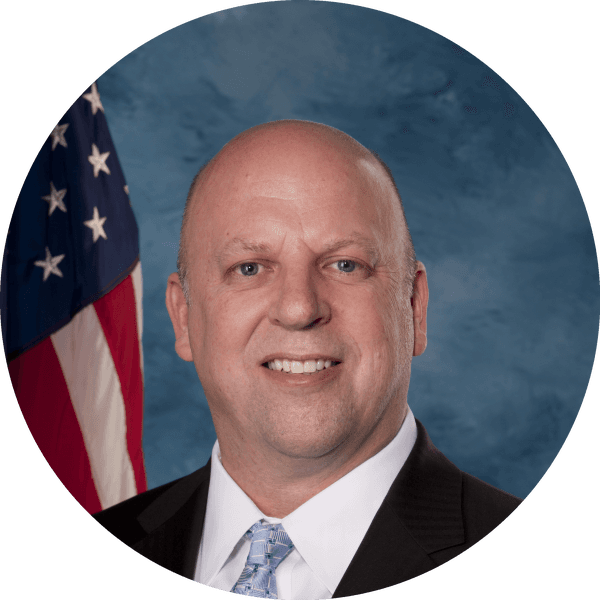
Scott DesJarlais
Republican · TN

Richard McCormick
Republican · GA

Raja Krishnamoorthi
Democrat · IL
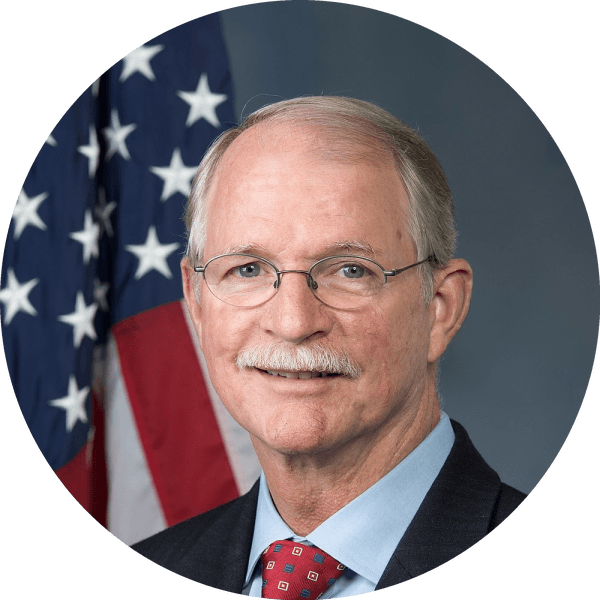
John Rutherford
Republican · FL

Lance Gooden
Republican · TX

Nick LaLota
Republican · NY
Cosponsor Coverage Map
Committee Sponsors
Transportation and Infrastructure Committee
23 of 67 committee members cosponsored


Veterans' Affairs Committee
12 of 25 committee members cosponsored


Science, Space, and Technology Committee
11 of 40 committee members cosponsored


Natural Resources Committee
13 of 45 committee members cosponsored


Judiciary Committee
9 of 44 committee members cosponsored


Financial Services Committee
16 of 53 committee members cosponsored


Education and Workforce Committee
12 of 37 committee members cosponsored


Oversight and Government Reform Committee
14 of 47 committee members cosponsored


Foreign Affairs Committee
18 of 53 committee members cosponsored


Energy and Commerce Committee
10 of 54 committee members cosponsored


Ways and Means Committee
12 of 45 committee members cosponsored


Armed Services Committee
45 of 57 committee members cosponsored


134 Republicans across these committees haven't cosponsored yet. Mobilize their constituents
What laws does H.R. 3151 change?
7 changes
Sections Amended
Section 202(a) of Food for Peace Act (7 U.S.C. 1722(a))
striking ``Notwithstanding'' and inserting ``Subject to the requirements of sections 55305 and 55314 of title 46, United States Code, and notwithstanding''
Section 3 of Natural Gas Act (15 U.S.C. 717b)
adding at the end the following: ``(g) Transportation of Exports of Natural Gas on Vessels Documented Under Laws of the United States
Section 3(c) of Natural Gas Act (15 U.S.C. 717b(c))
striking ``or the exportation of natural gas'' and inserting ``or, subject to subsection (g), the exportation of natural gas''
Section 1703(b) of Energy Policy Act of 2005 (42 U.S.C. 16513(b))
inserting at the end the following: ``(14) Marine transportation systems, including commercial vessels of the United States, shipyards, marine terminals, and port facilities
Section 1356(b) of Internal Revenue Code of 1986 (relating to qualifying shipping activities)
striking ``activities in operating'' and inserting ``the carriage of goods (as defined in section 1 of the Carriage of Goods by Sea Act (46 U
Section 4041(g) of Internal Revenue Code of 1986
adding at the end the following new sentence: ``For purposes of subsection (a)(2), the exemption under paragraph (1) shall also apply to fuel sold for use or used by a vessel which is both described in section 4042(c)(1) and actually engaged in trade between the Atlantic or Pacific ports of the United States (including any territory or possession of the United States)
Sections Repealed
3534(j) of National Defense Authorization Act for Fiscal Year 2024 (Public Law 118-31)
H.R. 3151 Quick Facts
- Committee
- Transportation and Infrastructure
- Chamber
- House
- Policy
- Transportation and Public Works
- Introduced
- May 1, 2025
Assigned to Subcommittee on Coast Guard and Maritime Transportation. for review
May 1, 2025
Official Sources
Official text of H.R. 3151, the SHIPS for America Act of 2025, as introduced in the 119th Congress
The existing Maritime Security Program that maintains a fleet of militarily useful U.S.-flag merchant ships; the bill creates a new Strategic Commercial Fleet alongside this program
Current federal loan guarantee program for shipbuilding that the bill amends in Section 503 to expand eligibility and financing terms
Current cargo preference rules requiring 50% of government cargo on U.S.-flag vessels; the bill raises this to 100% in Section 414
Existing program providing grants for equipment and training at small shipyards; the bill authorizes $100M annually through 2035 in Section 502
Independent federal agency regulating international ocean shipping; the bill requires a new FMC report on U.S. vessel competitiveness in Section 105
Federal service academy at Kings Point, NY that trains merchant marine officers; the bill authorizes infrastructure modernization funding in Sections 621-628
Coast Guard credentialing program the bill streamlines in Sections 631-636, including modernized licensing, easier renewals, and reactivation of expired credentials
Who is lobbying on H.R. 3151?
7 organizations lobbying on this bill
AMERICAN MARITIME PARTNERSHIP | 3 |
MATSON NAVIGATION | 3 |
NEW AMERICAN INDUSTRIAL ALLIANCE | 3 |
STOLT TANKERS USA, INC. | 3 |
AMERICAN MARITIME OFFICERS SERVICE (AMOS) | 3 |
AMERICAN MARITIME OFFICERS | 3 |
SALTCHUK RESOURCES, INC. | 1 |
Showing 1-7 of 7 organizations
H.R. 3151 Common Questions
How much would the SHIPS for America Act tax foreign-linked cargo ships per ton?
H.R. 3151 sets a $5 per ton charge on vessels owned by foreign entities or registered in countries of concern, $3.50 per ton on vessels built in shipyards of concern, and $1.25 per ton in some repair cases (SEC. 201). The revenue feeds the Maritime Security Trust Fund.
Does the SHIPS for America Act require 100% of U.S. government cargo to go on American ships?
Yes. H.R. 3151 raises the U.S. government cargo preference rule from 50% to 100%, taking effect 180 days after enactment (SEC. 414).
How much of goods made in China would have to ship on U.S.-built and U.S.-crewed vessels?
Under H.R. 3151, 1% of goods imported from China would have to move on U.S.-built, U.S.-crewed, U.S.-documented vessels starting in year five, rising to 10% by year fourteen (SEC. 415).
What are the foreign ship repair duty increases in the SHIPS for America Act?
H.R. 3151 raises duties on foreign vessel repairs to 70% generally, and to 200% if the work involves a foreign country of concern (SEC. 413).
How big can the Maritime Security Trust Fund get under the SHIPS for America Act?
H.R. 3151 caps the Maritime Security Trust Fund at $20 billion, with money available for obligations incurred before October 1, 2035 (SEC. 201).
How many ships would the Strategic Commercial Fleet have to include under the SHIPS for America Act?
Under H.R. 3151, the Strategic Commercial Fleet must include at least 10 U.S.-flagged vessels within two years, at least 20 within five years, and can grow up to 250 vessels (SEC. 401).
Can ship investors get a 33% tax credit under the SHIPS for America Act?
Yes. H.R. 3151 creates a 33% United States Vessel Investment Credit, with an extra 5% for U.S.-domiciled insurance and 2% for a U.S.-headquartered classification society (SEC. 701).
Does the SHIPS for America Act create a tax credit for shipyard upgrades?
Yes. H.R. 3151 creates a 25% Shipyard Investment Tax Credit for qualified investments in U.S. shipyard facilities (SEC. 702).
How much money does the SHIPS for America Act provide for small shipyards?
H.R. 3151 authorizes $100 million per year in Small Shipyard Assistance grants for fiscal years 2026 through 2035 — about $1 billion over a decade (SEC. 502).
What does the SHIPS for America Act do for U.S. merchant mariners?
Under H.R. 3151, merchant mariners qualify for public service loan forgiveness, expanded education benefits, easier license renewals, and reactivation of expired credentials. Spouses can be reimbursed for relicensing costs after a move (SEC. 601-636).
Based on H.R. 3151 bill text
H.R. 3151 Bill Text
“To support the national defense and economic security of the United States by supporting vessels, ports, and shipyards of the United States and the U.S. maritime workforce.”
Source: U.S. Government Publishing Office
Get notified when H.R. 3151 moves
Committee votes, floor action, cosponsor changes — straight to your inbox.
Bill alerts + Legisletter's monthly briefing. Unsubscribe anytime.
Transportation and Public Works Bills
9 related bills we're tracking
Stronger Communities through Better Transit Act





Referred to the Subcommittee on Highways and Transit.
May 16, 2025
ALERT Act





Received in the Senate and Read twice and referred to the Committee on Commerce, Science, and Transportation.
Apr 15, 2026
PART Act





Forwarded by Subcommittee to Full Committee by Voice Vote.
Feb 10, 2026
ROTOR Act





On motion to suspend the rules and pass the bill Failed by the Yeas and Nays: (2/3 required): 264 - 133 (Roll no. 72).
Feb 24, 2026
SELF DRIVE Act of 2026





Forwarded by Subcommittee to Full Committee by the Yeas and Nays: 12 - 11.
Feb 10, 2026
BASICS Act




Referred to the House Committee on Transportation and Infrastructure.
Feb 9, 2026
She DRIVES Act




Placed on Senate Legislative Calendar under General Orders. Calendar No. 141.
Jul 31, 2025
To amend title 23, United States Code, and the Infrastructure Investment and Jobs Act with respect to vehicle roadside crashes, work zone safety, and for other purposes.




Referred to the Subcommittee on Highways and Transit.
Apr 24, 2025
Air Carrier Access Amendments Act of 2026



Referred to the House Committee on Transportation and Infrastructure.
Jun 18, 2026
Trending Right Now
Bills gaining momentum across Congress
North Platte Canteen Congressional Gold Medal Act





Referred to the House Committee on Financial Services.
Feb 21, 2025
Fit to Serve Act




Referred to the House Committee on Armed Services.
May 21, 2025
ASAP Act




Ordered to be Reported in the Nature of a Substitute by the Yeas and Nays: 40 - 0.
Sep 16, 2026
Tracking Transportation and Public Works in Congress? Monitor bills, track cosponsor momentum, and launch advocacy campaigns — all from one advocacy platform.