H.R. 4039: CNMI Ferry Act
Sponsor
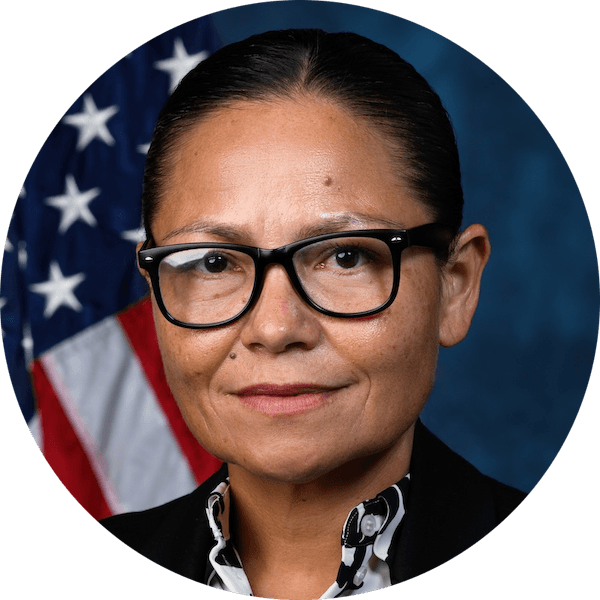
Kimberlyn King-Hinds
Republican · MP
Northern Mariana Islands want in on federal ferry money
Why it matters
Federal ferry grants are locked behind a rule that only counts service that already ran on a regular schedule before March 1, 2020. The Northern Mariana Islands never had that service, so they could never qualify to build one. H.R. 4039 carves out an exception that lets planned and brand-new CNMI ferry routes count too.
H.R. 4039, the CNMI Ferry Act, rewrites the eligibility rules for the federal ferry program created by the Infrastructure Investment and Jobs Act. It doesn't create a new program or attach a dollar figure — it changes who counts.
The sticking point is a definition. To qualify as an "eligible ferry service" under the general rule, a route has to have run a regular schedule at some point during the five years ending March 1, 2020, and connect at least two rural areas more than 50 sailing miles apart. The Commonwealth of the Northern Mariana Islands had no such service, so it could never meet the test — a catch-22 where you need an existing ferry to get money for a ferry.
The bill adds a CNMI-specific path: a ferry there can qualify if it is operating, or is being planned or established with the intent to run a regular schedule. That opens the door to startup routes, not just long-running ones.
It also settles two technicalities. Every area within CNMI is automatically treated as a "rural area" for this program, so there's no fight over whether island communities meet that bar. And the program's rulebook must now spell out how funds flow specifically to CNMI for establishing and operating a service, alongside the rules for the 50 states. The definition of "State" is updated to name CNMI directly, next to the District of Columbia, Puerto Rico, the U.S. Virgin Islands, Guam, American Samoa, and other U.S. territories.
Bill Progress
Latest Action · Jun 18, 2025
Assigned to Subcommittee on Highways and Transit. for review
H.R. 4039 Bill Summary
What H.R. 4039 actually does.
Planned ferry routes can finally qualify
The general rule still requires a service to have run a regular schedule during the five years ending March 1, 2020, and to connect at least two rural areas more than 50 sailing miles apart. The bill adds a separate path for CNMI: a ferry there qualifies if it is operating, or is being planned or established with the intent to run a regular schedule. New and startup routes count.
Every CNMI community counts as rural
The program normally borrows the federal definition of "rural area" from elsewhere in transportation law. The bill declares that the Commonwealth of the Northern Mariana Islands, and any area within it, is automatically treated as rural for this program — removing any argument that an island community doesn't meet the rural-area test.
Funding rules must spell out CNMI's share
The program's instructions currently cover how funds reach states. The bill adds a requirement that the rules also cover how funds reach CNMI specifically, for both establishing and operating an eligible ferry service.
CNMI named in the definition of 'State'
The bill rewrites the program's definition of "State" to explicitly list the Commonwealth of the Northern Mariana Islands alongside the 50 states, the District of Columbia, Puerto Rico, the U.S. Virgin Islands, Guam, American Samoa, and any other U.S. territory or possession.
A targeted edit, not a new program
The bill amends one existing law — the ferry program created under the Infrastructure Investment and Jobs Act. It rewrites definitions and requirements inside that framework rather than standing up a separate CNMI ferry program.
Who benefits from H.R. 4039?
People living across CNMI's islands
Roughly 47,000 people live in the Commonwealth, spread across islands separated by open water. Reliable, federally-supported ferry service would give them a funded option for getting between islands for work, medical care, school, and family.
Anyone trying to launch a CNMI ferry
Public agencies or operators wanting to start a route no longer have to prove the service existed before 2020. The bill explicitly covers ferries being planned or established with the intent to run a regular schedule.
CNMI's government and transportation planners
They get a defined path to federal money: the bill requires the program's rules to address how funds reach CNMI for both establishing and operating a service, rather than leaving the Commonwealth unmentioned.
Smaller, harder-to-reach island communities
Because every area in CNMI is automatically treated as rural for this program, communities on the more isolated islands don't have to win an argument over whether they meet the rural-area bar before a route serving them can qualify.
Who is affected by H.R. 4039?
Federal ferry program administrators
Transportation officials running the program would have to apply the new CNMI-specific rules — including that a CNMI service can qualify while it's still being planned — and write the funding requirements the bill calls for. That's new work the bill assigns but doesn't fund.
Existing applicants in the rest of the country
Routes everywhere else stay under the original rule: they must have run a regular schedule sometime in the five years ending March 1, 2020, and connect at least two rural areas more than 50 sailing miles apart. Only CNMI gets the tailored path; the bill doesn't loosen the test for other states.
Other territories in the program
Puerto Rico, the U.S. Virgin Islands, Guam, American Samoa, and the District of Columbia are named in the rewritten "State" definition. Their standing is confirmed rather than changed — the bill broadens the list to seat CNMI alongside them.
HR4039 Legislative Journey
House: Committee Action
Jun 18, 2025
Referred to the Subcommittee on Highways and Transit.
House: Committee Action
Jun 17, 2025
Referred to the House Committee on Transportation and Infrastructure.
About the Sponsor
Kimberlyn King-Hinds
Republican, Northern Mariana Islands At-Large · 1 years in Congress
Committees: Veterans' Affairs, Small Business, Transportation and Infrastructure
View full profile →
Committee Sponsors
Transportation and Infrastructure Committee
0 of 67 committee members cosponsored
No committee members have cosponsored this bill
35 Republicans across this committee haven't cosponsored yet. Mobilize their constituents
H.R. 4039 Quick Facts
- Committee
- Transportation and Infrastructure
- Chamber
- House
- Policy
- Transportation and Public Works
- Introduced
- Jun 17, 2025
Assigned to Subcommittee on Highways and Transit. for review
Jun 18, 2025
Official Sources
Official bill page with status, text, sponsors, and actions for the CNMI Ferry Act.
The law this bill amends; Section 71103 created the rural ferry program whose eligibility rules H.R. 4039 rewrites to let CNMI qualify.
The federal ferry statute the bill amends — Section 71103 of the IIJA appears in the U.S. Code as a 23 U.S.C. 147 note.
Defines "rural area," the term the ferry program borrows and that the bill deems every part of CNMI to satisfy automatically.
H.R. 4039 Common Questions
Why couldn't the Northern Mariana Islands get federal ferry money before?
The program only counted ferry service that ran a regular schedule sometime in the five years ending March 1, 2020. CNMI had no such service, so it could never meet the test — you needed an existing ferry to get money for a ferry. H.R. 4039 adds an exception.
Can a ferry that hasn't launched yet qualify for funding under H.R. 4039?
Yes. For CNMI, a ferry qualifies if it is operating, or is being planned or established with the intent to run a regular schedule. That's the key change — startup and planned routes count, not just long-running ones.
Does H.R. 4039 actually send money to the Northern Mariana Islands?
Not by itself. The bill changes who is eligible for the existing federal ferry program and requires rules for how funds reach CNMI. It names no dollar amount — actual grants depend on money Congress appropriates separately.
Is every part of the Northern Mariana Islands treated as a rural area?
Yes. For this program, the bill deems the Commonwealth and any area within it to be a rural area. That matters because the ferry program requires service between rural areas, and this removes any argument that CNMI communities don't qualify.
Does the Northern Mariana Islands count as a state under the ferry program?
Yes. The bill rewrites the program's definition of "State" to name CNMI directly, alongside the 50 states, the District of Columbia, Puerto Rico, the U.S. Virgin Islands, Guam, American Samoa, and other U.S. territories.
Does H.R. 4039 change the ferry rules for any other state?
No. Everyone outside CNMI stays under the original rule: a route must have run a regular schedule sometime in the five years ending March 1, 2020, and connect two rural areas more than 50 sailing miles apart. Only CNMI gets the new path.
Who sponsored the CNMI Ferry Act and where does it stand?
It was introduced June 17, 2025 by Kimberlyn King-Hinds, the Republican delegate representing the Northern Mariana Islands. It has no cosponsors and sits in the House Subcommittee on Highways and Transit.
Does the bill create a new ferry program or change an existing one?
It changes an existing one. H.R. 4039 amends the ferry program created under the Infrastructure Investment and Jobs Act rather than standing up a separate CNMI program.
Based on H.R. 4039 bill text
H.R. 4039 Bill Text
“To amend the Infrastructure Investment and Jobs Act to allow the Commonwealth of the Northern Mariana Islands to be eligible to receive certain funding for use providing basic essential ferry service in rural areas, and for other purposes.”
Source: U.S. Government Publishing Office
Get notified when H.R. 4039 moves
Committee votes, floor action, cosponsor changes — straight to your inbox.
Bill alerts + Legisletter's monthly briefing. Unsubscribe anytime.
Transportation and Public Works Bills
9 related bills we're tracking
Stronger Communities through Better Transit Act




Referred to the Subcommittee on Highways and Transit.
May 16, 2025
SHIPS for America Act of 2025




Referred to the Subcommittee on Coast Guard and Maritime Transportation.
May 1, 2025
ALERT Act


Received in the Senate and Read twice and referred to the Committee on Commerce, Science, and Transportation.
Apr 15, 2026
PART Act




Forwarded by Subcommittee to Full Committee by Voice Vote.
Feb 10, 2026
ROTOR Act





On motion to suspend the rules and pass the bill Failed by the Yeas and Nays: (2/3 required): 264 - 133 (Roll no. 72).
Feb 24, 2026
SELF DRIVE Act of 2026





Forwarded by Subcommittee to Full Committee by the Yeas and Nays: 12 - 11.
Feb 10, 2026
BASICS Act



Referred to the House Committee on Transportation and Infrastructure.
Feb 9, 2026
She DRIVES Act



Placed on Senate Legislative Calendar under General Orders. Calendar No. 141.
Jul 31, 2025
To amend title 23, United States Code, and the Infrastructure Investment and Jobs Act with respect to vehicle roadside crashes, work zone safety, and for other purposes.


Referred to the Subcommittee on Highways and Transit.
Apr 24, 2025
Trending Right Now
Bills gaining momentum across Congress
America’s Olympic and Paralympic Games Commemorative Coins Act





Referred to the House Committee on Financial Services.
Jul 14, 2025
Fit to Serve Act




Referred to the House Committee on Armed Services.
May 21, 2025
ASAP Act





Ordered to be Reported in the Nature of a Substitute by the Yeas and Nays: 40 - 0.
Sep 16, 2026
Tracking Transportation and Public Works in Congress? Monitor bills, track cosponsor momentum, and launch advocacy campaigns — all from one advocacy platform.