H.R. 1189: National Plan for Epilepsy Act
Sponsor

Jim Costa
Democrat · CA-21
One federal epilepsy plan for 3.5 million Americans
Why it matters
The bill's findings cite more than $54 billion a year in U.S. health care costs tied to epilepsy, with nearly 3,000,000 adults and 456,000 children affected. H.R. 1189 would put HHS in charge of one national epilepsy plan, with patients and caregivers on the council shaping it, quarterly public meetings, and annual progress reports to Congress through 2035.
H.R. 1189 tells HHS to create and keep updating a National Plan for Epilepsy. One federal roadmap covering research, diagnosis, treatment, care coordination, and data, instead of leaving the work spread across half a dozen agencies.
The plan has to estimate what the federal government is already spending on epilepsy, line up work across agencies, push for better treatments, and study how the disease affects both patients and caregivers. HHS has to publish a national progress report within 2 years and update it every year after that.
The bill creates an advisory council with seats for NIH, CMS, CDC, FDA, HRSA, the Department of Defense, and the VA. It also reserves seats for 4 people living with different types of epilepsy, 2 family caregivers, clinicians, researchers, and nonprofit groups.
The council meets at least quarterly, and every meeting is open to the public. A first report goes to Congress within 18 months of enactment, then every 2 years after that.
The bill's findings cite the scale: nearly 3,000,000 adults and 456,000 children with epilepsy, more than 30% living with uncontrolled seizures, and $54 billion a year in U.S. health care costs. The findings also cite that 32% of adults with epilepsy are unable to work, and that 53% of people with uncontrolled seizures live in households earning under $25,000 a year.
H.R. 1189 does not create a direct benefit or set a new funding amount. Its job is to make the federal government coordinate epilepsy policy in public, on a timeline, through the end of 2035 unless Congress extends it.
Bill Progress
Latest Action · Feb 11, 2025
Referred to the House Committee on Energy and Commerce.
H.R. 1189 Bill Summary
What H.R. 1189 actually does.
One federal epilepsy plan, instead of six
H.R. 1189 requires HHS to build and keep updating a single National Plan for Epilepsy covering prevention, diagnosis, treatment, care coordination, research, and quality of life.
Annual progress assessments through 2035
HHS has to publish a national progress assessment within 2 years of enactment and update it every year after that. It's a public scorecard that runs until the law sunsets on December 31, 2035.
Patients and caregivers get seats at the table
The advisory council reserves 4 seats for people living with different types of epilepsy and 2 for family caregivers, alongside clinicians, researchers, nonprofit groups, and federal agencies.
Quarterly meetings, all open to the public
The advisory council meets at least once each quarter, and every meeting must be open to the public. Separate research conferences happen every 2 years.
Reports to Congress on a clock
The council's first report to Congress is due 18 months after enactment, then every 2 years. HHS also files annual reports on federally funded epilepsy work and recommended next steps.
Agencies have to share their epilepsy data
Federal agencies inside and outside HHS must hand over epilepsy-related data the plan needs, pulling work that's currently scattered across NIH, CMS, CDC, FDA, HRSA, the Department of Defense, and the VA into one place.
Who benefits from H.R. 1189?
People living with epilepsy
Nearly 3,000,000 adults and 456,000 children in the U.S., about 3.5 million people in all, according to the bill's findings. They'd get a federal push for earlier diagnosis, better-coordinated care across specialists, and a public scorecard tracking whether any of it works.
Families managing uncontrolled seizures
The bill's findings cite that more than 30% of people with epilepsy live with uncontrolled seizures, and that 53% of those individuals live in households earning under $25,000 a year. The plan must recommend ways to reduce the financial impact and eliminate care disparities.
Family caregivers
Family caregivers get 2 reserved seats on the advisory council. The plan also has to study how epilepsy affects caregivers' physical, mental, and social health, not just patients'.
Clinicians and researchers
Doctors and biomedical researchers get formal representation on the council. The bill also pushes federal agencies to align research priorities and report publicly on what they're funding, instead of working in parallel silos.
Who is affected by H.R. 1189?
HHS
HHS becomes the lead agency for the national plan, the advisory council, annual progress assessments, and annual reports to Congress. That's roughly a decade of new coordination work running through 2035.
Federal health and service agencies
Agencies including NIH, CMS, CDC, FDA, HRSA, the Department of Defense, and the Department of Veterans Affairs have to send representatives to the council, share epilepsy-related data, and participate in the planning process.
Adults with epilepsy who can't work
The bill's findings cite that 32% of adults with epilepsy are unable to work. They don't get a direct benefit from H.R. 1189, but the plan's recommendations could shape future federal action on access, treatment, and support services.
Congress
Congress gets annual HHS reports plus advisory council reports every 2 years. Lawmakers have repeated checkpoints to judge whether the plan is producing measurable changes before deciding whether to extend it past December 31, 2035.
HR1189 Legislative Journey
House: Committee Action
Feb 11, 2025
Referred to the House Committee on Energy and Commerce.
About the Sponsor
Jim Costa
Democrat, California's 21st congressional district · 21 years in Congress
Committees: Agriculture, Foreign Affairs
View full profile →
Cosponsors (99)
This bill has 99 cosponsors: 73 Democrats, 26 Republicans, reflecting bipartisan support. Cosponsors represent 33 states: Alabama, Arizona, California, and 30 more.

Gregory Murphy
Republican · NC

Ted Lieu
Democrat · CA
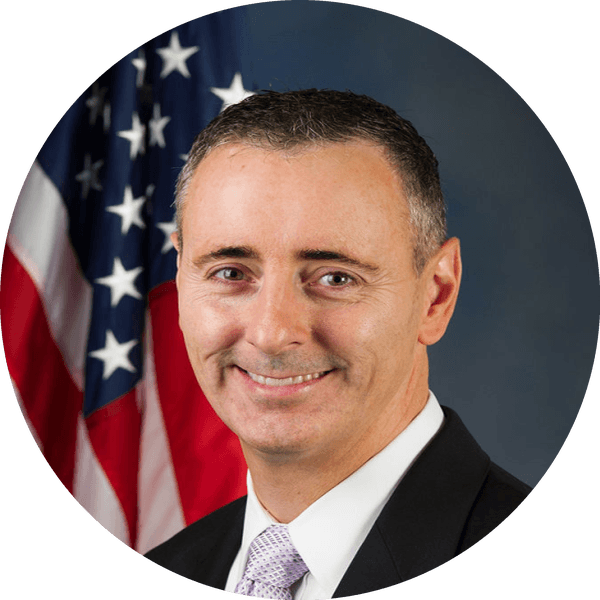
Brian Fitzpatrick
Republican · PA

Michael Lawler
Republican · NY
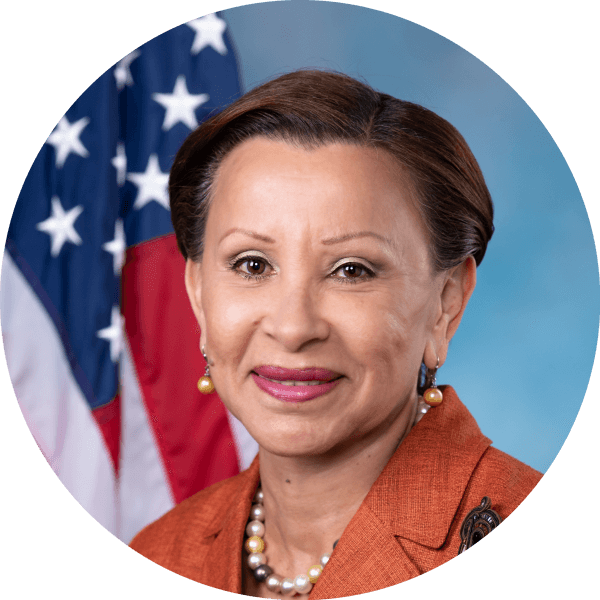
Nydia Velázquez
Democrat · NY
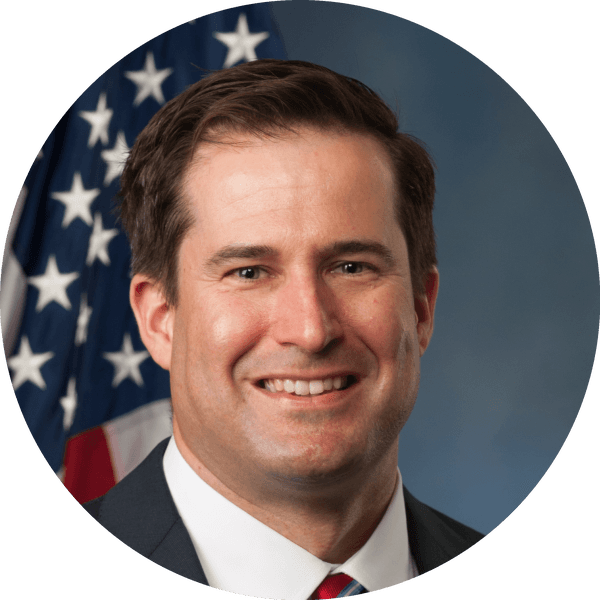
Seth Moulton
Democrat · MA

John Moolenaar
Republican · MI

Laura Gillen
Democrat · NY

Gus Bilirakis
Republican · FL

Eleanor Norton
Democrat · DC

Shri Thanedar
Democrat · MI

Debbie Dingell
Democrat · MI
Committee Sponsors
Energy and Commerce Committee
20 of 54 committee members cosponsored


10 Democrats across this committee haven't cosponsored yet. Mobilize their constituents
H.R. 1189 Quick Facts
- Committee
- Energy and Commerce
- Chamber
- House
- Policy
- Health
- Introduced
- Feb 11, 2025
Referred to the House Committee on Energy and Commerce.
Feb 11, 2025
Official Sources
Official bill page with status, text, sponsors, and actions for the National Plan for Epilepsy Act.
CDC's hub for epilepsy prevalence data, public health surveillance, quality of life, and the Managing Epilepsy Well Network — the kind of federal work the bill wants pulled into one plan.
CMS is named in the bill's advisory council; Medicare and Medicaid cover most of the epilepsy care for adults who can't work and low-income households cited in the findings.
FDA is named on the advisory council; the agency reviews and approves anti-seizure drugs and would feed into the plan's push for new treatments.
VA's Epilepsy Centers of Excellence are an established federal epilepsy program covering veterans — the model of coordinated care the bill wants to scale government-wide.
Section 3 of the bill amends Part B of title III of the Public Health Service Act (42 U.S.C. 243 et seq.) — the federal-state cooperation framework the new epilepsy authority is being grafted onto.
H.R. 1189 Common Questions
What would H.R. 1189 actually do?
It forces HHS to build one National Plan for Epilepsy instead of leaving the federal response spread across NIH, CMS, CDC, FDA, HRSA, the Department of Defense, and the VA. Patients, caregivers, doctors, and researchers get seats on the advisory council shaping it.
How many Americans does the bill say have epilepsy?
The bill's findings cite nearly 3,000,000 adults and 456,000 children, about 3.5 million people in all. The findings also cite that 1 in 26 people will develop a form of epilepsy in their lifetime.
Why does the bill cite $54 billion in costs?
The bill's findings cite more than $54 billion a year in U.S. health care costs associated with epilepsy and seizures. Sponsors use that number to argue the federal response is too fragmented for a problem that size.
Do patients and caregivers really get a say?
Yes. The bill reserves 4 council seats for people living with different types of epilepsy and 2 seats for family caregivers. Quarterly meetings are required, and every one of them must be open to the public.
Does H.R. 1189 give people money or insurance coverage?
No. It doesn't create direct payments, drug coverage, or a new insurance benefit. Its job is to make the federal government coordinate epilepsy policy, data, and reporting on a fixed timeline.
Which federal agencies have to participate?
The bill names NIH, CMS, CDC, FDA, HRSA, the Department of Defense, and the Department of Veterans Affairs. Each gets a seat on the advisory council and has to share epilepsy-related data with HHS.
When would the first progress reports come out?
The advisory council's first report to Congress is due 18 months after enactment, then every 2 years after that. HHS's first national progress assessment is due within 2 years and updated every year.
What happens to the national plan in 2035?
The whole framework sunsets on December 31, 2035, unless Congress extends it. That gives lawmakers about a decade of annual progress reports to judge whether the plan is producing measurable changes before reauthorizing.
Based on H.R. 1189 bill text
H.R. 1189 Bill Text
“To establish a national plan to coordinate research on epilepsy, and for other purposes.”
Source: U.S. Government Publishing Office
Get notified when H.R. 1189 moves
Committee votes, floor action, cosponsor changes — straight to your inbox.
Bill alerts + Legisletter's monthly briefing. Unsubscribe anytime.
Health Bills
9 related bills we're tracking
Nancy Gardner Sewell Medicare Multi-Cancer Early Detection Screening Coverage Act





Reported (Amended) by the Committee on Ways and Means. H. Rept. 119-333, Part I.
Oct 3, 2025
Mikaela Naylon Give Kids a Chance Act


Received in the Senate.
Dec 2, 2025
Improving Seniors’ Timely Access to Care Act of 2025




Ordered to be Reported in the Nature of a Substitute by the Yeas and Nays: 42 - 0.
Jul 15, 2026
CONNECT for Health Act of 2025





Referred to the Committee on Energy and Commerce, and in addition to the Committee on Ways and Means, for a period to be subsequently determined by the Speaker, in each case for consideration of such provisions as fall within the jurisdiction of the committee concerned.
Jun 26, 2025
ASAP Act





Ordered to be Reported in the Nature of a Substitute by the Yeas and Nays: 40 - 0.
Sep 16, 2026
Momnibus Act




Referred to the Subcommittee on Health.
Apr 20, 2026
Ensuring Lasting Smiles Act



Referred to the Committee on Energy and Commerce, and in addition to the Committees on Education and Workforce, and Ways and Means, for a period to be subsequently determined by the Speaker, in each case for consideration of such provisions as fall within the jurisdiction of the committee concerned.
May 8, 2025
Right to Contraception Act


Referred to the House Committee on Energy and Commerce.
Feb 5, 2025
Women’s Health Protection Act of 2025



Referred to the Committee on Energy and Commerce, and in addition to the Committee on the Judiciary, for a period to be subsequently determined by the Speaker, in each case for consideration of such provisions as fall within the jurisdiction of the committee concerned.
Jun 24, 2025
Trending Right Now
Bills gaining momentum across Congress
Fit to Serve Act




Referred to the House Committee on Armed Services.
May 21, 2025
America’s Olympic and Paralympic Games Commemorative Coins Act





Referred to the House Committee on Financial Services.
Jul 14, 2025
Therapeutic Fraud Prevention Act of 2025




Referred to the House Committee on Energy and Commerce.
May 7, 2025
Tracking Health in Congress? Monitor bills, track cosponsor momentum, and launch advocacy campaigns — all from one advocacy platform.