Mr. Speaker, I rise today to share my strong support for H.R. 1262, the Mikaela Naylon Give Kids a Chance Act. I am proud to co-lead this important, bipartisan legislation alongside Representatives Michael McCaul, Dr. Kim Schrier, and Gus Bilirakis. This bill will accelerate pediatric cancer treatments and expand access to lifesaving therapies for children battling rare diseases. It is impossible to fully express the pain and the devastation that a family experiences when their child is diagnosed with cancer.
H.R. 1262: Mikaela Naylon Give Kids a Chance Act
Signed Into LawPublic Law 119-75
Enacted as part of HR7148: Consolidated Appropriations Act, 2026· Feb 3, 2026
Sponsor

Michael McCaul
Republican · TX-10
Kids with cancer shouldn't wait for drugs adults already have
5 min readLast updated March 12, 2026
Why it matters
313 cosponsors — one of the most bipartisan bills in Congress. When a drug company develops a cancer treatment that targets a molecular pathway also found in childhood cancers, current law doesn't always require them to test it in kids. Children end up waiting years for treatments adults already have access to. H.R. 1262 closes that gap by requiring pediatric studies for molecularly targeted cancer drugs and authorizing $25 million per year for additional pediatric research.
The core of the bill is simple: if a drug company develops a cancer drug that targets a molecular pathway also found in childhood cancers, the FDA can require them to study it in kids. That applies even when the drug was originally developed for a completely different type of adult cancer — what matters is the molecular target, not where the cancer is located.
Drug companies must produce clinically meaningful pediatric data, including age-appropriate formulations and dosing, safety, and preliminary efficacy results. New applications submitted more than three years after the bill becomes law must comply. The FDA has to issue implementation guidance within a year.
The bill tightens enforcement too. Companies that miss their required pediatric studies face a formal noncompliance process — a 45-day window to respond, followed by penalties if the FDA determines lack of due diligence. The FDA's annual enforcement report must now include the names of companies penalized, the drugs involved, and the dollar amounts.
Beyond the pediatric cancer core, the bill extends the rare pediatric disease priority review voucher program through September 30, 2029, authorizes $25 million per year through 2028 for the NIH pediatric studies program, and narrows orphan drug exclusivity so it applies to specific approved indications rather than entire rare diseases — making it harder for companies to block competing treatments.
Several unrelated provisions were attached during House passage: organ transplant network modernization, an Abraham Accords FDA office, generic drug transparency reforms, and a $1.2 billion increase to the Medicare Improvement Fund as a budget offset.
Bill Progress
IntroducedFeb 12
Committee
Pass HouseDec 1
Pass Senate
Signed
Law
Latest Action · Dec 2, 2025
1/4
Passed the House, received in Senate
Visual Summary
H.R. 1262 at a Glance
<div style="max-width:100%;">
  <img src="https://legisletter.org/images/bill-infographics/hr1262-editorial-20251204-094049.png" alt="HR1262 Visual Summary - Mikaela Naylon Give Kids a Chance Act" style="max-width:100%;height:auto;display:block;" />
  <p style="margin:8px 0 0;font-size:14px;color:#555;text-align:center;">
    <a href="https://legisletter.org/bill/hr1262-mikaela-naylon-give-kids-chance-act" target="_blank" rel="noopener noreferrer" style="color:inherit;text-decoration:underline;">HR1262 Visual Summary – Mikaela Naylon Give Kids a Chance Act</a>
    <span> via </span>
    <a href="https://legisletter.org" target="_blank" rel="noopener noreferrer" style="color:inherit;text-decoration:none;font-weight:500;">legisletter.org</a>
  </p>
</div>H.R. 1262 Bill Summary
What H.R. 1262 actually does.
1
Drug companies must test cancer drugs in kids
If a new cancer drug targets a molecular pathway that the FDA determines is substantially relevant to a pediatric cancer, the company must conduct a pediatric study as part of the approval process. This includes combination therapies where the company owns both drugs.
2
What matters is the molecular target, not the cancer type
Current law ties pediatric study requirements to the type of cancer. This bill shifts the trigger to the molecular target — so a drug developed for adult lung cancer could be required to study its effects on a childhood leukemia if both are driven by the same molecular pathway.
3
Real penalties for companies that skip pediatric studies
Companies receive a formal noncompliance letter and have 45 days to respond. If the FDA determines they showed a lack of due diligence, enforcement actions follow. The FDA must publicly report every penalty, settlement, and payment — including the company name and dollar amount.
4
Priority review vouchers extended through 2029
The rare pediatric disease priority review voucher program — which gives companies a faster FDA review for any drug in exchange for developing a rare pediatric treatment — continues through September 30, 2029. These vouchers have been worth hundreds of millions of dollars on the secondary market.
5
$25 million per year for pediatric cancer research
The NIH's Program for Pediatric Studies of Drugs receives $25 million annually for fiscal years 2026 through 2028, funding studies that drug companies aren't required to conduct on their own.
6
Orphan drug exclusivity applies to specific uses, not entire diseases
Current law grants seven years of market exclusivity for the entire rare disease. This bill narrows that to the specific approved indication — so a second company can win approval for a different use within the same rare disease without waiting out the exclusivity period.
Who benefits from H.R. 1262?
Children with cancer and their families
The core promise: when a new cancer drug targets a molecular pathway found in pediatric cancers, companies can no longer treat the pediatric study as optional. Kids get access to molecularly targeted treatments sooner instead of relying on decades-old chemotherapy regimens while adults receive cutting-edge drugs.
Pediatric oncologists
More required pediatric studies means more clinical data on how targeted drugs behave in children — dosing, safety, efficacy. That data translates directly into better-informed treatment decisions for young patients.
Companies developing rare pediatric disease treatments
The priority review voucher extension through 2029 keeps one of pharma's most valuable incentives alive. These vouchers — which speed up FDA review for any drug — have sold for over $100 million on the secondary market, offsetting the cost of developing treatments for small patient populations.
Generic drug manufacturers competing with orphan drugs
Narrowing orphan drug exclusivity from the entire rare disease to the specific approved indication opens the door for competing treatments. A second company can now pursue FDA approval for a different use within the same disease without waiting seven years.
Who is affected by H.R. 1262?
Pharma and biotech companies with molecularly targeted cancer drugs
Any company submitting a new application for a cancer drug that hits a molecular target relevant to pediatric cancers must plan, fund, and complete a pediatric study. That changes development timelines and budgets for new oncology drugs.
The FDA
More pediatric study plans to review, a new enforcement process for noncompliance, public reporting requirements for penalties, and implementation guidance due within 12 months of enactment.
Companies holding orphan drug exclusivity
The narrower exclusivity standard means competitors can potentially enter the market sooner for different indications within the same rare disease. Companies that relied on broad exclusivity to protect their position face new competition.
Cost & Funding
Authorization
$25 million per year for fiscal years 2026-2028 for NIH pediatric studies
- The bill authorizes $75 million total ($25 million/year for three years) for the NIH Program for Pediatric Studies of Drugs.
- The Medicare Improvement Fund increases from $1.403 billion to $2.622 billion — a $1.219 billion increase that serves as the budget offset.
- Drug companies bear the direct cost of required pediatric cancer trials. The bill doesn't estimate what those studies cost, but pediatric oncology trials typically run into the tens of millions of dollars per study.
- The GAO is required to study the effectiveness of the voucher program and the pediatric study requirements — reports due within 5 and 10 years respectively.
On the Record
What Congress Is Saying
12 legislators have weighed in on H.R. 1262 — 4 Democrats, 8 Republicans.
Mr. Speaker, I thank my friend, the gentleman from Georgia, for recognizing me. Mr. Speaker, I rise in strong support as both a member of the Health Subcommittee and a proud cosponsor of this bill, H.R. 1262, the Give Kids a Chance Act. Mr. Speaker, we live in the most technologically advanced society in the history of human civilization, and modern medicine has recently come up with amazing solutions and cures for many of the physical ailments that have afflicted humanity. Unfortunately, Mr. Speaker, we have many rare pediatric diseases for which there is no cure.
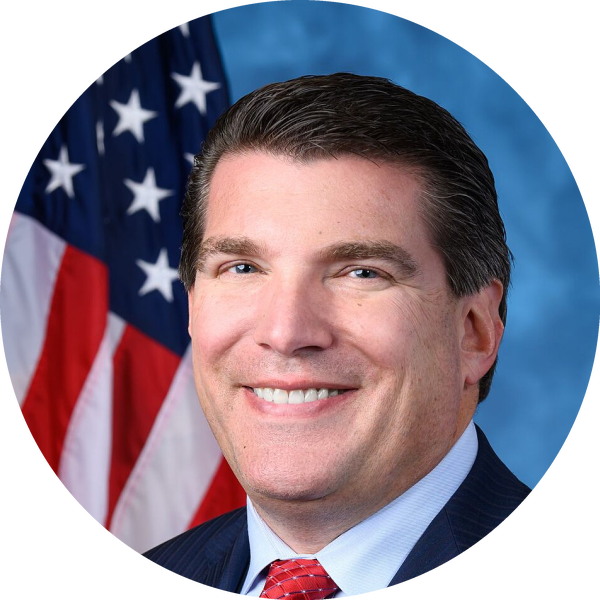
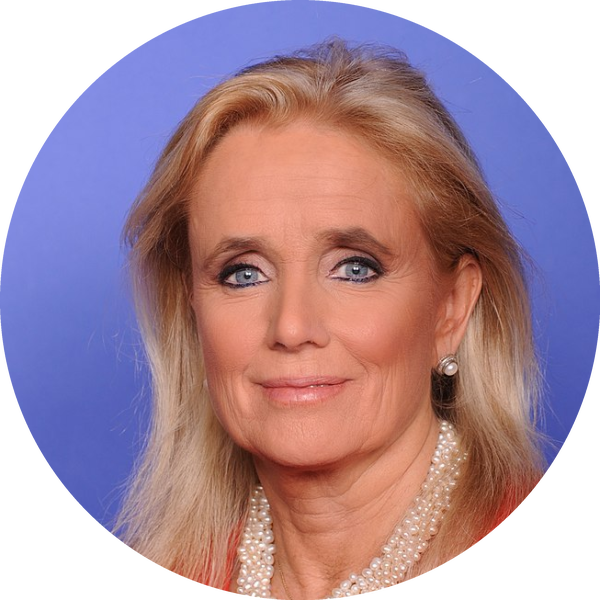
H.R. 1262 also appeared in 3 more House floor references and 38 routine cosponsor filings.
HR1262 Legislative Journey
Sent to Senate
Dec 2, 2025
Received in the Senate.
House: Vote: 4929-4932
Dec 1, 2025
On motion to suspend the rules and pass the bill, as amended Agreed to by voice vote. (text: CR H4929-4932)
House: Committee Action
Oct 31, 2025
Reported (Amended) by the Committee on Energy and Commerce. H. Rept. 119-352.
House: Vote: 47-0
Sep 17, 2025
Ordered to be Reported in the Nature of a Substitute (Amended) by the Yeas and Nays: 47 - 0.
House: Committee Action
Feb 12, 2025
Referred to the House Committee on Energy and Commerce.
About the Sponsor
Michael McCaul
Republican, Texas's 10th congressional district · 21 years in Congress
Committees: Homeland Security, Foreign Affairs
View full profile →
Cosponsors at time of passage (313)
This bill has 313 cosponsors: 180 Democrats, 133 Republicans, reflecting bipartisan support. Cosponsors represent 47 states: Alabama, Arkansas, Arizona, and 44 more.
180Democrats133Republicans·47 statesBipartisan

Gus Bilirakis
Republican · FL

Debbie Dingell
Democrat · MI
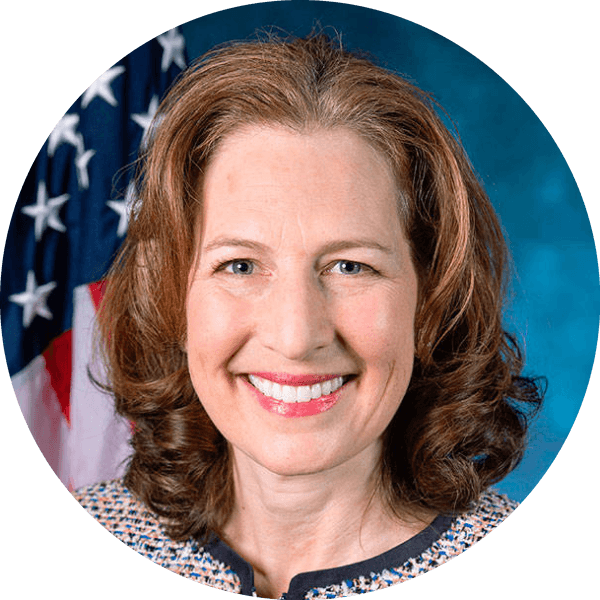
Kim Schrier
Democrat · WA

Diana Harshbarger
Republican · TN

Doris Matsui
Democrat · CA
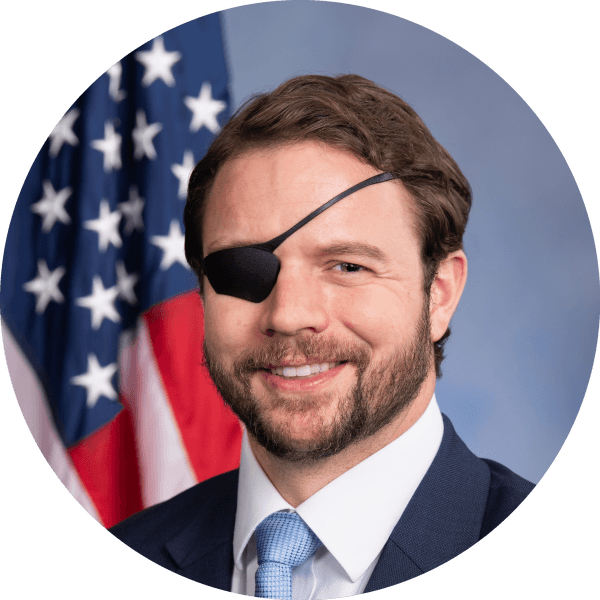
Dan Crenshaw
Republican · TX

Kathy Castor
Democrat · FL
Mike Kelly
Republican · PA
Lori Trahan
Democrat · MA
Randy Weber
Republican · TX

Robert Wittman
Republican · VA

Rick Allen
Republican · GA
Cosponsor Coverage Map
Committee Sponsors
Energy and Commerce Committee
24D30R
|40 signed14 others40 of 54 committee members cosponsored at the time


What laws does H.R. 1262 change?
1 changes
Sections Amended
Section 505 of such Act (21 U.S.C. 355) or licensed under section 351 of the Public Health Service Act (42 U.S.C. 262). SEC. 7. PROGRAM FOR PEDIATRIC STUDIES OF DRUGS. Section 409I(d)(1) of the Public Health Service Act (42 U.S.C. 284m(d)(1))
striking ``section,'' and all that follows through the period at the end and inserting ``section, $25,000,000 for each of fiscal years 2026 through 2028
H.R. 1262 Quick Facts
Cosponsors
313
- Committee
- Energy and Commerce
- Chamber
- House
- Policy
- Health
- Introduced
- Feb 12, 2025
Passed the House, received in Senate
Dec 2, 2025
Official Sources
About Legisletter
Legisletter is the advocacy platform that tracks every bill from introduction to Public Law — and connects the constituents affected by a bill to the legislators who vote on it.
Who is lobbying on H.R. 1262?
2 organizations lobbying on this bill
Lobbying on the Give Kids a Chance Act is being driven most visibly by Dana-Farber Cancer Institute, the Cystic Fibrosis Foundation, and drugmakers like Acadia Pharmaceuticals, a lineup that shows both pediatric-disease advocates and branded pharma pressing hard on the bill. The broader campaign is dominated by pharmaceutical companies and health advocacy groups, with filings clustered around Medicare, Medicaid, and health-policy vehicles—signaling a push to shape how pediatric drug development and access are structured rather than a narrow, standalone children’s health effort.
Total filings: 2
ASSOCIATION OF ACCESSIBLE MEDICINES | 1 |
NEURELIS, INC. | 1 |
Showing 1-2 of 2 organizations
H.R. 1262 Common Questions
What does H.R. 1262 actually require drug companies to do?
If a company submits a new cancer drug that targets a molecular pathway the FDA finds relevant to a pediatric cancer, the company must conduct a pediatric study — including age-appropriate dosing, safety, and preliminary efficacy data for children.
Why do kids with cancer wait longer for new treatments?
Current law doesn't always require companies to test new cancer drugs in children. A drug can be approved for adults and sit on the market for years before anyone studies whether it works in kids. This bill ties the requirement to the molecular target, not the cancer type.
What happens if a drug company doesn't complete the required pediatric study?
The FDA sends a formal noncompliance letter. The company has 45 days to respond. If the FDA determines the company showed a lack of due diligence, it can pursue enforcement actions including financial penalties. Penalty amounts, company names, and drug names are made public.
What are rare pediatric disease priority review vouchers?
An incentive for companies that develop treatments for rare childhood diseases. The voucher lets the company get a faster FDA review on any drug — not just the pediatric one. These vouchers have sold for over $100 million. H.R. 1262 extends the program through September 30, 2029.
How does H.R. 1262 change orphan drug exclusivity?
Current law gives seven years of market exclusivity for an entire rare disease. This bill narrows it to the specific approved indication — so a competing company can pursue approval for a different use within the same rare disease without waiting out the exclusivity period.
How much funding does this bill provide for pediatric cancer research?
$25 million per year for fiscal years 2026 through 2028 — $75 million total — for the NIH Program for Pediatric Studies of Drugs. This funds studies that drug companies aren't required to conduct on their own.
When do the new pediatric study requirements take effect?
Three years after the bill becomes law. Any new drug or biologic application submitted after that date must comply. The FDA also has 12 months to issue draft guidance on implementation.
Based on H.R. 1262 bill text
H.R. 1262 Bill Text
“To amend the Federal Food, Drug, and Cosmetic Act with respect to molecularly targeted pediatric cancer investigations, and for other purposes.”
Source: U.S. Government Publishing Office
Health Bills
9 related bills we're tracking
H.R. 842
Nancy Gardner Sewell Medicare Multi-Cancer Early Detection Screening Coverage Act
Jodey ArringtonR-TX



+334
338 cosponsors
Reported (Amended) by the Committee on Ways and Means. H. Rept. 119-333, Part I.
Oct 3, 2025
HouseHealth
H.R. 3514
Improving Seniors’ Timely Access to Care Act of 2025
Mike KellyR-PA
+304
308 cosponsors
+3 this monthOrdered to be Reported in the Nature of a Substitute by the Yeas and Nays: 42 - 0.
Jul 15, 2026
HouseHealth
H.R. 4206
CONNECT for Health Act of 2025
Mike ThompsonD-CA



+244
248 cosponsors
+2 this monthReferred to the Committee on Energy and Commerce, and in addition to the Committee on Ways and Means, for a period to be subsequently determined by the Speaker, in each case for consideration of such provisions as fall within the jurisdiction of the committee concerned.
Jun 26, 2025
HouseHealth
H.R. 6130Surging+12
ASAP Act

Vern BuchananR-FL
+227
231 cosponsors
+12 this monthOrdered to be Reported in the Nature of a Substitute by the Yeas and Nays: 40 - 0.
Sep 16, 2026
HouseHealth
H.R. 3277Surging+10
Ensuring Lasting Smiles Act
Neal DunnR-FL


+210
214 cosponsors
+10 this monthReferred to the Committee on Energy and Commerce, and in addition to the Committees on Education and Workforce, and Ways and Means, for a period to be subsequently determined by the Speaker, in each case for consideration of such provisions as fall within the jurisdiction of the committee concerned.
May 8, 2025
HouseHealth
H.R. 7973
Momnibus Act

Lauren UnderwoodD-IL


+209
213 cosponsors
Referred to the Subcommittee on Health.
Apr 20, 2026
HouseHealth
H.R. 999
Right to Contraception Act
Lizzie FletcherD-TX
+206
210 cosponsors
Referred to the House Committee on Energy and Commerce.
Feb 5, 2025
HouseHealth
H.R. 12
Women’s Health Protection Act of 2025
Judy ChuD-CA


+205
209 cosponsors
Referred to the Committee on Energy and Commerce, and in addition to the Committee on the Judiciary, for a period to be subsequently determined by the Speaker, in each case for consideration of such provisions as fall within the jurisdiction of the committee concerned.
Jun 24, 2025
HouseHealth
H.R. 4611
EACH Act of 2025
Ayanna PressleyD-MA


+197
201 cosponsors
Referred to the Subcommittee on Health.
Dec 19, 2025
HouseHealth
Trending Right Now
Bills gaining momentum across Congress
H.R. 1502Surging+21
North Platte Canteen Congressional Gold Medal Act

Adrian SmithR-NE

+255
259 cosponsors
+21 this monthReferred to the House Committee on Financial Services.
Feb 21, 2025
HouseArmed Forces and National Security
H.R. 3569Surging+13
Fit to Serve Act
Adam SmithD-WA

+185
189 cosponsors
+13 this monthReferred to the House Committee on Armed Services.
May 21, 2025
HouseArmed Forces and National Security
H.R. 349Gaining+9
Goldie’s Act
Nicole MalliotakisR-NY


+105
109 cosponsors
+9 this monthReferred to the Subcommittee on Livestock, Dairy, and Poultry.
Feb 14, 2025
HouseAnimals
Tracking Health in Congress? Monitor bills, track cosponsor momentum, and launch advocacy campaigns — all from one advocacy platform.