Mr. Speaker, I missed two votes in the vote series on April 14, 2026. Had I been present, I would have voted: YEA on Roll Call No. 110, passage of H.R. 7613, the ALERT Act, and YEA on Roll Call No. 109, passage of H.R. 1011, the Emergency Conservation Program Improvement Act.
H.R. 7613: ALERT Act
Introduced Feb 20, 202687 cosponsors
Sponsor

Sam Graves
Republican · MO-6
67 people died because 75 feet of air was supposed to be enough
8 min readLast updated March 12, 2026
Why it matters
On January 29, 2025, an Army Black Hawk helicopter and a regional jet collided over the Potomac River, killing everyone aboard both aircraft. The NTSB found that the FAA had routed helicopters through airspace with as little as 75 feet of vertical separation from landing jets, ignored 13 years of monthly close calls, and relied on pilots to see and dodge each other in the dark. This bill is Congress's answer. Whether it's a sufficient one is the open question.
The ALERT Act runs 23 sections deep across two titles and touches nearly every layer of the airspace safety stack, from the cockpit instruments to the Pentagon's flight rules. It was introduced by Transportation and Infrastructure Committee Chairman Sam Graves (R-MO) and Ranking Member Rick Larsen (D-WA), alongside Armed Services Committee Chairman Mike Rogers (R-AL) and Ranking Member Adam Smith (D-WA), with 84 bipartisan cosponsors signing on within weeks.
The bill's collision-avoidance provisions work on parallel tracks. Section 101 gives the FAA 180 days to evaluate whether ACAS-Xa alert inhibit altitudes can be lowered, so the system warns pilots of threats closer to the ground rather than going silent during the exact phase of flight where the DCA collision happened. Section 102 establishes a rulemaking committee within 45 days to set deadlines for upgrading all commercial aircraft from the legacy TCAS II to ACAS-Xa, including new aural alert standards that call out clock position, relative altitude, range, and vertical tendency. Section 103 does the same for helicopters operating in Class B airspace, requiring ACAS-Xr collision avoidance systems for rotorcraft. And Section 104 launches a negotiated rulemaking to require all turbine-powered aircraft and all civil aircraft in Class B and C airspace to carry ADS-B In collision mitigation technology by December 31, 2031.
The Washington-specific provisions are unmistakable. Multiple sections target Reagan National Airport by name: the FAA must reassess DCA's arrival rates and switch to 30-minute IFR allocation periods (Section 108), implement time-based flow management at Potomac TRACON within a year (Section 109), evaluate whether all aircraft should share a single radio frequency when helicopter and local control positions are combined at the DCA tower (Section 111), and revise all helicopter routes in the DCA vicinity within 90 days to ensure they are physically deconflicted from fixed-wing approach paths at all times (Section 116). The bill also mandates vertical separation minimums on helicopter route charts near airports (Section 117) and requires annual helicopter route reviews with congressional reporting and in-person briefings if the FAA misses the deadline (Section 115).
The air traffic control reforms go deeper than equipment. Section 106 establishes a controller training working group focused on threat and error management. Section 107 contracts with a federally funded research center to build a real-time safety risk assessment tool for controllers. Section 113 creates a task force to redesign the conflict alert system so it differentiates alerts by severity rather than treating every warning the same. Section 114 fixes post-accident drug and alcohol testing so supervisors can order tests immediately without waiting for an investigation. And Section 121 orders the DOT Inspector General to audit the Air Traffic Organization's entire safety culture, specifically examining why the FAA's own data systems failed to identify and mitigate the risk of midair collisions near DCA before January 29, 2025.
Title II brings the Defense Department under the same framework. Military manned rotary-wing aircraft in the National Capital Region must transmit ADS-B Out within one year (Section 201), and the bill supersedes the existing DOD-FAA memorandum of agreement with a new one that pulls military operations into a more formal national airspace safety structure.
The bill has drawn pointed criticism. The NTSB stated it cannot support the ALERT Act because it falls short of fully implementing the Board's 50 safety recommendations. The main objection: the ALERT Act does not mandate integrated ADS-B In, instead allowing portable devices like electronic flight bags as an alternative means of compliance. The families of Flight 5342's victims have sided with the NTSB, calling for the Senate-passed ROTOR Act instead. The Air Line Pilots Association also opposes the bill on similar grounds. The core tension is between the House bill's broader scope and more flexible compliance timelines and the Senate bill's narrower but stricter technology mandates.
Bill Progress
IntroducedFeb 20
Committee
Pass HouseApr 14
Pass Senate
Signed
Law
Latest Action · Apr 15, 2026
1/4
Passed the House, received in Senate
H.R. 7613 Bill Summary
What H.R. 7613 actually does.
1
ADS-B In collision mitigation technology by December 31, 2031
All turbine-powered aircraft and civil aircraft operating in Class B and C airspace must carry equipment that receives ADS-B transmissions and provides traffic awareness and advisories. The FAA has two years to issue a final rule through negotiated rulemaking. Portable ADS-B In receivers and electronic flight bags are allowed as alternative compliance, which is the provision the NTSB objects to most.
2
ACAS-Xa upgrades for commercial aircraft, ACAS-Xr for helicopters
Two separate rulemaking tracks. The FAA must set deadlines for retrofitting all commercial aircraft with the next-generation ACAS-Xa system, including enhanced aural alerts with clock position, altitude, range, and vertical tendency. Separately, all civil rotorcraft in Class B airspace must be equipped with ACAS-Xr once standards are published. Both systems replace the 1980s-era TCAS II.
3
Lower collision-alert inhibit altitudes
The FAA has 180 days to evaluate whether ACAS-Xa can alert pilots to threats closer to the ground. The current system suppresses warnings during takeoff and landing, the exact moments when the DCA collision happened. If technically feasible, this change would extend collision avoidance protection through more of the flight envelope.
4
Helicopter route overhaul near DCA and all airports
Within 90 days, the FAA must evaluate and revise every charted helicopter route near Reagan National to ensure physical deconfliction from fixed-wing approach paths at all times. Vertical separation minimums must be added to all helicopter route charts near airports. Annual reviews become mandatory, with the FAA's chief air traffic officer required to brief Congress in person if the agency misses a deadline.
5
Air traffic control system reforms
A package of provisions targeting controller workload and awareness: a new real-time safety risk assessment tool built by a federally funded research center, redesigned conflict alerts that differentiate by severity, mandatory documentation when controller positions are combined, training overhaul focused on threat and error management, and immediate post-accident drug and alcohol testing authority for on-site supervisors.
6
Military aircraft brought under civilian airspace safety rules
DOD manned rotary-wing aircraft in the National Capital Region must transmit ADS-B Out within one year. The existing DOD-FAA memorandum of agreement from May 2024 is superseded by a new agreement that formalizes military compliance with national airspace safety standards.
Who benefits from H.R. 7613?
Airline passengers
Every commercial flight into a busy airport would operate with upgraded collision avoidance systems, better-trained controllers, and airspace where helicopters are physically separated from jet approach paths. The 15,214 close proximity events logged near DCA between 2021 and 2024 illustrate the scale of risk this bill targets.
Air traffic controllers
Controllers at high-complexity facilities get a real-time safety risk assessment tool, redesigned conflict alerts that prioritize by severity instead of treating every warning identically, and formal rules around position combinations. The bill directly addresses the combined helicopter-and-local-control workload that degraded performance in the DCA crash.
Pilots and flight crews
Commercial pilots gain ACAS-Xa with directional traffic symbols and aural alerts that include clock position and relative altitude. Helicopter pilots in Class B airspace get ACAS-Xr. Both replace the aging TCAS II, which was designed in the 1980s and has known blind spots near the ground.
Families of crash victims and future passengers
The DOT Inspector General audit of Air Traffic Organization safety culture and the new close proximity encounter database create public accountability mechanisms. The annual helicopter route review with mandatory congressional briefings ensures the kind of 13-year pattern of ignored near-misses that preceded the DCA crash cannot happen in silence again.
Who is affected by H.R. 7613?
Commercial airlines and aircraft operators
Every airline operating turbine-powered aircraft must retrofit with ACAS-Xa and equip with ADS-B In collision mitigation technology by December 31, 2031. The compliance timeline varies by aircraft type and maintenance cycle, but the bill explicitly prohibits egregiously disproportionate implementation timelines between operators.
Helicopter operators near airports
Civil rotorcraft in Class B airspace face new ACAS-Xr requirements, revised route structures near airports, mandatory vertical separation floors and ceilings on charts, and annual route reviews. Operators near DCA face the tightest restrictions, with routes required to be physically deconflicted from jet approach paths.
The Department of Defense
Military helicopter operations in the National Capital Region must comply with ADS-B Out within one year and operate under a new memorandum of agreement with the FAA. The existing 2024 MOA is superseded. This pulls Army, Coast Guard, and other DOD rotary-wing operations into formal civilian airspace safety standards.
Avionics manufacturers and the aerospace supply chain
Demand for ACAS-Xa, ACAS-Xr, and ADS-B In equipment would surge. The bill requires the FAA to consider supply chain capacity and commercial availability of components when setting deadlines, but the 2031 hard stop creates a clear market signal.
On the Record
What Congress Is Saying
16 legislators have weighed in on H.R. 7613 — 9 Democrats, 7 Republicans.
Madam Speaker, I rise today in support of H.R. 7613, the Airspace Location and Enhanced Risk Transparency Act, or the ALERT Act, as amended, bipartisan legislation introduced by T&I Committee Chair Sam Graves, House Armed Services Committee Chair Mike Rogers, Ranking Member Adam Smith of the Armed Services Committee, and myself, as the ranking member of the T&I Committee. This bill responds to all the probable causes of the tragic midair collision near Washington National Airport, DCA, on January 29, 2025.
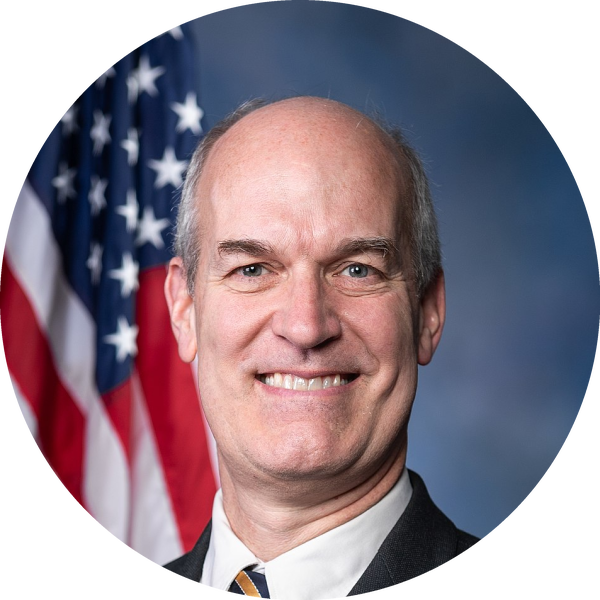

Madam Speaker, I rise today in support of H.R. 7613, the ALERT Act. I thank the committees of jurisdiction for their tireless work on this bill and for adopting significant feedback from the stakeholders, including the families of Flight 5342 and the National Transportation Safety Board. I extend a personal thank-you to Ranking Member Larsen for his collaboration and support. He and his team have been wonderful to work with through a difficult process.

Madam Speaker, I yield myself the balance of my time. Madam Speaker, we must do everything that we can to prevent another midair collision and to improve aviation safety. That is why I support H.R. 7613, as amended, and urge my colleagues to do the same. Madam Speaker, I yield back the balance of my time.
H.R. 7613 also appeared in 1 more House floor reference and 13 routine cosponsor filings.
HR7613 Legislative Journey
Committee Action
Apr 15, 2026
Received in the Senate and Read twice and referred to the Committee on Commerce, Science, and Transportation.
House: Vote: 396-10
Apr 14, 2026
On motion to suspend the rules and pass the bill, as amended Agreed to by the Yeas and Nays: (2/3 required): 396 - 10 (Roll no. 110). (text: CR H2856-2870)
House: Committee Action
Apr 9, 2026
Reported (Amended) by the Committee on Transportation and Infrastructure. H. Rept. 119-608, Part II.
House: Vote: 53-0
Mar 26, 2026
Ordered to be Reported (Amended) by the Yeas and Nays: 53 - 0.
House: Committee Action
Feb 21, 2026
Referred to the Subcommittee on Aviation.
House: Committee Action
Feb 20, 2026
Referred to the Committee on Transportation and Infrastructure, and in addition to the Committee on Armed Services, for a period to be subsequently determined by the Speaker, in each case for consideration of such provisions as fall within the jurisdiction of the committee concerned.
About the Sponsor
Sam Graves
Republican, Missouri's 6th congressional district · 25 years in Congress
Committees: Transportation and Infrastructure, Armed Services
View full profile →
Cosponsors (87)
No new cosponsors in 195 days — momentum stalled
This bill has 87 cosponsors: 37 Democrats, 50 Republicans, reflecting bipartisan support. Cosponsors represent 32 states: Alaska, Alabama, Arkansas, and 29 more.
37Democrats50Republicans·32 statesBipartisan

Rick Larsen
Democrat · WA

Mike Rogers
Republican · AL

Adam Smith
Democrat · WA

Troy Nehls
Republican · TX

André Carson
Democrat · IN

Eric Crawford
Republican · AR

David Rouzer
Republican · NC

Tracey Mann
Republican · KS

Mike Ezell
Republican · MS

Vince Fong
Republican · CA

Jeff Hurd
Republican · CO

Robert Wittman
Republican · VA
Committee Sponsors
Commerce, Science, and Transportation Committee
13D15R
|0 signed28 not yet0 of 28 committee members cosponsored
No committee members have cosponsored this bill
Transportation and Infrastructure Committee
31D35R1I
|35 signed32 not yet35 of 67 committee members cosponsored


Armed Services Committee
27D30R
|27 signed30 not yet27 of 57 committee members cosponsored


44 Republicans across these committees haven't cosponsored yet. Mobilize their constituents
H.R. 7613 Quick Facts
Cosponsors
87
- Committee
- Commerce, Science, and Transportation
- Chamber
- House
- Policy
- Transportation and Public Works
- Introduced
- Feb 20, 2026
Passed the House, received in Senate
Apr 15, 2026
Official Sources
H.R. 7613 on Congress.gov
Full bill text, cosponsors, and legislative status for the ALERT Act
NTSB Investigation — DCA Midair Collision
NTSB investigation page for the January 2025 PSA Airlines/Army helicopter collision that prompted this bill — includes probable cause, 50 safety recommendations, and hearing transcripts
NTSB Accident Report AIR-25-01
Full NTSB accident report on the DCA midair collision — the investigative findings this bill responds to
FAA Airborne Collision Avoidance System (ACAS)
FAA technical page covering TCAS II and ACAS-Xa variants — the collision avoidance systems the bill requires upgrading
FAA Automatic Dependent Surveillance-Broadcast (ADS-B)
FAA overview of ADS-B technology, equipment requirements, and coverage maps — the surveillance system the bill mandates for military helicopters and airport-area aircraft
FAA Permanent DCA Helicopter Restrictions
FAA interim final rule banning helicopter operations near DCA when Runways 15/33 are active — the administrative action this bill codifies into law
House Transportation and Infrastructure Committee
The committee where H.R. 7613 is referred — chaired by sponsor Rep. Sam Graves (R-MO)
H.R. 7613 Common Questions
What caused the crash that led to the ALERT Act?
On January 29, 2025, a PSA Airlines regional jet on final approach to Reagan National Airport and a U.S. Army Black Hawk helicopter collided over the Potomac River, killing all 67 people aboard both aircraft. It was the deadliest American aviation disaster since 2001. The NTSB found that the FAA had placed a helicopter route with as little as 75 feet of vertical separation from the jet approach path, ignored a 13-year pattern of monthly close calls at that location, and relied on pilots seeing each other at night to avoid a collision. The ALERT Act is the House's legislative response to the NTSB's 50 safety recommendations.
Does the ALERT Act require ADS-B In for aircraft near busy airports?
Yes, but with a major caveat. The bill requires all turbine-powered aircraft and civil aircraft in Class B and C airspace to carry collision mitigation technology that receives ADS-B transmissions by December 31, 2031. However, it allows alternative compliance through portable devices like electronic flight bags and tablet-mounted ADS-B In receivers, rather than mandating integrated cockpit equipment. That distinction is the single biggest reason the NTSB says it cannot support the bill.
Will military helicopters around Washington DC have to use ADS-B Out?
Yes. Under the ALERT Act, manned rotary-wing aircraft in the National Capital Region must transmit ADS-B Out within one year of enactment or by the date set in the new DOD-FAA memorandum of agreement, whichever applies. Sensitive missions can receive waivers. The Army Black Hawk involved in the DCA crash was not transmitting ADS-B, which meant the regional jet's crew had no electronic awareness of the helicopter's position.
How does the ALERT Act differ from the ROTOR Act?
The ALERT Act (House) is broader, covering 23 sections across collision avoidance technology, helicopter routes, air traffic control reforms, and Defense Department operations. But it allows portable ADS-B In devices as alternative compliance. The ROTOR Act (Senate) is narrower but stricter: it mandates integrated ADS-B In equipment hardwired into cockpits, which the NTSB, crash families, and pilot unions all prefer. The House rejected the ROTOR Act in a February 2026 vote after the Pentagon withdrew support. Whether the two bills can be reconciled in conference is the central legislative question.
Does the NTSB support the ALERT Act?
No. The NTSB issued a formal letter stating it cannot support the ALERT Act because the bill falls short of fully implementing the Board's 50 safety recommendations from the DCA crash investigation. The primary objection is that the bill allows portable ADS-B In devices as an alternative to integrated cockpit equipment. NTSB Chair Jennifer Homendy stated the bill is 'not fully responsive to the NTSB's recommendations.' The Air Line Pilots Association and the families of the 67 crash victims also oppose the bill on similar grounds.
Can the FAA lower collision warning alert altitudes near the ground?
The ALERT Act requires the FAA to evaluate within 180 days whether ACAS-Xa traffic and resolution advisory inhibit altitudes can be decreased during takeoff, approach, and landing. The current system suppresses collision warnings below certain altitudes to avoid false alarms, but that silence is exactly what happened during the DCA crash. If the evaluation finds it feasible, the FAA would extend collision avoidance protection through more of the flight envelope, closing a gap that has existed since TCAS was first deployed.
Which helicopters would have to get ACAS-Xr under the ALERT Act?
All civil rotorcraft operating in Class B airspace. The bill requires the FAA to finalize minimum operational performance standards for ACAS-Xr by December 31, 2026, then establish a rulemaking committee to set retrofit deadlines. The new system would provide helicopter pilots with aural alerts that include clock position, relative altitude, range, and vertical tendency, plus directional traffic symbols. This directly addresses the NTSB finding that the Army helicopter crew in the DCA crash had no collision avoidance system and lost visual separation with the approaching jet.
What traffic display details would ACAS-Xa upgrades have to show?
Under the ALERT Act, updated ACAS-Xa minimum operational performance standards must include traffic advisory aural alerts that call out clock position, relative altitude, range, and vertical tendency. The system must also integrate directional traffic symbols on the cockpit display. These are significant upgrades over the current TCAS II, which provides more limited directional information and has been criticized for not giving pilots enough situational awareness during high-workload phases of flight.
Does the bill force the FAA to change helicopter routes near DCA?
Yes, and fast. Within 90 days, the FAA must evaluate every charted helicopter route near Reagan National Airport and immediately revise any route that is not physically deconflicted from fixed-wing approach paths at all times. Vertical separation minimums must be added to all helicopter route chart segments near airports. The bill also mandates annual reviews of every helicopter route chart in the country, with the FAA's Chief Operating Officer required to brief Congress in person within four weeks if the agency misses the review deadline.
How does the ALERT Act address air traffic controller workload?
Multiple provisions. The bill establishes a controller training working group on threat and error management (Section 106), contracts a federally funded research center to build a real-time safety risk assessment tool (Section 107), creates a task force to redesign the conflict alert system so warnings differentiate by severity (Section 113), requires documentation every time controller positions are combined (Section 122), and orders the DOT Inspector General to audit the entire Air Traffic Organization safety culture (Section 121). The NTSB found that the DCA tower controller was handling combined helicopter and local control positions, and the resulting workload degraded situational awareness before the crash.
How long can DCA IFR operating periods be under the ALERT Act?
No more than 30 minutes. Section 108 requires the FAA to assess Reagan National's arrival rate within 30 days, then initiate rulemaking to update the airport's slot rules so instrument flight rules operations are prescribed in periods not greater than 30 minutes. The goal is to prevent the airport from exceeding safe capacity during busy periods when mixed helicopter and fixed-wing traffic converge.
Does the ALERT Act require time-based flow management at Potomac TRACON?
Yes. The FAA must implement time-based flow management at Potomac Consolidated Terminal Radar Approach Control and its associated towers within one year of enactment. This replaces distance-based spacing with time-based spacing, which can reduce controller workload and improve traffic sequencing during high-volume periods, particularly in the complex airspace around DCA, Dulles, and BWI.
Can air traffic supervisors order post-accident drug or alcohol testing without waiting for investigators?
Yes, and the bill makes this explicit. Section 114 requires the FAA to revise procedures so that an on-site supervisor makes the testing determination based on their own assessment, without needing to wait for an investigation or approval from elsewhere. The NTSB found failures in the FAA's post-accident testing procedures after the DCA crash. The bill also sets training standards and requires annual facility-level reviews to confirm every air traffic control facility can complete alcohol testing within 2 hours and drug testing within 4 hours.
Based on H.R. 7613 bill text
H.R. 7613 Bill Text
“To require certain aircraft to be equipped with collision mitigation technology, to improve helicopter route safety and separation around airports, to update air traffic control processes and procedures, to address national airspace system safety in Department of Defense activities, and for other purposes.”
Source: U.S. Government Publishing Office
Bill Alerts
Get notified when H.R. 7613 moves
Committee votes, floor action, cosponsor changes — straight to your inbox.
Bill alerts + Legisletter's monthly briefing. Unsubscribe anytime.
Transportation and Public Works Bills
9 related bills we're tracking
H.R. 3449
Stronger Communities through Better Transit Act

Henry JohnsonD-GA




+146
150 cosponsors
+3 this monthReferred to the Subcommittee on Highways and Transit.
May 16, 2025
HouseTransportation and Public Works
H.R. 3151
SHIPS for America Act of 2025

Trent KellyR-MS



+140
144 cosponsors
Referred to the Subcommittee on Coast Guard and Maritime Transportation.
May 1, 2025
HouseTransportation and Public Works
H.R. 5221
PART Act

James BairdR-IN




+70
74 cosponsors
+3 this monthForwarded by Subcommittee to Full Committee by Voice Vote.
Feb 10, 2026
HouseTransportation and Public Works
S. 2503
ROTOR Act

Ted CruzR-TX




+17
21 cosponsors
On motion to suspend the rules and pass the bill Failed by the Yeas and Nays: (2/3 required): 264 - 133 (Roll no. 72).
Feb 24, 2026
SenateTransportation and Public Works
H.R. 7390
SELF DRIVE Act of 2026

Robert LattaR-OH




+11
15 cosponsors
Forwarded by Subcommittee to Full Committee by the Yeas and Nays: 12 - 11.
Feb 10, 2026
HouseTransportation and Public Works
H.R. 7437
BASICS Act

Kristen McDonald RivetD-MI



+9
13 cosponsors
Referred to the House Committee on Transportation and Infrastructure.
Feb 9, 2026
HouseTransportation and Public Works
S. 161
She DRIVES Act

Deb FischerR-NE



+9
13 cosponsors
Placed on Senate Legislative Calendar under General Orders. Calendar No. 141.
Jul 31, 2025
SenateTransportation and Public Works
H.R. 2992
To amend title 23, United States Code, and the Infrastructure Investment and Jobs Act with respect to vehicle roadside crashes, work zone safety, and for other purposes.

Troy CarterD-LA



+6
10 cosponsors
Referred to the Subcommittee on Highways and Transit.
Apr 24, 2025
HouseTransportation and Public Works
H.R. 9373
Air Carrier Access Amendments Act of 2026
Dina TitusD-NV


+3
7 cosponsors
Referred to the House Committee on Transportation and Infrastructure.
Jun 18, 2026
HouseTransportation and Public Works
Trending Right Now
Bills gaining momentum across Congress
H.R. 1502Surging+36
North Platte Canteen Congressional Gold Medal Act

Adrian SmithR-NE




+255
259 cosponsors
+36 this monthReferred to the House Committee on Financial Services.
Feb 21, 2025
HouseArmed Forces and National Security
H.R. 3569Surging+19
Fit to Serve Act
Adam SmithD-WA




+184
188 cosponsors
+19 this monthReferred to the House Committee on Armed Services.
May 21, 2025
HouseArmed Forces and National Security
H.R. 6130Surging+12
ASAP Act

Vern BuchananR-FL




+227
231 cosponsors
+12 this monthOrdered to be Reported in the Nature of a Substitute by the Yeas and Nays: 40 - 0.
Sep 16, 2026
HouseHealth
Tracking Transportation and Public Works in Congress? Monitor bills, track cosponsor momentum, and launch advocacy campaigns — all from one advocacy platform.