
Mr. Chair, I rise today in support of H.R. 2483, the SUPPORT for Patients and Communities Reauthorization Act. This bill is a critical piece of legislation that will help bolster prevention, treatment, and recovery for millions of Americans suffering from substance abuse disorders. Thanks to the investments from the original SUPPORT for Patients and Communities Act in 2018 and the efforts of the Trump administration, we are finally starting to see a decrease in the overdose death rate. Florida is a shining example of this progress.
Live from the 119th Congress
Healthcare Reform
By Legisletter Editors·Published Apr 22, 2026·Updated 6 days ago
A $35 insulin cap with PBM rebate passthrough, a 313-cosponsor bill that forces pediatric cancer studies, and a PBM reform bill that fines spread pricing $10,000 per day are all moving this Congress. Track every healthcare bill in the 119th, and mobilize constituent pressure.
The state of play
Healthcare Reform in the 119th Congress is not a single fight. It is eight overlapping ones: drug pricing, Medicare payment rates, PBM rebate math, hospital-at-home expansion, mental health funding, pediatric drug access, opioid response, and insulin affordability. Each is moving through committee on its own timeline, and each has its own coalition.
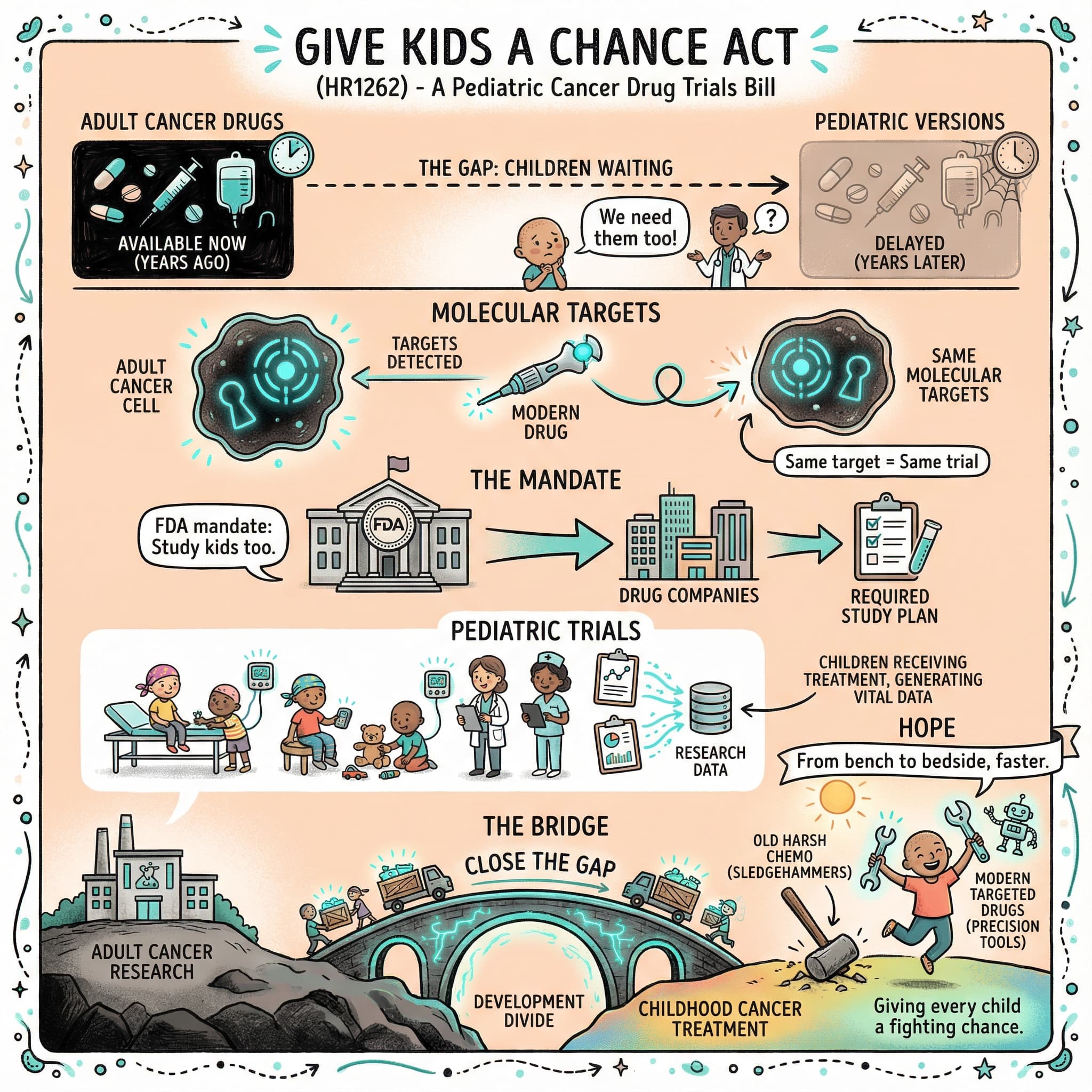
The bipartisan bills look nothing like the partisan ones. Rep. McCaul's Give Kids a Chance Act drew 313 cosponsors across both parties because it pairs a concrete harm (pediatric cancer patients waiting years for drugs adults already have) with a narrow technical fix (required pediatric studies on molecularly targeted drugs). Rep. Murphy's Medicare physician pay patch drew 198. Rep. Earl Carter's PBM Reform Act drew 70. On the other end, Rep. Jayapal's Medicare for All Act drew 113 Democratic cosponsors and zero Republicans. What clears committee this year will be the bills that pair a clear victim with a clear remedy, not the ones that rewrite coverage from the floor up.
Featured speech
Rep. McCaul speaks on the House floor for the Give Kids a Chance Act
McCaul's floor argument for Give Kids a Chance — the biggest healthcare bill at 313 cosponsors and the issue's momentum story. Passed the House unanimously the same day, pairing a concrete harm (pediatric cancer patients waiting years for adult drugs) with a narrow technical fix.
Take action
Send a letter to your lawmakers about healthcare reform
Congress is actively debating these bills. Tell your lawmakers where you stand — we'll draft the letter for you.
Start your advocacy campaignThe bills
What Congress is working on
Recent activityH.R. 3624 +1 cosponsor (James Moylan)
Signed into Law1 bill
- H.R. 2483SUPPORT for Patients and Communities Reauthorization Act of 2025
Reauthorizes the SUPPORT Act's opioid response programs: surveillance, first responder training, treatment workforce, and pregnant and postpartum recovery services.
1 cosponsor·Last action Dec 1, 2025
Active in Congress2 bills
- S. 4189INSULIN Act of 2026
Caps insulin at $35 for commercial plans starting 2027 and forces PBMs to pass 100% of insulin rebates back to plans within 90 days.
28 cosponsors·Last action Aug 7, 2026+23 more


- H.R. 3164Ensuring Community Access to Pharmacist Services Act
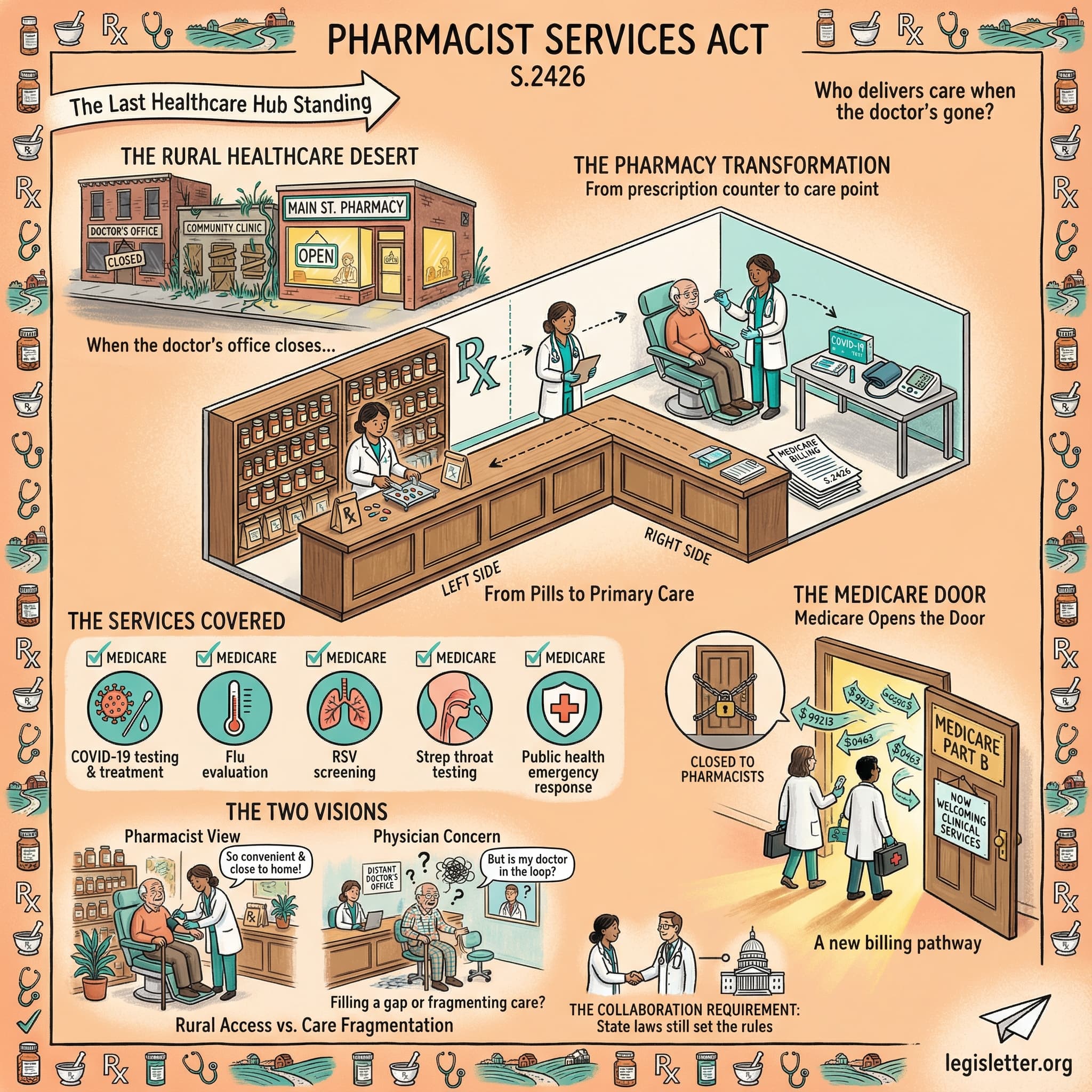
Lets Medicare pay pharmacists directly for COVID, flu, RSV, and strep testing and treatment. Closes an access gap in rural areas where the pharmacy is open and the clinic is not.
143 cosponsors·Last action May 21, 2026+138 more


In Committee21 bills
- H.R. 3069Medicare for All Act
Puts every U.S. resident on a single national health plan with no premiums, no copays, and no networks. Jayapal's benchmark single-payer bill, 113 Democratic cosponsors and zero Republicans.
118 cosponsors·Last action Apr 29, 2025+113 more


- H.R. 4231Treat and Reduce Obesity Act of 2025
Lets Medicare cover weight-loss drugs like Ozempic and Wegovy, and opens obesity counseling to dietitians, psychologists, and nurse practitioners.
85 cosponsors·Last action Jun 27, 2025+80 more


- H.R. 1227Alternatives to PAIN Act
Bans Medicare Part D plans from forcing opioid-first before covering qualifying non-opioid pain drugs, and puts those drugs on the lowest cost-sharing tier.
116 cosponsors·Last action Feb 12, 2025+111 more


- H.R. 879Medicare Patient Access and Practice Stabilization Act of 2025
Adds 6.62% to Medicare physician pay through 2025 to stop doctors from dropping Medicare patients. 198 cosponsors, the largest bipartisan Medicare pay push this Congress.
198 cosponsors·Last action Jan 31, 2025+194 more


- H.R. 4317PBM Reform Act of 2025
Bans PBM spread pricing in Medicaid managed care, forces rebate passthrough in Medicare Part D, and fines PBMs $10,000 per day for refusing employer plan reporting.
71 cosponsors·Last action Jul 10, 2025+66 more


- S. 1818Prescription Drug Price Relief Act of 2025
Sanders's bill: any brand-name drug priced above the 5-country median loses its exclusivities, and FDA must approve generic competitors within 8 months.
7 cosponsors·Last action May 20, 2025+2 more


- H.R. 3757Pride In Mental Health Act of 2025
Funds LGBTQ+ youth mental health services (crisis intervention, family acceptance, school-based support) and bars grantees from using the money for conversion therapy.
168 cosponsors·Last action Jun 5, 2025+163 more


- H.R. 4313Hospital Inpatient Services Modernization Act
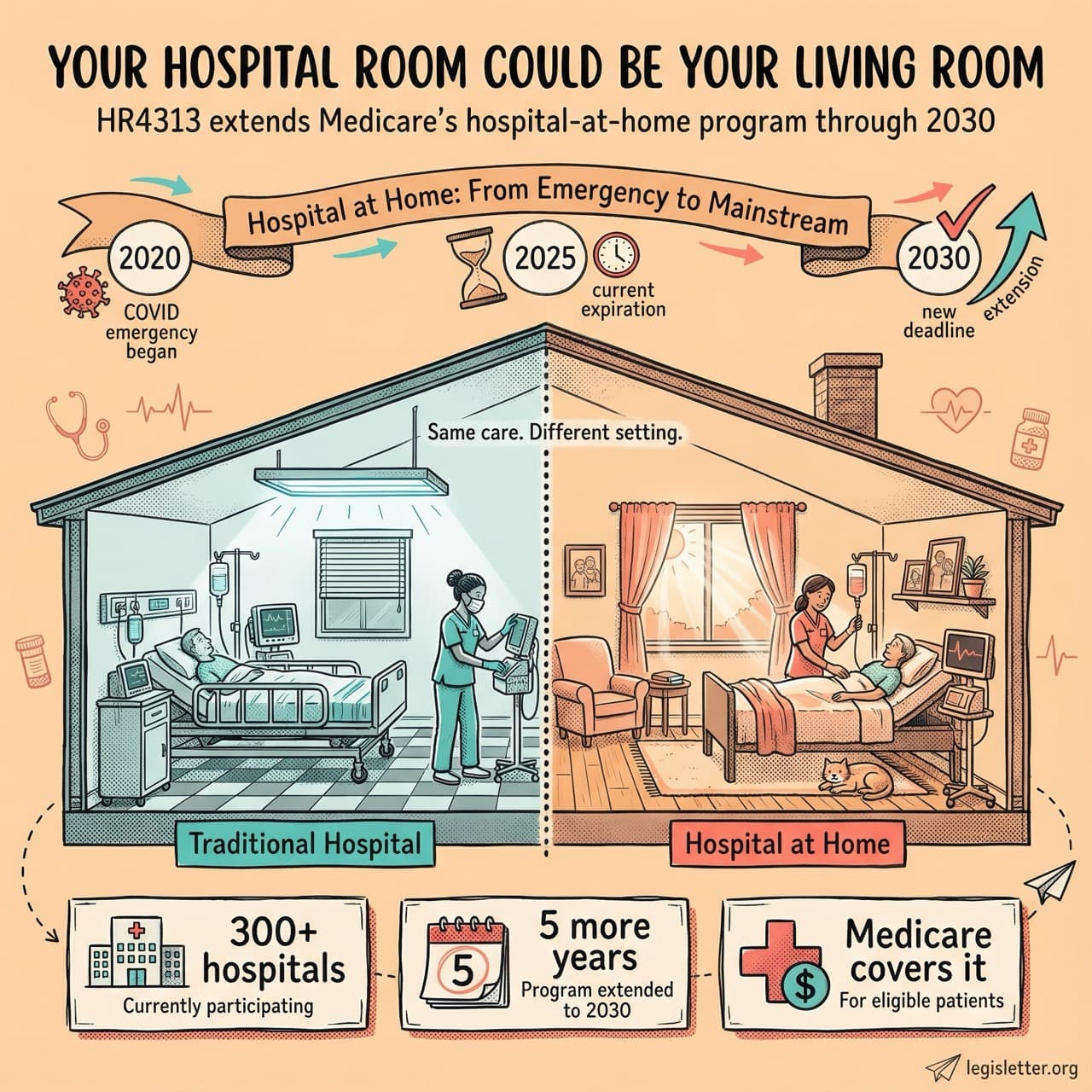
Extends Medicare's hospital-at-home waiver through 2030. Over 300 hospitals already use the model.
8 cosponsors·Last action Dec 2, 2025+3 more


- S. 927Protecting Pharmacies in Medicaid Act
Forces state Medicaid programs to pay pharmacies at least the actual drug acquisition cost plus a dispensing fee, cutting off PBM spread pricing that drains independent pharmacies.
3 cosponsors·Last action Mar 11, 2025


- S. 1058Preserving Patient Access to Home Infusion Act
Reworks Medicare's home infusion payment rules so in-home IV treatment gets paid for the behind-the-scenes work it actually requires, closing a coverage gap that forces unnecessary clinic visits.
1 cosponsor·Last action Mar 13, 2025
- S. 1031ROCR Value Based Program Act
Switches Medicare radiation oncology to episode-based payment with 80% paid up front, and creates a $500 transportation add-on for patients who need rides to treatment.
6 cosponsors·Last action Mar 13, 2025+1 more


- H.R. 4731Resident Physician Shortage Reduction Act of 2025
Adds 14,000 federally funded residency slots over seven years to start closing the physician shortage in rural and underserved areas.
138 cosponsors·Last action Jul 23, 2025+133 more


- H.R. 539Chiropractic Medicare Coverage Modernization Act of 2025
Treats chiropractors as full 'physicians' under Medicare for whatever their state license allows. A major expansion of scope-of-practice billing, 158 cosponsors.
174 cosponsors·Last action Jan 16, 2025+169 more


- H.R. 238Healthy Technology Act of 2025
Legally authorizes FDA-approved AI and machine-learning tools to prescribe drugs where state law allows. The first federal nudge to put AI into the prescribing role.
·Last action Jan 7, 2025 - H.R. 4475Medicare Orthotics and Prosthetics Patient-Centered Care Act
Bans Medicare payment for orthotics and prosthetics 'drop-shipped' to patients without the in-person fitting and training the devices require.
29 cosponsors·Last action Jul 17, 2025+24 more

- H.R. 2902SOAR Act of 2025
Pulls oxygen equipment out of Medicare's competitive bidding program starting 2026 and resets payment with new rural and non-contiguous formulas.
70 cosponsors·Last action Apr 10, 2025+65 more


- H.R. 3624Improving Mental Health Access for Students Act
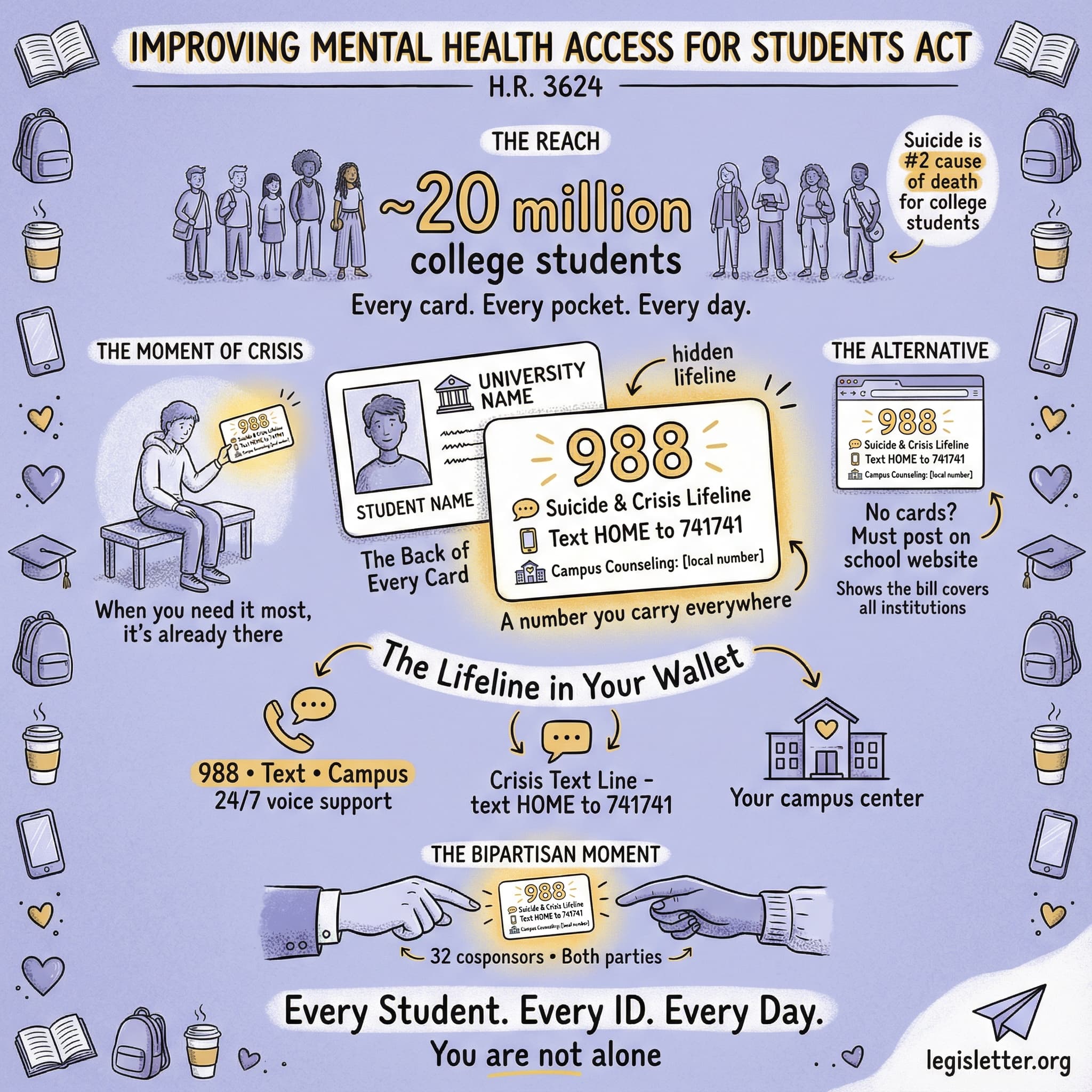
Requires colleges to print the 988 Suicide and Crisis Lifeline and campus mental health contact on every student ID card. Low-cost, high-nudge suicide prevention.
43 cosponsors·Last action May 29, 2025+38 more


- H.R. 5557Mental Health Services for Students Act of 2025
Authorizes $300 million over four years for comprehensive mental health services in K-12 schools, targeting trauma, grief, suicide risk, and violence.
68 cosponsors·Last action Sep 23, 2025+63 more

- S. 2426Equitable Community Access to Pharmacist Services Act
Senate pharmacist access bill. Pays pharmacists under Medicare for vaccinations, chronic-disease checks, and other services their state already lets them perform.
33 cosponsors·Last action Jul 24, 2025+28 more


- H.R. 2636Making Insulin Affordable for All Children Act
Caps insulin cost-sharing at $35 per month for kids 26 and under in commercial plans starting 2026. The kids-first companion to the broader INSULIN Act.
8 cosponsors·Last action Apr 3, 2025+3 more


- S. 3345PBM Price Transparency and Accountability Act
PBM transparency bill: monthly NADAC pharmacy price surveys with $100,000 non-compliance fines, broader disclosure rules, and spread-pricing limits across Medicaid and Medicare.
27 cosponsors·Last action Dec 4, 2025+22 more


Recently Introduced4 bills
- H.R. 1262Mikaela Naylon Give Kids a Chance Act
Forces drug companies to study cancer drugs in kids when the same molecular pathway drives childhood cancer. The 313-cosponsor bipartisan bill that closes the pediatric drug access gap.
313 cosponsors·Last action Dec 2, 2025+308 more - S. 355FDA Modernization Act 3.0
Lets FDA approve drugs based on non-animal testing alternatives (organ-on-a-chip, computational models) instead of requiring animal studies when better options exist.
9 cosponsors·Last action Dec 17, 2025+4 more


- S. 272Protect Infant Formula from Contamination Act
Requires infant formula makers to alert FDA within 1 business day of learning a product may be contaminated, and FDA to respond the same day.
9 cosponsors·Last action May 4, 2026+4 more


- S. 3386Health Care Freedom for Patients Act of 2025
Crapo's bill replaces ACA premium subsidies with HSA-first plans, adds HHS deposits into HSAs, and reroutes ACA cost-sharing reduction funding.
1 cosponsor·Last action Dec 11, 2025
On the Record
What Congress Is Saying
Mr. Speaker, I thank my friend, the gentleman from Georgia, for recognizing me. Mr. Speaker, I rise in strong support as both a member of the Health Subcommittee and a proud cosponsor of this bill, H.R. 1262, the Give Kids a Chance Act. Mr. Speaker, we live in the most technologically advanced society in the history of human civilization, and modern medicine has recently come up with amazing solutions and cures for many of the physical ailments that have afflicted humanity. Unfortunately, Mr. Speaker, we have many rare pediatric diseases for which there is no cure.
 Jay Obernolte(R–CA)·on Mikaela Naylon Give Kids a Chance Act·
Mr. Speaker, today I did not vote on Roll Call Nos. 148 and 149, as I was meeting with constituents. Had I been present, I would have voted NO on Roll Call No. 148, Ordering the previous question of H. Res. 458, and NO on Roll Call No. 149, Providing for consideration of H.R. 2483, SUPPORT for Patients and Communities Reauthorization Act of 2025; H.R. 2931, Save SBA from Sanctuary Cities Act of 2025; H.R. 2966, American Entrepreneurs First Act of 2025; and H.R. 2987, CEASE Act of 2025.

Show 1 more comment
Mr. Speaker, I thank my good friend and colleague from Minnesota for yielding. Mr. Speaker, I rise today in support of this rule and the underlying bill, H.R. 2931, the Save SBA from Sanctuary Cities Act of 2025. Over the past 4 years, the Biden administration's open-border policies have allowed millions of illegal immigrants to pour into our country.

Editorial
Bills at a glance
Original illustrated briefings for the most-tracked bills. Tap a card to read the full analysis.
Where Congress stands
Reform-leaning vs industry-friendly voices
Ranked by bill-level activity — sponsor or cosponsor of reform-leaning bills (insulin caps, PBM passthrough, drug price negotiation, pediatric studies, Medicare expansion) lean reform-minded; sponsor or cosponsor of deregulatory or industry-positioning bills (HSA expansion, provider payment modernization, FDA streamlining) lean industry-friendly.
Industry-friendly
· 12 members


Activity weights: sponsor = 10 points, cosponsor = 3 points. A legislator appears in the cluster where their score is highest. Number next to each name is how many bills in that camp they're on.
Follow the money
Who's lobbying these bills
Every quarter, registered lobbyists file disclosure reports naming the bills they worked on. These 28 healthcare bills drew filings from dozens of organizations, and the money splits into four camps: drugmakers defending prices and exclusivities, PBMs and the pharmacy chain fighting over the rebate math, hospitals and insurers shaping payment rules, and the nurses, patient advocates, and consumer groups pushing for guardrails.
Drugmakers & biotech
· Defending prices and exclusivitiesDrugmakers and biotech firms are the heaviest industry filers on healthcare reform. They are pushing back on reference-pricing proposals, shaping the pediatric-study and orphan-drug provisions in HR 1262, and working the definitions of 'selected insulin products' to preserve formulary power. The PhRMA trade association files alongside individual manufacturers like AstraZeneca, Bayer, Pfizer, Novo Nordisk, Novartis, Amgen, GSK, and Johnson & Johnson, plus a long tail of biotech and rare-disease developers.
28 filers · $855K max quarterly spend across this camp
- $265Kmax quarterVERTEX PHARMACEUTICALS INCORPORATED
Biotechnology company
- $200Kmax quarterEMERGENT BIOSOLUTIONS INC.
Biopharmaceutical Company
- $120Kmax quarterABBOTT LABORATORIES
Healthcare company with innovative medical devices, diagnostics and nutrition.
- $100Kmax quarterJOHNSON & JOHNSON SERVICES, INC.
Global biopharmaceutical, medical device and consumer product manufacturer.
- $100Kmax quarterEMERGENT BIOSOLUTIONS
Specialty Pharmaceutical Company
PBMs, pharmacies & drug distributors
· Fighting over the rebate mathThe PBM lobby, led by the trade association PCMA and CVS Health, and the pharmacy lobby (the chain drugstores' NACDS, grocery-pharmacy chains, independent pharmacies, and the Big Three distributors McKesson, Cardinal, and Cencora) are filing on opposite sides of every PBM bill we track. PBMs are defending spread pricing and rebate arrangements; pharmacies and distributors want mandated passthroughs and NADAC-based payment.
16 filers · $840K max quarterly spend across this camp
- $160Kmax quarterNATIONAL ASSOCIATION OF BOARDS OF PHARMACY
Association of member boards of pharmacy to protect public health
- $120Kmax quarterCENCORA INC. (FORMERLY AMERISOURCEBERGEN CORPORATION)
Pharmaceutical Distributor
- $120Kmax quarterCVS HEALTH
Leading pharmacy benefits and service provider.
- $120Kmax quarterMCKESSON CORPORATION
Health care distribution company
- $100Kmax quarterCENCORA FKA AMERISOURCEBERGEN CORPORATION
Pharmaceutical Services
Hospitals, insurers & provider coalitions
· Shaping payment rulesHospitals, health plans, and physician societies are the quiet shapers of the bill language. They are writing the hospital-at-home extension in HR 4313, the Medicare physician pay patch in HR 879, the pharmacist scope in HR 3164 and S 2426, and the radiation oncology episode-based model in S 1031. The AMA files on the largest number of bills we track, followed by AHIP and the hospital trade groups.
44 filers · $983K max quarterly spend across this camp
- $180Kmax quarterAMERICAN ACADEMY OF FAMILY PHYSICIANS
Association of family physicians
- $160Kmax quarterSUTTER HEALTH
Nonprofit healthcare network
- $100Kmax quarterNATIONAL ASSOCIATION OF COMMUNITY HEALTH CENTERS
Providing care to local community residents in rural and urban locations.
- $90Kmax quarterAMERICAN HOSPITAL ASSOCIATION
- $80Kmax quarterCHARTERCARE HEALTH PARTNERS
healthcare
Nurses, patient advocates & consumer groups
· Pushing for guardrailsNurses, disease-specific patient organizations, mental health advocates, and labor unions file on the consumer-protection side of every major bill. They are pushing for the Medicare for All framework, the Sanders reference-pricing bill, the Pride In Mental Health Act, the school mental health funding, and the PBM transparency mandates. National Nurses United, the American Cancer Society Cancer Action Network, the National Alliance on Mental Illness, and Mental Health America show up across multiple bills.
18 filers · $430K max quarterly spend across this camp
- $110Kmax quarterTOBACCO-FREE KIDS ACTION FUND FKA GLOBAL HEALTH ADVOCACY INCUBATOR (GHAI)
Development of federal public policy and advocacy strategy and lobbying federal government
- $100Kmax quarterMENTAL HEALTH ASSOCIATION OF NEW YORK CITY, INC. (DBA VIBRANT EMOTIONAL HEALTH)
Promotes mental and emotional well-being; delivers mental health services and supports
- $80Kmax quarterCOMPASSION & CHOICES
​ensure healthcare providers honor and enable patients decisions about their care
- $80Kmax quarterBREAKING BARRIERS TO SUBSTANCE USE RECOVERY
Telehealth-Virtual Based Opioid Treatment Therapy
- $30Kmax quarterMENTAL HEALTH AMERICA
Nonprofit dedicated to promoting mental health, well-being, and illness prevention.
Source: Senate Lobbying Disclosure Act filings (lda.gov), 117 unique filers across these 28 bills. Dollar amounts are the highest quarterly spend reported on any filing that named one of these bills — not a total.
Healthcare Reform Alerts
Get notified when healthcare reform moves in Congress
New bills, floor votes, cosponsor shifts, regulatory actions — straight to your inbox.
Healthcare Reform alerts + Legisletter's monthly briefing. Unsubscribe anytime.
Common questions
Questions about healthcare reform
Which healthcare bills in Congress have the most bipartisan support?
Three bills lead on cosponsors. The Give Kids a Chance Act has 313 cosponsors across both parties, the widest bipartisan healthcare coalition in the 119th Congress, because it pairs a sympathetic harm (children waiting for cancer drugs) with a narrow enforcement fix (required pediatric studies on molecularly targeted drugs). The Medicare Patient Access and Practice Stabilization Act drew 198 cosponsors for a 6.62% physician pay patch. The Chiropractic Medicare Coverage Modernization Act drew 158 for a scope-of-practice expansion. By contrast, the Medicare for All Act has 113 cosponsors, all Democrats.
When would the INSULIN Act actually cap insulin at $35?
The INSULIN Act of 2026, led by Sen. Jeanne Shaheen, would cap cost-sharing at $35 per 30-day supply of selected insulin products for commercial plans starting January 1, 2027. Starting January 1, 2028, the cap drops to the lesser of $35 or 25% of the post-rebate net price, so some patients could pay less. The bill also forces PBMs and other intermediaries to pass 100% of insulin rebates back to plans within 90 days, with audit rights for plan sponsors. The Making Insulin Affordable for All Children Act applies the same formula to enrollees 26 and under in commercial plans starting 2026.
What is PBM reform, and which healthcare bills touch it?
Pharmacy benefit managers sit between drugmakers, insurers, and pharmacies, and they earn money on the spread between what they collect and what they pay out. Four healthcare bills target that arrangement. Rep. Earl Carter's PBM Reform Act bans spread pricing in Medicaid managed care, forces rebate passthrough in Medicare Part D starting 2028, and fines PBMs $10,000 per day for refusing employer plan reporting. Sen. Crapo's PBM Price Transparency and Accountability Act adds monthly NADAC pharmacy price surveys with up to $100,000 in civil penalties. S. 927 protects pharmacies in Medicaid by mandating payment at acquisition cost plus a dispensing fee. The INSULIN Act includes its own PBM passthrough rule on insulin rebates.
Is Medicare for All going to become law this Congress?
No. The Medicare for All Act, led by Rep. Pramila Jayapal, has 113 Democratic cosponsors, zero Republican support, and no scheduled markup in any of the seven committees it was referred to. The bill is a benchmark, not a 2026 vehicle. It functions as the policy text progressives point to in drug pricing, coverage expansion, and Medicare fights, even though the standalone bill is not moving.
What happens to Medicare's hospital-at-home waiver if Congress does not act?
The Acute Hospital Care at Home waiver expires under current law unless Congress extends it. The House already passed the Hospital Inpatient Services Modernization Act, which pushes the expiration to 2030 and orders another federal study on quality, safety, and utilization. More than 300 hospitals have used the flexibility to deliver inpatient-level care at home with 24/7 virtual monitoring and in-person nursing visits. If the waiver lapses before a Senate deal, those programs lose their Medicare payment pathway and most would shut down.
Which bills target mental health, and what do they actually do?
Three healthcare bills attack mental health from different angles. The Pride In Mental Health Act funds LGBTQ+ youth mental health services through federal grants and bars grantees from using the money for conversion therapy, with 141 cosponsors. The Mental Health Services for Students Act authorizes $300 million over four years to expand comprehensive school-based services covering trauma, grief, suicide risk, and violence. Rep. Correa's Improving Mental Health Access for Students Act takes the smallest-cost path, requiring colleges to print the 988 Suicide and Crisis Lifeline and a campus mental health contact on every student ID.
What would change for pharmacists under these bills?
Three healthcare bills expand what pharmacists can bill Medicare for. The House Ensuring Community Access to Pharmacist Services Act and its Senate companion the Equitable Community Access to Pharmacist Services Act let Medicare Part B pay pharmacists directly for testing and treatment of COVID, flu, RSV, strep, and other conditions declared under a federal public health emergency. The Healthy Technology Act goes further, recognizing FDA-approved AI and machine-learning tools as eligible 'practitioners' that can prescribe drugs where state law allows. The common thread is closing primary-care access gaps where the pharmacy is reachable and the clinic is not.
How would Sen. Sanders's drug-pricing bill work?
The Prescription Drug Price Relief Act would label any brand-name drug priced above the median of five reference countries (Canada, UK, Germany, France, Japan) as 'excessively priced.' Once labeled, HHS would waive all government-granted exclusivities on the drug and grant non-exclusive licenses so competitors could produce generic or biosimilar versions. FDA would then have to act on related applications within 8 months. The bill also forces annual price, revenue, R&D, and marketing disclosures from manufacturers, with 0.5% to 1% of gross sales per day in penalties for late reports (redirected to NIH research grants). Sanders has 7 cosponsors, all Democrats.
Written by
Legisletter Editors
Legisletter is a grassroots advocacy platform tracking federal policy — and the impact it lands on everyday Americans.
Data sources: congress.gov · govinfo.gov · lda.gov · sec.gov