H.R. 3069: Medicare for All Act
Sponsor

Pramila Jayapal
Democrat · WA-7
112 Democrats want to put everyone on Medicare
Why it matters
H.R. 3069 would put every U.S. resident on a single national health plan with no deductibles, no copays, no balance billing, and no prior authorization. Private insurers and employer plans could no longer sell coverage that duplicates the new program. 112 House Democrats have signed on; not a single Republican has.
H.R. 3069 — the Medicare for All Act — would create a national health insurance program covering every U.S. resident. Coverage would be automatic at birth or when someone establishes residency, and the program would issue a Universal Medicare card that replaces the insurance card sitting in your wallet today.
The benefits package is broad: hospital and outpatient care, prescription drugs, mental health and substance use treatment, dental, vision, audiology, comprehensive reproductive care including abortion, comprehensive gender-affirming care, long-term care services and supports, and hospice. The Health and Human Services Secretary would have to revisit the package every year and recommend additions, but cannot recommend cuts.
At the point of care, the bill bans deductibles, coinsurance, copayments, balance billing, prior authorization, and step therapy. Patients could see any qualified hospital, doctor, or clinician — there are no insurance networks because there is no other insurance for these benefits. Once the program takes effect, private insurers and employer plans are barred from selling coverage that duplicates what the national plan offers. Supplemental coverage for non-covered benefits is still allowed.
Providers would be paid through a new system. The bill creates a Universal Medicare Trust Fund, sets a national health budget, pays hospitals through global budgets, and pays individual clinicians through fee schedules. The Secretary would negotiate prescription drug prices annually; if negotiations fail, the Secretary could issue competitive licenses on patents or clinical trial data, allowing generic manufacturers to break the exclusivity until a deal is reached.
The transition would happen in two stages. People under 19, anyone 55 or older, and existing Medicare enrollees could enroll one year after enactment. Everyone else would be enrolled two years after enactment. The 24-month Medicare waiting period for people with disabilities would be eliminated. A Medicare Transition buy-in would be available during the gap.
Politically, this is a messaging bill. With 112 Democratic cosponsors and zero Republicans, it has no realistic path through a Republican-controlled House. Sponsors treat it as a benchmark — the concrete version of what universal coverage looks like — while pieces like drug-price competitive licensing and the disability waiting period get floated as standalone reforms.
Bill Progress
Latest Action · Apr 29, 2025
Referred to Energy and Commerce, and in addition to the Committees on Ways and Means, Education and Workforce, Rules, Oversight and Government Reform, Armed Services, and the Judiciary, for a period to be subsequently determined by the Speaker, in each case for consideration of such provisions as fall within the jurisdiction of the committee concerned. for review
H.R. 3069 Bill Summary
What H.R. 3069 actually does.
One national health plan for every U.S. resident
Every U.S. resident would be entitled to coverage under a new Medicare for All program, automatically enrolled at birth or when they establish residency, and issued a Universal Medicare card.
No deductibles, copays, balance billing, or prior authorization
The bill bans cost-sharing of any kind for covered services. Providers cannot bill patients directly, require prior authorization, or apply step-therapy protocols.
Comprehensive benefits including long-term care and dental
The benefits package covers hospital, outpatient, prescription drugs, mental health, dental, vision, audiology, comprehensive reproductive care including abortion, gender-affirming care, and long-term services and supports.
Private duplicate insurance is barred
Once the program takes effect, private insurers and employer plans cannot sell or provide coverage that duplicates the national plan's benefits. Supplemental coverage for non-covered benefits is still allowed.
Annual drug-price negotiation with competitive licensing
The Secretary would negotiate prescription drug prices every year. If a manufacturer refuses, the Secretary could authorize competitors to use the patent or clinical trial data — breaking exclusivity until a price is set.
End of the 24-month Medicare disability waiting period
People who qualify for Medicare based on disability would no longer have to wait 24 months for coverage. The waiting period is eliminated outright during the transition period.
Two-year transition with early enrollment for kids and seniors
Most benefits begin two years after enactment. People under 19 and anyone 55 or older could enroll one year after enactment, with a Medicare Transition buy-in available in the gap.
Who benefits from H.R. 3069?
Uninsured and underinsured Americans
The Sense of Congress in the bill states that tens of millions of people in the U.S. do not receive health care services they need. Auto-enrollment closes that gap on day one.
People with chronic illness, disability, or high medical costs
No deductibles, no copays, and no prior-authorization gatekeeping. The 24-month Medicare disability waiting period is gone. Long-term care services and supports — including home- and community-based help with daily living — become a covered benefit.
People who skip care because of cost
Every covered service is free at the point of use. The bill also bans surprise balance bills from out-of-network or non-participating providers.
Self-employed workers, gig workers, and people between jobs
Coverage doesn't depend on an employer or marketplace shopping. Auto-enrollment kicks in regardless of work status, and coverage doesn't lapse when a job ends.
Who is affected by H.R. 3069?
Private health insurers
Companies that currently sell major medical, employer, and marketplace plans could no longer offer coverage that duplicates the national plan's benefits. Their remaining market would be supplemental products for things the national plan does not cover.
Employers that sponsor health benefits
Employer-sponsored health insurance for primary medical coverage would be phased out. Compensation, benefits administration, and the ERISA framework would all need to be restructured.
Hospitals and health care providers
Hospitals would be paid through global budgets negotiated annually. Individual clinicians would be paid through a national fee schedule. Bonus pay and value-based payment models tied to financial outcomes would be banned.
Pharmaceutical manufacturers
Drug prices would be negotiated annually. Refusing to negotiate triggers competitive licensing of patents and clinical trial data, allowing generic manufacturers to enter the market until a price is set.
State governments and existing federal programs
Health insurance exchanges, Medicaid, and the Federal Employees Health Benefits program would be wound down. Veterans Affairs and Indian Health Service coverage would continue under existing law.
HR3069 Legislative Journey
House: Committee Action
Apr 29, 2025
Referred to the Committee on Energy and Commerce, and in addition to the Committees on Ways and Means, Education and Workforce, Rules, Oversight and Government Reform, Armed Services, and the Judiciary, for a period to be subsequently determined by the Speaker, in each case for consideration of such provisions as fall within the jurisdiction of the committee concerned.
About the Sponsor
Pramila Jayapal
Democrat, Washington's 7th congressional district · 9 years in Congress
Committees: the Judiciary, the Budget, Foreign Affairs
View full profile →
Cosponsors (116)
All 116 cosponsors are Democrats. Cosponsors represent 34 states: Alabama, Arizona, California, and 31 more.

Debbie Dingell
Democrat · MI

Alma Adams
Democrat · NC

Yassamin Ansari
Democrat · AZ

Becca Balint
Democrat · VT

Nanette Barragán
Democrat · CA

Wesley Bell
Democrat · MO

Donald Beyer
Democrat · VA

Suzanne Bonamici
Democrat · OR

Brendan Boyle
Democrat · PA

Shontel Brown
Democrat · OH

Salud Carbajal
Democrat · CA
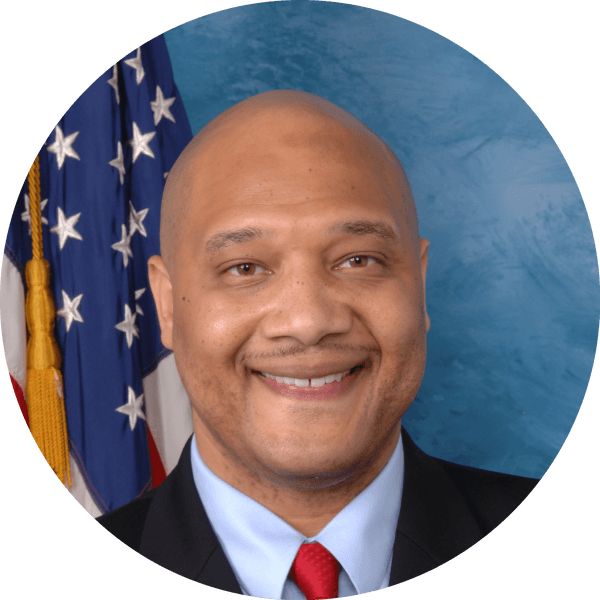
André Carson
Democrat · IN
Cosponsor Coverage Map
Committee Sponsors
Judiciary Committee
14 of 44 committee members cosponsored


Armed Services Committee
10 of 57 committee members cosponsored


Oversight and Government Reform Committee
17 of 47 committee members cosponsored


Rules Committee
3 of 13 committee members cosponsored


Education and Workforce Committee
11 of 37 committee members cosponsored


Ways and Means Committee
10 of 45 committee members cosponsored


Energy and Commerce Committee
12 of 54 committee members cosponsored


49 Democrats across these committees haven't cosponsored yet. Mobilize their constituents
What laws does H.R. 3069 change?
7 changes
Sections Amended
Section 4(b) of Employee Retirement Income Security Act of 1974 (29 U.S.C. 1003(b))
adding at the end the following: ``Paragraph (3) shall apply subject to section 522(b) (relating to reimbursement of the Medicare for All Program by workers compensation carriers)
Section 1 of such Act
inserting after the item relating to section 521 the following new item: ``Sec
Section 601 of part 6 of subtitle B of title I of the Employee Retirement Income Security Act of 1974 (19 U.S.C. 1161)
adding the following subsection at the end: ``(c) Subsection (a) shall apply to any group health plan that does not duplicate payments for any items or services for which payment may be made under the Medicare for All Act
Section 1848 of Social Security Act (42 U.S.C. 1395w-4(q)); (2) the incentives for meaningful use of certified EHR technology established pursuant to subsection (a)(7) of section 1848 of the Social Security Act (42 U.S.C. 1395w-4(a)(7)); (3) the incentives for adoption and meaningful use of certified EHR technology established pursuant to subsection (o) of section 1848 of the Social Security Act (42 U.S.C. 1395w- 4(o)); (4) alternative payment models established under section 1833(z) of the Social Security Act (42 U.S.C. 1395(z)); and (5) the following programs as established pursuant to the following sections of the Patient Protection and Affordable Care Act: (A) Section 2701 (adult health quality measures). (B) Section 2702 (payment adjustments for health care acquired conditions). (C) Section 2706 (Pediatric Accountable Care Organization Demonstration Projects for the purposes of receiving incentive payments). (D) Section 3002(b) (42 U.S.C. 1395w-4(a)(8)) (incentive payments for quality reporting). (E) Section 3001(a) (42 U.S.C. 1395ww(o)) (Hospital Value-Based Purchasing). (F) Section 3006 (value-based purchasing program for skilled nursing facilities and home health agencies). (G) Section 3007 (42 U.S.C. 1395w-4(p)) (value based payment modifier under physician fee schedule). (H) Section 3008 (42 U.S.C. 1395ww(p)) (payment adjustments for health care-acquired condition). (I) Section 3022 (42 U.S.C. 1395jjj) (Medicare shared savings programs). (J) Section 3023 (42 U.S.C. 1395cc-4) (National Pilot Program on Payment Bundling). (K) Section 3024 (42 U.S.C. 1395cc-5) (Independence at home demonstration program). (L) Section 3025 (42 U.S.C. 1395ww(q)) (hospital readmissions reduction program). (M) Section 10301 (plans for value-based purchasing program for ambulatory surgical centers). TITLE X--TRANSITION Subtitle A--Medicare for All Transition Over 2 Years and Transitional Buy-In Option SEC. 1001. MEDICARE FOR ALL TRANSITION OVER TWO YEARS. Title XVIII of the Social Security Act (42 U.S.C. 1395c et seq.)
adding at the end the following new section: ``SEC
Section 36B(c) of Internal Revenue Code of 1986
redesignating subparagraphs (C) and (D) as subparagraphs (D) and (E), respectively, and by inserting after subparagraph (B) the following new subparagraph: ``(C) Special rules for medicare transition buy-in enrollees
Section 1324(a) of Patient Protection and Affordable Care Act (42 U.S.C. 18044(a))
inserting ``the Medicare Transition buy-in,'' before ``or a multi-State qualified health plan''
H.R. 3069 Quick Facts
- Committee
- Judiciary
- Chamber
- House
- Policy
- Health
- Introduced
- Apr 29, 2025
Referred to Energy and Commerce, and in addition to the Committees on Ways and Means, Education and Workforce, Rules, Oversight and Government Reform, Armed Services, and the Judiciary, for a period to be subsequently determined by the Speaker, in each case for consideration of such provisions as fall within the jurisdiction of the committee concerned. for review
Apr 29, 2025
Official Sources
Official bill text, cosponsors, and legislative history for the Medicare for All Act
The existing Medicare program this bill would replace and expand into a universal national health insurance system
Explains the current Medicare trust fund structure — the bill creates a new Universal Medicare Trust Fund modeled on this framework
Current Medicare enrollment, parts, and coverage details — useful context for understanding what the bill would change
The state-federal Medicaid program that would be phased out and replaced under the bill's transition provisions
Current LTSS coverage framework — the bill adds comprehensive long-term care as a new national benefit (Section 204)
The NIH center the Secretary must consult when evaluating complementary and integrative medicine for inclusion in benefits (Section 201)
The whistleblower protection framework the bill applies to health care workers and providers who report fraud (Section 301)
H.R. 3069 Common Questions
Does H.R. 3069 ban deductibles and copays?
Yes. The Medicare for All Act bans deductibles, copays, coinsurance, balance billing, prior authorization, and step-therapy protocols for any covered service. You'd pay nothing at the point of care.
Can I keep my private insurance under Medicare for All?
Not for the same benefits. Once the program takes effect, private insurers and employer plans cannot sell or provide coverage that duplicates what Medicare for All offers. Supplemental coverage for benefits the national plan does not cover is still allowed.
When would Medicare for All actually start?
Most coverage would begin two years after enactment. Anyone under 19 or age 55 and over, plus existing Medicare enrollees, could enroll one year after enactment. A Medicare Transition buy-in would be available during the gap.
Does H.R. 3069 cover abortion, gender-affirming care, and long-term care?
Yes. The bill explicitly lists comprehensive reproductive care including abortion, comprehensive gender-affirming care, and long-term services and supports — including home- and community-based help with daily living — as covered benefits.
Can I keep my doctor under Medicare for All?
Yes, if your doctor is a qualified participating provider. The Medicare for All Act creates national coverage with no insurance networks, so any qualified hospital, doctor, or clinician could see you regardless of geography.
Does H.R. 3069 eliminate the 24-month Medicare disability waiting period?
Yes. People who qualify for Medicare based on disability would no longer have to wait 24 months to access coverage. The waiting period is eliminated outright during the transition phase.
How would prescription drug prices work under H.R. 3069?
The Health and Human Services Secretary would negotiate drug prices annually. If a manufacturer refuses, the Secretary could authorize competitors to use the patent or clinical trial data — breaking exclusivity until a deal is reached.
Could H.R. 3069 actually pass?
Not in this Congress. The Medicare for All Act has 112 Democratic cosponsors and zero Republicans, and Republican leadership controls every committee it was referred to. Sponsors treat it as a benchmark for what universal coverage would look like.
Based on H.R. 3069 bill text
H.R. 3069 Bill Text
“To establish an improved Medicare-for-All national health insurance program.”
Source: U.S. Government Publishing Office
Get notified when H.R. 3069 moves
Committee votes, floor action, cosponsor changes — straight to your inbox.
Bill alerts + Legisletter's monthly briefing. Unsubscribe anytime.
Health Bills
9 related bills we're tracking
Nancy Gardner Sewell Medicare Multi-Cancer Early Detection Screening Coverage Act





Reported (Amended) by the Committee on Ways and Means. H. Rept. 119-333, Part I.
Oct 3, 2025
Mikaela Naylon Give Kids a Chance Act




Received in the Senate.
Dec 2, 2025
Improving Seniors’ Timely Access to Care Act of 2025




Ordered to be Reported in the Nature of a Substitute by the Yeas and Nays: 42 - 0.
Jul 15, 2026
CONNECT for Health Act of 2025





Referred to the Committee on Energy and Commerce, and in addition to the Committee on Ways and Means, for a period to be subsequently determined by the Speaker, in each case for consideration of such provisions as fall within the jurisdiction of the committee concerned.
Jun 26, 2025
ASAP Act



Ordered to be Reported in the Nature of a Substitute by the Yeas and Nays: 40 - 0.
Sep 16, 2026
Momnibus Act


Referred to the Subcommittee on Health.
Apr 20, 2026
Ensuring Lasting Smiles Act



Referred to the Committee on Energy and Commerce, and in addition to the Committees on Education and Workforce, and Ways and Means, for a period to be subsequently determined by the Speaker, in each case for consideration of such provisions as fall within the jurisdiction of the committee concerned.
May 8, 2025
Right to Contraception Act




Referred to the House Committee on Energy and Commerce.
Feb 5, 2025
Women’s Health Protection Act of 2025



Referred to the Committee on Energy and Commerce, and in addition to the Committee on the Judiciary, for a period to be subsequently determined by the Speaker, in each case for consideration of such provisions as fall within the jurisdiction of the committee concerned.
Jun 24, 2025
Trending Right Now
Bills gaining momentum across Congress
America’s Olympic and Paralympic Games Commemorative Coins Act





Referred to the House Committee on Financial Services.
Jul 14, 2025
Fit to Serve Act




Referred to the House Committee on Armed Services.
May 21, 2025
Therapeutic Fraud Prevention Act of 2025





Referred to the House Committee on Energy and Commerce.
May 7, 2025
Tracking Health in Congress? Monitor bills, track cosponsor momentum, and launch advocacy campaigns — all from one advocacy platform.