H.R. 9250: Great American Outdoors Act 250
Sponsor

Bruce Westerman
Republican · AR-4
Foreign tourists would pay $100 to fund park repairs
Why it matters
The annual parks pass sells to the public for $80. H.R. 9250 would set that same pass at no less than $250 for foreign visitors, and add at least $100 per person at every federal recreation site that already charges an entrance fee. Every dollar collected goes to the repair backlog on public lands.
H.R. 9250 writes a two-tier price into federal recreation law. A visitor admitted on a tourist or business visa would pay at least $100 per person on top of whatever entrance or amenity fee a site already charges, and the annual pass that sells to the general public for $80 would cost that visitor at least $250.
The bill draws that group narrowly. It covers people admitted on standard visitor visas and travelers who arrive without a visa through the Visa Waiver Program. Other categories, including students and temporary workers, are not named in the definition.
Every dollar raised would go into the America's Legacy Restoration Fund. That is not a new account: it is the existing National Parks and Public Land Legacy Restoration Fund under a different name, and the bill states that the rename does not create a new fund or touch the money already in it.
The bill also builds in a scorecard, requiring GAO to tell Congress within two years, and every year after that, whether any of this is actually shrinking the repair backlog. That review covers the National Park Service, Fish and Wildlife Service, Bureau of Land Management, Forest Service, and Bureau of Indian Education.
Bill Progress
Latest Action · Jun 24, 2026
Committee approved bill for floor consideration in the Nature of a Substitute (Amended) by Voice Vote.
H.R. 9250 Bill Summary
What H.R. 9250 actually does.
Foreign visitors pay at least $100 more at every gate that charges
At federal recreational lands and waters that already charge an entrance fee or standard amenity fee, a covered foreign visitor would pay not less than $100 per person in addition to that existing fee.
The annual pass costs foreign visitors $250, not $80
The National Parks and Federal Recreational Lands Pass would have to be sold to covered foreign visitors for not less than $250. The same pass currently sells to the general public for $80.
American visitors' fees are unchanged
The new charges apply only to what the bill calls a visitor nonimmigrant: someone admitted on a standard tourism or business visa, or entering through the Visa Waiver Program. The bill sets no new fee for U.S. residents.
Every new dollar goes to the repair backlog
All money collected under the foreign visitor provisions would be deposited into the America's Legacy Restoration Fund, which pays for deferred maintenance on covered public lands.
The repair fund keeps operating under a new name
The bill renames the National Parks and Public Land Legacy Restoration Fund as the America's Legacy Restoration Fund, and specifies that the change does not create a new fund or alter existing balances. Existing references to the old name carry over automatically.
GAO grades the results every year
The Comptroller General would have to study implementation and report to Congress within two years of enactment, then annually, on whether the deferred maintenance backlog at the covered agencies is actually being reduced.
Five agencies are measured
The review covers the National Park Service, Fish and Wildlife Service, Bureau of Land Management, Forest Service, and Bureau of Indian Education.
Who benefits from H.R. 9250?
Anyone who uses aging federal recreation facilities
Roads, campgrounds, water systems, visitor centers, and trails are funded out of the restoration fund. New fee revenue is routed there rather than to general operations.
The five agencies carrying the maintenance backlog
The National Park Service, Fish and Wildlife Service, Bureau of Land Management, Forest Service, and Bureau of Indian Education would gain a revenue stream tied specifically to deferred maintenance.
Anyone who wants the spending audited
The annual GAO reporting requirement gives Congress and the public a recurring, published measure of whether the backlog is shrinking rather than a one-time promise.
Who is affected by H.R. 9250?
Tourists and business travelers on visitor visas
A person admitted on a standard tourism or business visa would pay at least $100 per visit at any covered site that already charges a fee. A family of four traveling together would pay at least $400 above the posted rate.
Visa Waiver Program travelers
Visitors from the roughly 40 countries in the Visa Waiver Program arrive without a visa but are explicitly covered by the bill's definition, so the same charges apply.
Entrance stations and fee-collection staff
Agencies would need a way to determine a visitor's immigration status at the point of sale in order to charge the correct price. The bill sets the fee floors but does not specify how that determination is made.
Gateway communities and tour operators
Hotels, guides, and tour packagers that sell to international travelers would be pricing trips against a higher per-person entry cost.
HR9250 Legislative Journey
House: Vote Held
Jun 24, 2026
Ordered to be Reported in the Nature of a Substitute (Amended) by Voice Vote.
House: Committee Action
Jun 12, 2026
Committee Hearings Held
House: Committee Action
Jun 10, 2026
Referred to the Committee on Natural Resources, and in addition to the Committee on Agriculture, for a period to be subsequently determined by the Speaker, in each case for consideration of such provisions as fall within the jurisdiction of the committee concerned.
About the Sponsor
Bruce Westerman
Republican, Arkansas's 4th congressional district · 11 years in Congress
Committees: Natural Resources, Transportation and Infrastructure
View full profile →
Cosponsors (261)
This bill has 261 cosponsors: 131 Democrats, 130 Republicans, reflecting bipartisan support. Cosponsors represent 51 states: Alaska, Alabama, Arkansas, and 48 more.

Jared Huffman
Democrat · CA

Mike Ezell
Republican · MS

Joe Neguse
Democrat · CO

Wesley Hunt
Republican · TX

Val Hoyle
Democrat · OR

Julie Fedorchak
Republican · ND

Sarah Elfreth
Democrat · MD
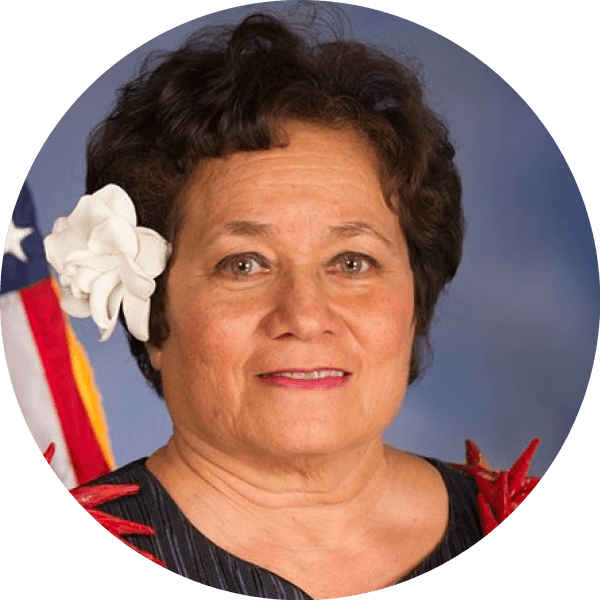
Aumua Amata Radewagen
Republican · AS

Julia Brownley
Democrat · CA
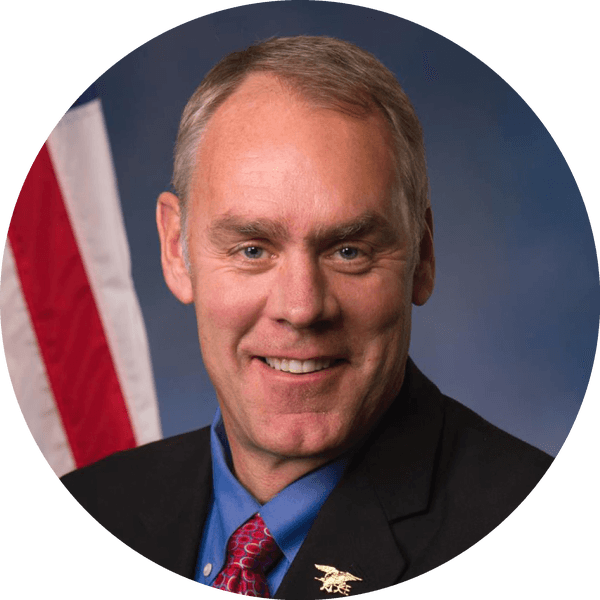
Ryan Zinke
Republican · MT

Lateefah Simon
Democrat · CA

Carol Miller
Republican · WV
Cosponsor Coverage Map
Committee Sponsors
Natural Resources Committee
39 of 45 committee members cosponsored


Agriculture Committee
36 of 53 committee members cosponsored


16 Republicans across these committees haven't cosponsored yet. Mobilize their constituents
What laws does H.R. 9250 change?
3 changes
Sections Amended
Section 802 of Federal Lands Recreation Enhancement Act (16 U.S.C. 6801)
adding at the end the following: ``(17) Visitor nonimmigrant
Section 217 of Immigration and Nationality Act (8 U.S.C. 1187).''. (b) Entry Fee for Foreign Visitors.--Section 803(e) of the Federal Lands Recreation Enhancement Act (16 U.S.C. 6802(e))
adding at the end the following: ``(3) Foreign visitors
Section 805(a) of Federal Lands Recreation Enhancement Act (16 U.S.C. 6804(a))
adding at the end the following: ``(11) Rule for visitor nonimmigrants
H.R. 9250 Quick Facts
- Committee
- Natural Resources
- Chamber
- House
- Policy
- Public Lands and Natural Resources
- Introduced
- Jun 10, 2026
Committee approved bill for floor consideration in the Nature of a Substitute (Amended) by Voice Vote.
Jun 24, 2026
Official Sources
Official bill page with the full text, actions, cosponsors, and committee status.
The recreation fee law the bill amends to add the $100 foreign visitor fee and the $250 annual pass floor.
The chapter the bill rewrites to rename the fund as the America’s Legacy Restoration Fund.
Official pass prices, listing the annual pass at $80 for residents and $250 for non-residents.
NPS explanation of the fund that would receive every dollar of the new foreign visitor fees.
Current agency figures on the repair backlog the bill is meant to shrink.
The immigration definition the bill borrows to decide who counts as a covered visitor nonimmigrant.
The program under 8 U.S.C. 1187 whose travelers are explicitly covered by the bill’s fee.
H.R. 9250 Common Questions
How much extra would foreign visitors pay to enter a national park?
At least $100 per person, and it stacks. The charge is added on top of whatever entrance fee or standard amenity fee a site already collects, not swapped in for it. A family of four would pay at least $400 above the posted rate.
Would Americans pay more to visit national parks under H.R. 9250?
No. The new charges apply only to what the bill calls a visitor nonimmigrant. H.R. 9250 sets no new fee for U.S. residents, and it does not change the price of the regular annual pass.
Which foreign travelers does the H.R. 9250 fee actually apply to?
Two groups: people admitted on a standard tourism or business visa, and travelers who enter through the Visa Waiver Program. Other categories, including students, temporary workers, and permanent residents, are not named in the bill's definition.
How much would the annual parks pass cost a foreign visitor?
At least $250. H.R. 9250 sets that as the minimum price of the National Parks and Federal Recreational Lands Pass for covered foreign visitors. The same pass sells to the general public for $80.
Where does the money from the new park fees go?
All of it goes into the America's Legacy Restoration Fund, which pays for deferred maintenance and repairs on covered public lands. None of it is directed to general agency operations.
Does H.R. 9250 create a new national parks fund?
No. It renames the existing National Parks and Public Land Legacy Restoration Fund as the America's Legacy Restoration Fund, and states that the change does not create a new fund or alter the balances already in it.
How would anyone know if the repair backlog is actually shrinking?
GAO would have to study implementation and report to Congress within two years of enactment, then every year after that, on whether the backlog is being reduced at the National Park Service, Fish and Wildlife Service, Bureau of Land Management, Forest Service, and Bureau of Indian Education.
Has H.R. 9250 passed, and what is the Great American Outdoors Act 250?
Not yet. The Great American Outdoors Act 250 is the bill's title, tied to the country's 250th anniversary. It was introduced June 10, 2026, has 247 cosponsors, and was ordered reported by the House Natural Resources Committee by voice vote on June 24, 2026. It is not law.
Based on H.R. 9250 bill text
H.R. 9250 Bill Text
“To modernize and maintain the National Park Service, the United States Fish and Wildlife Service, the Bureau of Land Management, the Forest Service, and the Bureau of Indian Education in celebration of America’s 250th anniversary.”
Source: U.S. Government Publishing Office
Get notified when H.R. 9250 moves
Committee votes, floor action, cosponsor changes — straight to your inbox.
Bill alerts + Legisletter's monthly briefing. Unsubscribe anytime.
Public Lands and Natural Resources Bills
9 related bills we're tracking
Arctic Refuge Protection Act


Referred to the House Committee on Natural Resources.
Apr 29, 2025
America the Beautiful Act




Placed on Senate Legislative Calendar under General Orders. Calendar No. 439.
Jun 17, 2026
Save Our Forests Act of 2025

Referred to the Committee on Agriculture, and in addition to the Committee on Natural Resources, for a period to be subsequently determined by the Speaker, in each case for consideration of such provisions as fall within the jurisdiction of the committee concerned.
May 21, 2025
Secure Rural Schools Reauthorization Act of 2025




Became Public Law No: 119-58.
Dec 18, 2025
Modernizing Access to Our Public Oceans Act



Placed on the Union Calendar, Calendar No. 438.
Feb 23, 2026
MAWS Act of 2026




Received in the Senate and Read twice and referred to the Committee on Commerce, Science, and Transportation.
Mar 18, 2026
Captain Accursio “Gus” Sanfilippo Young Fishermen’s Development Act



Received in the Senate.
Mar 4, 2026
Wintergreen Emergency Egress Act




Placed on Senate Legislative Calendar under General Orders. Calendar No. 664.
Sep 17, 2026
National Emergency Medical Services Memorial Extension Act



Became Public Law No: 119-107.
Sep 11, 2026
Trending Right Now
Bills gaining momentum across Congress
ASAP Act


Ordered to be Reported in the Nature of a Substitute by the Yeas and Nays: 40 - 0.
Sep 16, 2026
Federal Firearms Licensee Protection Act of 2025


Referred to the House Committee on the Judiciary.
Mar 3, 2025
Therapeutic Fraud Prevention Act of 2025




Referred to the House Committee on Energy and Commerce.
May 7, 2025
Tracking Public Lands and Natural Resources in Congress? Monitor bills, track cosponsor momentum, and launch advocacy campaigns — all from one advocacy platform.