S. 1547: America the Beautiful Act
Sponsor
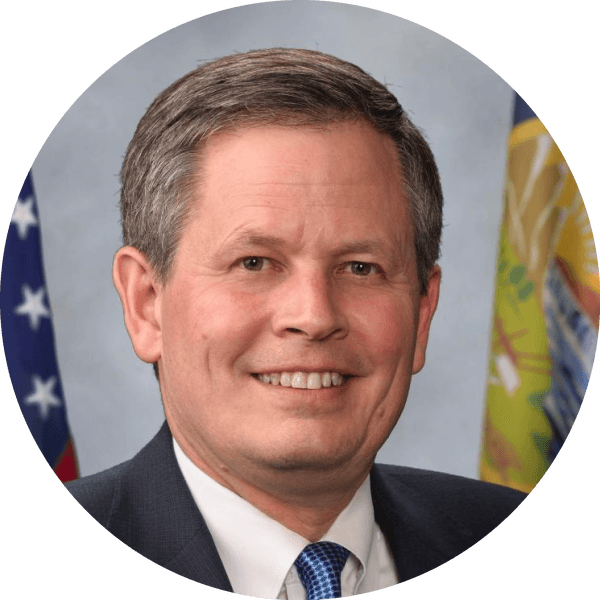
Steve Daines
Republican · MT
More park repairs, paid partly by foreign visitors
Why it matters
Up to $2 billion a year could keep flowing into long-delayed park and public-land repairs through 2033. S. 1547 also requires an extra fee for certain foreign visitors at fee-charging national parks and sends more licensing revenue into the repair fund.
S. 1547 would keep one of Congress's biggest park-repair funds alive through 2033 and raise its ceiling to $2 billion a year.
That money goes to deferred maintenance across national parks and other federal public lands — the long-postponed fixes that turn into broken trails, unsafe buildings, worn utilities, and deteriorating roads. The bill also says projects backed by private donations equal to at least 15% of project cost should move up the priority list.
If you visit fee-charging national parks from abroad and you are not a U.S. citizen, national, or lawful permanent resident, this bill says you would pay a new surcharge through September 30, 2031. Some international peace parks would be exempt.
The bill also opens another funding lane: federal agencies could license intellectual property they control, including trademarks and copyrights, collect fees, cover their licensing costs first, and send the remainder to the restoration fund.
There are also tighter guardrails on how the money gets used. Administrative spending would stay capped at 3%, and the fund could not be used for land purchases, employee bonuses, or certain road decommissioning.
The practical question is whether Congress can keep park repairs popular while selling voters on new fees for foreign visitors and a stronger tilt toward projects with outside donor support.
Bill Progress
Latest Action · Jun 17, 2026
Placed on Senate floor schedule under General Orders. Calendar No. 439.
S. 1547 Bill Summary
What S. 1547 actually does.
Park repair funding lasts longer and grows
S. 1547 extends deposits into the National Parks and Public Land Legacy Restoration Fund through 2033 and raises the annual cap from $1.9 billion to $2.0 billion.
Projects with outside donors move up the list
Interior and Agriculture would have to prioritize projects that receive nonfederal donations covering at least 15% of total project cost.
Some rebuilds can count as maintenance
The bill treats certain replacements of recently removed assets as deferred maintenance if the asset was removed within the past 10 years, serves a comparable function and capacity, and costs less than $5 million.
Foreign visitors at some parks pay extra
Fee-charging National Park System units would have to add a surcharge for visitors who are not U.S. citizens, nationals, or lawful permanent residents. That authority ends September 30, 2031.
Federal brands and content can raise repair money
Agencies could license intellectual property they own or control, including trademarks, copyrights, and trade secrets. After covering licensing-related costs, remaining revenue would go to the restoration fund.
Overhead stays limited
Administrative expenses could not exceed 3% of annual deposits, and the fund could not be used for land acquisition, employee bonuses, or to replace regular discretionary spending.
Who benefits from S. 1547?
People who use aging national parks and public lands
If you rely on park roads, campgrounds, trails, water systems, bathrooms, and visitor centers, this bill keeps up to $2 billion a year available for overdue repairs through 2033.
National Park Service sites with the largest repair needs
The bill says at least 65% of non-transportation funding must go to the National Park Service, which could help the places visitors know best compete for a bigger share of repairs.
Parks and public lands with strong nonprofit partners
Sites that can raise at least 15% of project cost from private or other nonfederal donors would get priority, which could benefit units with active friends groups and philanthropy networks.
Agencies with usable federal intellectual property
Agencies that control recognizable brands, content, or other intellectual property would gain a new way to bring in revenue and direct leftover fees to repairs.
Who is affected by S. 1547?
International visitors at fee-charging national parks
If you are not a U.S. citizen, national, or lawful permanent resident, S. 1547 says you would pay a new surcharge at park units that already charge entrance fees, unless an exemption applies.
Park units without donor networks
Projects that cannot line up at least 15% in nonfederal support may have a harder time rising to the top, even if their repair needs are significant.
Interior and Agriculture officials
They would need to reprioritize projects, meet reporting deadlines, manage the surcharge program, and track how much deferred maintenance the fund is actually reducing.
Programs seeking fund money for other purposes
The bill blocks this fund from being used for land purchases, employee bonuses, and some other non-repair uses, so those needs would have to be funded elsewhere.
Cost & Funding
Authorization
Up to $2,000,000,000 per year through 2033
- S. 1547 raises the annual cap from $1.9 billion to $2.0 billion and extends the fund through 2033.
- That is an additional $100 million per year above current law, or roughly $900 million more in potential capacity over nine years if the cap is fully reached each year.
- Administrative costs are capped at 3%, which would equal up to about $60 million in a year when the full $2.0 billion is deposited.
- Additional revenue could come from a required surcharge on certain foreign visitors at fee-charging national parks through September 30, 2031.
- Additional revenue could also come from licensing federal intellectual property, with licensing costs paid first and remaining fees deposited into the restoration fund.
S1547 Legislative Journey
Committee Action
Jun 17, 2026
Committee on Energy and Natural Resources. Reported by Senator Lee with an amendment in the nature of a substitute. Without written report.
Committee Action
May 1, 2025
Read twice and referred to the Committee on Energy and Natural Resources.
About the Sponsor
Steve Daines
Republican, MT · 13 years in Congress
Committees: Indian Affairs, Energy and Natural Resources, Foreign Relations
View full profile →
Cosponsors (70)
This bill has 70 cosponsors: 34 Democrats, 35 Republicans, 1 Independent, reflecting bipartisan support. Cosponsors represent 42 states: Alaska, Alabama, Arkansas, and 39 more.

Angus King
Independent · ME

Kevin Cramer
Republican · ND

Mark Warner
Democrat · VA

Tim Sheehy
Republican · MT

Jeanne Shaheen
Democrat · NH

Lisa Murkowski
Republican · AK

John Hickenlooper
Democrat · CO
David McCormick
Republican · PA

Ruben Gallego
Democrat · AZ

Susan Collins
Republican · ME

Christopher Coons
Democrat · DE

James Justice
Republican · WV
Committee Sponsors
Energy and Natural Resources Committee
15 of 20 committee members cosponsored


4 Republicans across this committee haven't cosponsored yet. Mobilize their constituents
What laws does S. 1547 change?
1 changes
Sections Amended
Section 803(e) of Federal Lands Recreation Enhancement Act (16 U.S.C. 6802(e))
adding at the end the following: ``(3) Entrance fee surcharge for nonresident visitors
S. 1547 Quick Facts
- Committee
- Energy and Natural Resources
- Chamber
- Senate
- Policy
- Public Lands and Natural Resources
- Introduced
- May 1, 2025
Placed on Senate floor schedule under General Orders. Calendar No. 439.
Jun 17, 2026
Official Sources
Official bill page with text, actions, cosponsors, and status for the America the Beautiful Act.
This U.S. Code section contains the statutory framework for the National Parks and Public Land Legacy Restoration Fund that S. 1547 would extend and amend.
Explains the National Park Service deferred maintenance backlog that the bill is designed to address.
Provides the official National Park Service entrance fee structure relevant to the bill's added surcharge for certain foreign visitors at fee-charging parks.
Official NPS page on passes and visitor access that helps contextualize how park entry charges work under current policy.
Official Congressional Budget Office page where a cost estimate for S. 1547 may appear if one is issued.
S. 1547 Common Questions
What does S. 1547 do?
S. 1547 extends a major public-lands repair fund through 2033, raises its annual cap to $2 billion, adds a surcharge for some foreign visitors at fee-charging national parks, and sends some federal licensing revenue into repairs.
How much money is at stake in S. 1547?
Up to $2.0 billion a year. That is $100 million more than the current $1.9 billion cap, and the higher ceiling would run through 2033.
Would foreign tourists pay more to enter national parks?
Yes. S. 1547 says fee-charging National Park System units must add a surcharge for visitors who are not U.S. citizens, nationals, or lawful permanent residents.
Who counts as a nonresident visitor under S. 1547?
Someone who is not a U.S. citizen, U.S. national, or lawful permanent resident. That is the group the bill targets for the added park surcharge.
When would the foreign visitor surcharge end?
The surcharge authority would expire on September 30, 2031, unless Congress extends it later.
Does S. 1547 favor projects with private donations?
Yes. The bill says Interior and Agriculture must prioritize projects that have nonfederal donations covering at least 15% of total project cost.
Can this fund pay to rebuild something that was torn down?
Sometimes. S. 1547 lets certain replacements count as deferred maintenance if the old asset was removed within 10 years, the replacement serves a similar function, and it costs under $5 million.
Can federal agencies use trademarks or copyrights to raise repair money?
Yes. The bill lets agencies license intellectual property they own or control. After covering licensing-related costs, remaining fees would go into the restoration fund.
Based on S. 1547 bill text
S. 1547 Bill Text
“To amend title 54, United States Code, to reauthorize the National Parks and Public Land Legacy Restoration Fund, and for other purposes.”
Source: U.S. Government Publishing Office
Get notified when S. 1547 moves
Committee votes, floor action, cosponsor changes — straight to your inbox.
Bill alerts + Legisletter's monthly briefing. Unsubscribe anytime.
Public Lands and Natural Resources Bills
9 related bills we're tracking
Great American Outdoors Act 250



Ordered to be Reported in the Nature of a Substitute (Amended) by Voice Vote.
Jun 24, 2026
Arctic Refuge Protection Act



Referred to the House Committee on Natural Resources.
Apr 29, 2025
Save Our Forests Act of 2025


Referred to the Committee on Agriculture, and in addition to the Committee on Natural Resources, for a period to be subsequently determined by the Speaker, in each case for consideration of such provisions as fall within the jurisdiction of the committee concerned.
May 21, 2025
Secure Rural Schools Reauthorization Act of 2025



Became Public Law No: 119-58.
Dec 18, 2025
Modernizing Access to Our Public Oceans Act



Placed on the Union Calendar, Calendar No. 438.
Feb 23, 2026
MAWS Act of 2026




Received in the Senate and Read twice and referred to the Committee on Commerce, Science, and Transportation.
Mar 18, 2026
Captain Accursio “Gus” Sanfilippo Young Fishermen’s Development Act



Received in the Senate.
Mar 4, 2026
Wintergreen Emergency Egress Act



Placed on Senate Legislative Calendar under General Orders. Calendar No. 664.
Sep 17, 2026
National Emergency Medical Services Memorial Extension Act



Became Public Law No: 119-107.
Sep 11, 2026
Trending Right Now
Bills gaining momentum across Congress
North Platte Canteen Congressional Gold Medal Act



Referred to the House Committee on Financial Services.
Feb 21, 2025
ASAP Act


Ordered to be Reported in the Nature of a Substitute by the Yeas and Nays: 40 - 0.
Sep 16, 2026
Fit to Serve Act



Referred to the House Committee on Armed Services.
May 21, 2025
Tracking Public Lands and Natural Resources in Congress? Monitor bills, track cosponsor momentum, and launch advocacy campaigns — all from one advocacy platform.