Mr. Chair, I rise in opposition to H.R. 471, the Fix Our Forests Act, sponsored by Chairman Westerman. While this bill is flawed, and we will be discussing those flaws here in a moment, I do appreciate that Chair Westerman and Representative Peters did come together to work on this issue in a bipartisan way that acknowledges our wildfire crisis. That is a good thing. Addressing that should be a bipartisan priority, and the Fix Our Forests Act includes some helpful provisions.
H.R. 471: Fix Our Forests Act
Introduced Jan 16, 202556 cosponsors
Sponsor
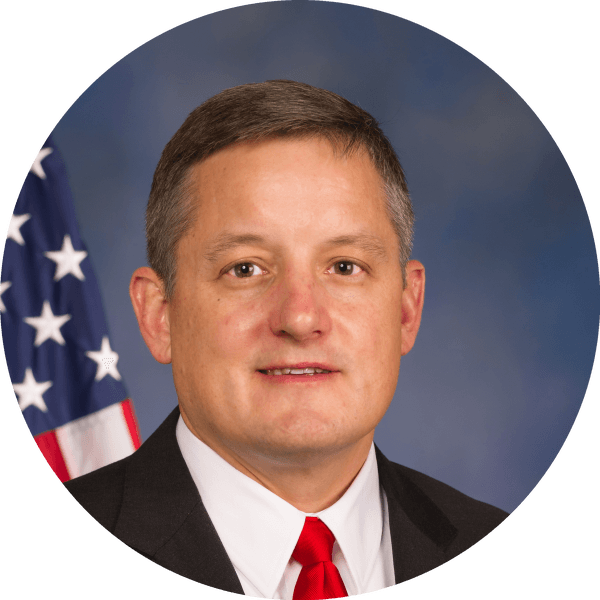
Bruce Westerman
Republican · AR-4
High-Risk Forests Need Faster Wildfire Protection
5 min readLast updated November 8, 2026
Why it matters
Roughly 1,538 of the nation’s highest-risk firesheds would move to the front of the line under H.R. 471. Specified wildfire projects could cover up to 10,000 acres, while shorter lawsuit deadlines and streamlined reviews would change how quickly work proceeds—and how it can be challenged.
H.R. 471 would initially prioritize the highest-risk 20% of 7,688 firesheds identified on a 2019 federal map—roughly 1,538 areas. It would raise the maximum size of specified projects using streamlined review from 3,000 to 10,000 acres, more than tripling the current ceiling. That could move larger fuel-reduction projects faster around communities, water supplies, and forests at risk of permanent change.
The added speed would come with tighter rules for review and litigation. Fireshed designations and certain joint assessments would be made outside the usual environmental review process, and challenges to covered agency actions would have to be filed within 120 days. Courts could pause a project only when a challenger shows a likelihood of winning; without substantial environmental harm tied to the project, the court could send the matter back for a 180-day agency correction rather than block it. People seeking to challenge covered projects would have less time to sue and fewer ways to stop work while a case proceeds.
The bill would also widen the network doing forest work. States, Tribal governments, and eligible special districts could take larger roles, stewardship contracts could last 20 years instead of 10, and the limit for certain locally led timber sales would rise from $10,000 to $55,000. Much of the emergency fireshed authority would expire seven years after enactment.
Around power lines, utilities could remove hazard trees within 150 feet instead of 10 feet. An unchanged vegetation-management plan would be approved automatically after 120 days, while temporary project roads would have to be removed within three years after work ends.
Other provisions would create public project tracking, standardize hazardous-fuels data, support biochar facilities, develop a native-seed strategy, and establish casualty assistance for wildland firefighters’ families. The bill does not provide one overall funding total, leaving Congress to decide how much money many of these programs receive.
Bill Progress
IntroducedJan 16
Committee
Pass HouseJan 23
Pass Senate
Signed
Law
Latest Action · Mar 6, 2025
1/4
Passed the House, received in Senate
H.R. 471 Bill Summary
What H.R. 471 actually does.
1
About 1,538 high-risk firesheds move first
The bill would initially prioritize the highest-risk 20% of 7,688 firesheds identified on a 2019 federal map. The selection would focus on threats to communities, municipal water supplies, and forests at risk of permanent conversion, with updated maps every five years.
2
Larger wildfire projects get a faster route
Specified projects using streamlined environmental review could grow from 3,000 to 10,000 acres—a ceiling about 3.3 times as large. Most emergency fireshed authorities would expire seven years after enactment.
3
Legal challenges face a 120-day clock
A lawsuit over a covered agency action would have to be filed within 120 days. A court could pause the action only if the challenger showed a likelihood of winning, and some cases would result in a 180-day agency correction instead of an order blocking the project.
4
Power-line crews gain a wider safety zone
Utilities could remove hazard trees within 150 feet of power lines rather than 10 feet. Unchanged vegetation plans would be approved after 120 days, and temporary project roads would have to be removed within three years after completion.
5
Forest contractors get longer-term certainty
Stewardship contracts could run for 20 years instead of 10. If the government canceled a qualifying contract lasting more than five years, the contractor would receive termination costs equal to 10% of the contract amount.
6
Firefighters’ families get casualty assistance
Federal agencies would have six months to develop a casualty-assistance program for wildland firefighters. Assistance would follow a next-of-kin order beginning with a spouse and children, followed by parents, siblings, grandparents, and other relatives recognized under state law.
Who benefits from H.R. 471?
Residents in roughly 1,538 high-risk firesheds
People living near the highest-risk forests—and communities relying on nearby municipal watersheds—could see hazardous-fuels projects prioritized and allowed to cover as many as 10,000 acres.
Wildland firefighters’ spouses and children
Families coping with a firefighter casualty would have a dedicated federal assistance program. Spouses and children would receive first priority under the bill’s next-of-kin order.
States, Tribal governments, and local special districts
Governors and Tribal governments could request shared-stewardship agreements, triggering federal deadlines of 90 days for an agreement and another 90 days for an assessment. Eligible special districts could join federal restoration partnerships.
Restoration contractors and biochar developers
Forest businesses could receive contracts lasting up to 20 years, with defined termination payments for qualifying cancellations. Biochar projects could receive federal support covering as much as 35% of capital costs.
Who is affected by H.R. 471?
People and organizations challenging forest projects
Potential challengers would have 120 days to sue over covered actions. They would also face a higher threshold for pausing work and limits on the remedies a court could order when substantial project-related environmental harm is not shown.
Federal forest and land-management agencies
Agencies would have to map priority areas, staff an interagency fireshed center, publish project information, standardize fuels data within 90 days, and report treatment costs and results each year.
Landowners and forest users near power lines
Tree removal could reach as far as 150 feet from utility lines, compared with 10 feet now. Nearby land and forest access could also be affected by temporary roads, which would have to be removed within three years after a project ends.
Congress and federal taxpayers
Congress would have to decide how much to appropriate for new programs, staffing, data systems, grants, and casualty assistance because H.R. 471 does not set one overall funding amount.
On the Record
What Congress Is Saying
31 legislators have weighed in on H.R. 471 — 14 Democrats, 17 Republicans.
Mr. Speaker, last night the Rules Committee met and reported a rule, House Resolution 53, providing for consideration of two measures, the first of which is H.R. 471, the Fix Our Forests Act, to be considered under a structured rule. The rule provides for 1 hour of debate, equally divided and controlled by the chair and ranking member of the Committee on Natural Resources, or their respective designees, provides for one motion to recommit, and makes two amendments in order. Additionally, the rule provides for consideration of S. 5, the Laken Riley Act, under a closed rule.

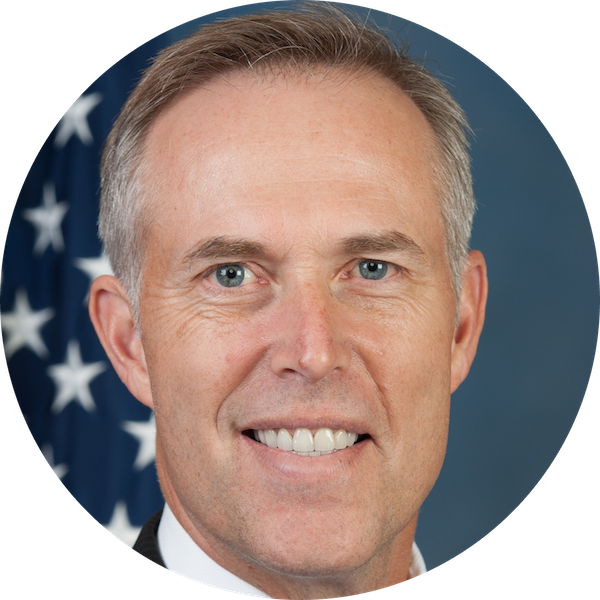
Mr. Speaker, I rise in respectful opposition to H.R. 471, the so-called Fix Our Forests Act. Right now, as we all have seen, tens of thousands of families are without homes. Our knowledge right now is that 28 people have died. The scale of the devastation in Los Angeles is just unthinkable. Mr. Chair, I represent a district just to the south of this catastrophe. Thankfully, we have not been affected, but we are subject to the same dynamics year after year. In recent years, we had the Santiago Canyon fire, the Laguna fire, the Canyon fire, and a number of others.

H.R. 471 also appeared in 2 more House floor references, 1 in the Extensions of Remarks, and 7 routine cosponsor filings.
HR471 Legislative Journey
Committee Action
Mar 6, 2025
Committee on Agriculture, Nutrition, and Forestry Subcommittee on Conservation, Forestry, Natural Resources, and Biotechnology. Hearings held. With printed Hearing: S.Hrg. 119-27.
Sent to Senate
Jan 28, 2025
Received in the Senate.
House: Passed 279-141
Jan 23, 2025
On passage Passed by the Yeas and Nays: 279 - 141 (Roll no. 25). (text: CR H321-333)
+14 more actions this day
House: Committee Action
Jan 21, 2025
Rules Committee Resolution H. Res. 53 Reported to House. Rule provides for consideration of H.R. 471 and S. 5. The resolution provides for consideration of H.R. 471 under a structured rule with one hour of general debate and one motion to recommit. Also, the resolution provides for consideration of S. 5 under a closed rule with one hour of general debate and one motion to commit.
House: Committee Action
Jan 16, 2025
Referred to the Committee on Natural Resources, and in addition to the Committees on Agriculture, and Science, Space, and Technology, for a period to be subsequently determined by the Speaker, in each case for consideration of such provisions as fall within the jurisdiction of the committee concerned.
About the Sponsor
Bruce Westerman
Republican, Arkansas's 4th congressional district · 11 years in Congress
Committees: Natural Resources, Transportation and Infrastructure
View full profile →
Cosponsors (56)
No new cosponsors in 654 days — momentum stalled
This bill has 56 cosponsors: 17 Democrats, 39 Republicans, reflecting bipartisan support. Cosponsors represent 28 states: Alaska, Arkansas, Arizona, and 25 more.
17Democrats39Republicans·28 statesBipartisan

Scott Peters
Democrat · CA
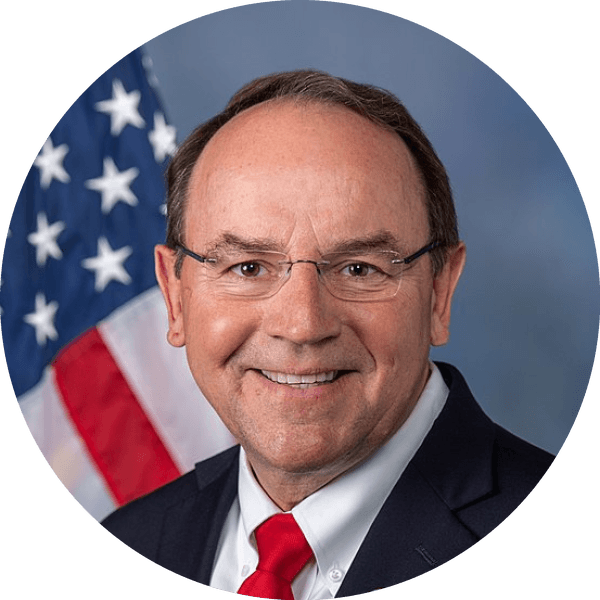
Thomas Tiffany
Republican · WI
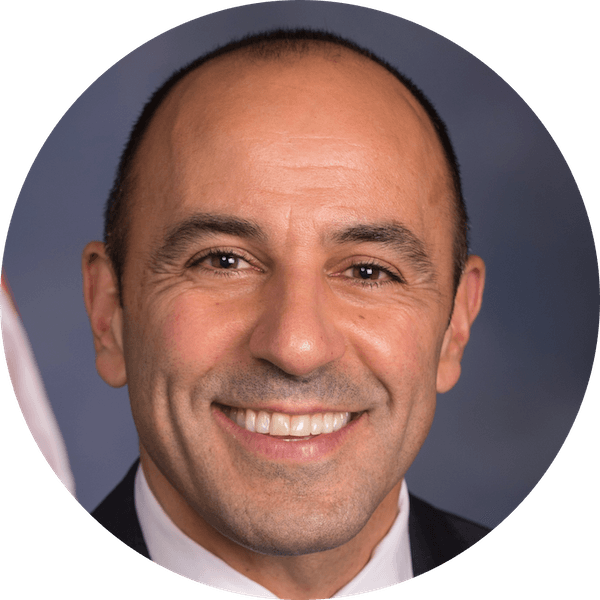
Jimmy Panetta
Democrat · CA

Pete Stauber
Republican · MN

George Whitesides
Democrat · CA

Mike Collins
Republican · GA
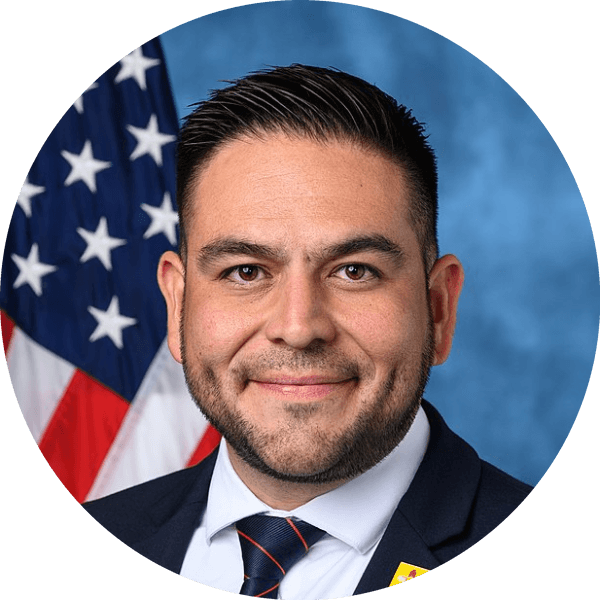
Gabe Vasquez
Democrat · NM

Young Kim
Republican · CA

Jim Costa
Democrat · CA
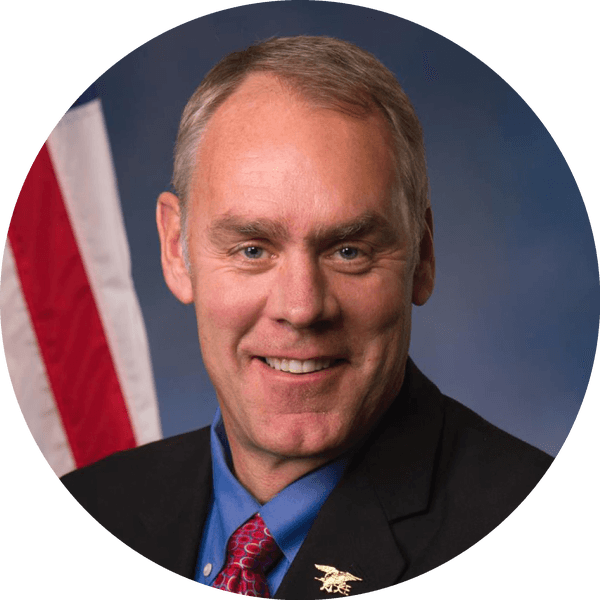
Ryan Zinke
Republican · MT

Josh Harder
Democrat · CA

Dusty Johnson
Republican · SD
Committee Sponsors
Agriculture, Nutrition, and Forestry Committee
11D12R
|0 signed23 not yet0 of 23 committee members cosponsored
No committee members have cosponsored this bill
Science, Space, and Technology Committee
18D22R
|8 signed32 not yet8 of 40 committee members cosponsored


Agriculture Committee
24D29R
|8 signed45 not yet8 of 53 committee members cosponsored


Natural Resources Committee
20D25R
|23 signed22 not yet23 of 45 committee members cosponsored


53 Republicans across these committees haven't cosponsored yet. Mobilize their constituents
What laws does H.R. 471 change?
2 changes
Sections Amended
Section 111 of National Environmental Policy Act of 1969 (42 U.S.C. 4336e). SEC. 122. CONSULTATION ON FOREST PLANS. (a) Forest Service Plans.--Section 6(d)(2) of the Forest and Rangeland Renewable Resources Planning Act of 1974 (16 U.S.C. 1604(d)(2))
read as follows: ``(2) No additional consultation required under certain circumstances
Section 202 of Federal Land Policy and Management Act of 1976 (43 U.S.C. 1712)
adding at the end the following: ``(g) No Additional Consultation Required Under Certain Circumstances
H.R. 471 Quick Facts
Cosponsors
56
- Committee
- Agriculture, Nutrition, and Forestry
- Chamber
- House
- Policy
- Public Lands and Natural Resources
- Introduced
- Jan 16, 2025
Passed the House, received in Senate
Mar 6, 2025
Official Sources
H.R. 471 on Congress.gov
Congress.gov provides the official bill text, legislative actions, amendments, and related documents for the Fix Our Forests Act.
Council on Environmental Quality NEPA
The Council on Environmental Quality provides official information about the National Environmental Policy Act process that H.R. 471 would streamline for specified projects.
Forest Service Good Neighbor Authority
This Forest Service page explains Good Neighbor Authority partnerships with states, Tribes, and other eligible governments for restoration work.
Joint Chiefs' Landscape Restoration Partnership
This USDA program coordinates the Forest Service and Natural Resources Conservation Service on cross-boundary forest and watershed restoration.
Collaborative Forest Landscape Restoration Program
The Forest Service provides official information about the collaborative landscape-restoration program addressed in the bill.
Who is lobbying on H.R. 471?
25 organizations lobbying on this bill
HR 471 has drawn a crowded but telling lobbying coalition led by the Coalition Against Bigger Trucks, the County of Fresno, and Quanta Services, signaling that the real fight is being driven less by ideological groups than by utilities, county governments, and transportation interests with direct stakes in wildfire mitigation, infrastructure hardening, and natural-resource management. The filing volume suggests a bill operating at the intersection of public safety and supply-chain politics, where local governments and energy-linked industry are pressing hardest, while foreign players including Germany’s OroraTech GmbH and Canada’s Flash Forest also see enough opportunity or exposure to get in the mix.
Total filings: 57
Foreign interests: 3
QUANTA SERVICES, INC. | 6 |
COUNTY OF FRESNO | 6 |
THE GREENBRIER COMPANIES | 5 |
COUNTY OF TULARE | 3 |
CORE ELECTRIC COOPERATIVE | 3 |
SACRAMENTO MUNICIPAL UTILITY DISTRICT | 2 |
WHITE OAK INITIATIVE GOVERNMENT POLICY COMMITTEE | 2 |
NATAT (NATIONAL ASSN OF TOWNS AND TOWNSHIPS | 2 |
PORTLAND GENERAL ELECTRIC | 2 |
MEGAFIRE ACTION | 2 |
Showing 1-10 of 25 organizations
H.R. 471 Common Questions
Which areas would H.R. 471 prioritize?
The bill would initially prioritize the highest-risk 20% of 7,688 firesheds identified on a 2019 federal map—roughly 1,538 areas facing threats to communities, water supplies, or forests.
How large could fast-tracked wildfire projects be?
Specified projects could cover up to 10,000 acres under streamlined environmental review. The current ceiling is 3,000 acres, so H.R. 471 would make the limit about 3.3 times as large.
How long would you have to challenge a project?
You would have 120 days to sue over a covered agency action. A court could pause the project only if you showed a likelihood of winning, and some rulings would be limited to a 180-day agency correction.
Would utilities be allowed to remove more trees?
Yes. The hazard-tree removal zone near power lines would expand from 10 feet to 150 feet. An unchanged vegetation-management plan would be approved automatically after 120 days.
How would H.R. 471 change forest contracts?
Stewardship contracts could last up to 20 years instead of 10. If the government canceled a qualifying contract longer than five years, the contractor would receive termination costs equal to 10% of its value.
How much would H.R. 471 cost?
The bill does not specify one overall funding total. Federal support for a biochar facility could cover up to 35% of capital costs, while Congress would have to fund other programs through later appropriations.
Who would receive wildland firefighter casualty assistance?
Priority would go to the firefighter’s spouse, children, parents, siblings, grandparents, then other relatives recognized under state law. Agencies would have six months to develop the program.
What role would states, Tribes, and local districts have?
Governors and Tribal governments could request shared-stewardship agreements, starting two consecutive 90-day federal deadlines. Eligible special districts could also participate in federal restoration agreements.
Based on H.R. 471 bill text
H.R. 471 Bill Text
“To expedite under the National Environmental Policy Act of 1969 and improve forest management activities on National Forest System lands, on public lands under the jurisdiction of the Bureau of Land Management, and on Tribal lands to return resilience to overgrown, fire-prone forested lands, and for other purposes.”
Source: U.S. Government Publishing Office
Bill Alerts
Get notified when H.R. 471 moves
Committee votes, floor action, cosponsor changes — straight to your inbox.
Bill alerts + Legisletter's monthly briefing. Unsubscribe anytime.
Public Lands and Natural Resources Bills
9 related bills we're tracking
H.R. 9250
Great American Outdoors Act 250
Bruce WestermanR-AR


+261
265 cosponsors
+4 this monthOrdered to be Reported in the Nature of a Substitute (Amended) by Voice Vote.
Jun 24, 2026
HousePublic Lands and Natural Resources
H.R. 3067
Arctic Refuge Protection Act
Jared HuffmanD-CA



+97
101 cosponsors
Referred to the House Committee on Natural Resources.
Apr 29, 2025
HousePublic Lands and Natural Resources
S. 1547
America the Beautiful Act
Steve DainesR-MT




+66
70 cosponsors
Placed on Senate Legislative Calendar under General Orders. Calendar No. 439.
Jun 17, 2026
SenatePublic Lands and Natural Resources
H.R. 3559
Save Our Forests Act of 2025
Joe NeguseD-CO


+27
31 cosponsors
Referred to the Committee on Agriculture, and in addition to the Committee on Natural Resources, for a period to be subsequently determined by the Speaker, in each case for consideration of such provisions as fall within the jurisdiction of the committee concerned.
May 21, 2025
HousePublic Lands and Natural Resources
S. 356
Secure Rural Schools Reauthorization Act of 2025

Mike CrapoR-ID



+24
28 cosponsors
Became Public Law No: 119-58.
Dec 18, 2025
SenatePublic Lands and Natural Resources
H.R. 3340
Modernizing Access to Our Public Oceans Act

Russell FryR-SC

+11
15 cosponsors
Placed on the Union Calendar, Calendar No. 438.
Feb 23, 2026
HousePublic Lands and Natural Resources
H.R. 4294
MAWS Act of 2026
Sarah ElfrethD-MD




+6
10 cosponsors
Received in the Senate and Read twice and referred to the Committee on Commerce, Science, and Transportation.
Mar 18, 2026
HousePublic Lands and Natural Resources
H.R. 3692
Captain Accursio “Gus” Sanfilippo Young Fishermen’s Development Act
Seth MoultonD-MA



+4
8 cosponsors
Received in the Senate.
Mar 4, 2026
HousePublic Lands and Natural Resources
H.R. 6365
Wintergreen Emergency Egress Act

John McGuireR-VA


+3
7 cosponsors
Placed on Senate Legislative Calendar under General Orders. Calendar No. 664.
Sep 17, 2026
HousePublic Lands and Natural Resources
Trending Right Now
Bills gaining momentum across Congress
H.R. 1502Surging+19
North Platte Canteen Congressional Gold Medal Act

Adrian SmithR-NE


+266
270 cosponsors
+19 this monthReferred to the House Committee on Financial Services.
Feb 21, 2025
HouseArmed Forces and National Security
H.R. 8205Active
Accelerating Access to Critical Therapies for ALS Reauthorization Act of 2026

Mike QuigleyD-IL



+99
103 cosponsors
Became Public Law No: 119-138.
Nov 3, 2026
HouseHealth
H.R. 3277Surging+11
Ensuring Lasting Smiles Act
Neal DunnR-FL




+218
222 cosponsors
+11 this monthReferred to the Committee on Energy and Commerce, and in addition to the Committees on Education and Workforce, and Ways and Means, for a period to be subsequently determined by the Speaker, in each case for consideration of such provisions as fall within the jurisdiction of the committee concerned.
May 8, 2025
HouseHealth
Tracking Public Lands and Natural Resources in Congress? Monitor bills, track cosponsor momentum, and launch advocacy campaigns — all from one advocacy platform.