H.R. 999: Right to Contraception Act
Sponsor

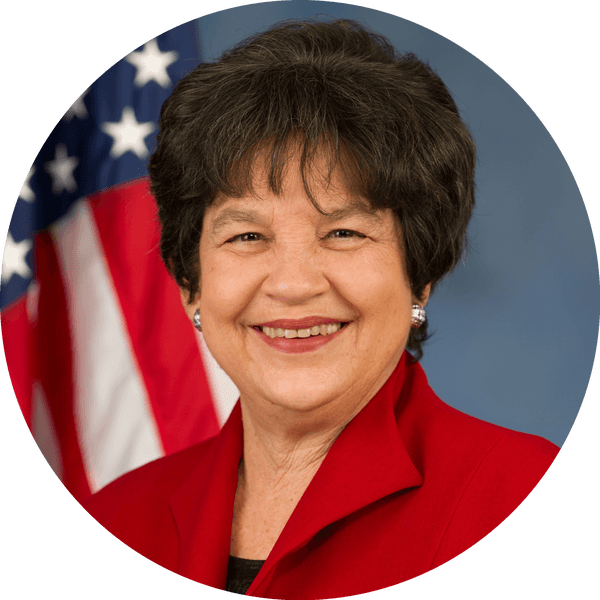
Lizzie Fletcher
Democrat · TX-7
206 members of Congress want to make birth control a federal right before the courts take it away
Why it matters
Medicaid covers 75% of all federal family planning spending, according to the bill's findings. If a future Supreme Court revisits Griswold v. Connecticut — the 1965 case that recognized a constitutional right to contraception — there's no federal statute underneath to catch the fall. H.R. 999 would create one, locking contraception access into law regardless of what the courts do next.
H.R. 999 does something the Supreme Court cases never did: it writes the right to contraception into a federal statute. If you want birth control — pills, IUDs, implants, condoms, fertility-awareness methods, or sterilization procedures — you'd have a statutory right to get it without government interference. Your doctor, pharmacist, or nurse practitioner would have a matching right to provide it.
The bill defines contraception broadly. It covers any FDA-approved drug, device, or biological product intended to prevent pregnancy, plus fertility-awareness-based methods and sterilization. It applies to every level of government — federal, state, county, city.
The enforcement mechanism is where it gets serious. If a state passes a law restricting access, the Attorney General can sue on behalf of the United States. But you don't have to wait for the AG — individuals and providers can file their own lawsuits. If a state wants to defend a restriction, it has to prove by clear and convincing evidence that the restriction actually advances access to contraception and that there's no less restrictive way to achieve the same goal. That's a high bar.
One critical limit: the bill doesn't require insurance plans to cover contraception. Existing coverage rules under the ACA and Medicaid stay exactly as they are. This is a rights-and-access bill, not a spending bill.
The preemption clause supersedes conflicting federal and state law, including the Religious Freedom Restoration Act. Future federal laws can only override it if they explicitly reference this Act by name.
Bill Progress
Latest Action · Feb 5, 2025
Referred to the House Committee on Energy and Commerce.
H.R. 999 Bill Summary
What H.R. 999 actually does.
Your right to birth control becomes federal law
You'd have a statutory right to obtain and use contraception. Providers — doctors, pharmacists, nurse practitioners, certified nurse-midwives — get a matching right to prescribe, dispense, and provide information about it.
States can't restrict what counts as contraception
The bill covers FDA-approved drugs, devices, biological products, fertility-awareness methods, and sterilization procedures. States can't narrow that definition or reclassify approved contraceptives to dodge the law.
You can sue — and so can your provider
Individuals, patients, and health care providers can file civil lawsuits against states or officials that violate the Act. Providers can sue on behalf of their staff and patients. Prevailing plaintiffs get attorney's fees.
States face a high bar to defend any restrictions
To survive a challenge, a government has to prove by clear and convincing evidence that a restriction actually advances access to contraception — and that no less restrictive alternative exists.
Overrides the Religious Freedom Restoration Act
The bill supersedes RFRA and any conflicting federal or state law. Future federal laws can only override it if they explicitly reference this Act by name.
Existing insurance coverage rules stay the same
The bill doesn't expand or change insurance coverage requirements. ACA preventive services mandates, Medicaid family planning coverage, and group health plan rules remain exactly as they are.
Who benefits from H.R. 999?
The 65 million women of reproductive age in the U.S.
You'd have a federal statutory right to access contraception — not just a constitutional right that depends on how nine justices interpret 60-year-old precedent.
Doctors, pharmacists, and nurses who prescribe birth control
Providers in states that have passed or considered restricting certain contraceptives would have clear federal legal protection. The bill explicitly covers pharmacists and nurse practitioners, not just physicians.
People in states that define some contraceptives as abortifacients
Several states have attempted to classify emergency contraception or IUDs as abortion-inducing. This bill defines contraception based on FDA approval for pregnancy prevention, blocking that reclassification.
Communities the bill's findings call out as facing the biggest barriers
According to the bill, Black, Indigenous, rural, low-income, disabled, immigrant, and LGBTQ+ communities face compounding barriers to reproductive health care driven by social, political, and economic inequities.
Who is affected by H.R. 999?
State legislatures considering contraception restrictions
Any state law that restricts the sale, provision, or use of FDA-approved contraceptives would be preempted. States with existing provider-refusal laws — the bill's findings cite 12 states — would face federal override.
Federal agencies and executive branch officials
The federal government is also bound. An administration that tried to narrow FDA approvals or restrict provider eligibility for contraception-related services would face the same legal constraints.
Religious liberty organizations
The explicit RFRA preemption removes the primary legal tool used to defend conscience-based restrictions on contraception access. This provision will face challenges.
Health systems and pharmacies
Hospitals, clinics, and pharmacies operating in states with restrictive laws would need to align policies with the federal floor. Any internal policy singling out contraception for different treatment could trigger liability.
HR999 Legislative Journey
House: Committee Action
Feb 5, 2025
Referred to the House Committee on Energy and Commerce.
About the Sponsor
Lizzie Fletcher
Democrat, Texas's 7th congressional district · 7 years in Congress
Committees: Energy and Commerce
View full profile →
Cosponsors (210)
This bill has 210 cosponsors: 209 Democrats, 1 Republican. Cosponsors represent 39 states: Alabama, Arizona, California, and 36 more.

Nikema Williams
Democrat · GA

Angie Craig
Democrat · MN

Sara Jacobs
Democrat · CA

Alma Adams
Democrat · NC

Pete Aguilar
Democrat · CA

Gabe Amo
Democrat · RI

Yassamin Ansari
Democrat · AZ

Jake Auchincloss
Democrat · MA

Becca Balint
Democrat · VT

Nanette Barragán
Democrat · CA

Joyce Beatty
Democrat · OH

Wesley Bell
Democrat · MO
Cosponsor Coverage Map
Committee Sponsors
Energy and Commerce Committee
23 of 54 committee members cosponsored


1 Democrats across this committee haven't cosponsored yet. Mobilize their constituents
H.R. 999 Quick Facts
- Committee
- Energy and Commerce
- Chamber
- House
- Policy
- Health
- Introduced
- Feb 5, 2025
Referred to the House Committee on Energy and Commerce.
Feb 5, 2025
Official Sources
H.R. 999 Common Questions
Does the Right to Contraception Act override religious freedom defenses?
Yes. H.R. 999 explicitly supersedes the Religious Freedom Restoration Act of 1993. States and officials cannot use RFRA to defend laws or actions that restrict contraception access.
What counts as contraception under H.R. 999?
FDA-approved drugs, devices, and biological products intended to prevent pregnancy, plus fertility-awareness-based methods and sterilization procedures. The definition is tied to FDA approval, so states can't reclassify approved products to dodge the law.
Can you sue a state that restricts birth control under the Right to Contraception Act?
Yes. Individuals, patients, and health care providers can file civil lawsuits in federal court. Providers can also sue on behalf of their staff and patients. If you win, the state pays your attorney's fees.
Does H.R. 999 require insurance companies to cover birth control?
No. The bill explicitly does not change insurance coverage rules. Existing ACA preventive services mandates, Medicaid family planning coverage, and group health plan requirements stay exactly as they are.
Are pharmacists and nurse practitioners protected under the Right to Contraception Act?
Yes. The bill defines health care provider broadly to include pharmacists, nurses, nurse practitioners, physician assistants, physicians, and certified nurse-midwives authorized by a state.
Does H.R. 999 apply in Puerto Rico and U.S. territories?
Yes. The bill defines "State" to include all 50 states, D.C., Puerto Rico, every U.S. territory and possession, and their political subdivisions — counties, cities, towns, and villages.
What standard does a state have to meet to defend a contraception restriction?
Clear and convincing evidence — one of the highest burdens in civil law. The state must prove the restriction actually advances access to contraception and that no less restrictive alternative exists.
How much federal family planning funding goes through Medicaid?
75%, according to the bill's findings. Congress first required Medicaid to cover family planning in 1972, and it remains the largest single federal funding source for contraception access.
Based on H.R. 999 bill text
H.R. 999 Bill Text
“To protect an individual’s ability to access contraceptives and to engage in contraception and to protect a health care providers ability to provide contraceptives, contraception, and information related to contraception.”
Source: U.S. Government Publishing Office
Get notified when H.R. 999 moves
Committee votes, floor action, cosponsor changes — straight to your inbox.
Bill alerts + Legisletter's monthly briefing. Unsubscribe anytime.
Health Bills
9 related bills we're tracking
Nancy Gardner Sewell Medicare Multi-Cancer Early Detection Screening Coverage Act





Reported (Amended) by the Committee on Ways and Means. H. Rept. 119-333, Part I.
Oct 3, 2025
Mikaela Naylon Give Kids a Chance Act





Received in the Senate.
Dec 2, 2025
Improving Seniors’ Timely Access to Care Act of 2025




Ordered to be Reported in the Nature of a Substitute by the Yeas and Nays: 42 - 0.
Jul 15, 2026
CONNECT for Health Act of 2025





Referred to the Committee on Energy and Commerce, and in addition to the Committee on Ways and Means, for a period to be subsequently determined by the Speaker, in each case for consideration of such provisions as fall within the jurisdiction of the committee concerned.
Jun 26, 2025
ASAP Act



Ordered to be Reported in the Nature of a Substitute by the Yeas and Nays: 40 - 0.
Sep 16, 2026
Momnibus Act

Referred to the Subcommittee on Health.
Apr 20, 2026
Ensuring Lasting Smiles Act



Referred to the Committee on Energy and Commerce, and in addition to the Committees on Education and Workforce, and Ways and Means, for a period to be subsequently determined by the Speaker, in each case for consideration of such provisions as fall within the jurisdiction of the committee concerned.
May 8, 2025
Women’s Health Protection Act of 2025



Referred to the Committee on Energy and Commerce, and in addition to the Committee on the Judiciary, for a period to be subsequently determined by the Speaker, in each case for consideration of such provisions as fall within the jurisdiction of the committee concerned.
Jun 24, 2025
EACH Act of 2025



Referred to the Subcommittee on Health.
Dec 19, 2025
Trending Right Now
Bills gaining momentum across Congress
North Platte Canteen Congressional Gold Medal Act




Referred to the House Committee on Financial Services.
Feb 21, 2025
Fit to Serve Act




Referred to the House Committee on Armed Services.
May 21, 2025
Safe Schools Improvement Act




Referred to the House Committee on Education and Workforce.
Mar 3, 2025
Tracking Health in Congress? Monitor bills, track cosponsor momentum, and launch advocacy campaigns — all from one advocacy platform.