H.R. 4206: CONNECT for Health Act of 2025
Sponsor
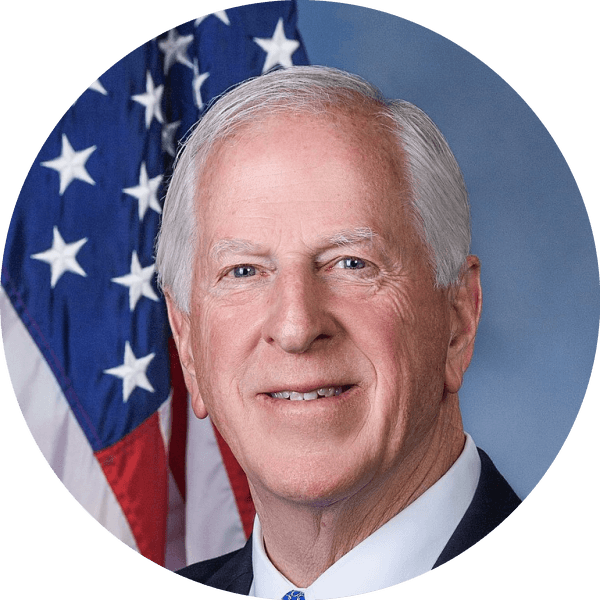
Mike Thompson
Democrat · CA-4
Your doctor visit shouldn't depend on your zip code
Why it matters
According to the bill's findings, 24% of Medicare beneficiaries used telehealth in 2023 — up from 0.1% in 2019. But those pandemic-era flexibilities keep expiring and getting patched with short-term extensions. H.R. 4206 would make them permanent, ending the cycle of temporary fixes that leaves 67 million Medicare beneficiaries uncertain whether their next video appointment is covered.
Medicare's telehealth rules were written for a world where video calls were a novelty. You had to be in a rural area, inside an approved facility, and on a short list of eligible provider types. The pandemic blew those rules open, and the bill's findings note that 90% of patients who tried telehealth were satisfied. But Congress has been renewing those flexibilities with six-month and one-year patches ever since.
H.R. 4206 makes the expansion permanent. Starting October 1, 2025, your location no longer determines whether Medicare covers your telehealth visit. Your home counts as an eligible site. FQHCs and rural health clinics can bill Medicare for telehealth the same way they bill for in-person visits. And beginning January 1, 2026, Indian Health Service facilities, tribal clinics, and Native Hawaiian health centers get the same originating-site flexibility.
The bill also removes a barrier to mental health care: under current rules, you must see a provider in person before you can start telemental health services. H.R. 4206 repeals that six-month in-person requirement entirely.
To keep pace with how care delivery is changing, HHS can waive practitioner-type limits for telehealth if the expansion is clinically appropriate — with mandatory public comment periods and a review at least every three years.
But expanded access comes with expanded accountability. The bill authorizes $3 million per year for the HHS Inspector General to audit telehealth billing through 2030. CMS must identify outlier billers by specialty and geography, notify them with comparison data, and publish aggregate fraud pattern data publicly. Providers who give patients telehealth technology get a safe harbor from anti-kickback rules — as long as it's not advertising.
Bill Progress
Latest Action · Jun 26, 2025
Referred to Energy and Commerce, and in addition to the Committee on Ways and Means, for a period to be subsequently determined by the Speaker, in each case for consideration of such provisions as fall within the jurisdiction of the committee concerned. for review
H.R. 4206 Bill Summary
What H.R. 4206 actually does.
Your location no longer matters for Medicare telehealth
Starting October 1, 2025, Medicare's geographic restrictions on telehealth are permanently removed. You no longer need to be in a rural area or inside a designated facility to qualify for a covered telehealth visit.
Your home is now an approved telehealth site
The bill makes the pandemic-era home-as-originating-site rule permanent. You can receive Medicare telehealth from your couch, not just from a clinic waiting room.
No more in-person gatekeeping for mental health
The six-month in-person visit requirement for telemental health services is repealed. If you need to talk to a therapist or psychiatrist, you can start treatment remotely without a prior office visit.
Community clinics and rural health centers can bill like normal
FQHCs and rural health clinics can bill Medicare for telehealth services under their existing payment systems starting October 1, 2025. Telehealth is no longer a separate, awkward billing category for these providers.
Tribal and Native Hawaiian health facilities included
Starting January 1, 2026, Indian Health Service facilities, tribal organizations, and Native Hawaiian health systems are exempt from originating-site restrictions for Medicare telehealth.
HHS can expand who provides telehealth
The HHS Secretary can waive practitioner-type limits for telehealth when clinically appropriate. Stakeholders get annual public comment periods, and waivers are reviewed at least every three years.
$15 million for telehealth fraud oversight
The bill authorizes $3 million per year for five years (FY2026-2030) for the HHS Inspector General to audit telehealth billing, investigate fraud, and enforce compliance.
Who benefits from H.R. 4206?
67 million Medicare beneficiaries
You keep your telehealth access permanently instead of wondering every six months whether Congress will extend it. If you live far from a specialist, have mobility challenges, or simply prefer a video visit — your coverage is stable.
Rural patients and their families
If your nearest cardiologist is a two-hour drive, telehealth changes that calculus. No more geographic eligibility tests. Your Medicare covers it from home.
Medicare patients with mental health needs
You can start therapy remotely without first dragging yourself to an in-person appointment — a rule that has been a particular barrier for patients dealing with anxiety, depression, or PTSD.
Community health centers and rural clinics
Over 1,400 FQHCs and thousands of rural health clinics nationwide can bill Medicare for telehealth under their regular payment systems. That makes telehealth financially sustainable for the providers who serve the most underserved communities.
Native American and Native Hawaiian communities
IHS facilities, tribal clinics, and Native Hawaiian health centers get permanent telehealth eligibility starting January 2026 — critical for communities where the nearest hospital can be hours away.
Who is affected by H.R. 4206?
CMS and Medicare administrators
They must implement permanent telehealth expansion, build outlier billing detection systems, publish fraud pattern data publicly, and manage new reporting obligations.
Clinicians and health systems
More flexibility to deliver care remotely, but also new compliance requirements. Outlier billers will be identified, notified, and compared against peers by specialty and geography.
HHS Inspector General
Receives $3 million per year through 2030 specifically for telehealth oversight — audits, investigations, and enforcement of billing integrity.
Medicare trust funds
Permanent telehealth expansion could increase utilization and spending. CBO has not yet scored the bill. Supporters argue that broader access reduces costly ER visits and hospitalizations.
Cost & Funding
Authorization
$15 million over five years for IG oversight
- The bill authorizes $3 million per year (FY2026-2030) for the HHS Inspector General for telehealth audits and investigations.
- Beneficiary education, provider training, and quality measurement provisions are authorized at 'such sums as necessary.'
- The larger fiscal question — what permanent telehealth expansion costs Medicare overall — is not addressed in the bill text and will depend on CBO scoring.
HR4206 Legislative Journey
House: Committee Action
Jun 26, 2025
Referred to the Committee on Energy and Commerce, and in addition to the Committee on Ways and Means, for a period to be subsequently determined by the Speaker, in each case for consideration of such provisions as fall within the jurisdiction of the committee concerned.
About the Sponsor
Mike Thompson
Democrat, California's 4th congressional district · 27 years in Congress
Committees: Ways and Means
View full profile →
Cosponsors (248)
This bill has 248 cosponsors: 184 Democrats, 64 Republicans, reflecting bipartisan support. Cosponsors represent 48 states: Alaska, Alabama, Arkansas, and 45 more.

David Schweikert
Republican · AZ

Doris Matsui
Democrat · CA

Troy Balderson
Republican · OH

Don Bacon
Republican · NE

Raja Krishnamoorthi
Democrat · IL

Ed Case
Democrat · HI
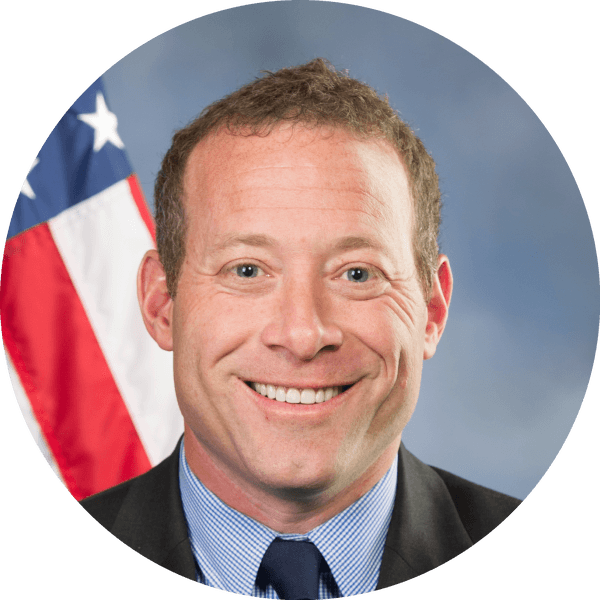
Josh Gottheimer
Democrat · NJ

Young Kim
Republican · CA

Yvette Clarke
Democrat · NY

Suhas Subramanyam
Democrat · VA

Sarah McBride
Democrat · DE
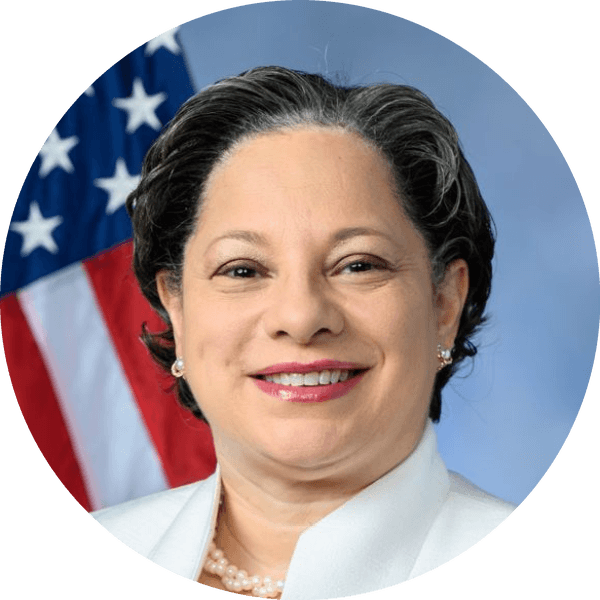
Jennifer McClellan
Democrat · VA
Cosponsor Coverage Map
Committee Sponsors
Ways and Means Committee
27 of 45 committee members cosponsored


Energy and Commerce Committee
29 of 54 committee members cosponsored


6 Democrats across these committees haven't cosponsored yet. Mobilize their constituents
What laws does H.R. 4206 change?
3 changes
Sections Amended
Section 319 of Public Health Service Act on or after the date of enactment of this subparagraph.''. SEC. 108. USE OF TELEHEALTH IN RECERTIFICATION FOR HOSPICE CARE. (a) In General.--Section 1814(a)(7)(D)(i)(II) of the Social Security Act (42 U.S.C. 1395f(a)(7)(D)(i)(II))
striking ``during the emergency period'' and all that follows through ``September 30, 2025'' and inserting the following: ``during and after the emergency period described in section 1135(g)(1)(B)''
Section 1834(m) of Social Security Act (42 U.S.C. 1395m(m))
adding at the end the following new paragraph: ``(10) Resources, guidance, and training sessions
Section 1890A of Social Security Act (42 U.S.C. 1395aaa-1)
adding at the end the following new subsection: ``(h) Measuring Quality of Telehealth Services
H.R. 4206 Quick Facts
- Committee
- Ways and Means
- Chamber
- House
- Policy
- Health
- Introduced
- Jun 26, 2025
Referred to Energy and Commerce, and in addition to the Committee on Ways and Means, for a period to be subsequently determined by the Speaker, in each case for consideration of such provisions as fall within the jurisdiction of the committee concerned. for review
Jun 26, 2025
Official Sources
Who is lobbying on H.R. 4206?
3 organizations lobbying on this bill
NATIONAL ASSOCIATION OF RURAL HEALTH CLINICS | 3 |
CAMBIA HEALTH SOLUTIONS (FORMERLY KNOWN AS THE REGENCE GROUP) | 1 |
AMERICAN NURSES ASSOCIATION | 1 |
Showing 1-3 of 3 organizations
H.R. 4206 Common Questions
Can Medicare patients use telehealth at home under the CONNECT for Health Act?
Yes. H.R. 4206 permanently expands Medicare telehealth originating sites to include the home. You no longer need to be in a clinic or approved facility to receive a covered telehealth visit.
Is the Medicare rural telehealth restriction ending in 2025?
Yes. H.R. 4206 permanently removes Medicare's geographic requirements for telehealth starting October 1, 2025. Your location — rural or urban — no longer determines whether your telehealth visit is covered.
Does the CONNECT for Health Act remove the in-person requirement for teletherapy?
Yes. The bill repeals the six-month in-person visit requirement for telemental health services. You can start therapy or psychiatric treatment remotely without a prior office visit.
Can FQHCs and rural health clinics bill Medicare for telehealth under H.R. 4206?
Yes. Starting October 1, 2025, telehealth services from FQHCs and rural health clinics are treated as regular outpatient services and paid through their existing Medicare payment systems.
How much funding does H.R. 4206 provide for telehealth fraud oversight?
The bill authorizes $3 million per year for fiscal years 2026 through 2030 — $15 million total — for the HHS Inspector General to conduct audits, investigations, and enforcement related to telehealth billing.
Can tribal and Native Hawaiian health clinics use telehealth for Medicare patients?
Yes. Starting January 1, 2026, Indian Health Service facilities, tribal organizations, and Native Hawaiian health centers are exempt from Medicare telehealth originating-site restrictions under H.R. 4206.
Can doctors give patients devices for telehealth without breaking fraud laws?
H.R. 4206 creates a safe harbor allowing providers to furnish telehealth or remote monitoring technology to patients — as long as it is not part of advertising or solicitation and meets HHS requirements.
What happens to doctors with unusually high telehealth billing under the CONNECT for Health Act?
HHS must identify outlier billers by specialty and geography, notify them with comparison data and billing guidance, and CMS must publish aggregate outlier pattern data on its website. Individual providers are not publicly named.
Based on H.R. 4206 bill text
H.R. 4206 Bill Text
“To amend title XVIII of the Social Security Act to expand access to telehealth services, and for other purposes.”
Source: U.S. Government Publishing Office
Get notified when H.R. 4206 moves
Committee votes, floor action, cosponsor changes — straight to your inbox.
Bill alerts + Legisletter's monthly briefing. Unsubscribe anytime.
Health Bills
9 related bills we're tracking
Nancy Gardner Sewell Medicare Multi-Cancer Early Detection Screening Coverage Act





Reported (Amended) by the Committee on Ways and Means. H. Rept. 119-333, Part I.
Oct 3, 2025
Mikaela Naylon Give Kids a Chance Act




Received in the Senate.
Dec 2, 2025
Improving Seniors’ Timely Access to Care Act of 2025


Ordered to be Reported in the Nature of a Substitute by the Yeas and Nays: 42 - 0.
Jul 15, 2026
ASAP Act


Ordered to be Reported in the Nature of a Substitute by the Yeas and Nays: 40 - 0.
Sep 16, 2026
Momnibus Act



Referred to the Subcommittee on Health.
Apr 20, 2026
Ensuring Lasting Smiles Act


Referred to the Committee on Energy and Commerce, and in addition to the Committees on Education and Workforce, and Ways and Means, for a period to be subsequently determined by the Speaker, in each case for consideration of such provisions as fall within the jurisdiction of the committee concerned.
May 8, 2025
Right to Contraception Act

Referred to the House Committee on Energy and Commerce.
Feb 5, 2025
Women’s Health Protection Act of 2025



Referred to the Committee on Energy and Commerce, and in addition to the Committee on the Judiciary, for a period to be subsequently determined by the Speaker, in each case for consideration of such provisions as fall within the jurisdiction of the committee concerned.
Jun 24, 2025
EACH Act of 2025



Referred to the Subcommittee on Health.
Dec 19, 2025
Trending Right Now
Bills gaining momentum across Congress
North Platte Canteen Congressional Gold Medal Act


Referred to the House Committee on Financial Services.
Feb 21, 2025
Fit to Serve Act

Referred to the House Committee on Armed Services.
May 21, 2025
Accelerating Access to Critical Therapies for ALS Reauthorization Act of 2026


Message on Senate action sent to the House.
Oct 14, 2026
Tracking Health in Congress? Monitor bills, track cosponsor momentum, and launch advocacy campaigns — all from one advocacy platform.