H.R. 3624: Improving Mental Health Access for Students Act
Sponsor

J. Correa
Democrat · CA-46
Crisis hotlines belong on every student ID
Why it matters
Suicide is the second leading cause of death for Americans ages 10–34, according to the CDC. H.R. 3624 would put the 988 Suicide and Crisis Lifeline, the Crisis Text Line, and a campus mental health number on every college student ID — the same card students already carry every day.
H.R. 3624 amends the Higher Education Act to require any college or university that issues physical student IDs to print three things on every card: the 988 Suicide and Crisis Lifeline, the Crisis Text Line, and a phone number for the school's own mental health center or program. Schools that don't issue physical IDs would have to post the same information prominently on their website.
The theory of the bill is friction reduction. CDC data shows suicide is the second leading cause of death for Americans ages 10–34, and the agency's 2023 Youth Risk Behavior Survey found 20.4% of high school students seriously considered suicide. When someone is in crisis, easy access to help can matter in a window measured in minutes. Congress already created 988 as the national hotline — this bill is about making sure students know it exists and can reach it without searching.
The requirement is enforced through federal student aid eligibility. Any school that wants its students to use Pell Grants or federal loans has to comply. Schools get one year after enactment to update their cards or websites.
The bill doesn't fund new counselors, expand campus mental health staff, or build new crisis services. Campus counseling centers are already reporting surging caseloads and long wait lists. Printing a phone number costs almost nothing — but the system on the other end of the call needs the capacity to answer.
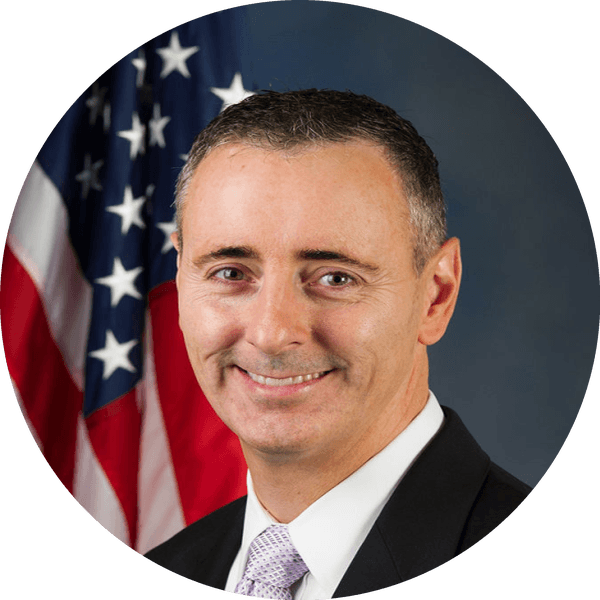
The proposal has unusually broad bipartisan reach. Reps. Correa (D-CA) and Bacon (R-NE) lead the House version with 32 cosponsors from both parties. The identical Senate companion (S. 1924), led by Sens. Kennedy (R-LA) and Booker (D-NJ), has passed by unanimous consent in prior Congresses.
Bill Progress
Latest Action · May 29, 2025
Referred to the House Committee on Education and Workforce.
Visual Summary
H.R. 3624 at a Glance
<div style="max-width:100%;">
  <img src="https://legisletter.org/images/bill-infographics/hr3624-editorial-20251204-111747 copy.png" alt="HR3624 Visual Summary - Improving Mental Health Access for Students Act" style="max-width:100%;height:auto;display:block;" />
  <p style="margin:8px 0 0;font-size:14px;color:#555;text-align:center;">
    <a href="https://legisletter.org/bill/hr3624-improving-mental-health-access-students-act" target="_blank" rel="noopener noreferrer" style="color:inherit;text-decoration:underline;">HR3624 Visual Summary – Improving Mental Health Access for Students Act</a>
    <span> via </span>
    <a href="https://legisletter.org" target="_blank" rel="noopener noreferrer" style="color:inherit;text-decoration:none;font-weight:500;">legisletter.org</a>
  </p>
</div>H.R. 3624 Bill Summary
What H.R. 3624 actually does.
988 and the Crisis Text Line go on every college ID
Any college or university that issues student ID cards has to print three pieces of contact information on each card: the 988 Suicide and Crisis Lifeline, the Crisis Text Line, and a phone number for the campus's own mental health center or program.
Schools without physical IDs have to post the info online
If a college doesn't issue student ID cards, it doesn't get a pass. It has to publish the same three crisis contacts prominently on its official website where students can find them.
Tied to federal student aid eligibility
The requirement is added to the Higher Education Act's program participation agreement — the same agreement schools sign to let their students use Pell Grants and federal loans. In practice, that means almost every college in the country has to comply.
Education Secretary can swap in a replacement service
If 988 or the Crisis Text Line ever shuts down or changes substantially, the Secretary of Education can designate a similar crisis service to be printed on the cards instead. The requirement adapts if the named services change.
One year to comply
Schools get one year after the bill becomes law to redesign their ID cards or update their websites. The clock doesn't start until the day the act is signed.
Who benefits from H.R. 3624?
Roughly 19 million U.S. college students
Every enrolled student would carry a working crisis number on the same card they already use to swipe into the dining hall, the library, and their dorm. For a panicked student at 2 a.m., not having to search for a number is the entire point.
Friends, roommates, and RAs
Most people in crisis don't call a hotline themselves — a roommate, friend, or resident assistant does. Printing the number on the ID means the help is one card-flip away when someone else needs to step in.
The 988 Lifeline and the Crisis Text Line
Both services get free, permanent placement on millions of student IDs and university websites — the kind of national awareness no crisis nonprofit could afford to buy.
Campus mental health centers
Every center gets its direct phone number printed on every student ID at its school. That's a built-in awareness channel for services students often don't realize exist until they're already struggling.
Who is affected by H.R. 3624?
Colleges and universities that issue physical IDs
Schools have to redesign their ID cards, update vendor contracts, and fit the three crisis contacts into their print runs. For a large university issuing hundreds of thousands of cards a year, the redesign is small but real.
Higher education institutions without student IDs
Online-only colleges and any other institutions that don't issue physical cards have to add the suicide prevention contact information to their official website. They'll need to decide where to place it so students can actually find it.
Campus counseling centers
Every center will see its phone number listed on the ID of every student it serves. Centers should expect more calls, particularly during high-stress periods like finals, without any new federal funding to handle the increase.
U.S. Department of Education
The Department has to update its program participation agreement, communicate the change to thousands of schools, and stand ready to designate replacement crisis services if 988 or the Crisis Text Line ever change.
HR3624 Legislative Journey
House: Committee Action
May 29, 2025
Referred to the House Committee on Education and Workforce.
About the Sponsor
J. Correa
Democrat, California's 46th congressional district · 9 years in Congress
Committees: Homeland Security, the Judiciary
View full profile →
Cosponsors (43)
This bill has 43 cosponsors: 35 Democrats, 8 Republicans, reflecting bipartisan support. Cosponsors represent 20 states: California, Colorado, District of Columbia, and 17 more.

Don Bacon
Republican · NE

Scott Peters
Democrat · CA
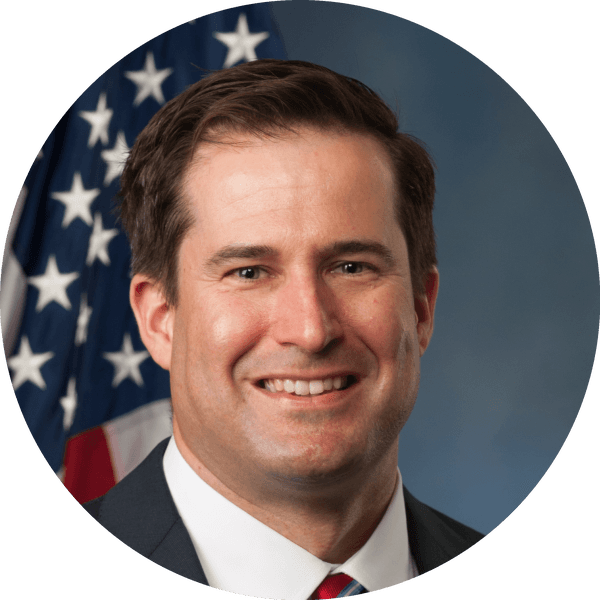
Seth Moulton
Democrat · MA

Josh Harder
Democrat · CA

Eleanor Norton
Democrat · DC

Nick LaLota
Republican · NY
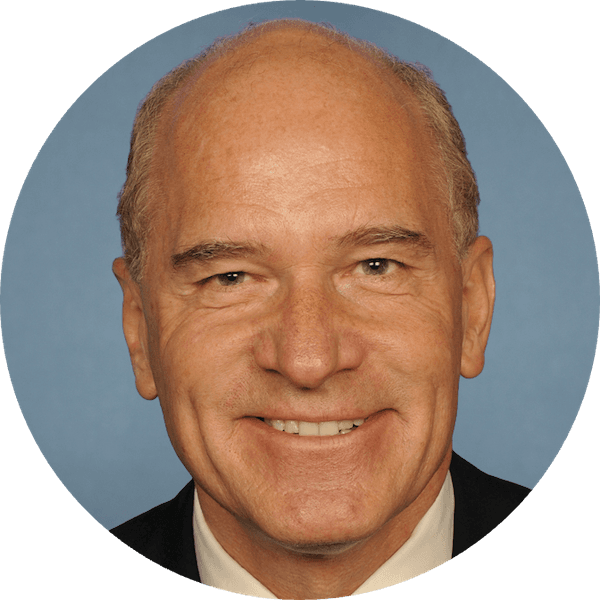
William Keating
Democrat · MA

Jonathan Jackson
Democrat · IL

Chellie Pingree
Democrat · ME

Raul Ruiz
Democrat · CA

Steve Cohen
Democrat · TN

Angie Craig
Democrat · MN
Committee Sponsors
Education and Workforce Committee
2 of 37 committee members cosponsored


16 Democrats across this committee haven't cosponsored yet. Mobilize their constituents
What laws does H.R. 3624 change?
2 key amendments · 2 total changes
Higher Education Act of 1965, Section 487(a) (20 U.S.C. 1094(a))
‘‘(30)(A) In the case of an institution that creates and distributes identification cards for students at any time after the date of enactment of this paragraph, such institution shall include phone contact information on each such card for the following organizations:
‘‘(i) 988 Suicide and Crisis Lifeline.
‘‘(ii) Crisis Text Line.
‘‘(iii) A campus mental health center or program, as determined by the institution.
‘‘(B) In the case of an institution that does not create and distribute identification cards for students at any time after the date of enactment of this paragraph, such institution shall publish the suicide prevention contact information specified in subparagraph (A) on the website of such institution.
‘‘(C) If an organization in clause (i) or (ii) of subparagraph (A) ceases to exist, the Secretary may designate a different entity with a similar purpose to be included on the identification card.’’
What this means: Creates a new condition of institutional eligibility under the Higher Education Act requiring colleges that issue student ID cards to print suicide prevention and crisis phone numbers on the cards, and those that do not issue IDs to post the same information on their website, while authorizing the Secretary to substitute equivalent crisis services if the named ones cease to exist.
Improving Mental Health Access for Students Act (new standalone provision governing the amendment’s timing)
‘‘(b) EFFECTIVE DATE.—The amendment made by subsection (a) shall take effect beginning on the day that is 1 year after the date of enactment of this Act.’’What this means: Delays implementation of the new student ID/website suicide prevention information requirement so that it becomes mandatory one year after the Act is enacted, giving institutions time to comply.
H.R. 3624 Quick Facts
- Committee
- Education and Workforce
- Chamber
- House
- Policy
- Education
- Introduced
- May 29, 2025
Referred to the House Committee on Education and Workforce.
May 29, 2025
Official Sources
Official bill page with full text, cosponsors, actions, and committee referrals for the Improving Mental Health Access for Students Act.
The federal program page for the 988 Lifeline, one of the three crisis contacts the bill mandates on student IDs — funded by SAMHSA and operated through 200+ local crisis centers.
The section of the Higher Education Act (§ 487(a)) that this bill amends by adding paragraph (30), tying the student ID requirement to federal financial aid eligibility.
Official SAMHSA resources for promoting 988 — logos, end cards, and messaging guidance for partners helping publicize the Lifeline, which is exactly what colleges would do under this bill.
CDC data hub reporting suicide as the second leading cause of death for ages 10–34, with approximately 49,000+ suicide deaths nationally in 2023.
Identical Senate companion bill introduced by Sens. Kennedy (R-LA) and Booker (D-NJ) — this bill has previously passed the Senate by unanimous consent in prior Congresses.
The Department of Education's mental health resource hub — the agency responsible for implementing this bill's requirements through federal student aid program participation agreements.
CDC surveillance data showing 20.4% of high school students seriously considered suicide and 9.5% attempted it — the epidemic driving this legislation.
H.R. 3624 Common Questions
What crisis numbers will be printed on student ID cards under H.R. 3624?
Three contacts: the 988 Suicide and Crisis Lifeline, the Crisis Text Line, and a campus mental health phone number that the school itself chooses.
What if my school doesn't issue physical student ID cards?
Schools without physical IDs have to post the same three crisis contacts prominently on their official website. Online-only and digital-ID schools can't skip the requirement.
When would H.R. 3624 take effect?
One year after it's signed into law. Schools get a 12-month window to redesign their ID cards or update their websites before the rule kicks in.
Does every college have to comply with the student ID requirement?
Effectively yes. The rule is added to the Higher Education Act's program participation agreement, which any school accepting federal student aid — Pell Grants, federal loans — has to sign.
Who decides which campus mental health number gets printed on the ID?
The school does. Each college picks which campus mental health center or program phone number appears on its student IDs.
What happens if 988 or the Crisis Text Line shuts down?
The Secretary of Education can designate a replacement crisis service to be printed on the cards instead. The bill builds in flexibility if the named services ever change.
Does H.R. 3624 fund more campus counselors or crisis services?
No. The bill only addresses information on the ID — it doesn't appropriate any new federal money for counselors, crisis response, or follow-up care. Critics say that's the gap to watch.
Is there a Senate version of H.R. 3624?
Yes — S. 1924 is the identical Senate companion, led by Sens. Kennedy (R-LA) and Booker (D-NJ). The Senate version has passed by unanimous consent in prior Congresses.
Based on H.R. 3624 bill text
H.R. 3624 Bill Text
“To add suicide prevention resources to school identification cards.”
Source: U.S. Government Publishing Office
Get notified when H.R. 3624 moves
Committee votes, floor action, cosponsor changes — straight to your inbox.
Bill alerts + Legisletter's monthly briefing. Unsubscribe anytime.
Education Bills
9 related bills we're tracking
Safe Schools Improvement Act





Referred to the House Committee on Education and Workforce.
Mar 3, 2025
IDEA Full Funding Act


Referred to the House Committee on Education and Workforce.
Apr 2, 2025
Tyler Clementi Higher Education Anti-Harassment Act of 2025




Referred to the House Committee on Education and Workforce.
Sep 18, 2025
REDI Act



Referred to the House Committee on Education and Workforce.
Mar 11, 2025
Department of Education Protection Act





Referred to the House Committee on Education and Workforce.
Jan 15, 2025
Expanding Access to Mental Health Services in Schools Act of 2025

Referred to the House Committee on Education and Workforce.
Jun 30, 2025
Holocaust Education and Antisemitism Lessons Act




Referred to the House Committee on Education and Workforce.
Jan 28, 2025
American Teacher Act




Referred to the House Committee on Education and Workforce.
Mar 10, 2025
Rebuild America’s Schools Act of 2026



Referred to the Committee on Education and Workforce, and in addition to the Committee on Ways and Means, for a period to be subsequently determined by the Speaker, in each case for consideration of such provisions as fall within the jurisdiction of the committee concerned.
Feb 4, 2026
Trending Right Now
Bills gaining momentum across Congress
North Platte Canteen Congressional Gold Medal Act



Referred to the House Committee on Financial Services.
Feb 21, 2025
Fit to Serve Act


Referred to the House Committee on Armed Services.
May 21, 2025
Accelerating Access to Critical Therapies for ALS Reauthorization Act of 2026



Presented to President.
Oct 26, 2026
Tracking Education in Congress? Monitor bills, track cosponsor momentum, and launch advocacy campaigns — all from one advocacy platform.