S. 355: FDA Modernization Act 3.0
Sponsor
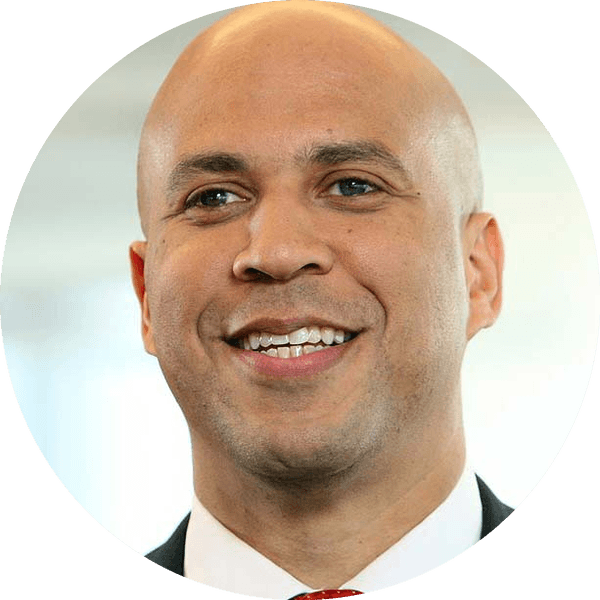
Cory Booker
Democrat · NJ
FDA rules should stop treating animal tests as the default
Why it matters
Congress dropped the federal requirement for animal testing before human drug trials in 2022, but 21 FDA regulations still describe the evidence sponsors must submit as "animal" data. S. 355 gives the FDA 1 year to rewrite them, so a company relying on cell-based assays, organ-on-a-chip systems, or computer models reads the same answer in the rulebook that it reads in the law.
In late 2022, Congress passed the FDA Modernization Act 2.0, which removed the long-standing federal requirement that drugs be tested on animals before human trials. Sponsors could instead submit nonclinical evidence: cell-based tests, microphysiological systems like organ chips, and computer modeling.
The law changed. The regulations that tell companies what to put in their applications mostly did not. The bill names 21 specific FDA rules, covering investigational drug applications, new drug approvals, generics, diagnostic imaging drugs, over-the-counter drug reviews, and biologics, that still refer to animal tests, data, studies, models, or research.
S. 355 orders the FDA to swap that animal-only wording for "nonclinical" wording within 1 year, so the agency's own rules stop presenting animal studies as the only route into human trials. It also writes the legal definition of "nonclinical test" into the FDA's core definition lists, and lets the agency fix any other rule needed for consistency.
The FDA would issue the change as an interim final rule that takes effect the day it is published. Normally an agency has to justify skipping advance public comment before a rule takes effect; this bill waives that requirement.
None of this bans animal testing. Companies that want to keep running animal studies can. What changes is the default: a reviewer reading the updated rules would see non-animal evidence named as an accepted way to show a drug is safe enough to test in people. Whether reviewers accept that evidence in practice is a separate question the bill does not settle.
The bill also carries a housekeeping fix: the 2022 omnibus accidentally created two subsections with the same letter in the drug-approval statute, and S. 355 relabels one of them.
Bill Progress
Latest Action · Dec 17, 2025
Passed the Senate, received in House
S. 355 Bill Summary
What S. 355 actually does.
A 1-year deadline to fix the rulebook
The Department of Health and Human Services, acting through the FDA commissioner, must publish the updated rule within 1 year of enactment. With 21 named regulations, that works out to roughly one rule rewritten every two and a half weeks.
"Animal" becomes "nonclinical" across drug application rules
Every listed reference to animal tests, data, studies, models, and research is replaced with nonclinical terminology, which covers animal studies and non-animal methods alike.
One definition of "nonclinical test" everywhere
The statutory definition, which includes cell-based assays, organ chips and other microphysiological systems, computer modeling, and animal tests, is added to the definition lists for investigational drugs, drug approvals, diagnostic imaging drugs, and biologics.
The change takes effect on publication
The rule is effective immediately as an interim final rule. The FDA does not have to show good cause for skipping advance notice and comment, a step that can otherwise add months.
Biologics, generics, and OTC drugs are covered
The listed rules reach beyond new prescription drugs to generic drug applications, over-the-counter drug reviews, imaging drugs, and biologics such as vaccines and antibodies, plus any other rule needed for consistency.
Who benefits from S. 355?
Drug and biotech developers using human-based models
A startup testing a compound on human organ chips or with computer toxicology models would see its evidence named in the same rules that govern its application, instead of relying on a statute the regulations never caught up to.
Companies that build non-animal testing tools
Makers of organ-on-a-chip platforms, 3D tissue models, and predictive software sell to drug sponsors. A rulebook that names their kind of data as acceptable makes that sale easier to justify to a sponsor's regulatory team.
Animal welfare advocates
Supporters of non-animal methods have backed both the 2022 law and this follow-up. The bill does not ban animal testing, but it removes regulatory wording that nudges sponsors toward it by default.
Patients waiting on new treatments
Supporters argue human-based models can predict human responses more directly than animal studies. If that holds, clearer rules could help sponsors reach early trials with more relevant safety data.
Who is affected by S. 355?
The FDA
The agency must rewrite at least 21 regulations on a 1-year clock and then apply the updated terms when reviewing real applications.
Sponsors who rely on animal studies
Nothing in the bill stops them. Their animal data still qualifies, since "nonclinical" includes animal tests.
Contract labs built around animal testing
Firms that run preclinical animal studies for drug companies could see some of that work shift to non-animal methods if sponsors take up the updated rules.
What Congress Is Saying
S. 355 has come up 4 times in the Congressional Record so far.
S. 355 also appeared in 2 more Senate floor references and 1 routine cosponsor filing.
S355 Legislative Journey
House: Action Taken
Dec 17, 2025
Held at the desk.
Passed
Dec 16, 2025
Passed Senate with an amendment by Unanimous Consent. (text of amendment in the nature of a substitute: CR S8794)
+4 more actions this day
Committee Action
Feb 3, 2025
Read twice and referred to the Committee on Health, Education, Labor, and Pensions.
About the Sponsor
Cory Booker
Democrat, NJ · 13 years in Congress
Committees: Small Business and Entrepreneurship, Agriculture, Nutrition, and Forestry, Foreign Relations
View full profile →
Cosponsors (9)
This bill has 9 cosponsors: 4 Democrats, 4 Republicans, 1 Independent, reflecting bipartisan support. Cosponsors represent 9 states: California, Connecticut, Kansas, and 6 more.
Committee Sponsors
Health, Education, Labor, and Pensions Committee
2 of 23 committee members cosponsored


10 Democrats across this committee haven't cosponsored yet. Mobilize their constituents
S. 355 Quick Facts


- Committee
- Health, Education, Labor, and Pensions
- Chamber
- Senate
- Policy
- Health
- Introduced
- Feb 3, 2025
Passed the Senate, received in House
Dec 17, 2025
Official Sources
Full text, cosponsors, and action history for the FDA Modernization Act 3.0, including its December 2025 Senate passage.
The 2022 law that dropped the federal animal-testing requirement before human trials, which S. 355 makes the FDA carry into its regulations.
The drug-approval statute whose "nonclinical test" definition S. 355 writes into the FDA rulebook and whose duplicate subsection the bill relabels.
The FDA overview of organ chips, computer models, and cell-based assays, the non-animal methods the updated rules would name.
The FDA April 2025 plan for phasing in non-animal safety methods, starting with monoclonal antibodies.
The FDA April 2026 progress report on its roadmap, showing where agency practice stands as S. 355 awaits House action.
The federal committee, housed at NIH, that coordinates validation of the non-animal test methods sponsors could rely on.
S. 355 Common Questions
What is the FDA Modernization Act 3.0?
S. 355 orders the FDA to rewrite 21 of its drug and biologics regulations within 1 year so they recognize non-animal testing methods, matching a change Congress made to federal law in 2022.
Does S. 355 ban animal testing?
No. Companies can still run animal studies, and that data still counts. The bill replaces animal-only wording with "nonclinical," a term that covers animal tests and non-animal methods alike.
How is this different from the FDA Modernization Act 2.0?
The 2022 law changed the statute so sponsors no longer have to use animal tests before human trials. S. 355 makes the FDA update its own regulations, which still ask for animal data in many places.
What counts as a nonclinical test?
Under federal law, it includes cell-based assays, organ chips and other microphysiological systems, computer modeling, other human or nonhuman biology-based methods, and animal tests.
Has S. 355 passed?
It passed the Senate by unanimous consent on December 16, 2025, with an amendment. The House received it the next day, and it is held at the desk. It needs House passage and the President's signature.
When would the new FDA rules take effect?
The FDA has 1 year after enactment to publish them, and they take effect the day they are published, without the usual advance public-comment period.
Which products does S. 355 cover?
New prescription drugs, generics, over-the-counter drugs, diagnostic imaging drugs, and biologics such as vaccines and antibodies. The FDA can also update any other rule needed for consistency.
Who is sponsoring S. 355?
Sen. Cory Booker (D-NJ) introduced it with bipartisan cosponsors including Rand Paul (R-KY), Eric Schmitt (R-MO), Roger Marshall (R-KS), Sheldon Whitehouse (D-RI), Angus King (I-ME), and Adam Schiff (D-CA).
Based on S. 355 bill text
S. 355 Bill Text
“To require the Secretary of Health and Human Services, acting through the Commissioner of Food and Drugs, to publish a final rule relating to nonclinical testing methods.”
Source: U.S. Government Publishing Office
Get notified when S. 355 moves
Committee votes, floor action, cosponsor changes — straight to your inbox.
Bill alerts + Legisletter's monthly briefing. Unsubscribe anytime.
Health Bills
9 related bills we're tracking
Nancy Gardner Sewell Medicare Multi-Cancer Early Detection Screening Coverage Act
Reported (Amended) by the Committee on Ways and Means. H. Rept. 119-333, Part I.
Oct 3, 2025
Mikaela Naylon Give Kids a Chance Act



Received in the Senate.
Dec 2, 2025
Improving Seniors’ Timely Access to Care Act of 2025
Ordered to be Reported in the Nature of a Substitute by the Yeas and Nays: 42 - 0.
Jul 15, 2026
CONNECT for Health Act of 2025



Referred to the Committee on Energy and Commerce, and in addition to the Committee on Ways and Means, for a period to be subsequently determined by the Speaker, in each case for consideration of such provisions as fall within the jurisdiction of the committee concerned.
Jun 26, 2025
ASAP Act
Ordered to be Reported in the Nature of a Substitute by the Yeas and Nays: 40 - 0.
Sep 16, 2026
Momnibus Act


Referred to the Subcommittee on Health.
Apr 20, 2026
Ensuring Lasting Smiles Act

Referred to the Committee on Energy and Commerce, and in addition to the Committees on Education and Workforce, and Ways and Means, for a period to be subsequently determined by the Speaker, in each case for consideration of such provisions as fall within the jurisdiction of the committee concerned.
May 8, 2025
Right to Contraception Act
Referred to the House Committee on Energy and Commerce.
Feb 5, 2025
Women’s Health Protection Act of 2025

Referred to the Committee on Energy and Commerce, and in addition to the Committee on the Judiciary, for a period to be subsequently determined by the Speaker, in each case for consideration of such provisions as fall within the jurisdiction of the committee concerned.
Jun 24, 2025
Trending Right Now
Bills gaining momentum across Congress
North Platte Canteen Congressional Gold Medal Act

Referred to the House Committee on Financial Services.
Feb 21, 2025
Fit to Serve Act
Referred to the House Committee on Armed Services.
May 21, 2025
Safe Schools Improvement Act
Referred to the House Committee on Education and Workforce.
Mar 3, 2025
Tracking Health in Congress? Monitor bills, track cosponsor momentum, and launch advocacy campaigns — all from one advocacy platform.