H.R. 5557: Mental Health Services for Students Act of 2025
Sponsor

Andrea Salinas
Democrat · OR-6
School becomes the front door for kids' mental health care
Why it matters
H.R. 5557 would authorize $300 million a year, in fiscal years 2027 and 2028, to put comprehensive mental health services inside schools, with single grants capped at $2 million and running five years at a time. The design choice that matters: a school can't take this money on its own — a state education agency has to apply alongside at least one community mental health provider, so a struggling kid gets a real clinical connection instead of a referral list. It has 65 cosponsors — nearly all Democrats, plus three Republicans — and is sitting in the House Energy and Commerce Committee.
H.R. 5557 rewrites a federal program so it funds comprehensive school-based mental health services for kids dealing with traumatic experiences, grief, suicide risk, and violence — including students in schools funded by the Bureau of Indian Education.
The central rule is who can apply. A school district can't go after this money by itself. The applicant has to be a partnership: a state education agency working with local schools, plus at least one community-based mental health provider — a clinic, a health system, a family-based provider, or a trauma network.
The money can pay for direct school- and community-based mental health programs, training staff to spot trauma or suicide risk, technical help for communities building these programs, and systems for students to report violence or threats. Services have to be trauma-informed and appropriate for a child's age, language, and culture.
The terms are long by federal standards. Awards run five years with renewal options. A single grant can't exceed $2 million, and its size is set by the number of children up to age 21 in the area being served. No more than 20% of a grant can go to evaluation, which keeps most of it on actual services.
Privacy is built into the structure. Health records created through the program have to follow federal health privacy rules, and student-record protections apply to every partner in the arrangement — not just inside the school walls.
The money is authorized, not guaranteed. The bill calls for $300 million in fiscal year 2027 and another $300 million in 2028, but Congress would still have to appropriate it. The bill hasn't moved out of committee since it was introduced.
Bill Progress
Latest Action · Sep 23, 2025
Referred to the House Committee on Energy and Commerce.
H.R. 5557 Bill Summary
What H.R. 5557 actually does.
Mental health support moves into the school building
The program funds comprehensive school-based services for children dealing with trauma, grief, suicide risk, and violence — including direct treatment, staff trained to identify warning signs, and systems for students to report threats. Schools funded by the Bureau of Indian Education are explicitly included.
No school can take this money alone
Every application must be a partnership: a state education agency in coordination with local schools, plus at least one community-based mental health provider such as a clinic, health system, family-based provider, or trauma network.
$300 million a year is authorized through 2028
The bill authorizes $300 million for fiscal year 2027 and $300 million for fiscal year 2028 to carry out the school-based mental health program.
Single grants run five years and cap at $2 million
Awards last five years with options for renewal. No single grant can exceed $2 million, and the amount is set by the population of children up to age 21 in the area being served.
Most of the money has to reach services, not evaluation
A recipient can spend no more than 20% of a grant on evaluation activities, leaving at least 80% for running the actual programs and services.
Privacy rules travel with the whole partnership
Patient records created through the program have to follow federal health privacy rules, and student-record privacy protections apply to every member of the partnership in the same way they apply to a school.
Who benefits from H.R. 5557?
Students dealing with trauma, grief, suicide risk, or violence
The program is built around these kids. Help would come through the school they already attend every day, rather than a separate system their family has to find and navigate on their own.
Families without a clear path to mental health care
Parents and caregivers could see formal partnerships between their school and local providers, which can make a referral, treatment, and follow-up easier to reach than starting from scratch.
Students in Bureau of Indian Education schools
The bill names these schools explicitly, so students in them aren't left out of a program centered on the school day.
School districts without the staff to handle this
Districts could join a partnership eligible for up to $2 million and bring in outside clinical capacity, instead of leaning on a single overloaded counselor.
Who is affected by H.R. 5557?
State education agencies
A state education agency has to be the lead applicant in every partnership, so states would have to coordinate applications and help structure the school-provider network.
Local school districts and staff
Participating districts would work with outside providers, support staff training, track and report outcomes annually, and operate inside federal privacy requirements.
Community mental health providers
Clinics, health systems, family-based providers, and trauma networks would take on direct service delivery, coordination with schools, reporting, and privacy compliance.
HHS and the Department of Education
Federal agencies would run the grant competition, define outcome measures, review annual reports, report results to Congress, and spread funding across regions and across urban and rural areas.
Cost & Funding
Authorization
$300 million for each of fiscal years 2027 and 2028
- Single grants are capped at $2 million.
- If every award hit the cap, $300 million would fund roughly 150 maximum-size grants in a year.
- Grants are sized by the local child population up to age 21, so most land below the cap and the number of funded partnerships would run higher.
- Awards last five years and can be renewed.
- No more than 20% of a grant can go to evaluation, leaving at least 80% for services.
- Funding has to be spread across regions and across urban and rural areas.
- This is authorization, not appropriation — Congress would still have to provide the cash.
HR5557 Legislative Journey
House: Committee Action
Sep 23, 2025
Referred to the House Committee on Energy and Commerce.
About the Sponsor
Andrea Salinas
Democrat, Oregon's 6th congressional district · 3 years in Congress
Committees: Science, Space, and Technology, Agriculture
View full profile →
Cosponsors (68)
This bill has 68 cosponsors: 65 Democrats, 3 Republicans. Cosponsors represent 29 states: California, Colorado, Connecticut, and 26 more.
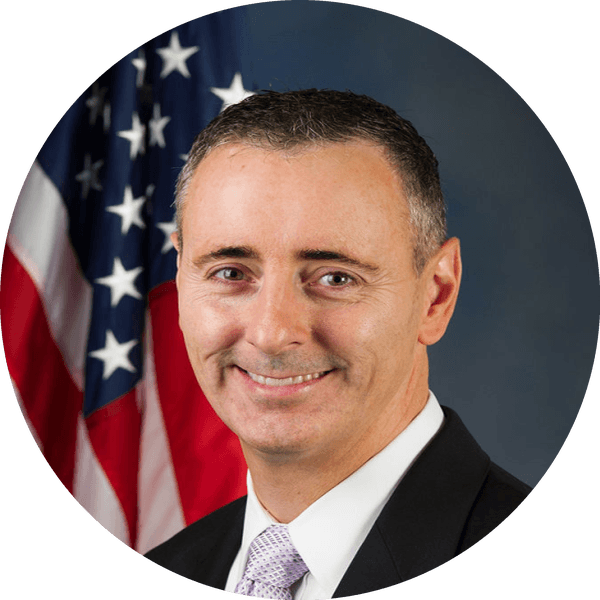
Brian Fitzpatrick
Republican · PA

Nanette Barragán
Democrat · CA

Suzanne Bonamici
Democrat · OR

Julia Brownley
Democrat · CA

Nikki Budzinski
Democrat · IL

Mike Carey
Republican · OH

Yvette Clarke
Democrat · NY

Steve Cohen
Democrat · TN

Angie Craig
Democrat · MN

Madeleine Dean
Democrat · PA

Suzan DelBene
Democrat · WA

Lloyd Doggett
Democrat · TX
Committee Sponsors
Energy and Commerce Committee
11 of 54 committee members cosponsored


13 Democrats across this committee haven't cosponsored yet. Mobilize their constituents
What laws does H.R. 5557 change?
1 changes
Sections Amended
Section 581 of Public Health Service Act (42 U.S.C. 290hh) (relating to children and violence)
read as follows: ``SEC
H.R. 5557 Quick Facts
- Committee
- Energy and Commerce
- Chamber
- House
- Policy
- Health
- Introduced
- Sep 23, 2025
Referred to the House Committee on Energy and Commerce.
Sep 23, 2025
Official Sources
Official legislative status page for the Mental Health Services for Students Act of 2025.
The current text of Section 581 of the Public Health Service Act that H.R. 5557 rewrites to create the school-based mental health program.
The existing federal school mental health grant program built on state education agency and community provider partnerships, the model H.R. 5557 expands.
Official SAMHSA hub for school-based behavioral health programs that aligns with the comprehensive in-school services this bill would fund.
Official federal mental health resource page for children and families relevant to the bill's focus on student trauma, grief, and suicide risk.
Official HHS guidance on the HIPAA Privacy Rule, which the bill expressly applies to patient records developed by covered entities in these partnerships.
Official Department of Education FERPA resource explaining the student record privacy rules the bill extends across every partnership member.
Bureau of Indian Education behavioral health page, relevant because the bill explicitly includes BIE-funded schools among those eligible for services.
H.R. 5557 Common Questions
How much money does H.R. 5557 provide?
It authorizes $300 million for fiscal year 2027 and another $300 million for 2028. Any single grant is capped at $2 million.
Can a school district get this money on its own?
No. The applicant has to be a partnership: a state education agency working with local schools, plus at least one community-based mental health provider. A school can't apply alone.
What would the money actually pay for?
Direct school- and community-based mental health programs, training staff to spot trauma or suicide risk, technical help for communities building these programs, and systems for kids to report violence or threats.
Who would see my child's mental health records?
Health records created through the program have to follow federal health privacy rules, and student-record protections apply to every partner in the arrangement — not just the school.
Are students in Bureau of Indian Education schools included?
Yes. H.R. 5557 names schools funded by the Bureau of Indian Education explicitly, so their students are part of who can be served.
How long would a grant last?
Five years, with options for renewal — a longer runway than a typical short pilot program.
How much can go to studying the program instead of running it?
No more than 20% of a grant can be spent on evaluation, so at least 80% stays available for the actual services.
If H.R. 5557 passes, is the money guaranteed?
No. The bill authorizes funding, but Congress would still have to appropriate it before grants go out. As of now, the bill hasn't moved out of the House Energy and Commerce Committee.
Based on H.R. 5557 bill text
H.R. 5557 Bill Text
“To amend the Public Health Service Act to revise and extend projects relating to children and to provide access to school-based comprehensive mental health programs.”
Source: U.S. Government Publishing Office
Get notified when H.R. 5557 moves
Committee votes, floor action, cosponsor changes — straight to your inbox.
Bill alerts + Legisletter's monthly briefing. Unsubscribe anytime.
Health Bills
9 related bills we're tracking
Nancy Gardner Sewell Medicare Multi-Cancer Early Detection Screening Coverage Act





Reported (Amended) by the Committee on Ways and Means. H. Rept. 119-333, Part I.
Oct 3, 2025
Mikaela Naylon Give Kids a Chance Act





Received in the Senate.
Dec 2, 2025
Improving Seniors’ Timely Access to Care Act of 2025


Ordered to be Reported in the Nature of a Substitute by the Yeas and Nays: 42 - 0.
Jul 15, 2026
CONNECT for Health Act of 2025



Referred to the Committee on Energy and Commerce, and in addition to the Committee on Ways and Means, for a period to be subsequently determined by the Speaker, in each case for consideration of such provisions as fall within the jurisdiction of the committee concerned.
Jun 26, 2025
ASAP Act



Ordered to be Reported in the Nature of a Substitute by the Yeas and Nays: 40 - 0.
Sep 16, 2026
Momnibus Act




Referred to the Subcommittee on Health.
Apr 20, 2026
Ensuring Lasting Smiles Act



Referred to the Committee on Energy and Commerce, and in addition to the Committees on Education and Workforce, and Ways and Means, for a period to be subsequently determined by the Speaker, in each case for consideration of such provisions as fall within the jurisdiction of the committee concerned.
May 8, 2025
Right to Contraception Act


Referred to the House Committee on Energy and Commerce.
Feb 5, 2025
Women’s Health Protection Act of 2025



Referred to the Committee on Energy and Commerce, and in addition to the Committee on the Judiciary, for a period to be subsequently determined by the Speaker, in each case for consideration of such provisions as fall within the jurisdiction of the committee concerned.
Jun 24, 2025
Trending Right Now
Bills gaining momentum across Congress
North Platte Canteen Congressional Gold Medal Act


Referred to the House Committee on Financial Services.
Feb 21, 2025
America’s Olympic and Paralympic Games Commemorative Coins Act





Referred to the House Committee on Financial Services.
Jul 14, 2025
Fit to Serve Act



Referred to the House Committee on Armed Services.
May 21, 2025
Tracking Health in Congress? Monitor bills, track cosponsor momentum, and launch advocacy campaigns — all from one advocacy platform.