I appreciate it. Mr. Chair, I rise in support of H.R. 2483, the SUPPORT for Patients and Communities Reauthorization Act of 2025. The SUPPORT for Patients and Communities Reauthorization Act of 2025 is one of the most impactful bills the Committee on Energy and Commerce has worked on during my time in Congress. Simply put, we came together to implement bipartisan policies that would save lives. Gone are the days that substance abuse and addiction are a far off problem that doesn't impact each one of our districts.
H.R. 2483: SUPPORT for Patients and Communities Reauthorization Act of 2025
Introduced Mar 31, 20251 cosponsors
Sponsor
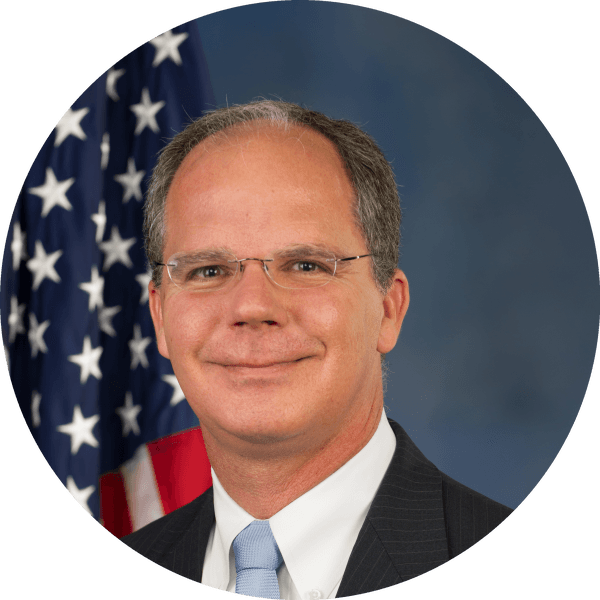
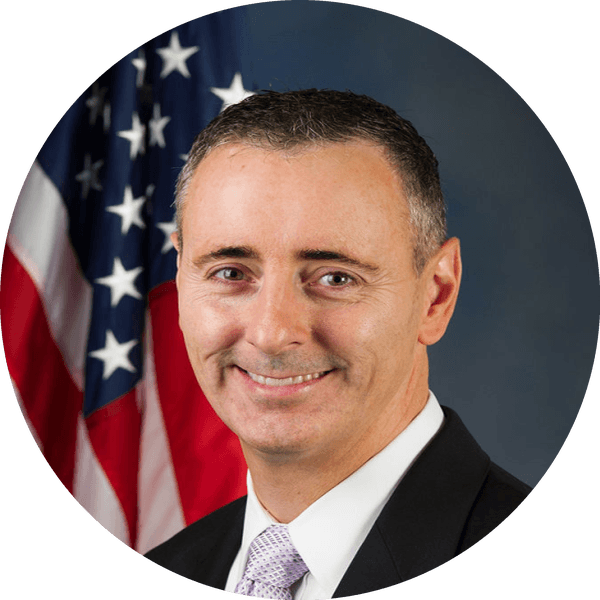
Brett Guthrie
Republican · KY-2
Federal overdose programs renewed and funded through 2030
4 min readLast updated June 14, 2026
Why it matters
The grants behind overdose prevention, addiction treatment, and recovery were running on funding authority that had already lapsed. This law renews them through 2030 and raises several of them — overdose surveillance to about $506 million a year, first responder training from $36 million to $57 million, recovery community grants from $5 million to $17 million — while rewriting opioid-only rules to cover fentanyl and the other drugs driving overdoses today.
At its core, this is a renewal. A wave of overdose and addiction programs created in the 2018 SUPPORT Act had funding authority that expired, and this law extends them through 2030 so states, tribes, hospitals, and community groups can keep running services that depend on the grants.
It also widens the lens. Where the old rules said "opioids," several sections now say "substances causing overdose," a shift toward treating fentanyl, xylazine, and polysubstance use as the real problem. The overdose surveillance program can now fund newer detection tools like wastewater testing, and a separate provision lets state and tribal grants pay for fentanyl and xylazine test strips where they're legal.
Families get more attention too. The law renews residential treatment for pregnant and postpartum women, the child traumatic stress initiative, youth prevention and recovery, and it rewrites the federal fetal alcohol spectrum disorder framework to cover education, diagnosis, research, and services.
What it doesn't do is build a new national treatment system or guarantee care to everyone who needs it. Reauthorization sets the ceiling for what Congress can spend, not the floor. The real-world effect depends on whether the yearly appropriations bills actually fund these programs at the levels the law now permits.
Bill Progress
IntroducedMar 31
Committee
Pass HouseJun 4
Pass SenateSep 18
SignedDec 1
LawDec 1
Latest Action · Dec 1, 2025
1/3
Became Public Law No: 119-44.
H.R. 2483 Bill Summary
What H.R. 2483 actually does.
1
Overdose surveillance renewed and broadened past opioids
The main overdose prevention and tracking program is reauthorized at $505,579,000 a year through 2030, up from $496 million. Its language shifts from opioids to "substances causing overdose," and it can now fund tools like wastewater surveillance where privacy laws allow.
2
First responder training funding jumps to $57 million
The grant that trains and equips first responders rises from $36 million to $57 million a year and is rewritten to cover overdose reversal drugs and devices for non-opioid overdoses, not just opioid ones.
3
Fentanyl gets its own federal work group
Through a section the bill labels Bruce's Law, the law creates a Federal Interagency Work Group on Fentanyl Contamination of Illegal Drugs and pushes prevention efforts to warn youth about drugs laced with fentanyl. A separate provision lets state and tribal grants buy fentanyl and xylazine test strips where legal.
4
Recovery community grants more than triple
Building Communities of Recovery grants go from $5 million to $17 million a year. The law also renews peer support, comprehensive opioid recovery centers, and lets CAREER Act job grants spend up to 5% on transportation to work or treatment.
5
Bigger investment in the treatment workforce
Loan repayment for the substance use disorder treatment workforce rises from $25 million to $40 million a year, on top of renewed mental and behavioral health education and training grants.
6
988 crisis line must report cyber incidents
The law requires the 988 Suicide and Crisis Lifeline's network administrator and crisis centers to report cybersecurity vulnerabilities and incidents to HHS, and orders a GAO study of the line's cyber risks within 180 days.
Who benefits from H.R. 2483?
People in or seeking recovery
Renewed treatment, overdose response, peer support, and recovery housing programs keep the services they rely on funded through 2030, with recovery community grants more than tripled.
States, tribes, and local health agencies
They keep grant authority and technical support to track overdoses, run prevention programs, and buy newer tools like fentanyl test strips and wastewater surveillance where legal.
Pregnant and postpartum women and their families
Residential treatment for women is renewed at $38,931,000 a year, and prenatal and postnatal health activities are funded at $4,250,000 a year through 2030.
First responders and the treatment workforce
First responder training funding rises to $57 million a year, and loan repayment for addiction treatment providers rises to $40 million a year.
Who is affected by H.R. 2483?
Hospitals, clinics, and treatment programs
They will compete for renewed grants and may need to align with new HHS guidance and broader overdose surveillance and treatment priorities.
988 crisis centers and network administrators
They now carry new duties to report cybersecurity vulnerabilities and incidents to HHS and to oversee the technology they use.
Pharmacies and prescribers
The law lets pharmacies deliver certain Schedule III, IV, and V drugs to practitioners for in-office treatment, and adds more accrediting groups whose courses satisfy the federal prescriber training requirement.
Schools and child-serving agencies
They are affected through expanded child trauma, youth prevention, and FASD education and coordination efforts.
Cost & Funding
Authorization
The law reauthorizes programs through FY2026-FY2030, raising several above their prior levels. The largest single line is $505,579,000 per year for overdose prevention and surveillance.
- Overdose prevention and surveillance: $505,579,000 a year (Section 103), up from $496,000,000.
- First responder training: $57,000,000 a year (Section 106), up from $36,000,000.
- Residential treatment for pregnant and postpartum women: $38,931,000 a year (Section 201), up from $29,931,000.
- Substance use disorder treatment workforce loan repayment: $40,000,000 a year (Section 204), up from $25,000,000.
- Building Communities of Recovery: $17,000,000 a year (Section 301), up from $5,000,000.
- Child Traumatic Stress Initiative: about $98,887,000 a year, rising to $100,000,000 in 2029 and 2030 (Section 107).
- Reauthorization sets the ceiling on spending; actual dollars depend on the annual appropriations bills.
On the Record
What Congress Is Saying
H.R. 2483 cleared both chambers and was presented to the President on Nov 25, 2025.
Mr. Chair, I rise today in support of H.R. 2483, the SUPPORT for Patients and Communities Reauthorization Act. This bill is a critical piece of legislation that will help bolster prevention, treatment, and recovery for millions of Americans suffering from substance abuse disorders. Thanks to the investments from the original SUPPORT for Patients and Communities Act in 2018 and the efforts of the Trump administration, we are finally starting to see a decrease in the overdose death rate. Florida is a shining example of this progress.
Mr. Chair, I rise today in support of H.R. 2483, the SUPPORT for Patients and Communities Reauthorization Act. When the Committee on Energy and Commerce led the way on the original SUPPORT for Patients and Communities Act 7 years ago under the leadership of Chairman Greg Walden, the opioid crisis looked different. Overdose deaths were largely driven by prescription and semisynthetic opioids, like oxycodone and heroin.
Mr. Speaker, today I did not vote on Roll Call Nos. 148 and 149, as I was meeting with constituents. Had I been present, I would have voted NO on Roll Call No. 148, Ordering the previous question of H. Res. 458, and NO on Roll Call No. 149, Providing for consideration of H.R. 2483, SUPPORT for Patients and Communities Reauthorization Act of 2025; H.R. 2931, Save SBA from Sanctuary Cities Act of 2025; H.R. 2966, American Entrepreneurs First Act of 2025; and H.R. 2987, CEASE Act of 2025.
Mr. Speaker, I thank my good friend and colleague from Minnesota for yielding. Mr. Speaker, I rise today in support of this rule and the underlying bill, H.R. 2931, the Save SBA from Sanctuary Cities Act of 2025. Over the past 4 years, the Biden administration's open-border policies have allowed millions of illegal immigrants to pour into our country.
H.R. 2483 also appeared in 1 in the Extensions of Remarks and 6 routine cosponsor filings.
HR2483 Legislative Journey
Signed into Law
Dec 1, 2025
Became Public Law No: 119-44.
+3 more actions this day
Action Taken
Nov 25, 2025
Presented to President.
Action Taken
Sep 19, 2025
Message on Senate action sent to the House.
Passed
Sep 18, 2025
Passed Senate without amendment by Unanimous Consent. (consideration: CR S6712)
+3 more actions this day
Committee Action
Jun 5, 2025
Received in the Senate and Read twice and referred to the Committee on Health, Education, Labor, and Pensions.
House: Passed 366-57
Jun 4, 2025
On passage Passed by the Yeas and Nays: 366 - 57 (Roll no. 151).
+20 more actions this day
House: Committee Action
Jun 3, 2025
Rules Committee Resolution H. Res. 458 Reported to House. Rule provides for consideration of H.R. 2483, H.R. 2931, H.R. 2966 and H.R. 2987. The resolution provides for consideration of H.R. 2483 under a structured rule and for consideration of H.R. 2931, H.R. 2966, and H.R. 2987 under a closed rule. The resolution provides for one hour of debate and one motion to recommit on each bill.
House: Committee Action
May 29, 2025
Committee on Financial Services discharged.
House: Vote: 36-13
Apr 29, 2025
Ordered to be Reported (Amended) by the Yeas and Nays: 36 - 13.
House: Committee Action
Mar 31, 2025
Referred to the Committee on Energy and Commerce, and in addition to the Committees on Education and Workforce, the Judiciary, and Financial Services, for a period to be subsequently determined by the Speaker, in each case for consideration of such provisions as fall within the jurisdiction of the committee concerned.
About the Sponsor
Brett Guthrie
Republican, Kentucky's 2nd congressional district · 17 years in Congress
Committees: Energy and Commerce
View full profile →
Cosponsors at time of passage (1)
This bill has 1 cosponsor: 1 Democrat. Cosponsors represent 1 state: Colorado.
1Democrat·1 state
Committee Sponsors
Health, Education, Labor, and Pensions Committee
10D12R1I
|0 signed23 others0 of 23 committee members cosponsored at the time
No committee members have cosponsored this bill
Financial Services Committee
23D30R
|1 signed52 others1 of 53 committee members cosponsored at the time

Judiciary Committee
19D24R1I
|0 signed44 others0 of 44 committee members cosponsored at the time
No committee members have cosponsored this bill
Education and Workforce Committee
16D20R1I
|0 signed37 others0 of 37 committee members cosponsored at the time
No committee members have cosponsored this bill
Energy and Commerce Committee
24D30R
|0 signed54 others0 of 54 committee members cosponsored at the time
No committee members have cosponsored this bill
What laws does H.R. 2483 change?
10 changes
Sections Amended
Section 317L(d) of Public Health Service Act (42 U.S.C. 247b- 13(d))
striking ``such sums as may be necessary for each of the fiscal years 2019 through 2023'' and inserting ``$4,250,000 for each of fiscal years 2026 through 2030''
Section 317N(d) of Public Health Service Act (42 U.S.C. 247b- 15(d))
striking ``fiscal years 2019 through 2023'' and inserting ``fiscal years 2026 through 2030''
Section 392A(e) of Public Health Service Act (42 U.S.C. 280b-1(e))
striking ``$496,000,000 for each of fiscal years 2019 through 2023'' and inserting ``$505,579,000 for each of fiscal years 2026 through 2030''
Section 399O(h) of Public Health Service Act (42 U.S.C. 280g- 3(h))
adding at the end the following: ``(5) Promoting state choice
Section 7131(e) of SUPPORT for Patients and Communities Act (42 U.S.C. 242t(e))
striking ``$2,000,000 for each of fiscal years 2019 through 2023'' and inserting ``$9,000,000 for each of fiscal years 2026 through 2030''
Section 756(f) of Public Health Service Act (42 U.S.C. 294e- 1(f))
striking ``fiscal years 2023 through 2027'' and inserting ``fiscal years 2026 through 2030''
H.R. 2483 Quick Facts
Cosponsors
1
- Committee
- Health, Education, Labor, and Pensions
- Chamber
- House
- Policy
- Health
- Introduced
- Mar 31, 2025
Became Public Law No: 119-44.
Dec 1, 2025
Official Sources
H.R. 2483 on Congress.gov
Official bill text, cosponsors, and full legislative history for the SUPPORT for Patients and Communities Reauthorization Act of 2025
SAMHSA Grants for Mental Health and Substance Use
SAMHSA administers most of the grant programs reauthorized by this law, including overdose prevention, treatment, and recovery grants
CDC Overdose Data to Action Program
The CDC cooperative agreement that funds 90 health departments for drug overdose surveillance and prevention — a key program this bill supports
CDC Overdose Prevention Data Resources
CDC data dashboards tracking fatal and nonfatal overdoses nationwide, the surveillance infrastructure this law reauthorizes
CDC About Fetal Alcohol Spectrum Disorders
The federal overview of FASD signs, diagnosis, and prevention — this law significantly expands the federal framework for FASD education, diagnosis, and intervention
SAMHSA National Child Traumatic Stress Initiative
The federal initiative for child trauma programs reauthorized under Section 107 with nearly $100M per year through FY2030
SAMHSA Recovery and Support Services
Recovery support programs including building communities of recovery and peer support services reauthorized under Title III of this law
988 Suicide & Crisis Lifeline (SAMHSA)
The federal crisis line this law protects with new cybersecurity reporting duties for its network administrator and crisis centers
About Legisletter
Legisletter is the advocacy platform that tracks every bill from introduction to Public Law — and connects the constituents affected by a bill to the legislators who vote on it.
Who is lobbying on H.R. 2483?
16 organizations lobbying on this bill
Total filings: 39
Foreign interests: 1
NATIONAL ASSOCIATION OF BOARDS OF PHARMACY | 6 |
BREAKING BARRIERS TO SUBSTANCE USE RECOVERY | 6 |
EMERGENT BIOSOLUTIONS INC. | 4 |
AMERICAN ACADEMY OF FAMILY PHYSICIANS | 3 |
TOBACCO-FREE KIDS ACTION FUND FKA GLOBAL HEALTH ADVOCACY INCUBATOR (GHAI) | 3 |
MENTAL HEALTH AMERICA | 3 |
NATIONAL ASSOCIATION OF COMMUNITY HEALTH CENTERS | 2 |
JOHNSON & JOHNSON SERVICES, INC. | 2 |
MENTAL HEALTH ASSOCIATION OF NEW YORK CITY, INC. (DBA VIBRANT EMOTIONAL HEALTH) | 2 |
EMERGENT BIOSOLUTIONS | 2 |
Showing 1-10 of 16 organizations
H.R. 2483 Common Questions
Is H.R. 2483 now law?
Yes. The House passed it 366-57, the Senate cleared it by unanimous consent, and the President signed it on December 1, 2025, making it Public Law 119-44.
What does the law actually do?
It renews a set of overdose, addiction treatment, and recovery programs from the 2018 SUPPORT Act through 2030, and updates many of them to address fentanyl and other drugs, not just opioids.
How much funding goes to overdose prevention and surveillance?
The main overdose prevention and tracking program is funded at $505,579,000 a year through 2030, up from $496 million. It can now cover emerging substances and tools like wastewater surveillance where privacy laws allow.
Does the law do anything specifically about fentanyl?
Yes. Through a section labeled Bruce's Law, it creates a Federal Interagency Work Group on Fentanyl Contamination of Illegal Drugs and lets state and tribal grants pay for fentanyl and xylazine test strips where they're legal.
How much does it provide for first responder overdose training?
First responder training is funded at $57,000,000 a year through 2030, up from $36 million. The program now covers reversal drugs and devices for non-opioid overdoses, not just opioid ones.
What's in it for people in recovery?
Recovery community grants rise from $5 million to $17 million a year, peer support and opioid recovery centers are renewed, and CAREER Act job grants can now spend up to 5% on transportation to work or treatment.
Does it help pregnant women struggling with addiction?
Yes. Residential treatment for pregnant and postpartum women is renewed at $38,931,000 a year, and prenatal and postnatal health activities are funded at $4,250,000 a year through 2030.
Why does the law require 988 to report cybersecurity incidents?
It adds rules for the 988 Suicide and Crisis Lifeline so its network administrator and crisis centers must report cyber vulnerabilities and incidents to HHS, and it orders a GAO study of the line's cyber risks within 180 days.
Based on H.R. 2483 bill text
H.R. 2483 Bill Text
“To reauthorize certain programs that provide for opioid use disorder prevention, treatment, and recovery, and for other purposes.”
Source: U.S. Government Publishing Office
Bill Alerts
Get notified when H.R. 2483 moves
Committee votes, floor action, cosponsor changes — straight to your inbox.
Bill alerts + Legisletter's monthly briefing. Unsubscribe anytime.
Health Bills
9 related bills we're tracking
H.R. 842
Nancy Gardner Sewell Medicare Multi-Cancer Early Detection Screening Coverage Act
Jodey ArringtonR-TX
+334
338 cosponsors
Reported (Amended) by the Committee on Ways and Means. H. Rept. 119-333, Part I.
Oct 3, 2025
HouseHealth
H.R. 1262
Mikaela Naylon Give Kids a Chance Act

Michael McCaulR-TX


+309
313 cosponsors
Received in the Senate.
Dec 2, 2025
HouseHealth
H.R. 3514
Improving Seniors’ Timely Access to Care Act of 2025
Mike KellyR-PA
+304
308 cosponsors
+3 this monthOrdered to be Reported in the Nature of a Substitute by the Yeas and Nays: 42 - 0.
Jul 15, 2026
HouseHealth
H.R. 4206
CONNECT for Health Act of 2025
Mike ThompsonD-CA



+244
248 cosponsors
+4 this monthReferred to the Committee on Energy and Commerce, and in addition to the Committee on Ways and Means, for a period to be subsequently determined by the Speaker, in each case for consideration of such provisions as fall within the jurisdiction of the committee concerned.
Jun 26, 2025
HouseHealth
H.R. 6130Surging+12
ASAP Act

Vern BuchananR-FL




+227
231 cosponsors
+12 this monthOrdered to be Reported in the Nature of a Substitute by the Yeas and Nays: 40 - 0.
Sep 16, 2026
HouseHealth
H.R. 7973
Momnibus Act

Lauren UnderwoodD-IL


+209
213 cosponsors
Referred to the Subcommittee on Health.
Apr 20, 2026
HouseHealth
H.R. 3277Gaining+7
Ensuring Lasting Smiles Act
Neal DunnR-FL

+207
211 cosponsors
+7 this monthReferred to the Committee on Energy and Commerce, and in addition to the Committees on Education and Workforce, and Ways and Means, for a period to be subsequently determined by the Speaker, in each case for consideration of such provisions as fall within the jurisdiction of the committee concerned.
May 8, 2025
HouseHealth
H.R. 999
Right to Contraception Act
Lizzie FletcherD-TX

+206
210 cosponsors
Referred to the House Committee on Energy and Commerce.
Feb 5, 2025
HouseHealth
H.R. 12
Women’s Health Protection Act of 2025
Judy ChuD-CA


+205
209 cosponsors
Referred to the Committee on Energy and Commerce, and in addition to the Committee on the Judiciary, for a period to be subsequently determined by the Speaker, in each case for consideration of such provisions as fall within the jurisdiction of the committee concerned.
Jun 24, 2025
HouseHealth
Trending Right Now
Bills gaining momentum across Congress
H.R. 1502Surging+36
North Platte Canteen Congressional Gold Medal Act

Adrian SmithR-NE
+255
259 cosponsors
+36 this monthReferred to the House Committee on Financial Services.
Feb 21, 2025
HouseArmed Forces and National Security
H.R. 3569Surging+19
Fit to Serve Act

Adam SmithD-WA



+184
188 cosponsors
+19 this monthReferred to the House Committee on Armed Services.
May 21, 2025
HouseArmed Forces and National Security
H.R. 8205Active
Accelerating Access to Critical Therapies for ALS Reauthorization Act of 2026
Mike QuigleyD-IL

+99
103 cosponsors
Message on Senate action sent to the House.
Oct 14, 2026
HouseHealth
Tracking Health in Congress? Monitor bills, track cosponsor momentum, and launch advocacy campaigns — all from one advocacy platform.