H.R. 2548: Sanctioning Russia Act of 2025
Sponsor
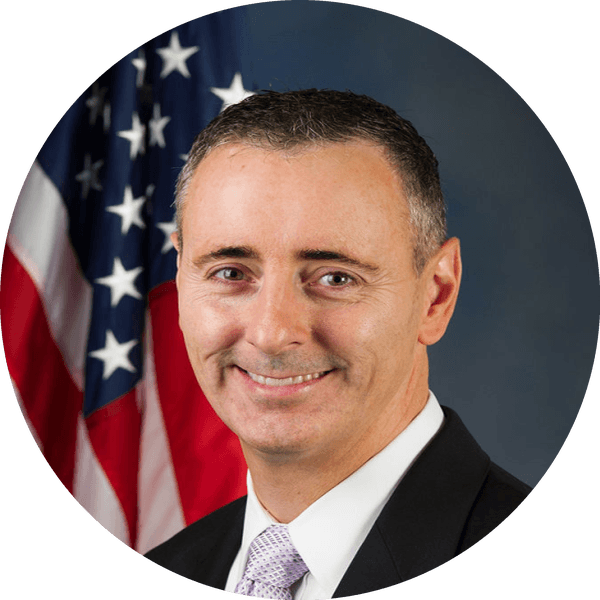
Brian Fitzpatrick
Republican · PA-1
500% tariffs on Russia hinge on one presidential finding
Why it matters
A 500% tariff is the central lever in H.R. 2548, and it would apply twice over: once to everything imported from Russia, and again to everything imported from any country that keeps trading in Russian-origin oil, uranium, gas or petroleum products. The bill carries 155 cosponsors — 92 Democrats and 63 Republicans behind a Republican sponsor. None of it takes effect until the President formally finds that Russia is refusing to negotiate, breaking a peace agreement, invading again, or moving to subvert Ukraine's government.
H.R. 2548 is built as a machine with one switch. Within 15 days of enactment, and every 90 days after that, the President has to determine whether Russia is refusing to negotiate a peace agreement with Ukraine, violating one it already signed, launching another military invasion, or working to overthrow or subvert Ukraine's government. Every sanction, prohibition and tariff in the bill flows from that finding, and none of them take effect until the President makes it.
Once the finding is made, the clock is 15 days. Twenty-four named Russian leadership posts — the president, the prime minister, the defense minister, the service chiefs, the foreign, finance, energy and agriculture ministers, and the heads of the intelligence and security services — would face blocked property and revoked visas. The same treatment extends to anyone selling arms to the Russian military, anyone the President identifies as an oligarch, and any foreign person operating in Russia's energy, commodities, telecommunications, banking, industrial, transportation or manufacturing sectors.
The financial provisions run wide. The Central Bank of Russia, Sberbank, VTB and Gazprombank would be blocked, along with any Russian state-owned bank and any bank anywhere that transacts with them. U.S. banks and brokers could not process transfers to or from Russia at all. The SEC would pull Russian state-affiliated issuers off national exchanges. Hedge funds, private equity firms and venture funds could not invest in entities the Russian government owns or controls, and no American could buy Russian sovereign debt.
Energy gets its own set of restrictions. No U.S.-produced energy could be exported to Russia, no American could invest in Russia's energy sector, and uranium from Russia or Rosatom would be barred from entering the country — including uranium routed through a third country after being sourced there.
Then the tariffs. Goods and services from Russia would carry a duty of at least 500 percent, stacked on top of any antidumping or countervailing duties already owed. The same 500 percent rate would apply to every good and service from any country that knowingly buys or sells Russian-origin oil, uranium, gas or petroleum products, not only to that country's energy exports.
The escape hatches are narrow. The President could waive the third-country tariff one time per country, good or service, for no more than 180 days, and could not waive it at all for a country the State Department has designated a state sponsor of terrorism. Sanctions could be lifted only if the President certifies to Congress both that the conduct has verifiably stopped and that Russia has entered a peace agreement with Ukraine, and they would be reimposed automatically if it resumed.
The bill's definition of a military invasion is broad: ground assaults, amphibious and airborne operations, aerial bombardment, missile strikes, naval blockades, cyberattacks, and an attack on any territory another sovereign country controls. Humanitarian and medical assistance to the Russian people is exempt, as are authorized U.S. intelligence activities.
Bill Progress
Latest Action · Apr 1, 2025
Referred to Foreign Affairs, and in addition to the Committees on the Judiciary, Financial Services, Ways and Means, and Oversight and Government Reform, for a period to be subsequently determined by the Speaker, in each case for consideration of such provisions as fall within the jurisdiction of the committee concerned. for review
H.R. 2548 Bill Summary
What H.R. 2548 actually does.
Nothing happens until the President makes a finding
Within 15 days of enactment, and every 90 days after that, the President must determine whether Russia is refusing to negotiate peace with Ukraine, violating an agreement, launching another invasion, or seeking to subvert Ukraine's government. Every other provision in the bill is triggered by that determination.
Twenty-four Russian leaders lose their property and visas
The bill names 24 senior posts, from the president and prime minister through the military service chiefs, cabinet ministers and intelligence directors. Their U.S.-linked property would be blocked and existing visas revoked immediately, with no separate national emergency declaration required.
Sanctions reach oligarchs and arms suppliers, not just officials
Coverage extends to any foreign person who supplies the Russian military, who the President identifies as an oligarch, who operates in Russia's energy, commodities, telecommunications, banking, industrial, transportation or manufacturing sectors, or who is involved in sanctions evasion, including through digital assets.
Russia's banks and anyone banking with them get cut off
The Central Bank of Russia, Sberbank, VTB Bank, Gazprombank, any Russian state-owned financial institution, and any financial institution anywhere that transacts with them would face blocked property and restrictions on U.S. correspondent accounts. Financial messaging providers that keep serving them would themselves be sanctioned.
Russian goods land with a 500 percent duty
Imports of goods and services from Russia, including oil, natural gas, petroleum and petrochemical products, would carry a duty of at least 500 percent ad valorem. That rate is in addition to any antidumping or countervailing duties already applying, and the Trade Representative would recommend goods that should be taxed higher still.
Buy Russian oil, and everything you sell here costs 500 percent more
Any country that knowingly buys, sells, supplies or transfers Russian-origin oil, uranium, natural gas, petroleum or petrochemical products would see the same 500 percent rate applied to all of its goods and services entering the United States, not only its energy exports.
American money can't reach the Russian state
U.S. persons could not purchase Russian sovereign debt. U.S. banks and brokers could not process transfers to or from Russia outside licensed transactions. Investment companies, private equity firms, venture capital funds and hedge funds could not invest in entities owned or controlled by the Russian government or its armed forces.
Russian uranium is barred, including through a third country
Uranium from Russia or Rosatom could not be imported, and neither could uranium held by another country if it was originally sourced from Russia or Rosatom. Rosatom's directors, officers and shareholders would be sanctioned, along with any government or person knowingly trading in Russian-origin uranium.
One waiver, 180 days, and a two-part off-ramp
The third-country tariff can be waived once per country, good or service for up to 180 days on national security grounds, and never for a designated state sponsor of terrorism. Sanctions end only if the President certifies both that the conduct has verifiably ceased and that Russia has entered a peace agreement, and they are reimposed automatically if it resumes.
Who benefits from H.R. 2548?
Ukraine and its critical infrastructure
The bill ties penalties to specific Russian conduct, including attacks that debilitate Ukraine's infrastructure or cybersecurity. Its definitions cover 19 sectors as critical to Ukraine, from energy, water and healthcare to communications, transportation and nuclear reactors. The sense of Congress also calls for sustained U.S. security assistance to Ukraine.
Members of Congress who want sanctions written into statute
Rather than leaving the pace to case-by-case executive action, the bill sets deadlines in law: 15 days for the first determination, 15 days from a determination to imposition, and a fresh review every 90 days. Supporters get a fixed timetable and a reporting rhythm they can hold an administration to.
U.S. and allied uranium and energy suppliers
Roughly a fifth of U.S. reactor fuel has historically come through Russian enrichment channels. Closing the Russian and Rosatom pipeline, including uranium routed through third countries, would shift that demand toward domestic and allied enrichment capacity.
Who is affected by H.R. 2548?
Russian political, military and security leadership
Twenty-four named posts face mandatory asset blocking and visa revocation, effective immediately and cancelling any other valid entry documents. The reach extends to anyone who receives property from a sanctioned person after the designation, or before it as an attempt to evade.
U.S. importers
The duty is collected from the importer of record, not the exporting country. An importer sourcing from a nation that keeps buying Russian energy would owe 500 percent ad valorem on that shipment, on top of any antidumping or countervailing duties already assessed.
U.S. banks, brokers and investment firms
Transfers to or from Russia would be prohibited outside licensed transactions, Russian sovereign debt would be off-limits, and investment in Russian state-owned or military-linked entities would be barred for investment companies, private equity, venture capital and hedge funds. Compliance screening would have to identify any foreign bank that transacts with the named Russian institutions.
Global financial messaging providers
A provider that continues supplying financial communications services to a sanctioned Russian institution would itself be sanctioned, along with its directors, officers and shareholders. That places the decision on the messaging network rather than on individual banks.
Countries still trading in Russian energy
A country that knowingly buys or sells Russian-origin oil, uranium, gas or petroleum products would see all of its exports to the United States taxed at 500 percent. The only relief is a single presidential waiver of up to 180 days, unavailable to designated state sponsors of terrorism.
HR2548 Legislative Journey
House: Committee Action
Apr 1, 2025
Referred to the Committee on Foreign Affairs, and in addition to the Committees on the Judiciary, Financial Services, Ways and Means, and Oversight and Government Reform, for a period to be subsequently determined by the Speaker, in each case for consideration of such provisions as fall within the jurisdiction of the committee concerned.
About the Sponsor
Brian Fitzpatrick
Republican, Pennsylvania's 1st congressional district · 9 years in Congress
Committees: House Permanent Select Committee on Intelligence, Ways and Means
View full profile →
Cosponsors (155)
This bill has 155 cosponsors: 92 Democrats, 63 Republicans, reflecting bipartisan support. Cosponsors represent 44 states: Alabama, Arkansas, Arizona, and 41 more.

Mike Quigley
Democrat · IL
Joe Wilson
Republican · SC

Marcy Kaptur
Democrat · OH

Jennifer Kiggans
Republican · VA

Sheila Cherfilus-McCormick
Democrat · FL

J. Hill
Republican · AR

Eleanor Norton
Democrat · DC

Ann Wagner
Republican · MO

Steny Hoyer
Democrat · MD

Mike Flood
Republican · NE

Eric Swalwell
Democrat · CA

Gabe Evans
Republican · CO
Cosponsor Coverage Map
Committee Sponsors
Oversight and Government Reform Committee
13 of 47 committee members cosponsored


Ways and Means Committee
17 of 45 committee members cosponsored


Financial Services Committee
16 of 53 committee members cosponsored


Judiciary Committee
9 of 44 committee members cosponsored


Foreign Affairs Committee
26 of 53 committee members cosponsored


81 Republicans across these committees haven't cosponsored yet. Mobilize their constituents
H.R. 2548 Quick Facts
- Committee
- Oversight and Government Reform
- Chamber
- House
- Policy
- International Affairs
- Introduced
- Apr 1, 2025
Referred to Foreign Affairs, and in addition to the Committees on the Judiciary, Financial Services, Ways and Means, and Oversight and Government Reform, for a period to be subsequently determined by the Speaker, in each case for consideration of such provisions as fall within the jurisdiction of the committee concerned. for review
Apr 1, 2025
Official Sources
Official bill page with full text, status, cosponsors and committee actions for the Sanctioning Russia Act of 2025.
Treasury's Office of Foreign Assets Control runs the existing Russia sanctions programs that this bill would expand and write into statute.
The blocked-property and visa provisions work by adding people and institutions to this list, which is where any designation would appear.
The 500 percent duty would stack on top of any antidumping or countervailing duty already owed, which CBP assesses and collects from the importer.
Ad valorem rates like the 500 percent duty in Sections 15 and 17 are applied through the Harmonized Tariff Schedule, published by the U.S. International Trade Commission.
The third-country tariff waiver is unavailable to any country the Secretary of State has designated a state sponsor of terrorism; this is the current list.
Commerce already restricts what can be exported to Russia; the bill adds a ban on U.S.-produced energy exports on top of these controls.
Public Law 118-62 already bans imports of Russian low-enriched uranium through 2028 with waivers; Section 14 of this bill would go further and cover uranium routed through third countries.
H.R. 2548 Common Questions
What does H.R. 2548 do?
H.R. 2548, the Sanctioning Russia Act of 2025, would impose sanctions on Russia's leadership, banks and energy sector, and set a 500% tariff on Russian goods. It also taxes imports from any country that keeps trading in Russian-origin oil, uranium or gas at the same rate.
Would the sanctions in H.R. 2548 start automatically?
No. Everything hangs on a presidential determination. Within 15 days of the bill becoming law, and every 90 days after, the President must decide whether Russia is refusing peace talks, breaking an agreement, invading again, or subverting Ukraine's government. Sanctions follow 15 days after that finding. Without the finding, nothing takes effect.
How high is the tariff on Russian goods under H.R. 2548?
At least 500% ad valorem on all goods and services from Russia, including oil, gas and petrochemicals. On a shipment with a $100 customs value, that is about $500 in duty. The rate stacks on top of any antidumping or countervailing duties already owed, so the total can run higher.
What happens to countries that keep buying Russian oil?
Every good and service they export to the United States would face the same 500% rate, not just their energy products. The President could waive it one time per country for up to 180 days on national security grounds, and could not waive it at all for a designated state sponsor of terrorism.
Would H.R. 2548 raise prices in the United States?
Tariffs are paid to Customs by the U.S. importer, not by the exporting country, and importers generally pass that cost along. Because the 500% rate would apply to all goods from a covered country rather than only its energy exports, the affected range could be broad. No CBO estimate has been published.
Which Russian banks would be sanctioned?
The bill names the Central Bank of Russia, Sberbank, VTB Bank and Gazprombank, then extends to any Russian state-owned financial institution and their subsidiaries. It also reaches any financial institution anywhere in the world that transacts with those banks.
Does H.R. 2548 ban Russian uranium imports?
Yes. Uranium from Russia or from Rosatom could not be imported, and neither could uranium held by another country if it was originally sourced from Russia or Rosatom. Rosatom's directors, officers and shareholders would also be sanctioned.
Would a cyberattack count as a new invasion under H.R. 2548?
Yes. The bill defines a military invasion to include cyberattacks alongside ground assaults, airborne and amphibious operations, aerial bombardment, missile strikes and naval blockades. It also covers an attack on any territory administered by another sovereign country.
Based on H.R. 2548 bill text
H.R. 2548 Bill Text
“To impose sanctions and other measures with respect to the Russian Federation if the Government of the Russian Federation refuses to negotiate a peace agreement with Ukraine, violates any such agreement, or initiates another military invasion of Ukraine, and for other purposes.”
Source: U.S. Government Publishing Office
Get notified when H.R. 2548 moves
Committee votes, floor action, cosponsor changes — straight to your inbox.
Bill alerts + Legisletter's monthly briefing. Unsubscribe anytime.
International Affairs Bills
9 related bills we're tracking
Enhanced Iran Sanctions Act of 2025




Motion to place bill on Consensus Calendar filed by Mr. Lawler.
Jan 12, 2026
United States-Israel Defense Partnership Act of 2025



Referred to the Committee on Armed Services, and in addition to the Committee on Foreign Affairs, for a period to be subsequently determined by the Speaker, in each case for consideration of such provisions as fall within the jurisdiction of the committee concerned.
Feb 12, 2025
West Bank Violence Prevention Act of 2025



Referred to the Committee on Foreign Affairs, and in addition to the Committee on the Judiciary, for a period to be subsequently determined by the Speaker, in each case for consideration of such provisions as fall within the jurisdiction of the committee concerned.
Apr 28, 2025
Global Respect Act



Referred to the Committee on Foreign Affairs, and in addition to the Committee on the Judiciary, for a period to be subsequently determined by the Speaker, in each case for consideration of such provisions as fall within the jurisdiction of the committee concerned.
Nov 19, 2025
International Human Rights Defense Act of 2025




Referred to the House Committee on Foreign Affairs.
Nov 17, 2025
Global Health, Empowerment and Rights Act




Referred to the House Committee on Foreign Affairs.
Jan 28, 2025
Pakistan Freedom and Accountability Act





Referred to the Committee on Foreign Affairs, and in addition to the Committee on the Judiciary, for a period to be subsequently determined by the Speaker, in each case for consideration of such provisions as fall within the jurisdiction of the committee concerned.
Sep 10, 2025
Baltic Security Assessment Act of 2025





Ordered to be Reported by the Yeas and Nays: 41 - 3.
Apr 22, 2026
Dismantle Foreign Scam Syndicates Act


Ordered to be Reported in the Nature of a Substitute (Amended) by the Yeas and Nays: 48 - 0.
Dec 3, 2025
Trending Right Now
Bills gaining momentum across Congress
North Platte Canteen Congressional Gold Medal Act


Referred to the House Committee on Financial Services.
Feb 21, 2025
America’s Olympic and Paralympic Games Commemorative Coins Act




Referred to the House Committee on Financial Services.
Jul 14, 2025
Fit to Serve Act



Referred to the House Committee on Armed Services.
May 21, 2025
Tracking International Affairs in Congress? Monitor bills, track cosponsor momentum, and launch advocacy campaigns — all from one advocacy platform.