Mr. Speaker, I rise in support of H.R. 1422. Mr. Speaker, no one in this Chamber should be under any illusions about the nature of the Iranian regime. For decades, Iran has funded terrorist proxies, threatened our partners and allies, supplied training and arms that killed and maimed dozens of American forces in Iraq, and pursued weapons capabilities that destabilize the Middle East and endanger global security. Congress has long acted in a bipartisan way to confront that threat.
H.R. 1422: Enhanced Iran Sanctions Act of 2025
Introduced Feb 18, 2025294 cosponsors
Sponsor

Michael Lawler
Republican · NY-17
294 lawmakers agree: cut off every dollar funding Iran's weapons
4 min readLast updated March 11, 2026
Why it matters
294 cosponsors — 170 Republicans and 124 Democrats — makes this one of the most bipartisan bills in Congress. Iran sells oil through shell companies, friendly ports, and compliant banks. Current sanctions miss the middlemen. H.R. 1422 goes after every link in that chain: the shippers, the insurers, the registries, the bankers, and their executives and families.
The Enhanced Iran Sanctions Act of 2025 targets the entire logistics chain that moves Iranian oil, gas, LNG, and petrochemicals to market. Not just the exporters — the banks that finance the deals, the insurers that cover the cargo, the ship registries that provide flags of convenience, and the pipeline operators that move LNG.
The bill uses a 50-percent ownership rule to catch shell companies. If a sanctioned entity owns half or more of your company, you're covered. Corporate officers are personally liable. Even immediate family members of sanctioned individuals can be denied U.S. visas and have existing ones revoked on the spot.
Enforcement expands in two directions. Domestically, the bill creates an Interagency Working Group — State, Treasury, Justice — to coordinate sanctions enforcement. Internationally, that working group builds a multilateral contact group with allied nations to share intelligence on evasion tactics and newly designated entities.
The bill also adds a private-sector bounty. It amends the State Department's existing rewards program so that anyone who identifies sanctions violators or evasion networks can get paid for the tip.
Humanitarian exceptions are built in. Food, medicine, medical devices, and agricultural commodities are explicitly exempt. So are provisions for crew safety and vessel maintenance. The President can waive sanctions for 180 days at a time if certified as vital to national interests — but must submit a phase-out plan before renewing.
Bill Progress
IntroducedFeb 18
Committee
Pass House
Pass Senate
Signed
Law
Latest Action · Jan 12, 2026
1/4
Motion to place bill on Consensus Calendar filed by Mr. Lawler.
H.R. 1422 Bill Summary
What H.R. 1422 actually does.
1
Every link in the supply chain faces sanctions
Banks, insurers, ship registries, LNG pipeline operators, and anyone else involved in processing, exporting, or selling Iranian oil, gas, LNG, or petrochemicals. Not just direct exporters — the entire logistics network.
2
Shell companies can't hide behind ownership structures
The 50-percent ownership rule means if a sanctioned entity controls half or more of your company, you're treated as sanctioned too. Subsidiaries, successors, and aliases are all covered.
3
Executives and family members are personally targeted
Corporate officers of sanctioned companies face individual sanctions. Immediate family members of sanctioned persons can be denied U.S. visas and have current visas revoked immediately.
4
International enforcement coordination
Creates an Interagency Working Group (State, Treasury, Justice) within 180 days of enactment and charges it with building a multilateral contact group with allied nations to share evasion intelligence and coordinate new measures.
5
Get paid for reporting sanctions violators
Amends the State Department's existing rewards program to cover anyone who identifies persons violating Iran sanctions or attempting evasion — creating a financial incentive for private-sector tips.
6
Humanitarian exemptions and presidential waivers
Food, medicine, medical devices, and agricultural commodities are explicitly exempt. The President can waive sanctions for 180 days at a time but must certify it as vital to national interests and submit a plan to phase out the waiver.
Who benefits from H.R. 1422?
U.S. national security and intelligence agencies
Expanded authorities to target the financial networks behind Iran's weapons programs. The interagency working group formalizes coordination that currently happens ad hoc.
Israel and Gulf state allies facing Iranian-backed threats
Tighter sanctions reduce the revenue Iran uses to fund Hezbollah, Hamas, and Houthi operations. Regional partners have lobbied for exactly this kind of supply-chain enforcement.
Compliant energy companies and shipping firms
Companies that already avoid Iranian transactions gain a more level playing field. Competitors who skirt sanctions face real consequences.
Private-sector tipsters
The rewards program amendment means people with knowledge of sanctions evasion networks can report it and get compensated through the State Department.
Who is affected by H.R. 1422?
Foreign banks and financial institutions processing Iranian energy deals
Face property blocking and transaction prohibitions under IEEPA. Any bank that knowingly handles Iranian oil revenue is subject to sanctions.
International shipping and insurance companies
Ship registries providing flags of convenience, insurers covering Iranian cargo, and logistics operators all fall within the bill's scope — even for indirect involvement.
Corporate officers and family members of sanctioned persons
Individual executives face personal sanctions. Family members face visa revocation and inadmissibility to the United States.
Global energy markets
If enforcement succeeds in removing significant volumes of Iranian oil from the market, prices could be affected. The bill's humanitarian and waiver provisions are designed to mitigate disruption.
On the Record
What Congress Is Saying
H.R. 1422 has come up 41 times in the Congressional Record so far.
Mr. Speaker, I rise in strong support of H.R. 1422, the Enhanced Iran Sanctions Act. For decades, the Iranian regime has brutally suppressed its own people while exporting terror across the globe. Tehran has pursued nuclear weapons, expanded its missile and drone programs, sponsored terrorism, and targeted Americans and our allies. On February 28, under President Trump's leadership, U.S. Central Command launched Operation Epic Fury after Iran rejected diplomatic off-ramps and refused to dismantle its nuclear program.
H.R. 1422 also appeared in 37 routine cosponsor filings.
HR1422 Legislative Journey
House: Action Taken
Jan 12, 2026
Motion to place bill on Consensus Calendar filed by Mr. Lawler.
House: Vote Held
Apr 9, 2025
Ordered to be Reported (Amended) by Voice Vote.
House: Committee Action
Feb 18, 2025
Referred to the Committee on Foreign Affairs, and in addition to the Committee on the Judiciary, for a period to be subsequently determined by the Speaker, in each case for consideration of such provisions as fall within the jurisdiction of the committee concerned.
About the Sponsor
Michael Lawler
Republican, New York's 17th congressional district · 3 years in Congress
Committees: Foreign Affairs, Financial Services
View full profile →
Cosponsors (294)
No new cosponsors in 257 days — momentum stalled
This bill has 294 cosponsors: 124 Democrats, 170 Republicans, reflecting bipartisan support. Cosponsors represent 46 states: Alaska, Alabama, Arkansas, and 43 more.
124Democrats170Republicans·46 statesBipartisan

Sheila Cherfilus-McCormick
Democrat · FL

Josh Gottheimer
Democrat · NJ

Laura Gillen
Democrat · NY

Jared Moskowitz
Democrat · FL
Claudia Tenney
Republican · NY

Frederica Wilson
Democrat · FL
Brian Fitzpatrick
Republican · PA

Maria Salazar
Republican · FL
Joe Wilson
Republican · SC

Donald Davis
Democrat · NC

Guy Reschenthaler
Republican · PA

Dan Crenshaw
Republican · TX
Cosponsor Coverage Map
Committee Sponsors
Foreign Affairs Committee
25D28R
|42 signed11 not yet42 of 53 committee members cosponsored


Judiciary Committee
19D24R1I
|26 signed18 not yet26 of 44 committee members cosponsored


13 Republicans across these committees haven't cosponsored yet. Mobilize their constituents
H.R. 1422 Quick Facts
Cosponsors
294
- Committee
- Foreign Affairs
- Chamber
- House
- Policy
- International Affairs
- Introduced
- Feb 18, 2025
Motion to place bill on Consensus Calendar filed by Mr. Lawler.
Jan 12, 2026
Official Sources
Bill Text (Congress.gov)
Full text of H.R. 1422 as introduced — the Enhanced Iran Sanctions Act of 2025
OFAC Iran Sanctions Program
Treasury's central hub for Iran sanctions — advisories, SDN list, executive orders, regulations, and general licenses that H.R. 1422 builds on
OFAC 50% Ownership Rule — FAQs 398-402
OFAC guidance on the 50% ownership rule — the exact mechanism H.R. 1422 codifies in Section 4(a)(3) to catch shell companies controlled by sanctioned entities
Iran Sanctions — State Department
State Department overview of Iran sanctions authorities, recent designations, and enforcement actions against petroleum smuggling networks
Treasury: Shadow Fleet & Missile Network Sanctions (Feb 2026)
OFAC sanctioned 30+ individuals, entities, and vessels in Iran's shadow fleet — the exact type of supply-chain enforcement H.R. 1422 would codify into law
Rewards for Justice — IRGC Financial Network
State Department rewards program offering up to $15M for information on IRGC financial networks — H.R. 1422 Section 6 expands this program to cover Iran sanctions evasion tips
OFAC Sanctions List Search
Search OFAC's Specially Designated Nationals (SDN) list — the registry of blocked persons that H.R. 1422 would expand with new Iran supply-chain designations
U.S. Sanctions on Iran — Congressional Research Service
CRS overview of the U.S. Iran sanctions framework — the legal architecture that H.R. 1422 strengthens and extends
H.R. 1422 Common Questions
Can family members of sanctioned persons be banned from the U.S. under H.R. 1422?
Yes. Immediate family members of persons sanctioned under the bill can be denied visas, declared inadmissible, and have existing visas revoked immediately.
What types of companies does H.R. 1422 target beyond oil exporters?
The bill covers the entire supply chain: foreign banks, insurance providers, ship registries providing flags of convenience, and LNG pipeline operators. Anyone who knowingly processes, finances, or facilitates Iranian energy exports.
How does the 50 percent ownership rule work in H.R. 1422?
If a sanctioned entity owns or controls 50 percent or more of your company — or you own 50 percent of theirs — and you conduct a significant transaction with them, you're treated as sanctioned too. Subsidiaries, successors, and aliases are also covered.
Are food and medicine shipments to Iran still allowed under H.R. 1422?
Yes. The bill explicitly exempts agricultural commodities, food, medicine, medical devices, and humanitarian assistance. Transactions necessary to facilitate those shipments are also exempt.
Can the President waive these Iran sanctions?
Yes, for up to 180 days at a time. The President must certify to Congress that the waiver is vital to national interests and provide a detailed justification. Renewals require a plan to phase out the waiver.
Can you get paid for reporting Iran sanctions violators under H.R. 1422?
Yes. The bill amends the State Department's Rewards for Justice program to cover anyone who identifies persons violating Iran sanctions or attempting evasion — creating a financial incentive for private-sector tips.
What happens to a shipping company that didn't know its cargo was Iranian oil?
The bill provides a safe harbor. If a company relied on a certificate of origin showing the petroleum came from a country other than Iran, it's not treated as knowing — unless it knew or had reason to know the documents were falsified.
Can individual executives be personally sanctioned under H.R. 1422?
Yes. Corporate officers of sanctioned companies face individual sanctions — including property blocking and visa restrictions — even if the officer is not the company itself.
Based on H.R. 1422 bill text
H.R. 1422 Bill Text
“To impose sanctions with respect to persons engaged in logistical transactions and sanctions evasion relating to oil, gas, liquefied natural gas, and related petrochemical products from the Islamic Republic of Iran, and for other purposes.”
Source: U.S. Government Publishing Office
Bill Alerts
Get notified when H.R. 1422 moves
Committee votes, floor action, cosponsor changes — straight to your inbox.
Bill alerts + Legisletter's monthly briefing. Unsubscribe anytime.
International Affairs Bills
9 related bills we're tracking
H.R. 1229
United States-Israel Defense Partnership Act of 2025
Joe WilsonR-SC


+176
180 cosponsors
Referred to the Committee on Armed Services, and in addition to the Committee on Foreign Affairs, for a period to be subsequently determined by the Speaker, in each case for consideration of such provisions as fall within the jurisdiction of the committee concerned.
Feb 12, 2025
HouseInternational Affairs
H.R. 3045
West Bank Violence Prevention Act of 2025
Jerrold NadlerD-NY


+170
174 cosponsors
+1 this monthReferred to the Committee on Foreign Affairs, and in addition to the Committee on the Judiciary, for a period to be subsequently determined by the Speaker, in each case for consideration of such provisions as fall within the jurisdiction of the committee concerned.
Apr 28, 2025
HouseInternational Affairs
H.R. 6151
Global Respect Act

Sarah McBrideD-DE


+163
167 cosponsors
+3 this monthReferred to the Committee on Foreign Affairs, and in addition to the Committee on the Judiciary, for a period to be subsequently determined by the Speaker, in each case for consideration of such provisions as fall within the jurisdiction of the committee concerned.
Nov 19, 2025
HouseInternational Affairs
H.R. 2548
Sanctioning Russia Act of 2025
Brian FitzpatrickR-PA



+151
155 cosponsors
Referred to the Committee on Foreign Affairs, and in addition to the Committees on the Judiciary, Financial Services, Ways and Means, and Oversight and Government Reform, for a period to be subsequently determined by the Speaker, in each case for consideration of such provisions as fall within the jurisdiction of the committee concerned.
Apr 1, 2025
HouseInternational Affairs
H.R. 6056
International Human Rights Defense Act of 2025
Robert GarciaD-CA



+150
154 cosponsors
+4 this monthReferred to the House Committee on Foreign Affairs.
Nov 17, 2025
HouseInternational Affairs
H.R. 764
Global Health, Empowerment and Rights Act
Lois FrankelD-FL




+134
138 cosponsors
Referred to the House Committee on Foreign Affairs.
Jan 28, 2025
HouseInternational Affairs
H.R. 5271Gaining+9
Pakistan Freedom and Accountability Act

Bill HuizengaR-MI




+109
113 cosponsors
+9 this monthReferred to the Committee on Foreign Affairs, and in addition to the Committee on the Judiciary, for a period to be subsequently determined by the Speaker, in each case for consideration of such provisions as fall within the jurisdiction of the committee concerned.
Sep 10, 2025
HouseInternational Affairs
H.R. 5543
Baltic Security Assessment Act of 2025

Wesley BellD-MO



+97
101 cosponsors
Ordered to be Reported by the Yeas and Nays: 41 - 3.
Apr 22, 2026
HouseInternational Affairs
H.R. 5490
Dismantle Foreign Scam Syndicates Act
Jefferson ShreveR-IN

+68
72 cosponsors
+1 this monthOrdered to be Reported in the Nature of a Substitute (Amended) by the Yeas and Nays: 48 - 0.
Dec 3, 2025
HouseInternational Affairs
Trending Right Now
Bills gaining momentum across Congress
H.R. 1502Surging+30
North Platte Canteen Congressional Gold Medal Act

Adrian SmithR-NE

+264
268 cosponsors
+30 this monthReferred to the House Committee on Financial Services.
Feb 21, 2025
HouseArmed Forces and National Security
H.R. 6130Surging+12
ASAP Act

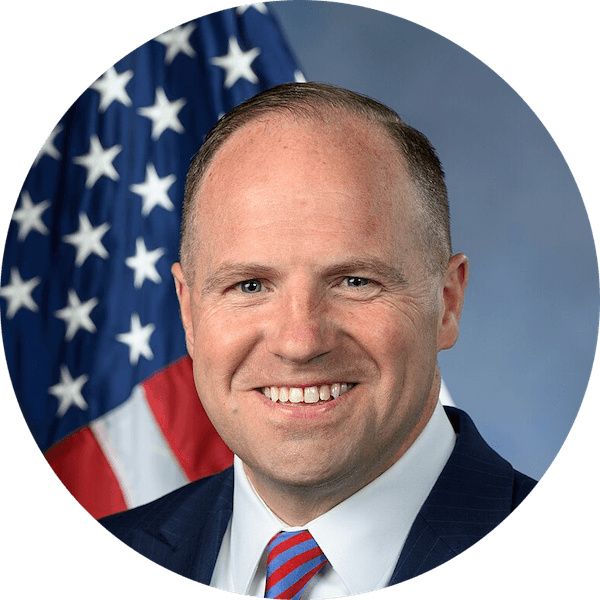
Vern BuchananR-FL

+227
231 cosponsors
+12 this monthOrdered to be Reported in the Nature of a Substitute by the Yeas and Nays: 40 - 0.
Sep 16, 2026
HouseHealth
H.R. 3569Surging+13
Fit to Serve Act
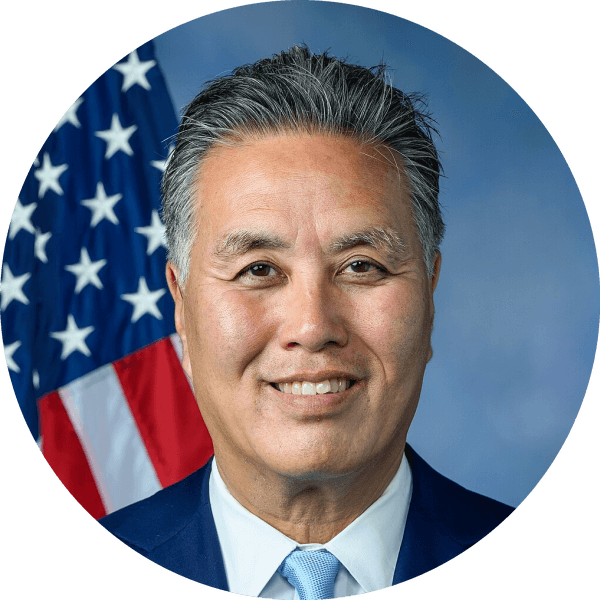
Adam SmithD-WA


+185
189 cosponsors
+13 this monthReferred to the House Committee on Armed Services.
May 21, 2025
HouseArmed Forces and National Security
Tracking International Affairs in Congress? Monitor bills, track cosponsor momentum, and launch advocacy campaigns — all from one advocacy platform.