H.R. 6056: International Human Rights Defense Act of 2025
Sponsor
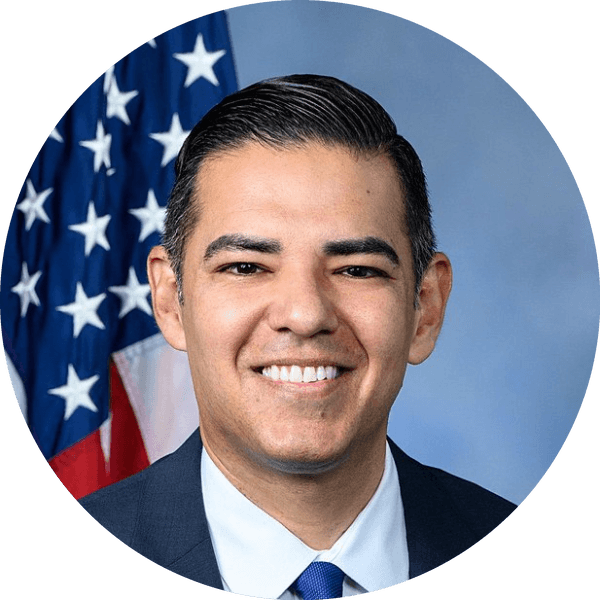
Robert Garcia
Democrat · CA-42
Congress wants an LGBTQI+ envoy that outlasts any president
Why it matters
The State Department has had a Special Envoy for the Human Rights of LGBTQI+ People since 2015, but the job exists at a president's discretion — the bill's findings note no one was named to it during the Trump administration. H.R. 6056 would write the post into law, put it on a fixed briefing and reporting schedule, and require the annual U.S. human rights reports to name every country that criminalizes people over sexual orientation, gender identity, or sex characteristics. The bill's findings count 64 such countries, and 12 with jurisdictions where the death penalty can be imposed.
H.R. 6056 would convert a discretionary State Department post into one required by law. The Secretary of State would have to establish a permanent Special Envoy for the Human Rights of LGBTQI+ People, appointed by the president, who could be given the rank of ambassador with Senate confirmation.
The envoy would serve as the Secretary's principal advisor on the subject and would direct the activities, policies, programs, and funding tied to it across every bureau and office at State — plus coordinate the same work at other federal agencies. The envoy would also represent the United States in bilateral and multilateral negotiations on those questions and consult regularly with outside organizations doing the work on the ground.
Then come the clocks. Within 180 days of enactment, and every year after, the envoy would have to brief the foreign affairs and appropriations committees in both chambers. Within the same 180 days, and every two years after, the envoy would have to produce a global strategy on criminalization, discrimination, and violence — including which foreign efforts have actually worked and what the U.S.-funded activities accomplished.
The change with the widest reach is to the annual human rights reports. H.R. 6056 amends the Foreign Assistance Act so the country reports must document criminalization, discrimination, and violence based on sexual orientation, gender identity, or sex characteristics, and must identify by name the countries whose laws or constitutions do the criminalizing. Those reports already touch on this, but coverage would become a statutory requirement rather than an editorial choice.
The bill also states that it is U.S. policy to require every recipient of federal funding — contractors, grantees, and cooperative agreement holders alike — to adopt nondiscrimination policies covering sexual orientation, gender identity, and sex characteristics. Worth reading carefully: that language sits in the bill's statement of policy, not in a standalone enforcement provision, so how far it actually reaches would depend on how agencies write it into contract and grant terms.
Finally, the bill authorizes the Secretary of State to fund four kinds of assistance: programs responding to abuses and economic exclusion, capacity building for foreign courts and law enforcement, health-sector work coordinated with the Global AIDS Coordinator's office, and a leadership program for activists abroad. No dollar figure is attached to any of it.
Bill Progress
Latest Action · Nov 17, 2025
Referred to the House Committee on Foreign Affairs.
H.R. 6056 Bill Summary
What H.R. 6056 actually does.
The envoy job becomes law, not a presidential choice
The Secretary of State would be required to establish a permanent Special Envoy for the Human Rights of LGBTQI+ People. The president appoints the envoy and may give the role ambassador rank, which would require Senate confirmation.
One official directs this work across all of State
The envoy would be the Secretary's principal advisor on the issue and would direct the related activities, policies, programs, and funding for every bureau and office at the department, while leading interagency coordination for the rest of the federal government.
Congress gets briefings on a fixed clock
The envoy would have to brief the foreign affairs and appropriations committees of both chambers within 180 days of enactment and annually after that, replacing updates that currently happen when an administration chooses to give them.
A published global strategy every two years
Within 180 days, and biennially after, the envoy would develop or update a global strategy — built in consultation with federal officials and outside organizations, submitted to Congress, and made public where practicable. Each version must assess what worked and what U.S.-funded activities achieved.
Human rights reports would have to name the countries
The bill amends the Foreign Assistance Act so the annual country reports must document criminalization, discrimination, and violence based on sexual orientation, gender identity, or sex characteristics, and identify the countries whose laws or constitutional provisions criminalize or discriminate on those grounds.
Nondiscrimination policies for federal funding recipients
The bill declares it U.S. policy that all recipients of federal funding — contractors, grantees, and cooperative agreement holders — establish nondiscrimination policies covering sexual orientation, gender identity, and sex characteristics, and take measures to protect staff and program beneficiaries. This appears in the statement of policy rather than as a separate enforcement section.
Four categories of foreign assistance, no price tag
The Secretary of State is authorized to fund assistance programs responding to abuses and exclusion, capacity building for foreign legal and judicial systems, health-sector work coordinated with the Global AIDS Coordinator's office, and a leadership program for international activists. The bill sets no dollar amount.
Who benefits from H.R. 6056?
People living where their relationships are a crime
The bill's findings count 64 countries with national laws criminalizing same-sex relations and 12 countries with jurisdictions where the death penalty can be imposed for private, consensual same-sex activity. H.R. 6056 would make those laws a mandatory line item in U.S. human rights reporting, country by country.
Trans and gender-diverse people in Latin America and the Caribbean
The bill's findings cite the Trans Murder Monitoring Project documenting at least 350 killings between October 2023 and September 2024, with 73 percent in Latin America and the Caribbean and 30 percent of the global total in Brazil. The required biennial strategy would have to address where the violence is concentrated.
Activists and organizations working under pressure abroad
The bill's findings describe laws that block or revoke registration for nongovernmental organizations. H.R. 6056 authorizes a leadership program connecting international activists to each other, plus assistance programs and health-sector support that today depend on year-to-year executive priorities.
Congressional committees doing oversight
Foreign affairs and appropriations committees in both chambers would get a briefing within 180 days and one every year after, plus a published strategy every two years. That converts a subject they currently ask about into one that arrives on a schedule.
Who is affected by H.R. 6056?
Organizations that take federal money
If your organization holds a federal contract, grant, or cooperative agreement, the bill's stated policy is that you would need a written nondiscrimination policy explicitly covering sexual orientation, gender identity, and sex characteristics. Because that language sits in the policy section, the practical burden would land through agency contract and grant terms rather than automatically on enactment.
The State Department
State would have to stand up the envoy office, absorb the coordinating authority the bill gives it over other bureaus, hit two 180-day deadlines, brief four committees annually, and refresh a public global strategy every two years — with no appropriation attached to any of it.
The offices that write the country reports
Staff compiling the annual human rights reports would have to collect and publish specific information on criminalization, discrimination, and violence in every country covered, and identify which ones have laws or constitutional provisions on the books. That is a data-collection obligation that runs across the full set of reports.
Governments with criminalizing laws on the books
Countries the reports identify would be named in a recurring U.S. government document rather than covered at the discretion of whoever drafts that year's edition. Some would also be candidates for the training and capacity-building assistance the bill authorizes for courts, police, and health systems.
HR6056 Legislative Journey
House: Committee Action
Nov 17, 2025
Referred to the House Committee on Foreign Affairs.
About the Sponsor
Robert Garcia
Democrat, California's 42nd congressional district · 3 years in Congress
Committees: Oversight and Government Reform, Transportation and Infrastructure
View full profile →
Cosponsors (150)
All 150 cosponsors are Democrats. Cosponsors represent 36 states: Alabama, Arizona, California, and 33 more.

Sara Jacobs
Democrat · CA
Suzan DelBene
Democrat · WA

Scott Peters
Democrat · CA

Diana DeGette
Democrat · CO
Joaquin Castro
Democrat · TX

Doris Matsui
Democrat · CA
Rashida Tlaib
Democrat · MI
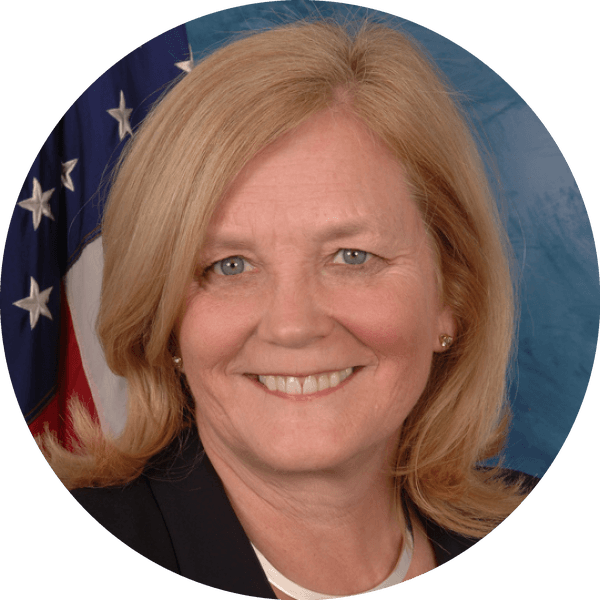
Chellie Pingree
Democrat · ME
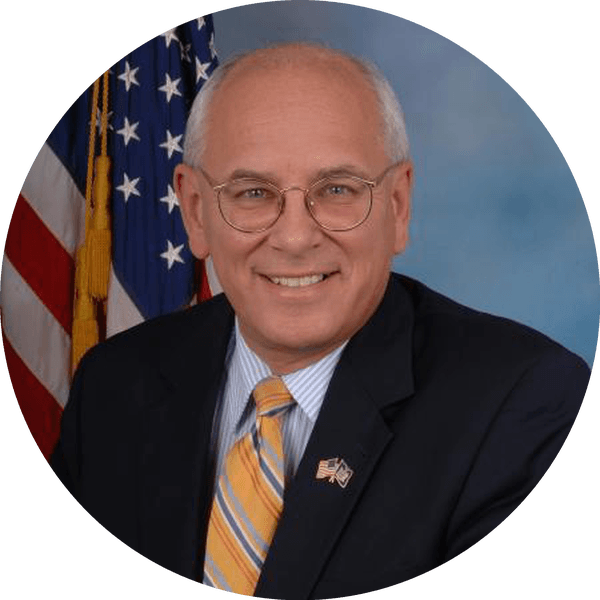
Paul Tonko
Democrat · NY

Gabe Amo
Democrat · RI
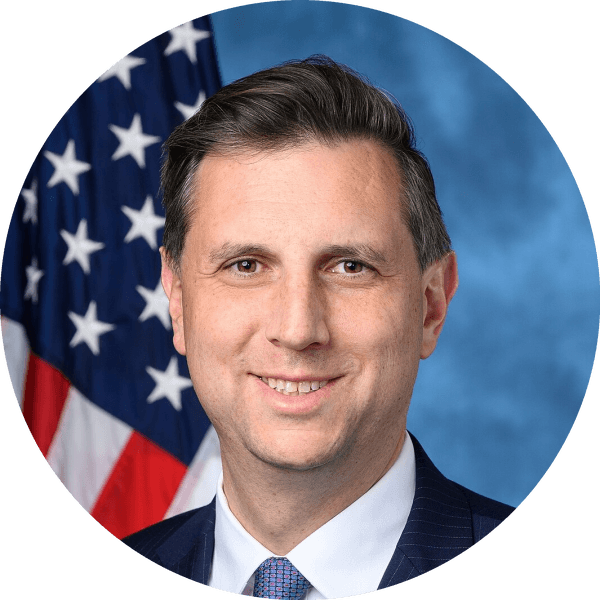
Seth Magaziner
Democrat · RI
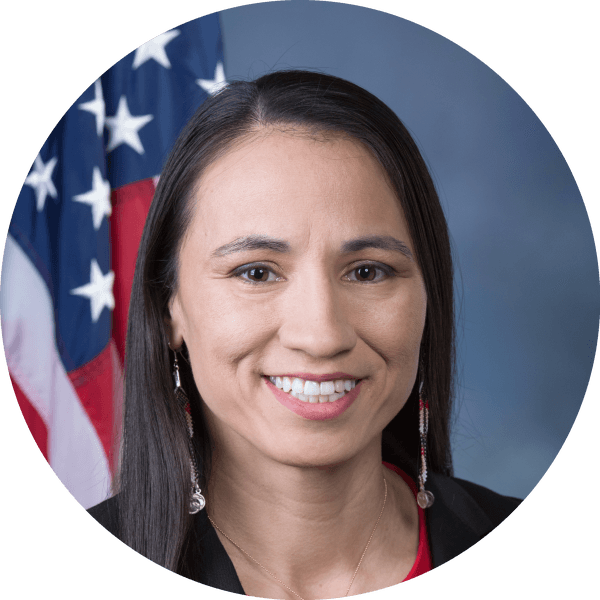
Sharice Davids
Democrat · KS
Cosponsor Coverage Map
Committee Sponsors
Foreign Affairs Committee
19 of 53 committee members cosponsored


6 Democrats across this committee haven't cosponsored yet. Mobilize their constituents
H.R. 6056 Quick Facts
- Committee
- Foreign Affairs
- Chamber
- House
- Policy
- International Affairs
- Introduced
- Nov 17, 2025
Referred to the House Committee on Foreign Affairs.
Nov 17, 2025
Official Sources
Official bill page with status, text, actions, cosponsors, and committee referral for the International Human Rights Defense Act of 2025.
The introduced text of H.R. 6056 as printed by the Government Publishing Office.
The annual country reports that Section 5 of the bill would require to document criminalization, discrimination, and violence and to name the countries whose laws criminalize on those grounds.
The State Department bureau that compiles the annual human rights reports and houses the civilian security, democracy, and human rights portfolio the envoy would direct.
Section 116(d) of the Foreign Assistance Act, one of the two statutes Section 5 of the bill amends to expand what the country reports must cover.
Section 502B of the Foreign Assistance Act, the security-assistance human rights reporting statute Section 5 of the bill also amends.
The Global AIDS Coordinator's office, which Section 6 names as the coordinating partner for the health-sector assistance the bill authorizes.
The committee H.R. 6056 was referred to, and one of the four committees the envoy would have to brief within 180 days and annually after.
H.R. 6056 Common Questions
What would H.R. 6056 actually change?
It would make the State Department's LGBTQI+ human rights envoy a permanent position required by law, put briefings to Congress on a fixed annual schedule, require a public global strategy every two years, and require the annual U.S. human rights reports to name countries that criminalize people on these grounds.
Doesn't the U.S. already have an LGBTQI+ rights envoy?
Yes, since 2015 — but only because a Secretary of State created the role. The bill's findings note no one was named to it during the Trump administration, and it was filled again in 2021. H.R. 6056 would put the position in statute so it no longer depends on each administration's choice.
What power would the envoy actually have?
More than an advisory role. The envoy would direct the activities, policies, programs, and funding tied to this work across every bureau and office at the State Department, lead coordination for other federal agencies, and represent the United States in bilateral and multilateral talks on it.
Would H.R. 6056 change the annual State Department human rights reports?
Yes. The reports would have to document criminalization, discrimination, and violence based on sexual orientation, gender identity, or sex characteristics, and identify by name the countries whose laws or constitutional provisions criminalize or discriminate on those grounds.
Would federal contractors and grantees have to change their policies?
The bill states it is U.S. policy that all federal funding recipients — contractors, grantees, and cooperative agreement holders — adopt nondiscrimination policies covering sexual orientation, gender identity, and sex characteristics. That language sits in the policy statement, so it would reach organizations through agency contract and grant terms.
How much would H.R. 6056 cost?
The bill names no dollar amount. It authorizes assistance programs, legal and judicial capacity building, health-sector work, and an activist leadership program, but sets no ceiling or floor. Actual spending would depend on future appropriations or existing agency budgets.
Does H.R. 6056 have any Republican support?
Not as introduced. All 147 cosponsors are Democrats, and Rep. Robert Garcia of California is the sponsor. Republicans control the House Foreign Affairs Committee, which decides whether the bill gets a markup.
What is the current status of H.R. 6056?
It was introduced in the House on November 17, 2025, and referred to the House Committee on Foreign Affairs. It would need committee action, House passage, Senate passage, and the president's signature to become law.
Based on H.R. 6056 bill text
H.R. 6056 Bill Text
“To establish in the Department of State a Special Envoy for the Human Rights of LGBTQI+ Peoples, and for other purposes.”
Source: U.S. Government Publishing Office
Get notified when H.R. 6056 moves
Committee votes, floor action, cosponsor changes — straight to your inbox.
Bill alerts + Legisletter's monthly briefing. Unsubscribe anytime.
International Affairs Bills
9 related bills we're tracking
Enhanced Iran Sanctions Act of 2025

Motion to place bill on Consensus Calendar filed by Mr. Lawler.
Jan 12, 2026
United States-Israel Defense Partnership Act of 2025

Referred to the Committee on Armed Services, and in addition to the Committee on Foreign Affairs, for a period to be subsequently determined by the Speaker, in each case for consideration of such provisions as fall within the jurisdiction of the committee concerned.
Feb 12, 2025
West Bank Violence Prevention Act of 2025
Referred to the Committee on Foreign Affairs, and in addition to the Committee on the Judiciary, for a period to be subsequently determined by the Speaker, in each case for consideration of such provisions as fall within the jurisdiction of the committee concerned.
Apr 28, 2025
Global Respect Act

Referred to the Committee on Foreign Affairs, and in addition to the Committee on the Judiciary, for a period to be subsequently determined by the Speaker, in each case for consideration of such provisions as fall within the jurisdiction of the committee concerned.
Nov 19, 2025
Sanctioning Russia Act of 2025
Referred to the Committee on Foreign Affairs, and in addition to the Committees on the Judiciary, Financial Services, Ways and Means, and Oversight and Government Reform, for a period to be subsequently determined by the Speaker, in each case for consideration of such provisions as fall within the jurisdiction of the committee concerned.
Apr 1, 2025
Global Health, Empowerment and Rights Act


Referred to the House Committee on Foreign Affairs.
Jan 28, 2025
Pakistan Freedom and Accountability Act

Referred to the Committee on Foreign Affairs, and in addition to the Committee on the Judiciary, for a period to be subsequently determined by the Speaker, in each case for consideration of such provisions as fall within the jurisdiction of the committee concerned.
Sep 10, 2025
Baltic Security Assessment Act of 2025




Ordered to be Reported by the Yeas and Nays: 41 - 3.
Apr 22, 2026
Dismantle Foreign Scam Syndicates Act
Ordered to be Reported in the Nature of a Substitute (Amended) by the Yeas and Nays: 48 - 0.
Dec 3, 2025
Trending Right Now
Bills gaining momentum across Congress
North Platte Canteen Congressional Gold Medal Act


Referred to the House Committee on Financial Services.
Feb 21, 2025
Fit to Serve Act
Referred to the House Committee on Armed Services.
May 21, 2025
ASAP Act
Ordered to be Reported in the Nature of a Substitute by the Yeas and Nays: 40 - 0.
Sep 16, 2026
Tracking International Affairs in Congress? Monitor bills, track cosponsor momentum, and launch advocacy campaigns — all from one advocacy platform.