H.R. 5490: Dismantle Foreign Scam Syndicates Act
Sponsor

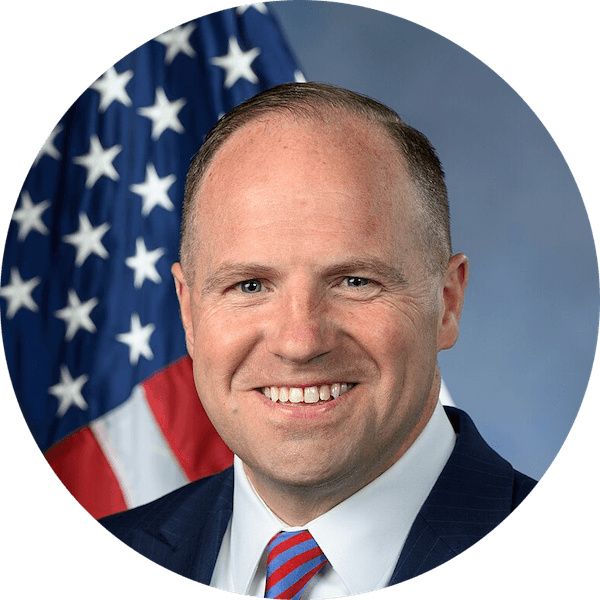
Jefferson Shreve
Republican · IN-6
Wipe out the scam compounds draining Americans' savings
Why it matters
The bill's findings, citing the Treasury Department, put American losses to overseas crypto scam operations at more than $10 billion in 2024 alone, up 33% in a year. H.R. 5490 sets up a State Department-led task force, a sanctions review of more than 40 named people and companies, and $60 million to carry out the plan.
The bill calls this fraud "pig butchering": a scammer spends weeks building trust, then steers you into a fake investment site and keeps raising the stakes until your savings are gone. According to the bill's findings, the operations are run by Chinese criminal groups working out of compounds in Southeast Asia, often in partnership with local officials.
The findings, citing Treasury, estimate Americans lost at least $10 billion in 2024. Global losses are put above $60 billion a year, and the bill notes many victims never report.
H.R. 5490 would make shutting down these scam centers an official U.S. government mission, run by a task force chaired by the Secretary of State. The FBI, Secret Service, Homeland Security Investigations, and Treasury's sanctions and financial-crimes offices would all sit at the table. The SEC, FTC, and FCC could join.
The task force would have 180 days to deliver a strategy. Its goals include pressuring foreign governments that tolerate the compounds, recovering stolen money for Americans, training foreign police, pushing to put Cambodia on the Financial Action Task Force's gray or black list, and using offensive cyber tools against scam operations.
The bill also names 32 individuals and 11 companies, and gives the President 180 days to decide whether each one gets sanctioned. Any name left off requires a written justification to Congress. People the President determines are trafficking victims cannot be sanctioned.
Private companies are part of the plan too. The task force would build partnerships with banks, dating apps, social media platforms, phone carriers, crypto exchanges, app stores, and search engines, since those are the channels scammers use to find you and move your money.
Bill Progress
Latest Action · Dec 3, 2025
Committee approved bill for floor consideration in the Nature of a Substitute (Amended) by the Yeas and Nays: 48 - 0.
H.R. 5490 Bill Summary
What H.R. 5490 actually does.
One team in charge of the scam fight
Within 30 days, the President must create a task force chaired by the Secretary of State, with the Justice Department, FBI, Homeland Security, Secret Service, and Treasury's sanctions and financial-crimes offices. Member agencies must share all relevant data with it. The task force expires after seven years.
A plan to shut the compounds down in 180 days
The strategy must cover pressuring complicit foreign governments, investigating the roles of China and Burma's military, training foreign police in digital forensics and anti-money laundering, and using offensive cyber tools against scam centers.
Getting stolen money back to Americans
Recovering and returning stolen assets is a listed goal of the strategy. The task force must also meet quarterly with state and local police and groups that help victims recover stolen crypto.
Named scam bosses face a sanctions decision
The President has 180 days to decide whether to sanction 32 named individuals and 11 companies under existing human rights, trafficking, and organized crime authorities. Any name not sanctioned needs a written justification to Congress, and a national security waiver is available.
Forced workers are protected from sanctions
Anyone the President determines is a trafficking victim cannot be sanctioned under the bill. The State Department may fund shelter, trauma-informed care, and reintegration for people rescued from scam centers.
Yearly public accounting of the losses
For five years, the task force must report how much Americans lost, how much was seized or returned, how many trafficking victims were held in scam centers, and where the operations are spreading. Reports are unclassified, with an optional classified annex.
Who benefits from H.R. 5490?
Anyone targeted by a romance or crypto investment scam
These scams reach people through texts, dating apps, and social media. The bill's findings say thousands of Americans have lost their life savings since 2021, and recovering stolen assets is a stated goal of the strategy.
People trafficked into scam compounds
According to the bill's findings, hundreds of thousands of people were lured by fake job ads and forced to meet scam quotas under threat of violence. The bill shields them from sanctions and allows funding for shelter and recovery.
Local police and victim advocates
Scam victims usually report to local police, who rarely have the reach to follow money overseas. The task force must consult them every quarter and take their recommendations into account.
Who is affected by H.R. 5490?
The named individuals and companies
Each of the 32 individuals and 11 companies faces a sanctions decision within 180 days. Sanctions could freeze their U.S. assets and cut them off from the U.S. financial system.
Governments of Cambodia, Laos, and Burma
The strategy calls for diplomatic pressure on governments that tolerate scam centers, and for pushing to place Cambodia on the Financial Action Task Force's gray or black list, which raises the cost of doing business there.
Banks, crypto exchanges, and tech platforms
The task force would seek partnerships with banks, dating and social apps, phone carriers, crypto exchanges, app stores, and search engines. The bill describes this as cooperation and does not impose new legal mandates on these companies.
The State Department and partner agencies
Agencies take on a 30-day setup deadline, a 180-day strategy, quarterly consultations, and five years of annual reports.
Cost & Funding
Authorization
$30 million a year to the State Department for FY2026 and FY2027 ($60 million total)
- The money goes to developing and carrying out the strategy. Victim shelter, care, and reintegration programs are paid for out of the same pot.
- Measured against the $10 billion in 2024 American losses cited in the bill's findings, $30 million a year is about 0.3% of one year's losses.
- These are authorizations. Congress still has to appropriate the money in separate spending bills.
HR5490 Legislative Journey
House: Vote: 48-0
Dec 3, 2025
Ordered to be Reported in the Nature of a Substitute (Amended) by the Yeas and Nays: 48 - 0.
House: Committee Action
Sep 18, 2025
Referred to the Committee on Foreign Affairs, and in addition to the Committee on the Judiciary, for a period to be subsequently determined by the Speaker, in each case for consideration of such provisions as fall within the jurisdiction of the committee concerned.
About the Sponsor
Jefferson Shreve
Republican, Indiana's 6th congressional district · 1 years in Congress
Committees: Appropriations
View full profile →
Cosponsors (72)
This bill has 72 cosponsors: 29 Democrats, 43 Republicans, reflecting bipartisan support. Cosponsors represent 26 states: California, District of Columbia, Delaware, and 23 more.

John Moolenaar
Republican · MI
Michael Rulli
Republican · OH

Bill Huizenga
Republican · MI
Thomas Suozzi
Democrat · NY
Rudy Yakym
Republican · IN

Addison McDowell
Republican · NC
James Moylan
Republican · GU

Josh Gottheimer
Democrat · NJ

Eugene Vindman
Democrat · VA

Josh Riley
Democrat · NY
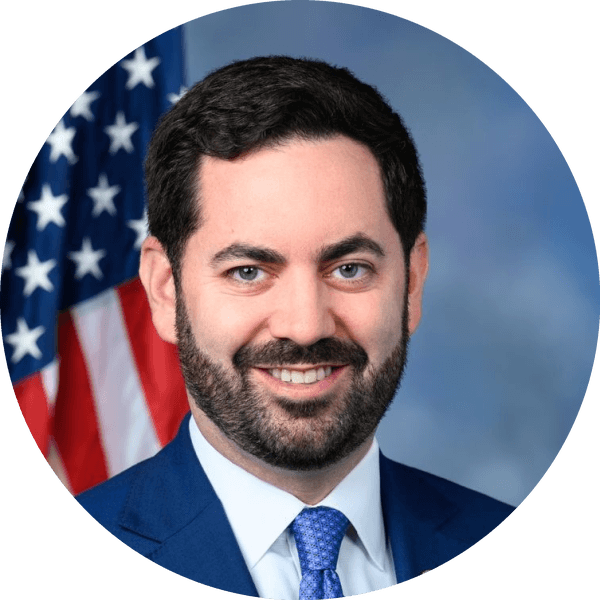
Michael Lawler
Republican · NY
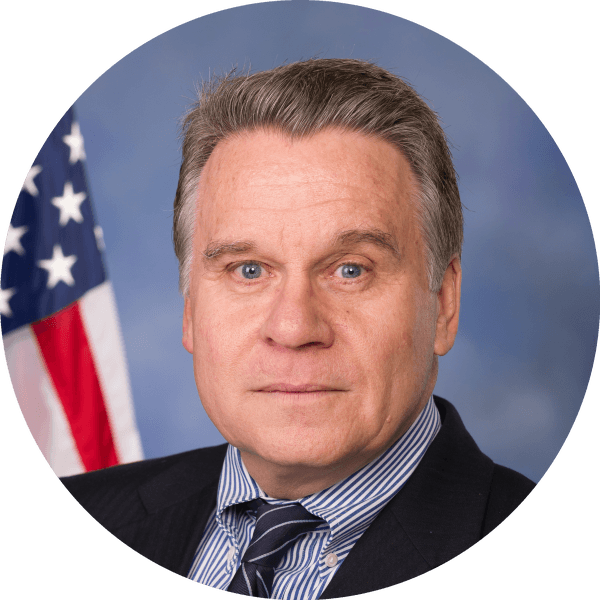
Christopher Smith
Republican · NJ
Committee Sponsors
Foreign Affairs Committee
21 of 53 committee members cosponsored


Judiciary Committee
5 of 44 committee members cosponsored


35 Republicans across these committees haven't cosponsored yet. Mobilize their constituents
H.R. 5490 Quick Facts
- Committee
- Foreign Affairs
- Chamber
- House
- Policy
- International Affairs
- Introduced
- Sep 18, 2025
Committee approved bill for floor consideration in the Nature of a Substitute (Amended) by the Yeas and Nays: 48 - 0.
Dec 3, 2025
Official Sources
Full text, cosponsors, committee actions, and the latest status of the bill.
Treasury's 2023 alert explaining how pig butchering scams work and the red flags banks watch for, the same fraud the bill targets.
The bill relies on the Global Magnitsky Human Rights Accountability Act as one of the authorities for sanctioning the 32 named individuals and 11 companies.
Executive Order 13581, which this program administers, is another authority the bill lists for sanctioning the named scam bosses and companies.
The FBI's annual tally of reported internet crime losses, including cryptocurrency investment fraud, for the same year the bill's findings cite.
The FBI's portal where Americans report crypto investment and romance scams; reports feed the loss figures the task force would track.
Consumer guidance on the relationship-building scams that open most pig butchering schemes, including how to report them.
H.R. 5490 Common Questions
What does H.R. 5490 do?
It creates a State Department-led task force to shut down overseas scam compounds, requires a strategy within 180 days, orders a sanctions decision on 32 named individuals and 11 companies, and authorizes $60 million over two years.
What is a pig butchering scam?
It's a long con. A stranger builds a friendship or romance over weeks, then walks you into a fake crypto investment site. The name, per the bill, is Chinese criminal slang for fattening a victim up before the slaughter.
How much have Americans lost to these scams?
The bill's findings, citing Treasury, put it at more than $10 billion in 2024 alone, up 33% from the year before. The findings estimate global losses above $60 billion a year and say the real figure is likely higher because many victims never report.
Where are the scam compounds located?
According to the bill's findings, mostly in Burma, Laos, and Cambodia, often run by Chinese criminal groups working alongside local officials. The strategy also covers networks that spread elsewhere.
Who is on the sanctions list in H.R. 5490?
The bill names 32 individuals and 11 companies, including Prince Group, Huione Group, and Chen Zhi. The President must decide on each within 180 days and justify to Congress any name that isn't sanctioned.
Are the people forced to work in scam compounds punished?
No. Anyone the President determines is a trafficking victim cannot be sanctioned. The State Department may also fund shelter, trauma care, and reintegration for people rescued from the compounds.
Will H.R. 5490 help me get my stolen crypto back?
It doesn't create a refund program. But recovering and returning stolen assets is a required goal of the strategy, and the task force must report each year how much stolen money was seized or returned.
What is the status of H.R. 5490?
The House Foreign Affairs Committee approved it 48-0 on December 3, 2025. It next needs a House floor vote, then Senate passage.
Based on H.R. 5490 bill text
H.R. 5490 Bill Text
“To establish an interagency Task Force to dismantle and shut down transnational criminal syndicates perpetuating mass online scam operations against Americans.”
Source: U.S. Government Publishing Office
Get notified when H.R. 5490 moves
Committee votes, floor action, cosponsor changes — straight to your inbox.
Bill alerts + Legisletter's monthly briefing. Unsubscribe anytime.
International Affairs Bills
9 related bills we're tracking
Enhanced Iran Sanctions Act of 2025



Motion to place bill on Consensus Calendar filed by Mr. Lawler.
Jan 12, 2026
United States-Israel Defense Partnership Act of 2025


Referred to the Committee on Armed Services, and in addition to the Committee on Foreign Affairs, for a period to be subsequently determined by the Speaker, in each case for consideration of such provisions as fall within the jurisdiction of the committee concerned.
Feb 12, 2025
West Bank Violence Prevention Act of 2025


Referred to the Committee on Foreign Affairs, and in addition to the Committee on the Judiciary, for a period to be subsequently determined by the Speaker, in each case for consideration of such provisions as fall within the jurisdiction of the committee concerned.
Apr 28, 2025
Global Respect Act



Referred to the Committee on Foreign Affairs, and in addition to the Committee on the Judiciary, for a period to be subsequently determined by the Speaker, in each case for consideration of such provisions as fall within the jurisdiction of the committee concerned.
Nov 19, 2025
Sanctioning Russia Act of 2025



Referred to the Committee on Foreign Affairs, and in addition to the Committees on the Judiciary, Financial Services, Ways and Means, and Oversight and Government Reform, for a period to be subsequently determined by the Speaker, in each case for consideration of such provisions as fall within the jurisdiction of the committee concerned.
Apr 1, 2025
International Human Rights Defense Act of 2025



Referred to the House Committee on Foreign Affairs.
Nov 17, 2025
Global Health, Empowerment and Rights Act



Referred to the House Committee on Foreign Affairs.
Jan 28, 2025
Pakistan Freedom and Accountability Act


Referred to the Committee on Foreign Affairs, and in addition to the Committee on the Judiciary, for a period to be subsequently determined by the Speaker, in each case for consideration of such provisions as fall within the jurisdiction of the committee concerned.
Sep 10, 2025
Baltic Security Assessment Act of 2025




Ordered to be Reported by the Yeas and Nays: 41 - 3.
Apr 22, 2026
Trending Right Now
Bills gaining momentum across Congress
Fit to Serve Act


Referred to the House Committee on Armed Services.
May 21, 2025
America’s Olympic and Paralympic Games Commemorative Coins Act



Referred to the House Committee on Financial Services.
Jul 14, 2025
ASAP Act


Ordered to be Reported in the Nature of a Substitute by the Yeas and Nays: 40 - 0.
Sep 16, 2026
Tracking International Affairs in Congress? Monitor bills, track cosponsor momentum, and launch advocacy campaigns — all from one advocacy platform.