H.R. 1229: United States-Israel Defense Partnership Act of 2025
Sponsor

Joe Wilson
Republican · SC-2
The U.S. and Israel are building a joint counter-drone arsenal
Why it matters
$1 billion over five years. That's the new money Congress wants to pour into joint U.S.-Israel defense programs covering counter-drone systems, anti-tunnel tech, and emerging fields like AI and quantum computing. With 178 bipartisan cosponsors, this is one of the broadest coalitions in the 119th Congress.
The centerpiece is a new joint counter-drone program. The Pentagon and Israel's Ministry of Defense would build a formal partnership to develop, test, buy, and deploy systems that stop drones and other unmanned threats. A dedicated program office inside the Defense Department would run it. Congress is putting $150 million a year behind it for five fiscal years — $750 million total.
Two existing programs get longer timelines and more money. Anti-tunnel cooperation, which helps detect and destroy underground threats along Israel's borders, sees its funding cap jump from $50 million to $80 million and runs through the end of 2028. Counter-UAS cooperation — the existing program for stopping drones — gets a cap increase from $55 million to $75 million on the same timeline.
The forward-looking piece is a new emerging technology partnership. The Pentagon would be authorized to work with Israel on AI, cybersecurity, robotics, quantum computing, and automation. But Congress built in guardrails: no work can start until the Defense Department sends Congress a cost-sharing agreement, an intellectual property framework, and a requirement for Israel to submit spending reports every six months. That program gets $50 million a year for five years.
Three other provisions round out the bill. War reserve stockpile authority — the legal basis for keeping U.S. weapons pre-positioned in Israel — extends to January 2029. The Defense Innovation Unit, a Pentagon organization that scouts commercial technology for military use, would have to open an office in Israel within 180 days. And the Defense Department would begin talks about bringing Israel into the "national technology and industrial base," a designation currently limited to Five Eyes countries: the U.S., UK, Australia, New Zealand, and Canada.
Finally, the bill requires an assessment of integrated air and missile defense across the Middle East, specifically incorporating lessons from the two 2024 Iranian attacks on Israel.
Bill Progress
Latest Action · Feb 12, 2025
Referred to Armed Services, and in addition to the Committee on Foreign Affairs, for a period to be subsequently determined by the Speaker, in each case for consideration of such provisions as fall within the jurisdiction of the committee concerned. for review
H.R. 1229 Bill Summary
What H.R. 1229 actually does.
$750 million for a new joint counter-drone program
Creates the U.S.-Israel Counter-Unmanned Systems Program with a dedicated Pentagon office. Covers research, testing, procurement, deployment, and joint training. Authorized at $150 million per year for FY2026 through FY2030.
Anti-tunnel funding jumps 60%
Raises the funding cap for U.S.-Israel anti-tunnel cooperation from $50 million to $80 million and extends the program through December 31, 2028.
Existing counter-drone program gets more money and time
Increases the funding cap for the current U.S.-Israel counter-UAS partnership from $55 million to $75 million through the end of 2028.
AI and quantum defense research — with strings attached
Authorizes $50 million per year for five years for joint work on AI, cybersecurity, robotics, quantum computing, and automation. No work can begin until Congress receives a cost-sharing agreement and IP framework.
U.S. weapons stay pre-positioned in Israel through 2029
Extends war reserve stockpile authority, which allows the Pentagon to keep defense articles stored in Israel for rapid access during a crisis.
Pentagon must open an innovation office in Israel
The Defense Innovation Unit — the Pentagon's commercial technology scouting arm — has 180 days after enactment to set up an office in Israel focused on countering Iranian dual-use tech development.
Post-Iran-attack air defense review required
The Pentagon must assess integrated air and missile defense across the CENTCOM region, including lessons from the April 13 and October 1, 2024, Iranian airstrikes on Israel.
Who benefits from H.R. 1229?
U.S. and Israeli military forces facing drone threats
Both countries' armed forces gain a formal, funded partnership to develop and deploy the systems needed to counter the growing use of drones by state and nonstate adversaries.
Defense technology companies in both countries
Over $1 billion in new authorizations creates procurement, R&D, and joint venture opportunities across counter-drone, AI, cybersecurity, robotics, and quantum computing.
U.S. allies and partners in the Middle East
The CENTCOM air defense assessment and strengthened U.S.-Israel capabilities could improve the broader regional defense architecture that protected multiple countries during the 2024 Iranian attacks.
Supporters of the U.S.-Israel strategic relationship
The bill reaffirms and expands the defense partnership with 178 cosponsors from both parties — one of the most broadly supported foreign policy measures in the 119th Congress.
Who is affected by H.R. 1229?
Pentagon program managers and procurement officers
They would need to stand up a new program office, coordinate with Israeli counterparts, manage IP frameworks, and produce annual and semiannual reports to Congress.
Congressional defense and foreign affairs committees
They receive new oversight responsibilities including annual counter-drone program reports, semiannual Israeli spending reports, and a CENTCOM air defense assessment.
Five Eyes defense industrial base members
If Israel joins the national technology and industrial base — currently limited to the U.S., UK, Australia, New Zealand, and Canada — it would gain preferential access to defense procurement and technology sharing that no other Middle Eastern country has.
U.S. taxpayers
The bill authorizes $200 million per year in new spending for five years, plus higher caps for two existing programs. These are authorizations — Congress still has to appropriate the actual money.
Cost & Funding
Authorization
$200 million per year for FY2026-FY2030 in new authorizations, plus increased caps for two existing programs
- $150 million per year for FY2026 through FY2030 for the new U.S.-Israel Counter-Unmanned Systems Program — $750 million total.
- $50 million per year for FY2026 through FY2030 for the emerging defense technology partnership — $250 million total.
- Anti-tunnel cooperation cap raised from $50 million to $80 million (a 60% increase).
- Counter-UAS cooperation cap raised from $55 million to $75 million (a 36% increase).
- Total new authorizations over five years: approximately $1 billion, not counting the cap increases for existing programs.
- These are authorizations, not appropriations — Congress must still approve the actual spending in annual funding bills.
HR1229 Legislative Journey
House: Committee Action
Feb 12, 2025
Referred to the Committee on Armed Services, and in addition to the Committee on Foreign Affairs, for a period to be subsequently determined by the Speaker, in each case for consideration of such provisions as fall within the jurisdiction of the committee concerned.
About the Sponsor
Joe Wilson
Republican, South Carolina's 2nd congressional district · 25 years in Congress
Committees: Armed Services, Education and Workforce, Foreign Affairs
View full profile →
Cosponsors (177)
This bill has 177 cosponsors: 92 Democrats, 88 Republicans, reflecting bipartisan support. Cosponsors represent 38 states: Alabama, Arizona, California, and 35 more.

Donald Norcross
Democrat · NJ

Zachary Nunn
Republican · IA

Laura Gillen
Democrat · NY

Claudia Tenney
Republican · NY

Josh Gottheimer
Democrat · NJ

Brian Fitzpatrick
Republican · PA

Frederica Wilson
Democrat · FL

Jared Moskowitz
Democrat · FL

Donald Davis
Democrat · NC

Guy Reschenthaler
Republican · PA

Sanford Bishop
Democrat · GA
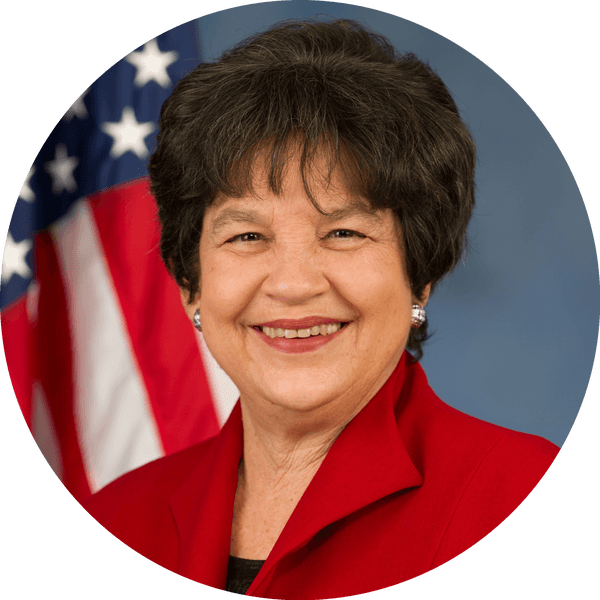
Lois Frankel
Democrat · FL
Cosponsor Coverage Map
Committee Sponsors
Foreign Affairs Committee
25 of 53 committee members cosponsored


Armed Services Committee
33 of 57 committee members cosponsored


31 Republicans across these committees haven't cosponsored yet. Mobilize their constituents
H.R. 1229 Quick Facts
- Committee
- Foreign Affairs
- Chamber
- House
- Policy
- International Affairs
- Introduced
- Feb 12, 2025
Referred to Armed Services, and in addition to the Committee on Foreign Affairs, for a period to be subsequently determined by the Speaker, in each case for consideration of such provisions as fall within the jurisdiction of the committee concerned. for review
Feb 12, 2025
Official Sources
Full bill text, cosponsors, actions, and committee referrals for the United States-Israel Defense Partnership Act of 2025.
The identical Senate version of the United States-Israel Defense Partnership Act, introduced the same day.
Congressional Research Service overview of U.S.-Israel bilateral assistance, including the $38 billion 10-year MOU covering FY2019-FY2028.
Official overview of the Pentagon office that the bill requires to open an Israel branch within 180 days. Covers AI, autonomy, cyber, and emerging tech sectors.
Defense Security Cooperation Agency definition of the pre-positioned stockpile program that the bill extends through January 2029.
One of two committees of referral for H.R. 1229. Handles jurisdiction over defense policy, acquisition, and counter-drug programs.
The DOD organization designated as lead agency for the bill's emerging defense technology program with Israel. Manages bilateral agreements with five allied nations including Israel.
The statutory definition of the defense industrial base the bill would open to Israel — currently limited to the U.S., UK, Australia, New Zealand, and Canada.
H.R. 1229 Common Questions
How much new money does H.R. 1229 authorize?
About $1 billion over five years. The counter-drone program gets $150 million per year ($750 million total) and the emerging tech partnership gets $50 million per year ($250 million total) for FY2026 through FY2030. Two existing programs also get higher funding caps.
What prompted the CENTCOM air defense review?
The April 13 and October 1, 2024, Iranian airstrikes on Israel. The bill requires the Pentagon to assess integrated air and missile defense across the region, specifically incorporating lessons from those attacks.
What technologies does the emerging defense partnership cover?
Artificial intelligence, cybersecurity, robotics, quantum computing, and automation. But no work can start until the Pentagon submits a cost-sharing agreement, an IP rights framework, and a requirement for Israel to file semiannual spending reports.
Would Israel join the Five Eyes defense industrial base?
Not automatically. The bill requires the Pentagon to begin talks with Israel about joining the national technology and industrial base — currently limited to the U.S., UK, Australia, New Zealand, and Canada. Ascension would require further action.
Does H.R. 1229 create a new Pentagon office?
Yes — two, effectively. A U.S.-Israel Counter-Unmanned Systems Program Office to manage the counter-drone partnership, and a Defense Innovation Unit office in Israel (within 180 days) to scout commercial technology and counter Iranian dual-use tech.
How bipartisan is this bill?
Strongly. It has 178 cosponsors from both parties — introduced by Rep. Joe Wilson (R-SC) with Rep. Donald Norcross (D-NJ) as lead cosponsor. That makes it one of the most broadly supported defense bills in the 119th Congress.
Does the bill extend U.S. war reserve stockpiles in Israel?
Yes. The authority for keeping U.S. defense articles pre-positioned in Israel — ready for rapid access during a crisis — extends from January 1, 2027, to January 1, 2029.
Is the $1 billion in spending guaranteed?
No. These are authorizations — Congress saying it approves spending up to these amounts. The actual money has to come through separate appropriations bills. Authorization is the promise; appropriation is the check.
Based on H.R. 1229 bill text
H.R. 1229 Bill Text
“To enhance bilateral defense cooperation between the United States and Israel, and for other purposes.”
Source: U.S. Government Publishing Office
Get notified when H.R. 1229 moves
Committee votes, floor action, cosponsor changes — straight to your inbox.
Bill alerts + Legisletter's monthly briefing. Unsubscribe anytime.
International Affairs Bills
9 related bills we're tracking
Enhanced Iran Sanctions Act of 2025


Motion to place bill on Consensus Calendar filed by Mr. Lawler.
Jan 12, 2026
West Bank Violence Prevention Act of 2025




Referred to the Committee on Foreign Affairs, and in addition to the Committee on the Judiciary, for a period to be subsequently determined by the Speaker, in each case for consideration of such provisions as fall within the jurisdiction of the committee concerned.
Apr 28, 2025
Global Respect Act



Referred to the Committee on Foreign Affairs, and in addition to the Committee on the Judiciary, for a period to be subsequently determined by the Speaker, in each case for consideration of such provisions as fall within the jurisdiction of the committee concerned.
Nov 19, 2025
Sanctioning Russia Act of 2025



Referred to the Committee on Foreign Affairs, and in addition to the Committees on the Judiciary, Financial Services, Ways and Means, and Oversight and Government Reform, for a period to be subsequently determined by the Speaker, in each case for consideration of such provisions as fall within the jurisdiction of the committee concerned.
Apr 1, 2025
International Human Rights Defense Act of 2025




Referred to the House Committee on Foreign Affairs.
Nov 17, 2025
Global Health, Empowerment and Rights Act




Referred to the House Committee on Foreign Affairs.
Jan 28, 2025
Pakistan Freedom and Accountability Act





Referred to the Committee on Foreign Affairs, and in addition to the Committee on the Judiciary, for a period to be subsequently determined by the Speaker, in each case for consideration of such provisions as fall within the jurisdiction of the committee concerned.
Sep 10, 2025
Baltic Security Assessment Act of 2025





Ordered to be Reported by the Yeas and Nays: 41 - 3.
Apr 22, 2026
Dismantle Foreign Scam Syndicates Act


Ordered to be Reported in the Nature of a Substitute (Amended) by the Yeas and Nays: 48 - 0.
Dec 3, 2025
Trending Right Now
Bills gaining momentum across Congress
North Platte Canteen Congressional Gold Medal Act




Referred to the House Committee on Financial Services.
Feb 21, 2025
Fit to Serve Act



Referred to the House Committee on Armed Services.
May 21, 2025
ASAP Act




Ordered to be Reported in the Nature of a Substitute by the Yeas and Nays: 40 - 0.
Sep 16, 2026
Tracking International Affairs in Congress? Monitor bills, track cosponsor momentum, and launch advocacy campaigns — all from one advocacy platform.