H.R. 7380: IRAN Act
Sponsor

Eric Swalwell
Democrat · CA-14
When Iran cuts the internet, keep the satellites on
Why it matters
When a government flips the internet kill switch, satellites overhead can be the only way out. H.R. 7380 would put $30 million and new FCC licensing rules behind keeping Iranians connected — and bar U.S.-licensed satellite companies from helping black out coverage over the country.
H.R. 7380 — the Internet Reach and Access Now Act, or IRAN Act — aims to keep Iranians online when their government tries to cut them off. It works on three fronts.
First, it names the Secretary of State as the lead U.S. official on internet freedom in Iran and orders an updated strategy within 120 days. That strategy has to look specifically at VPNs and Direct-to-Cell satellite service, and figure out how to keep them working during a blackout.
Second, it tells the FCC to attach a string to every new satellite license, license change, or market-access grant: the company can't intentionally shut off, slow down, or geo-block coverage over Iran. There are narrow exceptions for legal orders, rules that prevent signal interference, and short-term network-security emergencies.
Third, it builds a State Department program — run through the Bureau of Democracy, Human Rights, and Labor — to give Iranian journalists and activists cybersecurity training, vetted VPNs and encrypted messaging, and warnings about regime-controlled apps and phishing.
Congress authorizes $15 million for 2027 and another $15 million for 2028 to pay for it. The bill is careful to say it doesn't waive any Iran sanctions and doesn't force any company to market, sell, or collect payment for service inside Iran.
Bill Progress
Latest Action · Feb 4, 2026
Referred to Foreign Affairs, and in addition to the Committee on Energy and Commerce, for a period to be subsequently determined by the Speaker, in each case for consideration of such provisions as fall within the jurisdiction of the committee concerned. for review
H.R. 7380 Bill Summary
What H.R. 7380 actually does.
State Department gets 120 days to rewrite the Iran internet plan
The bill makes the Secretary of State the lead federal official on internet freedom in Iran and requires an updated strategy within 120 days. That update has to evaluate how activists use VPNs and Direct-to-Cell satellite tools, assess how the regime carries out internet blackouts, and coordinate with the Treasury and Commerce Departments so sanctions don't block civilians from getting access technology.
Satellite companies can't geo-block Iran on new licenses
For any FCC license, license modification, or market-access grant issued on or after enactment, the FCC must require the operator not to intentionally disable, degrade, or geo-block satellite or Direct-to-Cell coverage over Iran. The exceptions are narrow: federal law, an FCC order, international rules to prevent signal interference, or brief periods to handle an imminent threat to network security.
U.S. must fight efforts to wall Iran off internationally
The Secretary of State, working with the Commerce Department and the FCC, must oppose any proposal at the International Telecommunication Union that would push to geographically exclude Iran from satellite or Direct-to-Cell coverage. State has to submit a report within 180 days, then annually for 5 years, on those efforts and any time an operator intentionally cut off coverage of Iran.
A digital-safety program for Iranian journalists and activists
Within 180 days, the Secretary of State — acting through the Bureau of Democracy, Human Rights, and Labor — must stand up a program offering cybersecurity training, vetted VPNs and end-to-end encrypted messaging, and multilingual materials warning users about regime-controlled apps and phishing. It's aimed at journalists, human-rights defenders, and civil-society actors inside Iran.
Quarterly check-ins and a 3-year independent audit
The program has to report quarterly metrics — how many people it trained, incident-response cases handled, and unique users of the tools. Separately, the Comptroller General (the head of the Government Accountability Office) must deliver an independent evaluation of how well the program worked within 3 years of enactment.
$30 million over two years, with sanctions left intact
The bill authorizes $15 million for 2027 and $15 million for 2028 to fund the cybersecurity and secure-access work, with the money available until it's spent. A rule of construction states that nothing in the bill limits the President's emergency economic powers or authorizes any transaction barred by U.S. sanctions or export-control laws.
Who benefits from H.R. 7380?
Iranian journalists reporting under censorship
They could get cybersecurity training and vetted digital-safety tools — including VPNs and encrypted messaging — through a State Department program that has to be running within 180 days of enactment.
Human-rights defenders and activists in Iran
They stand to gain from federal efforts to widen access to VPNs and Direct-to-Cell technology, plus multilingual materials warning them about regime-controlled apps and phishing campaigns.
Ordinary Iranians during an internet shutdown
If U.S.-licensed satellite operators are barred from geo-blocking coverage over Iran, civilians caught in a blackout would have a better shot at reaching the open internet through satellite and Direct-to-Cell service.
Civil-society groups planning around blackouts
The Secretary of State's updated strategy, due in 120 days, has to specifically examine how activists rely on VPNs and Direct-to-Cell tools and how to keep them accessible when the regime cuts connectivity.
Who is affected by H.R. 7380?
Secretary of State and the State Department
The department becomes the primary federal coordinator on internet freedom in Iran. It must submit a strategy update within 120 days, stand up a cybersecurity program within 180 days, report initially within 180 days and then annually for 5 years, and run the work through the Bureau of Democracy, Human Rights, and Labor.
Federal Communications Commission
The FCC must attach a new condition to licenses, license modifications, and market-access grants issued on or after enactment, requiring operators not to intentionally disable, degrade, or geo-block satellite or Direct-to-Cell coverage over Iran outside the bill's narrow exceptions.
Satellite and Direct-to-Cell operators
Companies licensed by the FCC would face a new condition of doing business: they can't intentionally cut off or weaken coverage over Iran, except when required by federal law, an FCC order, international interference rules, or a short-term security emergency. The bill does not, however, force them to sell or activate service inside Iran.
Treasury and Commerce Departments
Both must coordinate with the Secretary of State so sanctions enforcement doesn't block civilians from getting communications technology — while the bill's savings clause keeps existing OFAC sanctions and export-control rules fully in force.
Cost & Funding
Authorization
$15,000,000 for FY2027 and $15,000,000 for FY2028 — $30 million total
- The money funds the cybersecurity training program and secure VPN access for people in Iran.
- Funds stay available until they're spent, rather than expiring at the end of the fiscal year.
- Authorizing the money doesn't waive any sanctions or export-control restrictions — the bill says so explicitly.
What Congress Is Saying
37 legislators have weighed in on H.R. 7380 — 18 Democrats, 19 Republicans.
Mr. Speaker, I rise in strong support of this resolution and reasserting Congress' constitutional responsibility. As the gentleman from Florida stated, the President has the power to react to an attack on the United States. He does not have the power to start a war. President Trump's illegal strikes against Iran are dragging the United States into another costly war in the Middle East. To be clear, I shed no tears over the Ayatollah's death. His brutality was responsible for the deaths of scores of his own people, and he directed terrorist proxies around the world.
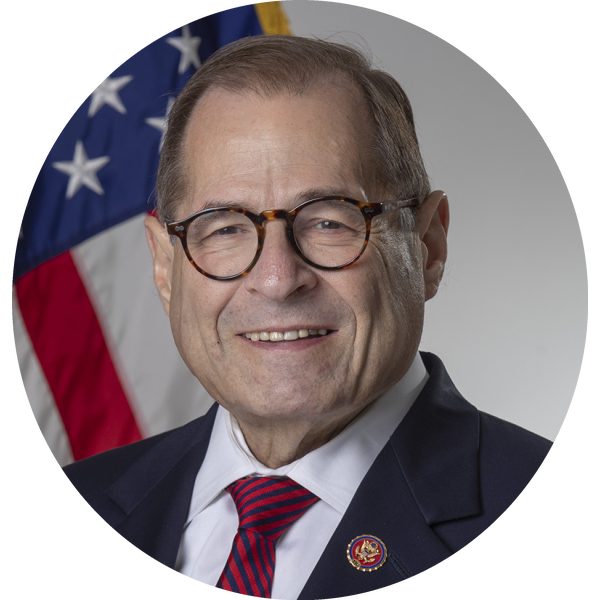
H.R. 7380 also appeared in 10 routine cosponsor filings.
HR7380 Legislative Journey
House: Committee Action
Feb 4, 2026
Referred to the Committee on Foreign Affairs, and in addition to the Committee on Energy and Commerce, for a period to be subsequently determined by the Speaker, in each case for consideration of such provisions as fall within the jurisdiction of the committee concerned.
About the Sponsor
Eric Swalwell
Democrat, California's 14th congressional district · 13 years in Congress
Committees: House Select Subcommittee to Investigate the Remaining Questions Surrounding January 6, 2021, Homeland Security, the Judiciary
View full profile →
Cosponsors (16)
This bill has 16 cosponsors: 10 Democrats, 6 Republicans, reflecting bipartisan support. Cosponsors represent 12 states: Arizona, California, Florida, and 9 more.

Claudia Tenney
Republican · NY

Yassamin Ansari
Democrat · AZ

Maria Salazar
Republican · FL

Dave Min
Democrat · CA

Stephanie Bice
Republican · OK

Brendan Boyle
Democrat · PA

James Walkinshaw
Democrat · VA

Michael Lawler
Republican · NY

Nicole Malliotakis
Republican · NY

Suhas Subramanyam
Democrat · VA

Jake Auchincloss
Democrat · MA

Ilhan Omar
Democrat · MN
Committee Sponsors
Energy and Commerce Committee
1 of 54 committee members cosponsored

Foreign Affairs Committee
3 of 53 committee members cosponsored


47 Democrats across these committees haven't cosponsored yet. Mobilize their constituents
H.R. 7380 Quick Facts
- Committee
- Energy and Commerce
- Chamber
- House
- Policy
- International Affairs
- Introduced
- Feb 4, 2026
Referred to Foreign Affairs, and in addition to the Committee on Energy and Commerce, for a period to be subsequently determined by the Speaker, in each case for consideration of such provisions as fall within the jurisdiction of the committee concerned. for review
Feb 4, 2026
Official Sources
Official Congress.gov page for the IRAN Act, with bill text, actions, sponsors, and status.
The FCC's satellite and Direct-to-Cell licensing rules, the regime the bill would amend by barring operators from geo-blocking coverage over Iran.
The statutory section the bill updates, requiring the Secretary of State to maintain a strategy to promote internet freedom and access to information in Iran.
The bill's rule of construction states it does not limit presidential authority under IEEPA, so the official U.S. Code text is directly relevant.
The bill amends and builds on the internet-freedom provisions in this existing public law, including the Section 414 strategy requirement.
H.R. 7380 Common Questions
How much does the IRAN Act spend on Iran internet freedom?
H.R. 7380 authorizes $30 million total — $15 million for 2027 and $15 million for 2028 — to fund cybersecurity training and secure VPN access for people in Iran. The money stays available until it's spent.
Can satellite companies block coverage over Iran under the IRAN Act?
Generally no. H.R. 7380 tells the FCC to require, on every new license, that operators not intentionally disable, degrade, or geo-block satellite or Direct-to-Cell coverage over Iran. Narrow exceptions cover legal orders, signal-interference rules, and short-term security emergencies.
Does the IRAN Act force satellite companies to do business in Iran?
No. The bill's savings clause says it can't require any operator to market, sell, activate, or collect payment for service in Iran. It bars companies from intentionally cutting off coverage — it doesn't compel them to operate there.
How soon would the State Department have to update the Iran internet strategy?
Within 120 days of enactment, according to H.R. 7380. The updated strategy gets submitted in unclassified form, with an optional classified annex, and has to address VPNs and Direct-to-Cell satellite tools.
Who in Iran would get cybersecurity help under the IRAN Act?
Journalists, human-rights defenders, and civil-society actors in Iran. H.R. 7380 directs the State Department to offer them cybersecurity training, digital-safety tools, and educational materials within 180 days of enactment.
What tools would the IRAN Act provide to people in Iran?
According to H.R. 7380, the program can hand out vetted VPNs and end-to-end encrypted messaging apps, plus multilingual materials warning users about regime-controlled apps and phishing campaigns.
Does the IRAN Act override U.S. sanctions on Iran?
No. H.R. 7380 says nothing in it authorizes any transaction barred by U.S. sanctions or export-control laws, and it doesn't limit the President's emergency economic powers. Existing OFAC restrictions stay in force.
Does the IRAN Act require reports on Iran coverage exclusions?
Yes. H.R. 7380 requires the State Department to report within 180 days, then annually for 5 years, on its work at the International Telecommunication Union and any time a satellite or Direct-to-Cell operator intentionally cut off coverage of Iran.
Based on H.R. 7380 bill text
H.R. 7380 Bill Text
“To make certain improvements relating to the coordination of efforts to promote internet freedom and access to information in Iran, and for other purposes.”
Source: U.S. Government Publishing Office
Get notified when H.R. 7380 moves
Committee votes, floor action, cosponsor changes — straight to your inbox.
Bill alerts + Legisletter's monthly briefing. Unsubscribe anytime.
International Affairs Bills
9 related bills we're tracking
Enhanced Iran Sanctions Act of 2025




Motion to place bill on Consensus Calendar filed by Mr. Lawler.
Jan 12, 2026
United States-Israel Defense Partnership Act of 2025



Referred to the Committee on Armed Services, and in addition to the Committee on Foreign Affairs, for a period to be subsequently determined by the Speaker, in each case for consideration of such provisions as fall within the jurisdiction of the committee concerned.
Feb 12, 2025
West Bank Violence Prevention Act of 2025




Referred to the Committee on Foreign Affairs, and in addition to the Committee on the Judiciary, for a period to be subsequently determined by the Speaker, in each case for consideration of such provisions as fall within the jurisdiction of the committee concerned.
Apr 28, 2025
Global Respect Act




Referred to the Committee on Foreign Affairs, and in addition to the Committee on the Judiciary, for a period to be subsequently determined by the Speaker, in each case for consideration of such provisions as fall within the jurisdiction of the committee concerned.
Nov 19, 2025
Sanctioning Russia Act of 2025



Referred to the Committee on Foreign Affairs, and in addition to the Committees on the Judiciary, Financial Services, Ways and Means, and Oversight and Government Reform, for a period to be subsequently determined by the Speaker, in each case for consideration of such provisions as fall within the jurisdiction of the committee concerned.
Apr 1, 2025
International Human Rights Defense Act of 2025




Referred to the House Committee on Foreign Affairs.
Nov 17, 2025
Global Health, Empowerment and Rights Act




Referred to the House Committee on Foreign Affairs.
Jan 28, 2025
Pakistan Freedom and Accountability Act





Referred to the Committee on Foreign Affairs, and in addition to the Committee on the Judiciary, for a period to be subsequently determined by the Speaker, in each case for consideration of such provisions as fall within the jurisdiction of the committee concerned.
Sep 10, 2025
Baltic Security Assessment Act of 2025



Ordered to be Reported by the Yeas and Nays: 41 - 3.
Apr 22, 2026
Trending Right Now
Bills gaining momentum across Congress
America’s Olympic and Paralympic Games Commemorative Coins Act




Referred to the House Committee on Financial Services.
Jul 14, 2025
Fit to Serve Act



Referred to the House Committee on Armed Services.
May 21, 2025
ASAP Act


Ordered to be Reported in the Nature of a Substitute by the Yeas and Nays: 40 - 0.
Sep 16, 2026
Tracking International Affairs in Congress? Monitor bills, track cosponsor momentum, and launch advocacy campaigns — all from one advocacy platform.