Mr. Speaker, I rise against H.R. 6955. Instead of the Main Street Act, this bill, Mr. Speaker, should be called the Wall Street wins Main Street loses act. It does not help end the affordability crisis, feed hardworking Americans, or keep a roof over their heads. Instead, this bill sneaks in deregulatory measures, further weakens the Consumer Financial Protection Bureau, and weakens community reinvestment and anti- discrimination safeguards. For this reason, at the appropriate time, I will offer a motion to recommit this bill back to committee.
2026 MidtermsSolid SeatD+31R shift +12$671K raised
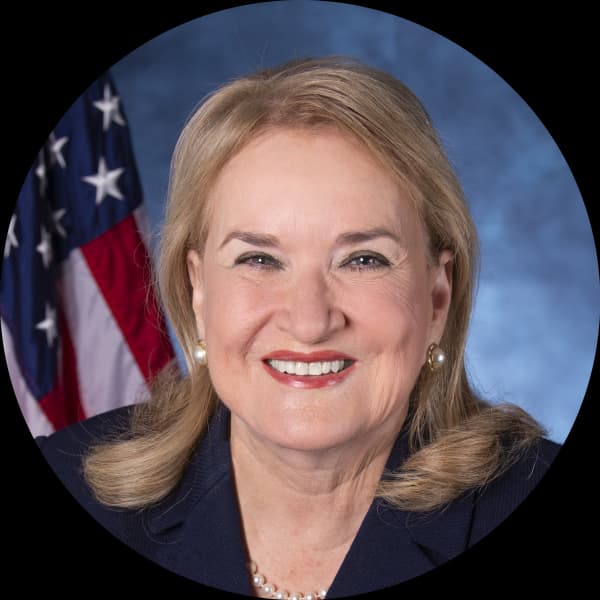
Sylvia Garcia
Representative · Texas · Democrat
Sylvia Garcia
House Floor
Recent comments in the House
Thank you to the gentlewoman from California for the time. Mr. Speaker, I am here to speak about a killing in my district. On July 7, an ICE agent shot and killed Lorenzo Salgado Araujo, an unarmed man with no criminal record, who was not even the target of their investigation. He was headed to a construction job when ICE aggressively pursued his van in an unmarked vehicle. No sirens, no body cameras, no dash cameras, just two unmarked cars following him. Then, an ICE agent fired through the open passenger's side window where Mr. Lorenzo's brother was sitting and killed him.
Biography
Sylvia Garcia began her career as a social worker and city controller, grounding her public service in advocating for working families and local communities. Elected to the U.S. House of Representatives for Texas’s 29th district in 2018, she prioritizes immigration reform, access to affordable healthcare, and economic opportunity for her constituents. Garcia has introduced legislation to protect immigrant rights and serves on the House Judiciary and Financial Services Committees, shaping national policy on civil liberties and financial regulation. She is recognized for her direct, community-focused approach, ensuring the voices of Houston-area residents are represented in Congress.
Education
- J.D., Texas Southern University, Thurgood Marshall School of Law, Houston, TX1978
- B.S. in Social Work, Texas Women’s University, Denton, TX1972
Professional History
U.S. Representative
2019–PresentRepresented Texas's 29th congressional district for 4 terms.
State Senator, Texas 6th District
2013–2018Elected in a 2013 special election and served in the Texas Senate until resigning after her election to the U.S. House.
Commissioner, Harris County Commissioners Court
2003–2010Elected in 2002 as the first woman and first Latina to serve on the Harris County Commissioners Court in her own right.
City Controller, Houston
1998–2002Elected Houston city controller in 1998, serving as the city’s chief financial officer.
Presiding Judge, Houston Municipal Court System
Appointed in the early 1980s by Mayor Kathryn Whitmire and served for five terms under two mayors.
Policy Focus
Finance and Financial Sector17%
Armed Forces and National Security9%
Crime and Law Enforcement9%
Immigration9%
Notable Legislation
Key legislative actions from Sylvia Garcia's record in Congress.
Violence Against Women Act Reauthorization
Co-sponsored and advocated for the reauthorization of the Violence Against Women Act to strengthen protections for survivors.
COVID-19 Relief Funding
Secured federal COVID-19 relief funding for Houston-area hospitals, schools, and small businesses during the pandemic.
Affordable Housing Support
Helped obtain federal grants for affordable housing initiatives in Houston to address homelessness and housing insecurity.
Protecting Immigrant Rights
Introduced legislation to protect the rights of immigrant detainees and improve conditions in immigration detention centers.
Committee Assignments
View details →- House Committee on Ethics
- House Committee on Financial Services
Rep. Sylvia Garcia FAQ
Reach Texas Lawmakers
Representative Garcia focuses on Finance and Financial Sector, Armed Forces and National Security and Crime and Law Enforcement. Deliver personalized constituent letters to Texas's federal, state, and local officials — live in under five minutes.
Grassroots advocacy & legislator intelligence. Used by nonprofits, associations, and GR firms nationwide.
Start a Campaign