H.R. 5361: George Floyd Justice in Policing Act of 2025
Sponsor

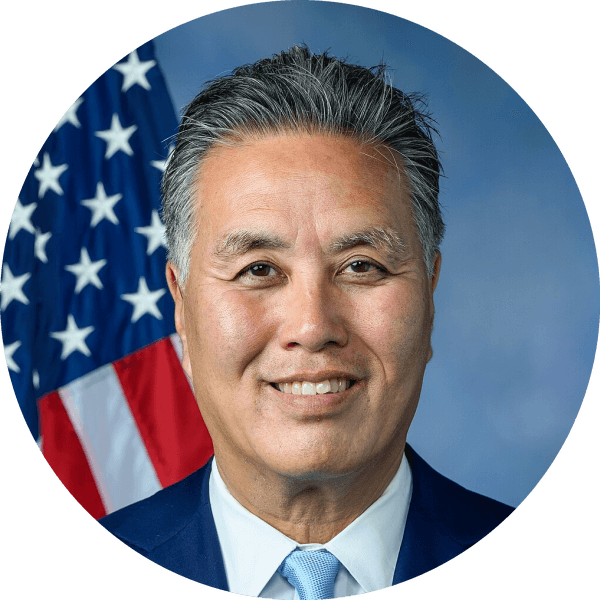
Glenn Ivey
Democrat · MD-4
Qualified immunity ends and police misconduct goes public
Why it matters
$750 million for independent investigations of police killings, a public misconduct registry searchable by officer name within 180 days, and the end of qualified immunity for officers sued over civil rights violations. H.R. 5361 also ties more than a billion dollars a year in Byrne and COPS grants to chokehold bans, no-knock limits, and officer certification. The change you would feel first is in court: your case would turn on what the officer did, not on whether an earlier judge had already ruled on the same facts.
H.R. 5361 is the 2025 version of the George Floyd Justice in Policing Act, reintroduced by Rep. Glenn Ivey with 135 cosponsors. It bundles a dozen separate policing bills into one package, and most of them work in one of two ways: by changing what happens in a courtroom, or by attaching strings to federal grant money.
The courtroom changes come first. An officer sued for violating your civil rights could no longer win dismissal by arguing they acted in good faith or that the right was not "clearly established" at the time. On the criminal side, federal prosecutors would need to show an officer acted "knowingly or recklessly" rather than "willfully," and a death would count if the officer's act was a substantial factor in causing it. Chokeholds would be written into the federal misconduct statute as a form of punishment.
Then comes transparency. The Attorney General would have 180 days to launch a National Police Misconduct Registry covering federal and local officers: sustained complaints, discipline, firings, lawsuit settlements, and officers who resigned while under investigation for use of force. You could search it by an officer's name. Departments would have to check it before hiring. Agencies would report every stop, frisk, and use of force with demographic detail and keep those records at least four years.
Federal officers get their own rulebook. Deadly force would be allowed only as a last resort to prevent imminent death or serious injury, after less-lethal alternatives are exhausted. Every federal officer would wear a body camera, with footage kept six months, or three years when it involves force or a complaint. No-knock warrants would be banned in federal drug cases.
For state and local police, the bill mostly uses money as leverage. A year after enactment, any state or city without a chokehold ban would lose Byrne and COPS grants. Any jurisdiction that still allows no-knock warrants in drug cases would lose COPS money. Grant recipients would have to spend at least 5 percent on accreditation, 5 percent on oversight standards, and 10 percent on anti-profiling systems. Departments that want to keep federal funding would have to ban chokeholds, end no-knock drug raids, and certify every officer.
Two more pieces stand apart. A sexual act by anyone acting under color of law with a person in custody would become a federal crime carrying up to 15 years, with no consent defense. And the Pentagon's surplus-equipment program, which the bill's findings say has moved more than $6.8 billion in gear to police departments, would no longer be able to transfer grenades, grenade launchers, silencers, drones, or armed aircraft.
Bill Progress
Latest Action · Sep 15, 2025
Referred to the Judiciary, and in addition to the Committees on Armed Services, and Energy and Commerce, for a period to be subsequently determined by the Speaker, in each case for consideration of such provisions as fall within the jurisdiction of the committee concerned. for review
H.R. 5361 Bill Summary
What H.R. 5361 actually does.
Officers lose the qualified immunity defense
Local officers sued for civil rights violations, and federal officers sued under any law, could no longer defend the case by arguing they acted in good faith or that the right was not "clearly established" when the conduct occurred. The case would be decided on the conduct itself.
Federal prosecutors face a lower bar in misconduct cases
The federal misconduct statute would require showing an officer acted "knowingly or recklessly" instead of "willfully." A death would be covered when the officer's act was a substantial factor in causing it, and chokeholds would be defined as a form of punishment under the statute.
A public misconduct registry, searchable by officer name
Within 180 days, the Attorney General would launch a National Police Misconduct Registry listing sustained complaints, discipline, terminations, lawsuit settlements, and officers who resigned while under investigation for use of force. Departments would have to consult it before hiring.
Federal officers may use deadly force only as a last resort
Federal officers could use deadly force only to prevent imminent death or serious injury, after reasonable alternatives including less-lethal force are exhausted, and only when it creates no substantial risk to a third person. Officers would have to identify themselves and give a verbal warning when feasible.
Body cameras on every federal officer
Federal officers would wear body cameras activated at the start of every call or stop, and patrol vehicles would carry in-car video. Footage would be kept six months, or three years when it involves force or a complaint. Occupants of a home, crime victims, and anonymous tipsters could ask that the camera be turned off.
Grant money tied to chokehold and no-knock bans
A year after enactment, states and cities without a law banning chokeholds would lose Byrne and COPS grants, and those still allowing no-knock warrants in drug cases would lose COPS grants. No-knock warrants would be banned outright in federal drug cases.
Sex with a person in custody becomes a federal crime
Anyone acting under color of law who engages in a sexual act with a person under arrest, in detention, or otherwise in custody could face a fine, up to 15 years in prison, or both. Consent could not be raised as a defense.
Military surplus transfers to police are cut back
The Pentagon's 1033 program could no longer transfer firearms, grenades, grenade launchers, silencers, drones, combat aircraft, or long-range acoustic devices to police. Recipients would need local governing-body approval and 30 days of public notice, and any agency that cannot account for all of its equipment would be suspended.
Who benefits from H.R. 5361?
Anyone whose civil rights case against police would be dismissed today
Under current law a court can throw out your case if no earlier ruling covered nearly identical facts. H.R. 5361 removes that defense for local and federal officers, so a judge or jury would weigh the conduct itself.
Families of people killed in police encounters
The federal criminal standard drops from "willfully" to "knowingly or recklessly," and a death counts when the officer's act was a substantial factor in it. The bill also authorizes $750 million for states that require independent investigations of deadly-force cases.
People stopped, frisked, or searched
Agencies would report every stop, frisk, and use of force with demographic detail and keep the records at least four years. Anyone harmed by racial profiling could sue for a court order to stop the practice, and every grant-funded department would need a written anti-profiling policy.
People in police custody
A sexual act by anyone acting under color of law with a person under arrest or in detention would be a federal crime carrying up to 15 years. Consent would not be a defense.
Job applicants and departments doing background checks
A public, name-searchable registry would show sustained complaints, firings, and settlements from every reporting agency. A department could no longer unknowingly hire an officer fired elsewhere for excessive force.
State attorneys general
They would gain subpoena power and the authority to bring pattern-or-practice cases against police departments in their own states, backed by $100 million a year for three years in federal grants.
Who is affected by H.R. 5361?
Local and federal police officers
Officers sued for civil rights violations would lose the qualified immunity defense. Federal officers would also be held to a last-resort deadly force standard, mandatory body cameras, and a lower threshold for federal criminal charges. An officer's sustained complaints, discipline, and settlements would appear in a public registry.
Cities and states that rely on Byrne and COPS grants
A jurisdiction without a chokehold ban, or one that permits no-knock warrants in drug cases, would lose those grants a year after enactment. Recipients would also have to spend at least 5 percent on accreditation, 5 percent on oversight standards, and 10 percent on anti-profiling systems.
Police departments doing their own hiring
Departments would have to check the national registry before hiring, and states would need officer certification and decertification systems to stay eligible for Byrne grants. States would report their registry data every 180 days.
Police unions and departments with collective bargaining agreements
Any contract, including a union agreement, that blocks the Attorney General from enforcing pattern-or-practice relief or conflicts with a consent decree would cost the department its share of Byrne and COPS funds.
Departments that take surplus military equipment
Grenades, grenade launchers, silencers, drones, combat aircraft, and long-range acoustic devices would come off the transfer list. Any agency that cannot account for all of its transferred equipment, or that is investigated by the Justice Department for civil liberties violations, would have to return it.
Cost & Funding
Authorization
At least $1.1 billion in specified amounts over fiscal years 2026 through 2028, plus $5 million a year for a DOJ oversight task force and open-ended "such sums as necessary" for the data-collection and anti-profiling programs.
- $750 million for fiscal years 2026 through 2028 goes to states and tribes that adopt independent investigation statutes for police use of deadly force. That is the largest single item, roughly $250 million a year.
- $100 million a year for fiscal years 2026 through 2028, or $300 million total, funds state attorneys general to run pattern-or-practice investigations of their own police departments.
- Smaller items: $25 million for community-based organization grants, $25 million for federal civil rights enforcement, $5.5 million for a data-collection demonstration program and its evaluation, and $3.3 million for the DOJ Community Relations Service.
- The chokehold, no-knock, and certification provisions carry no new money. They work by withholding existing Byrne and COPS grants, which together send well over a billion dollars a year to state and local police. A city that loses both would feel it in the next budget cycle.
- There is no CBO score. The registry, body cameras for every federal officer, in-car video for every federal patrol vehicle, and the new reporting systems would all carry costs the bill does not specify.
HR5361 Legislative Journey
House: Committee Action
Sep 15, 2025
Referred to the Committee on the Judiciary, and in addition to the Committees on Armed Services, and Energy and Commerce, for a period to be subsequently determined by the Speaker, in each case for consideration of such provisions as fall within the jurisdiction of the committee concerned.
About the Sponsor
Glenn Ivey
Democrat, Maryland's 4th congressional district · 3 years in Congress
Committees: Ethics, Appropriations
View full profile →
Cosponsors (136)
All 136 cosponsors are Democrats. Cosponsors represent 35 states: Alabama, Arizona, California, and 32 more.



Cosponsor Coverage Map
Committee Sponsors
Energy and Commerce Committee
18 of 54 committee members cosponsored


Armed Services Committee
13 of 57 committee members cosponsored


Judiciary Committee
15 of 44 committee members cosponsored


24 Democrats across these committees haven't cosponsored yet. Mobilize their constituents
What laws does H.R. 5361 change?
4 changes
Sections Amended
Section 1979 of Revised Statutes of the United States (42 U.S.C. 1983)
adding at the end the following: ``It shall not be a defense or immunity in any action brought under this section against a local law enforcement officer (as such term is defined in section 2 of the George Floyd Justice in Policing Act of 2025), or in any action under any source of law against a Federal investigative or law enforcement officer (as such term is defined in section 2680(h) of title 28, United States Code), that-- ``(1) the defendant was acting in good faith, or that the defendant believed, reasonably or otherwise, that his or her conduct was lawful at the time when the conduct was committed; or ``(2) the rights, privileges, or immunities secured by the Constitution and laws were not clearly established at the time of their deprivation by the defendant, or that at such time, the state of the law was otherwise such that the defendant could not reasonably have been expected to know whether his or her conduct was lawful
Section 502(a) of title I of the Omnibus Crime Control and Safe Streets Act of 1968 (34 U.S.C. 10153(a))
adding at the end the following: ``(7) An assurance that, for each fiscal year covered by an application, the applicant will use not less than 5 percent of the total amount of the grant award for the fiscal year to assist law enforcement agencies of the applicant, including campus public safety departments, gain or maintain accreditation from certified law enforcement accreditation organizations in accordance with section 113 of the Law Enforcement Trust and Integrity Act of 2025
Section 509 of Controlled Substances Act (21 U.S.C. 879)
adding at the end the following: ``A search warrant authorized under this section shall require that a law enforcement officer execute the search warrant only after providing notice of his or her authority and purpose
Section 501(c) of title I of the Omnibus Crime Control and Safe Streets Act of 1968 (34 U.S.C. 10152(c))
adding at the end the following: ``(3) In the case of crisis intervention teams funded under subsection (a)(1)(H), a program assessment under this subsection shall contain a report on best practices for crisis intervention
H.R. 5361 Quick Facts




- Committee
- Energy and Commerce
- Chamber
- House
- Policy
- Crime and Law Enforcement
- Introduced
- Sep 15, 2025
Referred to the Judiciary, and in addition to the Committees on Armed Services, and Energy and Commerce, for a period to be subsequently determined by the Speaker, in each case for consideration of such provisions as fall within the jurisdiction of the committee concerned. for review
Sep 15, 2025
Official Sources
Official bill text, status, committee referrals, and the full cosponsor list for the George Floyd Justice in Policing Act of 2025.
The civil rights lawsuit statute the bill amends to strip local officers of the qualified immunity defense.
The federal criminal statute whose "willfully" standard the bill lowers to "knowingly or recklessly" and expands to cover chokeholds.
How the Justice Department currently investigates and prosecutes officers under Section 242, the baseline the bill changes.
The office that brings pattern-or-practice cases against police departments, a power the bill extends to state attorneys general with subpoena authority.
The formula grant the bill withholds from states and cities without chokehold bans or officer certification systems.
The community policing grants that jurisdictions would lose if they keep no-knock warrants in drug cases or lack a chokehold ban.
The existing federal survey of law enforcement agency practices that the bill's new stop, frisk, and use-of-force reporting would build on.
H.R. 5361 Common Questions
Did the George Floyd Justice in Policing Act pass?
Not this version. H.R. 5361 was introduced in September 2025 and sits in three House committees with no hearing scheduled. An earlier version passed the House in March 2021 and died in the Senate after talks over qualified immunity fell apart.
Would H.R. 5361 end qualified immunity for police?
Yes. Local police and federal law enforcement officers could no longer defend a civil rights lawsuit by arguing they acted in good faith or that the right was not "clearly established." The bill does not touch immunity for other government employees.
Does the bill ban chokeholds?
Indirectly. It does not outlaw chokeholds nationwide, but a state or city without its own chokehold ban would lose Byrne and COPS grant money a year after enactment. Chokeholds would also be defined as a form of punishment under the federal misconduct statute.
Does H.R. 5361 ban no-knock warrants?
For federal drug cases, yes: agents would have to announce themselves before entering. For state and local police, it is a grant condition. A jurisdiction that still allows no-knock warrants in drug cases would lose COPS grant funding.
Would it be easier to prosecute police officers federally?
Yes. Prosecutors would need to show an officer acted "knowingly or recklessly" instead of "willfully," which is a lower bar. A death would count if the officer's act was a substantial factor in causing it, and the death penalty would be removed from the statute.
Could I look up an officer in the National Police Misconduct Registry?
Yes. The registry would be public and searchable by officer name, listing sustained complaints, discipline, firings, lawsuit settlements, and resignations during a use-of-force investigation. The Attorney General would have 180 days after enactment to launch it.
When could federal officers use deadly force under the bill?
Only as a last resort to prevent imminent death or serious injury, after less-lethal options are exhausted, and only when it creates no substantial risk to a bystander. When feasible, the officer would first have to identify themselves and give a verbal warning.
What happens if an officer has sex with someone in custody?
It would become a federal crime punishable by a fine, up to 15 years in prison, or both, for anyone acting under color of law. Consent would not be a defense.
How much would H.R. 5361 cost?
At least $1.1 billion in specified funding: $750 million for independent investigations of deadly force and $300 million over three years for state pattern-or-practice probes, plus smaller grants. There is no CBO estimate yet.
Based on H.R. 5361 bill text
H.R. 5361 Bill Text
“To hold law enforcement accountable for misconduct in court, improve transparency through data collection, and reform police training and policies.”
Source: U.S. Government Publishing Office
Get notified when H.R. 5361 moves
Committee votes, floor action, cosponsor changes — straight to your inbox.
Bill alerts + Legisletter's monthly briefing. Unsubscribe anytime.
Crime and Law Enforcement Bills
9 related bills we're tracking
Crime Victims Fund Stabilization Act of 2025


Received in the Senate and Read twice and referred to the Committee on the Judiciary.
Jan 13, 2026
Bipartisan Background Checks Act of 2025

Referred to the House Committee on the Judiciary.
Jun 10, 2025
Combating Organized Retail Crime Act of 2025



Received in the Senate and Read twice and referred to the Committee on the Judiciary.
May 13, 2026
Ethan's Law


Referred to the House Committee on the Judiciary.
Feb 25, 2025
Assault Weapons Ban of 2025

Referred to the House Committee on the Judiciary.
Apr 30, 2025
Constitutional Concealed Carry Reciprocity Act of 2025

Placed on the Union Calendar, Calendar No. 289.
Oct 3, 2025
Honoring Our Fallen Heroes Act of 2025


Referred to the House Committee on the Judiciary.
Feb 12, 2025
Raise the Age Act of 2025

Referred to the House Committee on the Judiciary.
Mar 26, 2025
Born-Alive Abortion Survivors Protection Act


Received in the Senate and Read twice and referred to the Committee on the Judiciary.
Jan 24, 2025
Trending Right Now
Bills gaining momentum across Congress
North Platte Canteen Congressional Gold Medal Act



Referred to the House Committee on Financial Services.
Feb 21, 2025
ASAP Act


Ordered to be Reported in the Nature of a Substitute by the Yeas and Nays: 40 - 0.
Sep 16, 2026
Fit to Serve Act




Referred to the House Committee on Armed Services.
May 21, 2025
Tracking Crime and Law Enforcement in Congress? Monitor bills, track cosponsor momentum, and launch advocacy campaigns — all from one advocacy platform.