H.R. 7599: Federal Extreme Risk Protection Order Act of 2026
Sponsor

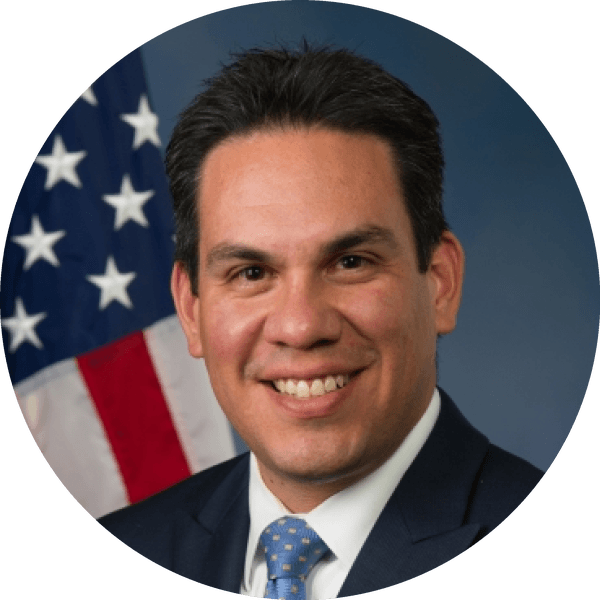
Lucy McBath
Democrat · GA-6
House Democrats push a federal red-flag gun law
Why it matters
For the first time, a family member or a police officer could walk into a federal court and ask a judge — the same day — to bar someone from buying or owning guns because they appear to be an imminent danger to themselves or others. An emergency order can be issued before that person is heard and last up to 14 days; a longer order, up to 180 days, requires a hearing within 72 hours and clear and convincing evidence. Knowingly lying on a petition can mean up to five years in prison.
H.R. 7599 would let a federal judge order someone to give up their guns if a court finds they are a danger to themselves or others. It creates what most people call a red-flag law — formally, an extreme risk protection order — at the federal level, where none exists today. A family or household member, or a law enforcement officer, can file the petition.
There are two tracks. The fast one is an emergency order: the judge has to rule the same day the petition is filed, or first thing the next court day, and can grant it without the named person present if a sworn affidavit shows probable cause that they pose an imminent risk. That emergency order lasts up to 14 days, and the person must surrender firearms, ammunition, and gun permits to the U.S. Marshals Service.
The second track is a longer order. The court must hold a hearing — within 72 hours if an emergency order was already issued, otherwise within 14 days — where the person gets notice, a chance to respond, and a lawyer, including a court-appointed one if they cannot afford it. To grant a longer order, the petitioner has to prove by clear and convincing evidence that the risk is real. That order lasts up to 180 days and can be renewed.
The bill builds in guardrails. Knowingly filing a false or frivolous petition can bring a fine up to $5,000, up to five years in prison, or both. Judges must weigh specific factors, including recent threats or acts of violence toward others or oneself, cruelty to animals, and substance abuse tied to violence. There are no court or filing fees for either side. A separate grant program would pay states and tribes to run their own red-flag systems, and the bill does not override or preempt existing state laws.
Supporters say a federal option fills gaps where state systems are weak or nonexistent and where guns cross state lines. Critics raise due process and Second Amendment objections, especially to emergency orders issued before the person has been heard. The bill answers some of that with the 72-hour hearing, the higher evidence standard for longer orders, and the right to counsel, but the core dispute over removing guns on a temporary court finding is exactly where the political fight sits.
Bill Progress
Latest Action · Feb 17, 2026
Referred to the House Committee on the Judiciary.
H.R. 7599 Bill Summary
What H.R. 7599 actually does.
A federal judge can order guns surrendered
A U.S. district court can bar someone from buying, possessing, or receiving firearms or ammunition and order them turned over to the U.S. Marshals Service or a designated officer.
Family or police can file, with no fees
A family or household member, or a law enforcement officer, can petition. Courts and agencies cannot charge any filing, service, subpoena, or related fees to the petitioner or the respondent.
Emergency orders can issue the same day, before a hearing
On a sworn affidavit showing probable cause of imminent risk, a judge can grant an order without the named person present. It lasts up to 14 days.
Longer orders require a hearing and a higher bar
Within 72 hours of an emergency order, otherwise within 14 days, the court holds a hearing with notice, a chance to respond, and a right to counsel. A 180-day order requires clear and convincing evidence and can be renewed.
Knowingly lying on a petition is a federal crime
Knowingly submitting false information or filing a frivolous petition can bring a fine up to $5,000, up to five years in prison, or both.
Money and cross-state recognition for state systems
A Justice Department grant program funds states and tribes that pass similar laws, and qualifying state and tribal orders must be honored across state lines.
Who benefits from H.R. 7599?
Families watching a loved one in crisis
A relative or housemate who sees the warning signs but, in a state without a red-flag law, has had no court that can act quickly to separate that person from a firearm.
Someone in an acute crisis
The bill's central scenario is a person at imminent risk of self-harm or violence, for whom a short, court-ordered gap in firearm access is meant to let the crisis pass.
Police facing a dangerous situation
Officers get a defined federal process to act fast in high-risk cases, and can keep a source's identity under seal when a witness fears retaliation.
People in states without a red-flag law
Residents of states that have not passed one would gain a federal court they can petition.
Who is affected by H.R. 7599?
Anyone named in a petition
They can be ordered to surrender every firearm, ammunition, and gun permit they own — possibly before they have appeared in court — and must contest a longer order at a hearing. Items are returned only after the order ends and a background check confirms they may legally have them.
Gun owners and Second Amendment advocates
The emergency, pre-hearing order is the core of the legal and political objection; opponents argue it risks restricting a constitutional right on a probable-cause finding before a full hearing.
Federal courts and U.S. Marshals
District courts must handle same-day filings, fast hearings, and a new category of cases; the Marshals Service takes custody of, stores, and returns firearms.
States, tribes, and background-check systems
Orders feed into the national background check system; states and tribes can opt into grant funding by passing matching laws, and must honor qualifying orders from other states.
HR7599 Legislative Journey
House: Committee Action
Feb 17, 2026
Referred to the House Committee on the Judiciary.
About the Sponsor
Lucy McBath
Democrat, Georgia's 6th congressional district · 7 years in Congress
Committees: Education and Workforce, the Judiciary
View full profile →
Cosponsors (113)
All 113 cosponsors are Democrats. Cosponsors represent 31 states: Alabama, Arizona, California, and 28 more.

Jared Moskowitz
Democrat · FL

Salud Carbajal
Democrat · CA

Terri Sewell
Democrat · AL

Yassamin Ansari
Democrat · AZ

Greg Stanton
Democrat · AZ

Mike Thompson
Democrat · CA

Doris Matsui
Democrat · CA

John Garamendi
Democrat · CA

Mark DeSaulnier
Democrat · CA

Lateefah Simon
Democrat · CA

Eric Swalwell
Democrat · CA

Kevin Mullin
Democrat · CA
Cosponsor Coverage Map
Committee Sponsors
Judiciary Committee
10 of 44 committee members cosponsored


9 Democrats across this committee haven't cosponsored yet. Mobilize their constituents
What laws does H.R. 7599 change?
1 changes
Sections Amended
Section 3(1) of NICS Improvement Amendments Act of 2007 (34 U.S.C. 40903(1))
striking ``section 922(g)(8)'' and inserting ``paragraph (8) or (10) of section 922(g)''
H.R. 7599 Quick Facts
- Committee
- Judiciary
- Chamber
- House
- Policy
- Crime and Law Enforcement
- Introduced
- Feb 17, 2026
Referred to the House Committee on the Judiciary.
Feb 17, 2026
Official Sources
Official congressional page for the Federal Extreme Risk Protection Order Act of 2026, including status, full text, cosponsors, and committee referral.
The existing federal grant program that funds state extreme risk protection order systems — the same kind of state-and-tribal funding H.R. 7599 would authorize under Section 4.
Justice Department center providing training and technical assistance to courts, law enforcement, and the public on implementing red-flag (ERPO) laws like the federal one this bill would create.
The COPS Office, whose Director the bill designates to run the state-and-tribal extreme risk protection order grant program in Section 4.
The federal firearms-prohibition statute H.R. 7599 amends so that anyone subject to an extreme risk protection order is barred from buying or possessing guns.
The judicial-branch agency whose Director the bill tasks with drafting a model policy for filing federal red-flag petitions and reporting to Congress annually.
The Brady Act provision establishing NICS, the background-check system the bill uses to flag prohibited persons and confirm eligibility before firearms are returned.
H.R. 7599 Common Questions
What is a federal red-flag law?
It's a court order — formally an extreme risk protection order — that temporarily bars someone from buying or having guns if a judge finds they're a danger to themselves or others. Many states already have one; H.R. 7599 would create the first version in federal court.
Who can ask a federal court to remove someone's guns?
A law enforcement officer, or a family or household member — spouses, parents, siblings, children, dating partners, co-parents, recent housemates, domestic partners, grandparents, stepparents, stepchildren, and legal guardians. There are no filing or court fees for either side.
How fast can a federal red-flag order happen, and how long does it last?
Fast. A judge must rule on an emergency request the same day it's filed, or first thing the next court day. An emergency order lasts up to 14 days. A longer order, issued after a hearing, lasts up to 180 days and can be renewed.
Do you get a hearing and a lawyer?
Yes. Before a long-term order, the court holds a hearing — within 72 hours if an emergency order was already issued, otherwise within 14 days. You get notice, a chance to respond, and a lawyer, including a court-appointed one if you can't afford it.
Does a red-flag order take your guns permanently?
No. Orders are time-limited — 14 days for an emergency order, up to 180 days for a longer one. When the order ends and a background check confirms you can legally own firearms, the court orders your guns, ammunition, and permits returned.
What stops someone from filing a false red-flag petition?
Knowingly filing false information or a frivolous petition is a federal crime — a fine up to $5,000, up to five years in prison, or both. A judge also has to weigh specific evidence, like recent threats, violence, or substance abuse tied to violence, before issuing any order.
Does this override state red-flag laws?
No, it doesn't preempt state law. It adds a federal option and creates a Justice Department grant program for states and tribes that pass similar laws. Qualifying state and tribal orders would also have to be honored across state lines.
Is a federal red-flag law constitutional?
That's the central fight. Supporters point to the due-process safeguards — a prompt hearing, a clear-and-convincing-evidence standard, and a right to counsel. Critics raise Second Amendment concerns and object to emergency orders issued before the person is heard. Courts have generally upheld state red-flag laws, but the question remains heavily litigated.
Based on H.R. 7599 bill text
H.R. 7599 Bill Text
“To authorize the issuance of extreme risk protection orders.”
Source: U.S. Government Publishing Office
Get notified when H.R. 7599 moves
Committee votes, floor action, cosponsor changes — straight to your inbox.
Bill alerts + Legisletter's monthly briefing. Unsubscribe anytime.
Crime and Law Enforcement Bills
9 related bills we're tracking
Crime Victims Fund Stabilization Act of 2025





Received in the Senate and Read twice and referred to the Committee on the Judiciary.
Jan 13, 2026
Bipartisan Background Checks Act of 2025


Referred to the House Committee on the Judiciary.
Jun 10, 2025
Combating Organized Retail Crime Act of 2025





Received in the Senate and Read twice and referred to the Committee on the Judiciary.
May 13, 2026
Ethan's Law





Referred to the House Committee on the Judiciary.
Feb 25, 2025
Assault Weapons Ban of 2025


Referred to the House Committee on the Judiciary.
Apr 30, 2025
Constitutional Concealed Carry Reciprocity Act of 2025





Placed on the Union Calendar, Calendar No. 289.
Oct 3, 2025
Honoring Our Fallen Heroes Act of 2025



Referred to the House Committee on the Judiciary.
Feb 12, 2025
Raise the Age Act of 2025


Referred to the House Committee on the Judiciary.
Mar 26, 2025
Born-Alive Abortion Survivors Protection Act



Received in the Senate and Read twice and referred to the Committee on the Judiciary.
Jan 24, 2025
Trending Right Now
Bills gaining momentum across Congress
America’s Olympic and Paralympic Games Commemorative Coins Act





Referred to the House Committee on Financial Services.
Jul 14, 2025
Fit to Serve Act





Referred to the House Committee on Armed Services.
May 21, 2025
ASAP Act





Ordered to be Reported in the Nature of a Substitute by the Yeas and Nays: 40 - 0.
Sep 16, 2026
Tracking Crime and Law Enforcement in Congress? Monitor bills, track cosponsor momentum, and launch advocacy campaigns — all from one advocacy platform.