H.R. 4849: Protecting Health Care and Lowering Costs Act of 2025
Sponsor

Adam Gray
Democrat · CA-13
A $1 raise shouldn't erase your ACA subsidy
Why it matters
For a family of four, the ACA's income cutoff for premium help lands near $128,600. Earn a dollar past it and the premium tax credit drops to zero — a cliff that was paused from 2021 through 2025 and written to return in 2026. H.R. 4849 removes that cutoff for good, makes the larger 2021–2025 subsidy formula permanent, and repeals the Medicaid and marketplace changes in the 2025 reconciliation law.
H.R. 4849 does two things. Section 3 rewrites who qualifies for the premium tax credit and how much they get. Section 2 repeals the health subtitle of the 2025 reconciliation law, Public Law 119–21.
On the credit: the bill strikes the rule that ends eligibility once household income passes 400% of the federal poverty line. No matter how much you earn, your share of a benchmark marketplace premium would be capped at a fixed percentage of income, and a tax credit would pay the difference. The official bill summary describes the new percentage table as the same lower one used from 2021 through 2025, without the inflation adjustment that would otherwise raise it each year.
The cutoff matters because it is all-or-nothing. In 2025 the line sits at roughly $62,600 for one person and $128,600 for a family of four. At $128,599 a family qualifies for help. At $128,601 it qualifies for none.
On the repeal: the bill strikes Subtitle B of title VII of the 2025 law and directs that every statute and regulation it touched be read as if the subtitle never existed. According to the Congressional Research Service summary, that reverses the law's Medicaid eligibility and verification requirements, its shorter window for retroactive Medicaid coverage, and its new verification rules for the premium tax credit.
The credit changes apply to tax years beginning after December 31, 2025, so 2026 is the first coverage year affected.
Bill Progress
Latest Action · Aug 1, 2025
Referred to Ways and Means, and in addition to the Committee on Energy and Commerce, for a period to be subsequently determined by the Speaker, in each case for consideration of such provisions as fall within the jurisdiction of the committee concerned. for review
H.R. 4849 Bill Summary
What H.R. 4849 actually does.
The 400% income cliff disappears permanently
The bill strikes the words 'but does not exceed 400 percent' from the premium tax credit's eligibility rule. Households above four times the poverty line could qualify for help based on income, with no upper limit, starting with 2026 tax years.
Premiums stay capped at a share of income
Your expected contribution to a benchmark plan would rise on a linear sliding scale within income tiers. The official summary describes the table as the lower 2021–2025 version, which topped out at 8.5% of household income, and it drops the inflation adjustment that would otherwise raise those percentages over time.
The 2025 reconciliation law's health subtitle is repealed
Subtitle B of title VII of Public Law 119–21 is struck. The Congressional Research Service summary lists the affected provisions as Medicaid and Medicare eligibility and verification requirements, the shortened window for retroactive Medicaid coverage, and premium tax credit verification requirements.
Agencies must act as if the repealed subtitle never passed
Any law or regulation the subtitle changed would be applied as though the subtitle and its amendments had not been enacted. That unwinds rules Treasury and HHS have already begun implementing, not just future ones.
Three affordability rules tied to the cap are cleaned up
The bill removes three conforming provisions in the credit that only made sense while the 400% ceiling existed, including a rule that treated some employer coverage as unaffordable under the old thresholds.
Who benefits from H.R. 4849?
Marketplace enrollees just past 400% of the poverty line
A single person earning around $63,000 or a family of four earning around $129,000 sits right at the cutoff. Under the bill they would keep a credit that scales down gradually instead of vanishing at one dollar over.
Older buyers whose premiums outrun their income
Marketplace premiums climb steeply with age, so a 60-year-old at $70,000 can face a benchmark plan that eats a quarter of income or more. A fixed percentage cap matters most to this group because the gap between the cap and the sticker price is largest.
Self-employed workers and early retirees with uneven income
Freelancers, farmers, small-business owners, and people bridging to Medicare are the bulk of buyers without employer coverage. A late-year contract that pushes income past the line would no longer trigger repayment of a full year's credit.
Medicaid enrollees facing new paperwork
Repealing the 2025 law's health subtitle would remove the eligibility and verification requirements and restore the longer window for retroactive Medicaid coverage, according to the Congressional Research Service summary. CBO projected the 2025 law's health provisions would leave roughly 10 million more people uninsured by 2034.
Who is affected by H.R. 4849?
Roughly 24 million marketplace enrollees
Marketplace enrollment reached about 24 million in 2025, and the large majority receive a premium tax credit. The formula in Section 3 sets what each of them owes toward a benchmark plan.
Higher earners newly eligible for a credit
Households above 400% of the poverty line could claim a credit for the first time under permanent law. The amount depends on age, location, and premium prices; a young enrollee with a cheap benchmark plan may find the cap is already below the sticker price and receive nothing.
Treasury, IRS, and HHS
Both agencies would have to reissue guidance for the credit and reverse rules already written under the repealed subtitle, since the bill directs them to act as though it never took effect.
Federal taxpayers and budget scorekeepers
The bill contains no offset. CBO estimated in 2024 that a permanent extension of the enhanced credits alone would cost roughly $335 billion over ten years, before counting the Medicaid changes reversed by Section 2.
What Congress Is Saying
H.R. 4849 has come up 18 times in the Congressional Record so far.
H.R. 4849 also appeared in 1 more House floor reference and 16 routine cosponsor filings.
HR4849 Legislative Journey
House: Committee Action
Aug 1, 2025
Referred to the Committee on Ways and Means, and in addition to the Committee on Energy and Commerce, for a period to be subsequently determined by the Speaker, in each case for consideration of such provisions as fall within the jurisdiction of the committee concerned.
About the Sponsor
Adam Gray
Democrat, California's 13th congressional district · 1 years in Congress
Committees: Natural Resources, Agriculture
View full profile →
Cosponsors (142)
All 142 cosponsors are Democrats. Cosponsors represent 35 states: Alabama, Arizona, California, and 32 more.
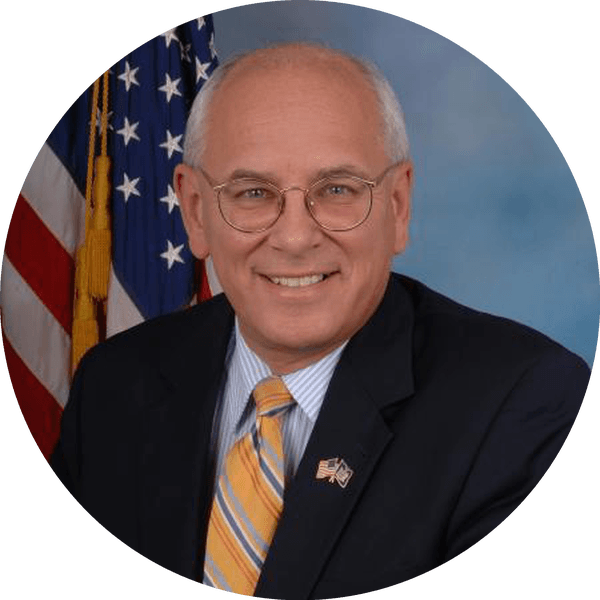
Paul Tonko
Democrat · NY

Kevin Mullin
Democrat · CA

Lateefah Simon
Democrat · CA

Robert Menendez
Democrat · NJ

John Larson
Democrat · CT

Kathy Castor
Democrat · FL

Yvette Clarke
Democrat · NY

Jennifer McClellan
Democrat · VA

Suzan DelBene
Democrat · WA

Eleanor Norton
Democrat · DC

Greg Landsman
Democrat · OH

Judy Chu
Democrat · CA
Cosponsor Coverage Map
Committee Sponsors
Energy and Commerce Committee
22 of 54 committee members cosponsored


Ways and Means Committee
11 of 45 committee members cosponsored


10 Democrats across these committees haven't cosponsored yet. Mobilize their constituents
What laws does H.R. 4849 change?
3 changes
Sections Amended
Section 36B(c) of such Code
striking subparagraph (E)
Section 36B(c) of such Code
striking subparagraph (F)
Sections Repealed
B of title VII of An Act to provide for reconciliation pursuant to title II of H. Con. Res. 14 (Public Law 119-21)
H.R. 4849 Quick Facts
- Committee
- Energy and Commerce
- Chamber
- House
- Policy
- Taxation
- Introduced
- Aug 1, 2025
Referred to Ways and Means, and in addition to the Committee on Energy and Commerce, for a period to be subsequently determined by the Speaker, in each case for consideration of such provisions as fall within the jurisdiction of the committee concerned. for review
Aug 1, 2025
Official Sources
Official bill page with text, status, cosponsors, and committee referrals for the Protecting Health Care and Lowering Costs Act of 2025.
Current text of Internal Revenue Code section 36B, including the 400 percent eligibility ceiling and applicable percentage table that Section 3 rewrites.
The 2025 reconciliation law whose health subtitle (title VII, subtitle B) Section 2 repeals in full.
How the credit works today, who qualifies, and how the 2021 expansion changed the income rules the bill would make permanent.
Marketplace guidance on how the premium tax credit lowers what enrollees pay each month for a benchmark plan.
The federal poverty guidelines used to set the 400 percent income cliff that the bill removes.
CBO and JCT estimate that permanently extending the expanded premium tax credit would add about $335 billion to deficits over 2025 to 2034.
CBO projection of how the 2025 reconciliation law and the expiring enhanced credits change the number of uninsured people by 2034.
H.R. 4849 Common Questions
Does H.R. 4849 end the ACA subsidy cliff permanently?
Yes. It strikes the 400% of poverty income ceiling from the premium tax credit with no sunset date, so eligibility would be based on income with no upper cutoff starting with 2026 tax years.
How much income puts you over the ACA subsidy cliff today?
About $62,600 for one person and $128,600 for a family of four, using 2025 poverty guidelines. Without the enhanced credits, one dollar over that line means no premium tax credit at all.
Would my premium still be capped at 8.5% of income?
That is the design. The official summary describes the bill's percentage table as the same lower 2021–2025 formula, which topped out at 8.5% of household income for a benchmark plan, with no inflation adjustment.
What does H.R. 4849 repeal from the 2025 reconciliation law?
The health subtitle of Public Law 119–21. Per the Congressional Research Service, that covers Medicaid eligibility and verification requirements, the shorter retroactive Medicaid coverage window, and new premium tax credit verification rules.
When would H.R. 4849 take effect?
The credit changes apply to tax years beginning after December 31, 2025, so 2026 coverage is the first year affected. The repeal in Section 2 has no delayed date and would apply on enactment.
How much would H.R. 4849 cost?
The bill has no CBO score yet. CBO estimated in 2024 that making the enhanced credits permanent would cost about $335 billion over ten years, and reversing the 2025 law's Medicaid changes would add to that.
Who is backing H.R. 4849 and can it pass?
Rep. Adam Gray (D-CA) introduced it with 141 cosponsors, all Democrats. It is in the Ways and Means and Energy and Commerce committees. With no Republican support in a Republican House, the subsidy piece is more likely to move as part of a broader deal than on its own.
Based on H.R. 4849 bill text
H.R. 4849 Bill Text
“To repeal health-related portions of An Act to provide for reconciliation pursuant to title II of H. Con. Res. 14, and for other purposes.”
Source: U.S. Government Publishing Office
Get notified when H.R. 4849 moves
Committee votes, floor action, cosponsor changes — straight to your inbox.
Bill alerts + Legisletter's monthly briefing. Unsubscribe anytime.
Taxation Bills
9 related bills we're tracking
American Family Act



Referred to the House Committee on Ways and Means.
Apr 9, 2025
Freedom to Invest in Tomorrow’s Workforce Act




Referred to the House Committee on Ways and Means.
Feb 7, 2025
Main Street Tax Certainty Act



Referred to the House Committee on Ways and Means.
Jan 23, 2025
Death Tax Repeal Act



Referred to the House Committee on Ways and Means.
Feb 13, 2025
To amend the Internal Revenue Code of 1986 to modify the railroad track maintenance credit.



Referred to the House Committee on Ways and Means.
Jan 16, 2025
Tax Fairness for Workers Act





Referred to the House Committee on Ways and Means.
Apr 7, 2025
Health Care Affordability Act of 2025




Referred to the House Committee on Ways and Means.
Jan 9, 2025
Affordable Housing Credit Improvement Act of 2025

Referred to the House Committee on Ways and Means.
Apr 8, 2025
More Homes on the Market Act




Referred to the House Committee on Ways and Means.
Feb 13, 2025
Trending Right Now
Bills gaining momentum across Congress
North Platte Canteen Congressional Gold Medal Act





Referred to the House Committee on Financial Services.
Feb 21, 2025
America’s Olympic and Paralympic Games Commemorative Coins Act





Referred to the House Committee on Financial Services.
Jul 14, 2025
Fit to Serve Act





Referred to the House Committee on Armed Services.
May 21, 2025
Tracking Taxation in Congress? Monitor bills, track cosponsor momentum, and launch advocacy campaigns — all from one advocacy platform.