H.R. 4583: Living Donor Protection Act of 2025
Sponsor

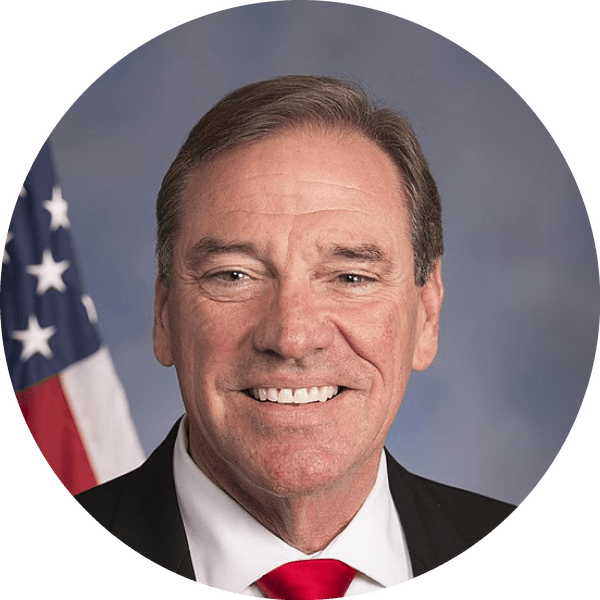
Don Bacon
Republican · NE-2
Donating an organ shouldn't cost you life insurance
Why it matters
Three insurance markets — life, disability, and long-term care — could no longer refuse you, drop you, or price you on the basis of a donated organ alone. H.R. 4583 reaches anyone who has given all or part of an organ and is still living, with no time limit and no list of qualifying organs, and it carries 154 cosponsors from both parties.
H.R. 4583 runs four pages and does two things. The first is a flat prohibition: an insurer cannot deny you coverage, cancel it, refuse to issue it, set your price, or change any term of a life, disability, or long-term care policy based only on the fact that you are a living organ donor.
The word carrying the weight is "solely." The bill's full phrase bars decisions made solely on donor status "and without any actual, unique, and material actuarial risks." An insurer that can document a real, specific, measurable risk in your file can still act on it. An insurer that sees a donation and prices upward without one cannot. Where the line falls between those two is the entire argument over this bill.
The definition is deliberately wide. A living organ donor is anyone who has donated all or part of an organ and is not deceased. There is no list of qualifying organs, no window of time, no requirement that the donation was recent. A partial liver donation from twenty years ago counts the same as a kidney given last month.
Enforcement is where the federal reach stops. The prohibition is national, but the bill hands enforcement to state insurance regulators and lets them use only the powers their own state law already grants. Two donors with the same right could face very different odds of enforcing it, depending on which state they live in.
The second half of the bill is education. Health and Human Services would get six months after enactment to review and update its public materials on living donation — public service announcements, organdonor.gov, and whatever other media the department picks — so they cover the benefits, the risks, the insurance question, and the new protection itself.
Bill Progress
Latest Action · Jul 22, 2025
Referred to Energy and Commerce, and in addition to the Committee on Financial Services, for a period to be subsequently determined by the Speaker, in each case for consideration of such provisions as fall within the jurisdiction of the committee concerned. for review
H.R. 4583 Bill Summary
What H.R. 4583 actually does.
Donor status alone can't set your premium
An insurer cannot deny coverage, cancel it, refuse to issue a policy, determine the price, or vary any term or condition of a life, disability, or long-term care policy based solely on someone's status as a living organ donor.
Insurers keep underwriting, but need documented risk
The prohibition applies only where the decision rests on donor status without any actual, unique, and material actuarial risks. An insurer that can point to such a risk may still treat a donor differently.
The protection has no expiration date
The bill defines a living organ donor as anyone who has donated all or part of an organ and is not deceased. It names no specific organs and sets no time limit after the donation.
Your state decides how the rule is enforced
A state insurance regulator may enforce the prohibition using the actions specifically authorized under that state's own laws. The bill creates no federal penalty, damages schedule, or enforcement office.
Federal donor education gets rewritten in six months
Health and Human Services would have six months after enactment to review and update public materials on living organ donation, covering the benefits and risks, the effect of donation on insurance access, and the changes this bill makes.
Updates run through PSAs and organdonor.gov
The department would update its existing public service announcements, the publicly accessible websites it maintains such as organdonor.gov or a successor site, and other media it determines appropriate.
Who benefits from H.R. 4583?
Anyone who has already donated an organ
The definition covers every living donor regardless of when they donated or which organ. Someone who gave a kidney decades ago falls under the same protection as a donor from this year.
People weighing a donation and running the numbers
Prospective donors evaluate recovery time, lost wages, and long-term coverage. This bill addresses one of those variables directly, and requires the federal donor education materials to spell out the insurance question rather than leave it to be discovered later.
Families relying on a donor's policy
Life and disability policies pay out to spouses, children, and other dependents. Keeping donor status out of the pricing and issuance decision affects the household holding the policy, not only the donor.
Transplant programs and living-donor advocacy groups
Programs that counsel prospective donors currently answer the insurance question with whatever their state law provides. A federal prohibition would give them one nationwide rule to describe.
Who is affected by H.R. 4583?
Life, disability, and long-term care insurers
Any insurer whose underwriting currently treats donor status as a factor on its own would need a documented actuarial risk to keep doing so. The bill is written to override conflicting law.
State insurance regulators
Enforcement runs through state departments of insurance, using authority those states already hold. Complaints and compliance work would land in existing state systems rather than a new federal channel.
Health and Human Services
The department would review and update its living-donation materials within six months, including the insurance-access section and an explanation of the statutory change.
HR4583 Legislative Journey
House: Committee Action
Jul 22, 2025
Referred to the Committee on Energy and Commerce, and in addition to the Committee on Financial Services, for a period to be subsequently determined by the Speaker, in each case for consideration of such provisions as fall within the jurisdiction of the committee concerned.
About the Sponsor
Don Bacon
Republican, Nebraska's 2nd congressional district · 9 years in Congress
Committees: Agriculture, Armed Services
View full profile →
Cosponsors (168)
This bill has 168 cosponsors: 131 Democrats, 37 Republicans, reflecting bipartisan support. Cosponsors represent 41 states: Alabama, Arizona, California, and 38 more.

Jerrold Nadler
Democrat · NY

Troy Balderson
Republican · OH

Jim Costa
Democrat · CA

Mariannette Miller-Meeks
Republican · IA

Joe Wilson
Republican · SC

Andy Barr
Republican · KY

Lloyd Doggett
Democrat · TX

Herbert Conaway
Democrat · NJ

Jennifer McClellan
Democrat · VA

Mike Quigley
Democrat · IL

Yvette Clarke
Democrat · NY

Jesús García
Democrat · IL
Cosponsor Coverage Map
Committee Sponsors
Financial Services Committee
20 of 53 committee members cosponsored


Energy and Commerce Committee
24 of 54 committee members cosponsored


46 Republicans across these committees haven't cosponsored yet. Mobilize their constituents
H.R. 4583 Quick Facts
- Committee
- Financial Services
- Chamber
- House
- Policy
- Health
- Introduced
- Jul 22, 2025
Referred to Energy and Commerce, and in addition to the Committee on Financial Services, for a period to be subsequently determined by the Speaker, in each case for consideration of such provisions as fall within the jurisdiction of the committee concerned. for review
Jul 22, 2025
Official Sources
Official bill page with status, text, cosponsors, and committee actions for the Living Donor Protection Act of 2025.
The HHS living-donation education page the bill would require the Secretary to review and update within six months of enactment.
Scientific Registry of Transplant Recipients guidance for living donors, including long-term follow-up data behind any actuarial argument.
NIH guidance on living with one kidney, the medical question underlying whether an insurer has an actual, unique, and material actuarial risk to document.
The statutory definition of qualified long-term care services that the bill cross-references to define a long-term care insurance policy.
Directory of state consumer and insurance regulators, the offices the bill relies on for enforcement rather than any federal penalty.
H.R. 4583 Common Questions
Can a life insurance company deny me because I donated a kidney?
Not under H.R. 4583, if donor status is the only reason. The bill bars insurers from denying, canceling, or refusing to issue a life, disability, or long-term care policy based solely on someone being a living organ donor.
What kinds of insurance does H.R. 4583 actually cover?
Three: life insurance, disability insurance, and long-term care insurance. The bill defines each one and stops there. It does not address health insurance, auto, or any other product.
Could an insurer still charge an organ donor more?
Yes, in one situation. The prohibition covers decisions made solely on donor status and without any actual, unique, and material actuarial risks. An insurer that can document such a risk may still price or underwrite differently.
Does it matter how long ago I donated?
No. The bill defines a living organ donor as anyone who has donated all or part of an organ and is not deceased. There is no time limit and no list of qualifying organs, so a donation from twenty years ago is covered the same as a recent one.
Who enforces this if my insurer ignores it?
State insurance regulators, and only with the powers their own state law already gives them. H.R. 4583 sets no federal penalty and creates no federal enforcement office, so what happens after a complaint depends on the state.
Does H.R. 4583 give me time off work to donate an organ?
No. This bill is only about insurance. The job-protected leave piece is a separate bill, H.R. 4582, introduced the same day by the same two members, which would name organ donation recovery in federal family and medical leave law.
Would the federal government have to update donor information?
Yes. Health and Human Services would get six months after enactment to review and update its living-donation materials, including the effect of donation on insurance access and an explanation of the change this bill makes.
Where does H.R. 4583 stand right now?
It was introduced in July 2025 and referred to both the Energy and Commerce Committee and the Financial Services Committee. It has 154 cosponsors, 120 Democrats and 34 Republicans, and has not yet had a committee vote.
Based on H.R. 4583 bill text
H.R. 4583 Bill Text
“To promote and protect from discrimination living organ donors.”
Source: U.S. Government Publishing Office
Get notified when H.R. 4583 moves
Committee votes, floor action, cosponsor changes — straight to your inbox.
Bill alerts + Legisletter's monthly briefing. Unsubscribe anytime.
Health Bills
9 related bills we're tracking
Nancy Gardner Sewell Medicare Multi-Cancer Early Detection Screening Coverage Act




Reported (Amended) by the Committee on Ways and Means. H. Rept. 119-333, Part I.
Oct 3, 2025
Mikaela Naylon Give Kids a Chance Act





Received in the Senate.
Dec 2, 2025
Improving Seniors’ Timely Access to Care Act of 2025





Ordered to be Reported in the Nature of a Substitute by the Yeas and Nays: 42 - 0.
Jul 15, 2026
CONNECT for Health Act of 2025



Referred to the Committee on Energy and Commerce, and in addition to the Committee on Ways and Means, for a period to be subsequently determined by the Speaker, in each case for consideration of such provisions as fall within the jurisdiction of the committee concerned.
Jun 26, 2025
ASAP Act





Ordered to be Reported in the Nature of a Substitute by the Yeas and Nays: 40 - 0.
Sep 16, 2026
Momnibus Act





Referred to the Subcommittee on Health.
Apr 20, 2026
Ensuring Lasting Smiles Act



Referred to the Committee on Energy and Commerce, and in addition to the Committees on Education and Workforce, and Ways and Means, for a period to be subsequently determined by the Speaker, in each case for consideration of such provisions as fall within the jurisdiction of the committee concerned.
May 8, 2025
Right to Contraception Act




Referred to the House Committee on Energy and Commerce.
Feb 5, 2025
Women’s Health Protection Act of 2025




Referred to the Committee on Energy and Commerce, and in addition to the Committee on the Judiciary, for a period to be subsequently determined by the Speaker, in each case for consideration of such provisions as fall within the jurisdiction of the committee concerned.
Jun 24, 2025
Trending Right Now
Bills gaining momentum across Congress
North Platte Canteen Congressional Gold Medal Act




Referred to the House Committee on Financial Services.
Feb 21, 2025
America’s Olympic and Paralympic Games Commemorative Coins Act





Referred to the House Committee on Financial Services.
Jul 14, 2025
Fit to Serve Act




Referred to the House Committee on Armed Services.
May 21, 2025
Tracking Health in Congress? Monitor bills, track cosponsor momentum, and launch advocacy campaigns — all from one advocacy platform.