H.R. 4253: Expanding Access to Mental Health Services in Schools Act of 2025
Sponsor

Rosa DeLauro
Democrat · CT-3
Schools can't hire counselors they can't keep
Why it matters
One counselor for every 250 students. One psychologist for every 500. One social worker for every 250. Those are the three staffing marks H.R. 4253 measures districts against, and a district that misses at least two of them — while ranking in the top 15 percent of its state on the federal poverty count used for Title I — could compete for grants to hire more mental health providers and pay them enough to stay.
H.R. 4253 sets up a competitive federal grant program run by the Education Department. School districts can apply directly; a state education agency or a regional service agency can apply on behalf of one or more districts.
Eligibility is narrow by design. A district has to clear two separate bars: rank among the highest 15 percent in its state on the poverty count that drives Title I funding, and fall short on at least two of the bill's three staffing ratios. A district that meets two of the three marks but badly misses the third does not qualify.
The money is not limited to salaries. Districts can spend it on signing stipends, relocation costs, student loan repayment, and other financial incentives to recruit providers, and on professional development, mentorship, induction, and peer support to keep the ones they have. The same grant that hires a school psychologist can pay off her student loans or cover her move across the state.
Districts have to put up money of their own. At least 25 percent of the project budget must come from non-federal sources, and the federal share has to add to what a district already spends rather than replace it. Grants run up to five years, and the Secretary can renew them for two more.
Every district that takes the money has to publish its numbers online each year — how many providers it employs, how many it recruited, hired, and retained, the student-to-provider ratio and how far it has moved, and whether the annual attrition rate has come down since the grant started.
Bill Progress
Latest Action · Jun 30, 2025
Referred to the House Committee on Education and Workforce.
H.R. 4253 Bill Summary
What H.R. 4253 actually does.
Grants to hire counselors, psychologists, and social workers
The Education Department would award competitive grants to districts, state education agencies, and regional service agencies to recruit, hire, retain, and diversify school-based mental health providers in elementary and secondary schools.
Two ratios missed, or you don't qualify
A high-need district is one that ranks among the highest 15 percent in its state on the Title I poverty count and fails at least two of three benchmarks: one counselor per 250 students, one psychologist per 500 students, one social worker per 250 students.
Half the money is walled off for the shortest-staffed districts
After the set-asides for administration, Bureau of Indian Education schools, and outlying areas, at least 50 percent of what remains must go to high-quality applications from high-need local educational agencies.
Grants can pay stipends, moving costs, and student loans
Allowable uses include salary stipends, relocation benefits, student loan repayment, and other financial incentives for recruitment, plus professional development, induction, mentorship, and peer support for retention.
Districts pay a quarter of the cost themselves
Recipients must contribute at least 25 percent of the project budget from non-federal sources, and the federal funds must supplement rather than supplant non-federal money the district would otherwise have spent.
Staffing numbers get published every year
Recipients file an annual report with the Secretary and post it in an accessible format on their own website, covering provider counts and year-over-year increases, demographics, student-to-provider ratios, and the change in annual attrition.
Who benefits from H.R. 4253?
Students in districts that miss the ratios
A student in a district with one counselor for every 500 kids is sharing that person with twice the number the bill treats as workable. Grants are aimed squarely at closing that gap during the school day, in the building, rather than through an outside referral.
School psychologists and social workers weighing a district job
The providers districts compete hardest for are the ones with graduate debt and options. A grant-funded package can include a signing stipend, relocation costs, and loan repayment, which is money a high-poverty district usually cannot put on the table by itself.
Providers already in those buildings
Retention money is a separate allowable use: professional development, a formal induction year, mentorship, and peer support. Reducing annual attrition is one of the three things grantees have to report on.
Bureau of Indian Education schools and the outlying areas
One percent of each year's appropriation is reserved for schools operated or funded by the Bureau of Indian Education, and another 1 percent for the outlying areas, distributed by relative need. Neither has to win the open competition to get a share.
Who is affected by H.R. 4253?
Districts putting an application together
An applicant describes the mental health and substance use concerns its students face, documents its provider shortage, lays out a recruiting and retention plan, and assures the department that its providers — telehealth included — follow federal student privacy and special education law.
State and regional education agencies
A state educational agency, or an educational service agency acting for one or more high-need districts, can be the applicant, which puts the reporting and compliance work at that level instead of in a single district office.
Districts already funding their own counselors
The supplement-not-supplant rule means a district cannot swap federal dollars in for local dollars it already spends on this. Existing spending stays, and the 25 percent match comes on top of it.
The Education Department
The department writes the application requirements, runs the competition, spreads awards across urban, suburban, and rural areas to the extent practicable, enforces the 50 percent floor for high-need districts, and collects the annual data. Up to 2 percent of appropriations covers that work.
HR4253 Legislative Journey
House: Committee Action
Jun 30, 2025
Referred to the House Committee on Education and Workforce.
About the Sponsor
Rosa DeLauro
Democrat, Connecticut's 3rd congressional district · 35 years in Congress
Committees: Appropriations
View full profile →
Cosponsors (130)
This bill has 130 cosponsors: 128 Democrats, 2 Republicans. Cosponsors represent 37 states: Alabama, Arizona, California, and 34 more.

Jahana Hayes
Democrat · CT
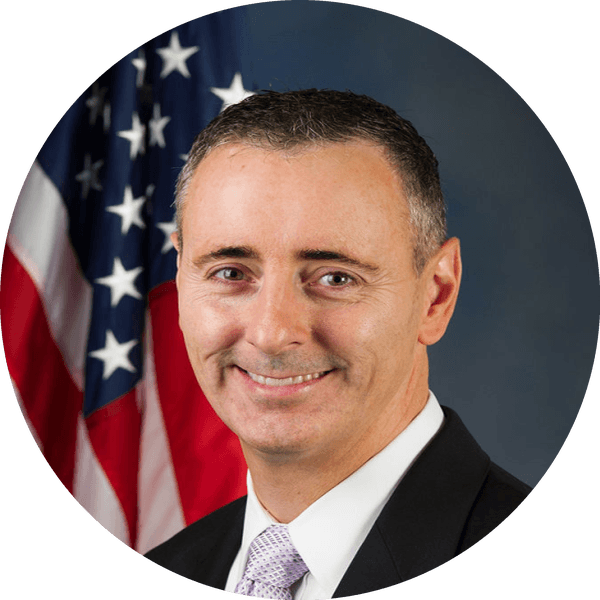
Brian Fitzpatrick
Republican · PA

Gabe Amo
Democrat · RI

Becca Balint
Democrat · VT
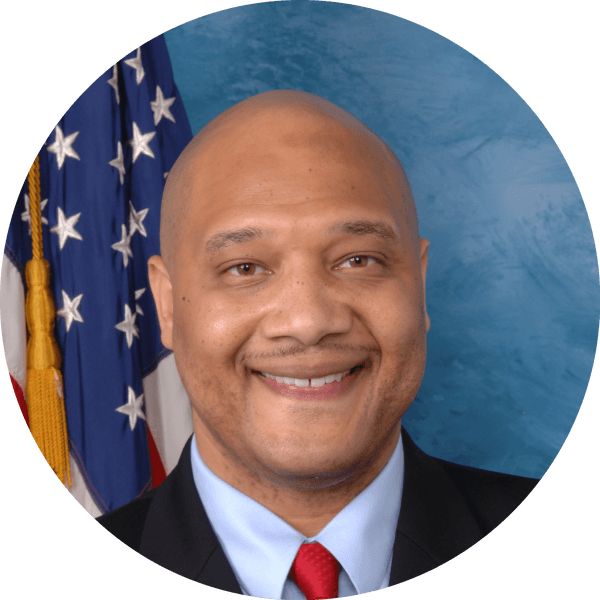
André Carson
Democrat · IN

Judy Chu
Democrat · CA

Angie Craig
Democrat · MN

Lloyd Doggett
Democrat · TX

Dwight Evans
Democrat · PA

Adriano Espaillat
Democrat · NY

Josh Harder
Democrat · CA

Chrissy Houlahan
Democrat · PA
Cosponsor Coverage Map
Committee Sponsors
Education and Workforce Committee
10 of 37 committee members cosponsored


6 Democrats across this committee haven't cosponsored yet. Mobilize their constituents
H.R. 4253 Quick Facts
- Committee
- Education and Workforce
- Chamber
- House
- Policy
- Education
- Introduced
- Jun 30, 2025
Referred to the House Committee on Education and Workforce.
Jun 30, 2025
Official Sources
Official bill page with the full text, sponsor and cosponsor list, actions, and current committee status.
The existing Education Department discretionary grant the bill builds on, aimed at the same shortage of credentialed school mental health providers.
The Title I basic grant formula whose poverty count sets the first eligibility bar — a district must rank in the highest 15 percent in its state on this measure.
Census school-district poverty estimates are the counts the Education Department uses for those Title I rankings.
The ESEA definition the bill adopts for "school-based mental health services provider," covering licensed counselors, psychologists, and social workers.
The special education law grant-funded providers must also comply with when serving students with disabilities.
One percent of each year’s appropriation is reserved for schools operated or funded by the Bureau of Indian Education.
H.R. 4253 Common Questions
What does H.R. 4253 actually do?
It creates a competitive Education Department grant program that pays districts to recruit, hire, and keep school counselors, psychologists, and social workers. Grants run up to 5 years, with a possible 2-year renewal.
What counts as a high-need school district under H.R. 4253?
A district has to do both: rank among the highest 15 percent in its state on the Title I poverty count, and miss at least two of three ratios — one counselor per 250 students, one psychologist per 500, one social worker per 250. Missing only one is not enough.
Can the money pay off a school counselor's student loans?
Yes. Student loan repayment is a listed use, alongside salary stipends, relocation benefits, and other financial incentives. Districts can also spend grant money on professional development, mentorship, and peer support to keep providers they already have.
Would a district have to put up its own money?
Yes. At least 25 percent of the project budget has to come from non-federal sources. The federal share also has to add to what a district already spends on this work, not replace it.
Does H.R. 4253 cover telehealth mental health providers?
It does. Applicants have to assure the Education Department that every provider paid under the grant, telehealth providers included, delivers services consistent with federal student privacy law and special education law.
How much money does H.R. 4253 provide?
No fixed amount. The bill authorizes "such sums as may be necessary" for fiscal years 2026 through 2030, so Congress sets the size each year. Up to 2 percent goes to administration, 1 percent to Bureau of Indian Education schools, and 1 percent to the outlying areas.
Would schools have to report their staffing results publicly?
Yes. Every grantee files an annual report with the Secretary and posts it on its own website, covering how many providers it employs, the student-to-provider ratio and how much it has dropped, and whether annual attrition has fallen since the grant began.
Has H.R. 4253 passed?
No. Rep. Rosa DeLauro introduced it on June 30, 2025, and it was referred to the House Education and Workforce Committee the same day. It has 129 cosponsors, 127 Democrats and 2 Republicans, and has not had a committee vote.
Based on H.R. 4253 bill text
H.R. 4253 Bill Text
“To support States and high-need local educational agencies in increasing the number of mental health services providers in schools.”
Source: U.S. Government Publishing Office
Get notified when H.R. 4253 moves
Committee votes, floor action, cosponsor changes — straight to your inbox.
Bill alerts + Legisletter's monthly briefing. Unsubscribe anytime.
Education Bills
9 related bills we're tracking
Safe Schools Improvement Act





Referred to the House Committee on Education and Workforce.
Mar 3, 2025
IDEA Full Funding Act




Referred to the House Committee on Education and Workforce.
Apr 2, 2025
Tyler Clementi Higher Education Anti-Harassment Act of 2025

Referred to the House Committee on Education and Workforce.
Sep 18, 2025
REDI Act



Referred to the House Committee on Education and Workforce.
Mar 11, 2025
Department of Education Protection Act




Referred to the House Committee on Education and Workforce.
Jan 15, 2025
Holocaust Education and Antisemitism Lessons Act




Referred to the House Committee on Education and Workforce.
Jan 28, 2025
American Teacher Act




Referred to the House Committee on Education and Workforce.
Mar 10, 2025
Rebuild America’s Schools Act of 2026



Referred to the Committee on Education and Workforce, and in addition to the Committee on Ways and Means, for a period to be subsequently determined by the Speaker, in each case for consideration of such provisions as fall within the jurisdiction of the committee concerned.
Feb 4, 2026
Loan Equity for Advanced Professionals Act



Referred to the House Committee on Education and Workforce.
Dec 10, 2025
Trending Right Now
Bills gaining momentum across Congress
North Platte Canteen Congressional Gold Medal Act


Referred to the House Committee on Financial Services.
Feb 21, 2025
ASAP Act



Ordered to be Reported in the Nature of a Substitute by the Yeas and Nays: 40 - 0.
Sep 16, 2026
Fit to Serve Act


Referred to the House Committee on Armed Services.
May 21, 2025
Tracking Education in Congress? Monitor bills, track cosponsor momentum, and launch advocacy campaigns — all from one advocacy platform.