H.R. 768: Holocaust Education and Antisemitism Lessons Act
Sponsor

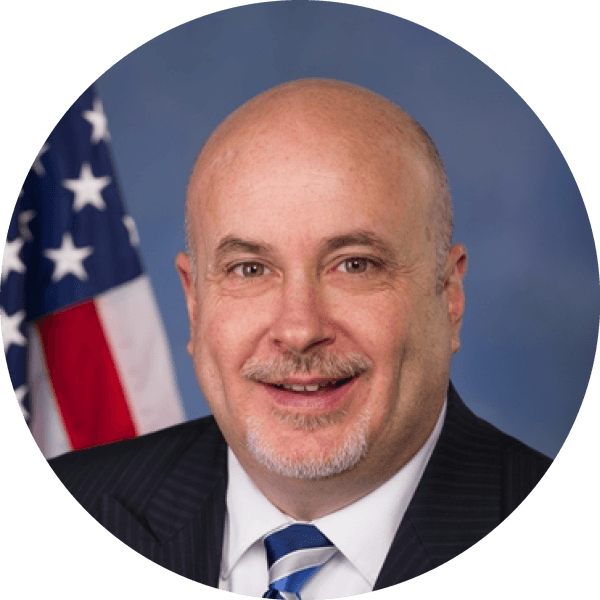
Josh Gottheimer
Democrat · NJ-5
Nobody has counted what schools teach about the Holocaust
Why it matters
All 50 states, a nationally representative sample of school districts, and a sample of the schools inside them — that is the scope H.R. 768 hands to the United States Holocaust Memorial Museum. The study has to begin within 180 days of enactment, and Congress gets the findings within three years. No curriculum changes. What changes is that the country would have an accounting of what is taught, for how long, and by teachers trained how.
H.R. 768 assigns one job to the Director of the United States Holocaust Memorial Museum: study how the Holocaust is actually taught in American public schools, then report to Congress. The review has to cover every state, plus a nationally representative sample of school districts and a sample of the schools those districts run.
The questions are the basic ones with no verified national answer. Is Holocaust education required or optional? What do state standards say, and are districts implementing them? Is there anywhere at the state or local level that collects and distributes curricula and materials? Do teachers get training before they enter the classroom and after? How many hours does the subject get, and in which classes — history, English, somewhere else?
The bill's definition of Holocaust education reaches past the history itself. It covers the history of antisemitism, its roots, the propaganda and narratives directed at Jewish people, and how antisemitism changes shape over time. The study must also look at whether schools test students on identifying antisemitism, bigotry, hate, and genocide in contemporary settings, not only historical ones.
There is a practical half to the assignment. The Museum would catalog what is working — classroom discussion, homework and experiential learning with local museums and cultural centers, project-based learning, developmentally appropriate material taught through a trauma-informed lens, and lessons carried across subjects through the school year. It would also document the gaps: what keeps educators from meeting requirements already on the books, and what training and resources they say they need.
H.R. 768 writes no curriculum, sets no mandate, and moves no money — it produces a report. The study starts within 180 days of enactment, and the report is due to Congress by the earlier of two deadlines: 180 days after the study wraps, or three years after the bill becomes law.
Bill Progress
Latest Action · Jan 28, 2025
Referred to the House Committee on Education and Workforce.
H.R. 768 Bill Summary
What H.R. 768 actually does.
The clock starts 180 days after it becomes law
The Director of the United States Holocaust Memorial Museum must begin the study no later than 180 days after enactment.
Every state is examined, not a handful
The study covers all states, a nationally representative sample of local school districts, and a representative sample of the public elementary and secondary schools those districts serve.
Required, optional, or neither gets documented
The study must determine which states and districts require Holocaust education, which make it optional, what each state's standards say, and how far implementation has actually gotten.
Teacher training and class hours get counted
The review covers professional development for pre-service and in-service teachers, the instructional materials in use including primary sources, the amount of time the required curriculum allots, and the gaps that keep educators from meeting existing requirements.
Lessons about antisemitism are written into the definition
The bill defines Holocaust education to include the history of antisemitism, its historical roots, the propaganda and narratives directed at Jewish people, and how antisemitism changes over time.
Student assessments are part of the review
The study examines how schools assess outcomes using traditional and nontraditional methods, including whether students can identify and analyze antisemitism, bigotry, hate, and genocide in historical and contemporary contexts.
Congress gets the report within three years
The report is due by the earlier of two dates: 180 days after the study is complete, or three years after enactment.
Who benefits from H.R. 768?
Students in schools that spend little time on the subject
The report would document how many hours the required curriculum allots, in which subjects, and whether state standards are being implemented — placing a district's practice alongside a national picture.
Teachers handed the subject without training
The study examines professional development for pre-service and in-service teachers, the materials available to them, and the training and resources educators say they need.
Parents trying to find out what their school actually covers
Instead of a general claim that a state 'requires' Holocaust education, the report would map whether the standard exists, whether it reaches classrooms, and what students are expected to know.
Holocaust museums and cultural centers
The study examines how informal educational organizations support classroom teaching, and whether United States Holocaust Memorial Museum resources are being adopted by state and local curriculum offices and by local Holocaust museums.
Who is affected by H.R. 768?
United States Holocaust Memorial Museum
The Museum designs the study, collects the data from every state and the sampled districts and schools, and delivers the report on deadline. The bill attaches no appropriation to the work.
State education agencies
Every state's Holocaust education standards and implementation status are reviewed, including whether the state runs any central operation that collects and distributes curricula and materials.
Sampled school districts
Districts drawn into the nationally representative sample would be studied for their curriculum requirements, teacher supports, and use of outside educational organizations.
Sampled public schools
Schools in the sample would be examined on what they teach, in which disciplines, for how long, with what materials, and how they assess what students learned.
HR768 Legislative Journey
House: Committee Action
Jan 28, 2025
Referred to the House Committee on Education and Workforce.
About the Sponsor
Josh Gottheimer
Democrat, New Jersey's 5th congressional district · 9 years in Congress
Committees: House Permanent Select Committee on Intelligence, Financial Services
View full profile →
Cosponsors (112)
This bill has 112 cosponsors: 93 Democrats, 19 Republicans, reflecting bipartisan support. Cosponsors represent 31 states: Arizona, California, Colorado, and 28 more.

Michael McCaul
Republican · TX

Daniel Goldman
Democrat · NY

Brian Fitzpatrick
Republican · PA

Haley Stevens
Democrat · MI

Young Kim
Republican · CA

Yassamin Ansari
Democrat · AZ

Jake Auchincloss
Democrat · MA

Don Bacon
Republican · NE

Gus Bilirakis
Republican · FL

Suzanne Bonamici
Democrat · OR

Brendan Boyle
Democrat · PA

Julia Brownley
Democrat · CA
Cosponsor Coverage Map
Committee Sponsors
Education and Workforce Committee
8 of 37 committee members cosponsored


8 Democrats across this committee haven't cosponsored yet. Mobilize their constituents
H.R. 768 Quick Facts
- Committee
- Education and Workforce
- Chamber
- House
- Policy
- Education
- Introduced
- Jan 28, 2025
Referred to the House Committee on Education and Workforce.
Jan 28, 2025
Official Sources
Official bill page with the full text, actions, sponsor, and all 112 cosponsors of the Holocaust Education and Antisemitism Lessons Act.
H.R. 768 takes its definition of "Holocaust" from section 3 of this 2020 law, which also built Holocaust education resources at the Museum.
The bill borrows elementary school, secondary school, local educational agency, and State from this section of the Elementary and Secondary Education Act.
The Museum resources whose adoption by state and local curriculum offices the study is required to measure.
The study must document professional development for pre-service and in-service teachers; these are the trainings the Museum itself runs.
The bill writes the history of antisemitism and its shape over time into the definition of Holocaust education; this is the Museum material on that subject.
The federal database of every public school and school district, the universe the bill’s nationally representative sample would be drawn from.
The committee H.R. 768 was referred to on introduction and where it currently sits.
H.R. 768 Common Questions
Does H.R. 768 require schools to teach about the Holocaust?
No. It orders a study first. The Holocaust Memorial Museum would document which states and districts require the subject, which make it optional, and how far those rules reach into actual classrooms. No mandate, no national curriculum.
Who would run the study?
The Director of the United States Holocaust Memorial Museum. The bill puts the study and the report to Congress in the Museum's hands rather than the Education Department's.
How long would all of this take?
The study has to begin within 180 days of the bill becoming law. The report is due to Congress by the earlier of two deadlines: 180 days after the study is finished, or three years after enactment.
Which schools would actually get studied?
All states, a nationally representative sample of school districts, and a representative sample of the public elementary and secondary schools those districts serve. Every state is covered; not every school is.
Does it cover antisemitism today or only Holocaust history?
Both. The bill defines Holocaust education to include the history of antisemitism, its roots, propaganda and narratives directed at Jewish people, and how it changes over time. The study also reviews whether schools assess students on spotting antisemitism, bigotry, hate, and genocide in contemporary contexts.
What would the study ask about teachers?
Whether they get professional development before and during their careers, what instructional materials they have including primary sources, how much class time the curriculum allots, what gaps keep them from meeting existing requirements, and what training they say they need.
Does H.R. 768 spend any money?
The bill text carries no dollar authorization. Unless Congress funds it separately, the Museum would run a 50-state review out of existing resources.
Where does H.R. 768 stand right now?
It was referred to the House Committee on Education and Workforce and has not moved since. Josh Gottheimer of New Jersey sponsors it, with 112 cosponsors — 93 Democrats and 19 Republicans.
Based on H.R. 768 bill text
H.R. 768 Bill Text
“To require a study on Holocaust education efforts of States, local educational agencies, and public elementary and secondary schools, and for other purposes.”
Source: U.S. Government Publishing Office
Get notified when H.R. 768 moves
Committee votes, floor action, cosponsor changes — straight to your inbox.
Bill alerts + Legisletter's monthly briefing. Unsubscribe anytime.
Education Bills
9 related bills we're tracking
Safe Schools Improvement Act





Referred to the House Committee on Education and Workforce.
Mar 3, 2025
IDEA Full Funding Act




Referred to the House Committee on Education and Workforce.
Apr 2, 2025
Tyler Clementi Higher Education Anti-Harassment Act of 2025



Referred to the House Committee on Education and Workforce.
Sep 18, 2025
Department of Education Protection Act





Referred to the House Committee on Education and Workforce.
Jan 15, 2025
REDI Act




Referred to the House Committee on Education and Workforce.
Mar 11, 2025
Expanding Access to Mental Health Services in Schools Act of 2025

Referred to the House Committee on Education and Workforce.
Jun 30, 2025
American Teacher Act



Referred to the House Committee on Education and Workforce.
Mar 10, 2025
Rebuild America’s Schools Act of 2026




Referred to the Committee on Education and Workforce, and in addition to the Committee on Ways and Means, for a period to be subsequently determined by the Speaker, in each case for consideration of such provisions as fall within the jurisdiction of the committee concerned.
Feb 4, 2026
Loan Equity for Advanced Professionals Act





Referred to the House Committee on Education and Workforce.
Dec 10, 2025
Trending Right Now
Bills gaining momentum across Congress
ASAP Act




Ordered to be Reported in the Nature of a Substitute by the Yeas and Nays: 40 - 0.
Sep 16, 2026
Fit to Serve Act


Referred to the House Committee on Armed Services.
May 21, 2025
America’s Olympic and Paralympic Games Commemorative Coins Act





Referred to the House Committee on Financial Services.
Jul 14, 2025
Tracking Education in Congress? Monitor bills, track cosponsor momentum, and launch advocacy campaigns — all from one advocacy platform.