H.R. 5408: Faster Labor Contracts Act
Sponsor

Donald Norcross
Democrat · NJ-1
Winning a union vote should come with a contract deadline
Why it matters
The bill's findings cite a 2021 Bloomberg Law study putting the average gap between a successful union vote and a first contract at 465 days. H.R. 5408 caps open-ended talks: bargaining starts within 10 days, mediation is available after 90, and a deal still missing 30 days later goes to an arbitration panel that can set the contract itself.
Federal labor law already requires employers and unions to bargain in good faith. It sets no deadline for reaching a first contract, and the bill's findings cite a 465-day average wait. The findings also argue that these delays mainly benefit employers opposed to the union, who can use the time to wear down support.
H.R. 5408 builds a sequence of deadlines. Once a newly certified or recognized union sends a written request, both sides must meet and begin bargaining within 10 days. After 90 days with no agreement, either side can bring in the Federal Mediation and Conciliation Service. If mediation fails within 30 days, the dispute goes to binding arbitration, and the panel's decision becomes your contract for 2 years.
The panel has three members: one chosen by the union, one by the employer, and a neutral third both sides agree on. Each side has 14 days to pick; the mediation service fills any seat left empty. The panel must weigh the employer's finances and size, workers' cost of living, whether the pay supports a family, and what similar employers pay.
Two protections apply while talks drag on. Current wages, hours, and working conditions stay frozen until there is a deal. And the employer's duty to bargain continues unless workers vote the union out in a decertification election. Every deadline can be stretched if both sides agree to more time.
Bill Progress
Latest Action · Jun 10, 2026
Passed the House, received in Senate
H.R. 5408 Bill Summary
What H.R. 5408 actually does.
Bargaining has to start within 10 days
After a newly certified or recognized union sends a written request, the employer and union must meet and begin bargaining within 10 days, unless both agree to a different schedule. Both sides must make every reasonable effort to reach and sign an agreement.
Your pay and hours are frozen during talks
The employer must keep current wages, hours, and terms of employment in place until a first contract is reached.
Stalled talks get a mediator after 90 days
If there is no agreement 90 days after bargaining begins, either side can ask the Federal Mediation and Conciliation Service to step in. The Service must promptly contact both parties and try to broker a deal.
A neutral panel decides if mediation fails
If mediation produces no agreement within 30 days, the Service refers the dispute to a three-member arbitration panel: one chosen by the union, one by the employer, and a neutral member both agree on. Seats not filled within 14 days are appointed by the Service.
The panel's decision binds both sides for 2 years
A majority decision of the panel settles the contract and binds both parties for 2 years unless they agree in writing to change it. The panel must consider the employer's finances, business size and type, workers' cost of living, whether wages and benefits support workers' families, and what comparable employers pay.
The duty to bargain continues until decertification
The employer's obligation to bargain with the union stays in force unless employees vote to remove the union in a decertification election.
GAO measures how long first contracts take
Within 1 year of enactment, the Government Accountability Office must report to Congress on the average number of days between union certification or recognition and a first contract.
Who benefits from H.R. 5408?
Workers who just won a union election
Instead of waiting an average of 465 days, as the bill's findings cite, you would have a defined path to a contract: arbitration can be triggered roughly 130 days after bargaining is requested if no deal is reached.
Workers worried about changes mid-negotiation
Your wages, hours, and working conditions stay where they are until a first contract is in place.
Newly formed unions
They gain a guaranteed endpoint to first-contract talks, and an employer's duty to bargain cannot lapse without a decertification vote by the workers.
Lawmakers and researchers studying labor law
The GAO report would provide the first federal measure of how long first contracts actually take once the new deadlines are in effect.
Who is affected by H.R. 5408?
Employers with newly unionized workforces
They must begin bargaining within 10 days of a request, hold current wages and terms steady during talks, and could be bound for 2 years by contract terms set by an arbitration panel rather than agreed at the table.
Unions entering first-contract talks
They are also bound by the arbitration outcome, which could set terms below what they asked for, and must pick their panel member within 14 days or have one appointed.
Federal Mediation and Conciliation Service
The agency takes on new mediation requests, writes the rules for arbitration panels, refers unresolved cases, and appoints panel members when either side misses the deadline.
Arbitrators
They would decide first-contract terms using five factors listed in the bill, from the employer's financial prospects to local cost of living and industry pay.
What Congress Is Saying
18 legislators have weighed in on H.R. 5408 — 9 Democrats, 9 Republicans.
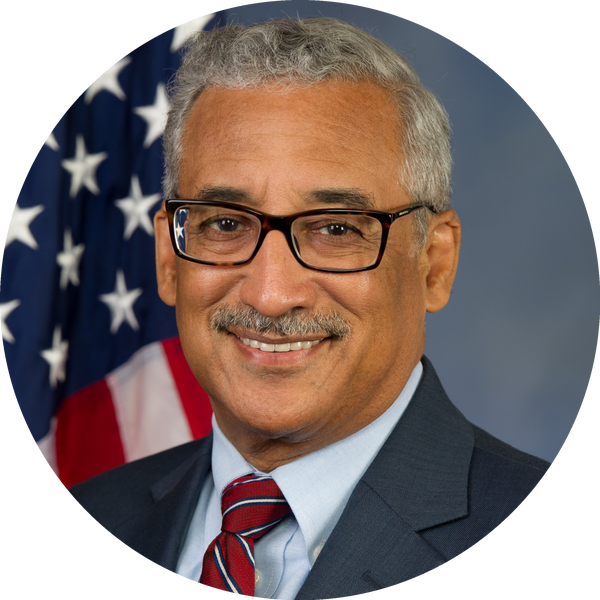
Mr. Speaker, I rise in support of H.R. 5408, the Faster Labor Contracts Act, which ensures that workers can quickly and efficiently reach a first contract between a union and their employer. It is also one of the many important provisions of the Protecting the Right to Organize Act, or the PRO Act, which critically bolsters working people's ability to organize and form a union while holding union-busting employers accountable. This bill would amend the National Labor Relations Act to require employers to begin negotiations with a newly certified union within 10 days.
H.R. 5408 also appeared in 1 more House floor reference and 15 routine cosponsor filings.
HR5408 Legislative Journey
Sent to Senate
Jun 10, 2026
Received in the Senate.
House: Passed 230-193
Jun 9, 2026
On passage Passed by the Yeas and Nays: 230 - 193 (Roll no. 216). (text: CR H4029-4030)
+5 more actions this day
House: Committee Action
Sep 16, 2025
Referred to the House Committee on Education and Workforce.
About the Sponsor
Donald Norcross
Democrat, New Jersey's 1st congressional district · 12 years in Congress
Committees: Armed Services, Education and Workforce
View full profile →
Cosponsors (110)
This bill has 110 cosponsors: 93 Democrats, 17 Republicans, reflecting bipartisan support. Cosponsors represent 34 states: Arizona, California, Colorado, and 31 more.

Pete Stauber
Republican · MN

Christopher Deluzio
Democrat · PA

Brian Fitzpatrick
Republican · PA

Nikki Budzinski
Democrat · IL

Nicole Malliotakis
Republican · NY
Timothy Kennedy
Democrat · NY

Don Bacon
Republican · NE

Josh Riley
Democrat · NY

Michael Lawler
Republican · NY

Angie Craig
Democrat · MN

Michael Rulli
Republican · OH

Jared Golden
Democrat · ME
Cosponsor Coverage Map
Committee Sponsors
Education and Workforce Committee
10 of 37 committee members cosponsored


7 Democrats across this committee haven't cosponsored yet. Mobilize their constituents
H.R. 5408 Quick Facts
- Committee
- Education and Workforce
- Chamber
- House
- Policy
- Labor and Employment
- Introduced
- Sep 16, 2025
Passed the House, received in Senate
Jun 10, 2026
Official Sources
Official bill text, cosponsors, and the record of the House vote and Senate receipt for the Faster Labor Contracts Act.
The Senate version of the same bill, which tracks where the first-contract deadlines stand in the Senate.
H.R. 5408 amends section 8(d) of the National Labor Relations Act, the current good-faith bargaining duty, to add the first-contract deadlines.
The bill applies to unions certified or recognized under section 9(a) of the NLRA, and ties the lasting duty to bargain to the decertification process in the same section.
The Federal Mediation and Conciliation Service would mediate first-contract talks that stall after 90 days.
FMCS would refer unresolved first-contract disputes to a three-member arbitration panel and appoint members when a side misses the 14-day deadline.
The National Labor Relations Board explains the existing good-faith bargaining duty that the bill puts on a timeline.
Under the bill, an employer must keep bargaining unless workers remove the union through this NLRB election process.
H.R. 5408 Common Questions
How long does it take to get a first union contract?
The bill's findings cite a 2021 Bloomberg Law study that found an average of 465 days between a successful union vote and a first contract. Current federal law sets no deadline for reaching one.
How soon would bargaining have to start under H.R. 5408?
Within 10 days of the union's written request, unless both sides agree to a different schedule.
What happens if there is still no contract after 90 days?
Either side can call in the Federal Mediation and Conciliation Service. If mediation does not produce a deal within 30 days, the dispute goes to a three-member arbitration panel.
Can an arbitrator impose a union contract under H.R. 5408?
Yes. A majority of the panel issues a binding decision that sets the first contract for 2 years, unless both sides agree in writing to change it.
How would arbitrators decide wages and benefits?
The bill lists five factors: the employer's finances, the size and type of business, workers' cost of living, whether the pay supports their families, and what similar employers pay.
Can my employer cut pay or change hours while the contract is negotiated?
No. The employer must keep current wages, hours, and working conditions in place until a first contract is reached.
Can an employer stop bargaining with a new union?
Not under H.R. 5408. The duty to bargain continues unless workers vote to remove the union in a decertification election.
Has H.R. 5408 passed?
It passed the House 230-193 on June 9, 2026, and was received in the Senate on June 10. It needs Senate passage and the President's signature to become law.
Based on H.R. 5408 bill text
H.R. 5408 Bill Text
“To accelerate workplace time-to-contract under the National Labor Relations Act.”
Source: U.S. Government Publishing Office
Get notified when H.R. 5408 moves
Committee votes, floor action, cosponsor changes — straight to your inbox.
Bill alerts + Legisletter's monthly briefing. Unsubscribe anytime.
Labor and Employment Bills
9 related bills we're tracking
Protect America's Workforce Act

Received in the Senate.
Dec 15, 2025
Paycheck Fairness Act




Referred to the Committee on Education and Workforce, and in addition to the Committee on Oversight and Government Reform, for a period to be subsequently determined by the Speaker, in each case for consideration of such provisions as fall within the jurisdiction of the committee concerned.
Mar 25, 2025
Richard L. Trumka Protecting the Right to Organize Act of 2025




Referred to the House Committee on Education and Workforce.
Mar 5, 2025
FAMILY Act

Referred to the House Committee on Ways and Means.
Sep 16, 2025
Public Service Freedom to Negotiate Act of 2025

Referred to the House Committee on Education and Workforce.
Apr 8, 2025
Raise the Wage Act of 2025


Referred to the House Committee on Education and Workforce.
Apr 8, 2025
American Franchise Act





Placed on the Union Calendar, Calendar No. 702.
Sep 8, 2026
Healthy Families Act


Referred to the Committee on Education and Workforce, and in addition to the Committees on House Administration, and Oversight and Government Reform, for a period to be subsequently determined by the Speaker, in each case for consideration of such provisions as fall within the jurisdiction of the committee concerned.
Feb 12, 2026
Asunción Valdivia Heat Illness, Injury, and Fatality Prevention Act of 2025


Referred to the House Committee on Education and Workforce.
Jul 16, 2025
Trending Right Now
Bills gaining momentum across Congress
ASAP Act



Ordered to be Reported in the Nature of a Substitute by the Yeas and Nays: 40 - 0.
Sep 16, 2026
Fit to Serve Act





Referred to the House Committee on Armed Services.
May 21, 2025
America’s Olympic and Paralympic Games Commemorative Coins Act





Referred to the House Committee on Financial Services.
Jul 14, 2025
Tracking Labor and Employment in Congress? Monitor bills, track cosponsor momentum, and launch advocacy campaigns — all from one advocacy platform.