H.R. 20: Richard L. Trumka Protecting the Right to Organize Act of 2025
Sponsor

Robert Scott
Democrat · VA-3
Faster union votes — and first contracts that can't stall out
Why it matters
$100,000 per violation is the sharpest number in H.R. 20, known as the PRO Act. It would compress union elections to about 20 business days, push stalled first contracts into binding arbitration, and let the labor board fine employers that repeatedly break the rules.
H.R. 20, known as the PRO Act, is a broad rewrite of federal labor law aimed at making it easier to organize and to actually land a first contract once you win a vote. It speeds up elections, widens who counts as an employee, and makes it harder for companies to keep workers outside union rights by calling them contractors.
The biggest change comes after workers vote yes. If a new union and employer still have no first contract after 90 days of bargaining, either side can call in a federal mediator. If that fails after 30 more days, a three-person arbitration panel sets binding contract terms that last two years — so a first contract can't be stalled out indefinitely.
The bill also targets common anti-union pressure. It would make it unlawful to permanently replace strikers, to force workers into mandatory anti-union meetings unrelated to their jobs, or to block organizing on work email systems employees already use for their jobs.
Enforcement is where the stakes climb. Employers could face up to $50,000 per unfair labor practice, or up to $100,000 for repeat violations within five years. Workers who win could collect back pay plus double that amount in damages — turning a $10,000 loss into $30,000 before any other remedy.
It reaches past election rules, too. H.R. 20 would override state right-to-work limits on fair-share fees, require online and phone union voting within a year, and set new deadlines for labor whistleblower complaints and investigations.
Bill Progress
Latest Action · Mar 5, 2025
Referred to the House Committee on Education and Workforce.
H.R. 20 Bill Summary
What H.R. 20 actually does.
First contracts can't sit in limbo for years
If a new union and employer do not reach a first contract after 90 days of bargaining, either side can request mediation. If there is still no deal after 30 more days, a three-person arbitration panel steps in and issues binding terms that last for two years, with a decision due within 120 days.
Union elections move on a tighter clock
Pre-election hearings would have to begin within 8 days, and elections would have to be scheduled within 20 business days of the direction of election. Employers would have just 2 business days to hand the union a voter list with workers' contact information.
Anti-union violations get much more expensive
Unfair labor practice penalties could reach $50,000 per violation, rising to $100,000 for repeat violations within five years. Separate penalties could apply for ignoring a labor board order or breaking voter-list and notice rules, and directors or officers can be held personally liable.
Workers can recover more than lost pay
When workers win, the labor board would award back pay plus liquidated damages equal to two times the damages awarded. In practical terms, that triples the damages portion before any other remedy, such as front pay or attorney's fees, is added.
More workers count as employees
The bill uses a strict three-part test for independent contractor status. Unless a worker is free from the company's control, works outside its usual business, and runs an independent trade, that worker would generally be treated as an employee under federal labor law.
Companies sharing control can share responsibility
Businesses could be treated as joint employers if they share control over key job terms, including through indirect control or authority they reserve but do not regularly use. That reaches franchises, staffing arrangements, and subcontracting chains.
Remote union voting becomes mandatory
Within one year of enactment, union voting systems would have to let workers cast ballots by internet or telephone. The bill also orders future government studies on broader bargaining structures and who is covered by labor law.
Who benefits from H.R. 20?
Workers trying to unionize for the first time
If you're part of a new organizing drive, H.R. 20 is built to keep the process moving. Hearings would start within 8 days, elections would be scheduled within 20 business days, and your employer would have just 2 business days to hand over the voter list.
Newly organized workers waiting on a first contract
A first contract could no longer drag on indefinitely. After 90 days of bargaining and 30 days of mediation, the dispute moves to binding arbitration, with a decision due within 120 days and terms lasting two years.
Workers labeled as independent contractors
Gig workers and others classified outside regular employment could gain labor-law protections unless they meet all three parts of the bill's contractor test. That makes it harder to keep workers outside union rights by classification alone.
Employees punished for organizing or striking
Workers fired, underpaid, or otherwise harmed by unlawful labor practices could recover back pay plus double damages. If an employer racks up repeat violations, the bill allows penalties of up to $100,000 each.
Who is affected by H.R. 20?
Private-sector employers
Employers would face faster election rules, broader limits on anti-union conduct, and much steeper financial exposure. The bill also restricts permanent striker replacements and mandatory anti-union meetings unrelated to job duties.
Franchisors, staffing firms, and subcontractors
Companies that share or reserve control over working conditions could be treated as joint employers. That could pull more business relationships into bargaining duties and labor-law liability.
Managers now treated as supervisors
Some workers currently excluded from labor-law protections could be reclassified if they do not spend a majority of their worktime acting as supervisors in the employer's interest. That would expand who can organize under federal law.
States and territories with right-to-work laws
Their rules limiting fair-share fee agreements would no longer control where federal labor law applies. H.R. 20 says those agreements would be enforceable despite conflicting state or territorial law.
What Congress Is Saying
17 legislators have weighed in on H.R. 20 — 9 Democrats, 8 Republicans.
H.R. 20 also appeared in 2 more House floor references and 5 routine cosponsor filings.
HR20 Legislative Journey
House: Committee Action
Mar 5, 2025
Referred to the House Committee on Education and Workforce.
About the Sponsor
Robert Scott
Democrat, Virginia's 3rd congressional district · 33 years in Congress
Committees: Education and Workforce, the Budget
View full profile →
Cosponsors (217)
This bill has 217 cosponsors: 215 Democrats, 2 Republicans. Cosponsors represent 39 states: Alabama, Arizona, California, and 36 more.

Brian Fitzpatrick
Republican · PA

Shontel Brown
Democrat · OH

Gwen Moore
Democrat · WI

Nikema Williams
Democrat · GA

Eleanor Norton
Democrat · DC

Rashida Tlaib
Democrat · MI
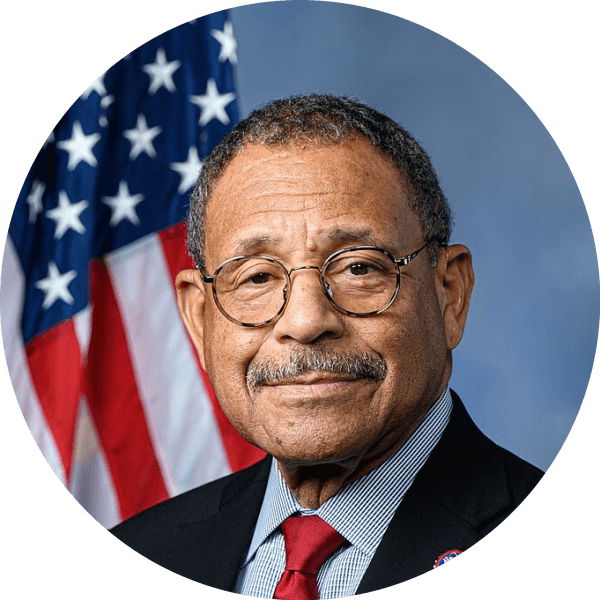
Sanford Bishop
Democrat · GA

LaMonica McIver
Democrat · NJ

Dina Titus
Democrat · NV

Suzanne Bonamici
Democrat · OR
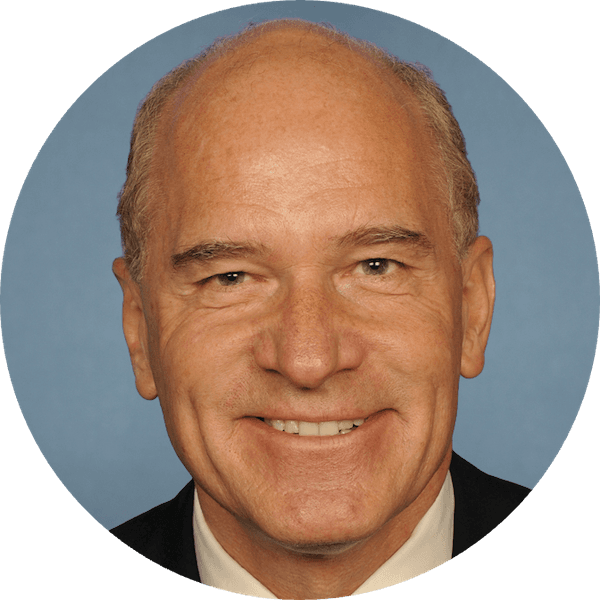
William Keating
Democrat · MA

James McGovern
Democrat · MA
Cosponsor Coverage Map
Committee Sponsors
Education and Workforce Committee
15 of 37 committee members cosponsored


1 Democrats across this committee haven't cosponsored yet. Mobilize their constituents
What laws does H.R. 20 change?
8 changes
Sections Amended
Section 2(2) of National Labor Relations Act (29 U.S.C. 152(2))
adding at the end the following: ``Two or more persons shall be employers with respect to an employee if each such person codetermines or shares control over the employee's essential terms and conditions of employment
Section 2(3) of National Labor Relations Act (29 U.S.C. 152(3))
adding at the end the following: ``An individual performing any service shall be considered an employee (except as provided in the previous sentence) and not an independent contractor, unless-- ``(A) the individual is free from control and direction in connection with the performance of the service, both under the contract for the performance of service and in fact; ``(B) the service is performed outside the usual course of the business of the employer; and ``(C) the individual is customarily engaged in an independently established trade, occupation, profession, or business of the same nature as that involved in the service performed
Section 3003 of Federal Reports Elimination and Sunset Act of 1995 (Public Law 104-66; 31 U.S.C. 1113 note) shall not apply with respect to reports required under this subsection. ``(3) Each report issued under this subsection shall-- ``(A) include no less detail than reports issued by the Board prior to the termination of such reports under section 3003 of the Federal Reports Elimination and Sunset Act of 1995 (Public Law 104-66; 31 U.S.C. 1113 note); ``(B) list each case in which the Designated Agency Ethics Official provided advice regarding whether a Member should be recused from participating in a case or rulemaking; and ``(C) list each case in which the Designated Agency Ethics Official determined that a Member should be recused from participating in a case or rulemaking.''. SEC. 103. APPOINTMENT. Section 4(a) of the National Labor Relations Act (29 U.S.C. 154(a))
striking ``, or for economic analysis''
Section 10(c) of National Labor Relations Act (29 U.S.C. 160(c))
striking ``suffered by him'' and inserting ``suffered by such employee: Provided further, That if the Board finds that an employer has discriminated against an employee in violation of paragraph (3) or (4) of section 8(a) or has committed a violation of section 8(a) that results in the discharge of an employee or other serious economic harm to an employee, the Board shall award the employee back pay without any reduction (including any reduction based on the employee's interim earnings or failure to earn interim earnings), front pay (when appropriate), full compensation for all direct or foreseeable pecuniary harms suffered as a result of the respondent's unfair labor practice, and an additional amount as liquidated damages equal to two times the amount of damages awarded: Provided further, no relief under this subsection shall be denied on the basis that the employee is, or was during the time of relevant employment or during the back pay period, an unauthorized alien as defined in section 274A(h)(3) of the Immigration and Nationality Act (8 U
Section 18 of National Labor Relations Act (29 U.S.C. 168)
striking ``section 10(e) or (f)'' and inserting ``subsection (d) or (f) of section 10''
Section 10(b) of National Labor Relations Act (29 U.S.C. 160(b)) is amended-- (1) by striking ``six months'' and inserting ``180 days''; and (2) by striking ``the six-month period'' and inserting ``the 180-day period''. SEC. 110. LIMITATIONS ON THE RIGHT TO STRIKE. Section 13 of the National Labor Relations Act (29 U.S.C. 163)
striking the period at the end and inserting the following: ``: Provided, That the duration, scope, frequency, or intermittence of any strike or strikes shall not render such strike or strikes unprotected or prohibited
H.R. 20 Quick Facts
- Committee
- Education and Workforce
- Chamber
- House
- Policy
- Labor and Employment
- Introduced
- Mar 5, 2025
Referred to the House Committee on Education and Workforce.
Mar 5, 2025
Official Sources
Official legislative status page for the Richard L. Trumka Protecting the Right to Organize Act of 2025.
Full text of the National Labor Relations Act, the main federal statute H.R. 20 would amend, including the definitions of employee and joint employer the bill rewrites.
Official NLRB overview of collective bargaining rights, relevant to the bill's first-contract mediation and arbitration provisions.
Summarizes employee rights to organize, act together, and join a union under federal law, which H.R. 20 would strengthen.
Explains how the NLRB runs union representation elections, the process H.R. 20 would speed up with tighter hearing and scheduling deadlines.
The federal agency H.R. 20 would tap for first-contract mediation before a dispute moves to binding arbitration.
H.R. 20 Common Questions
What does H.R. 20, the PRO Act, actually do?
It makes it easier to form a union, speeds up election and bargaining timelines, raises penalties on employers who break labor law, and broadens who qualifies for federal labor-law protection.
How fast would a union election happen under H.R. 20?
Elections would have to be scheduled within 20 business days. Pre-election hearings would start within 8 days, and your employer would have just 2 business days to hand the union a voter list.
Can H.R. 20 force a first union contract into arbitration?
Yes. If bargaining runs 90 days with no deal, either side can request mediation. If that fails after 30 more days, a three-person panel imposes binding contract terms that last two years.
How much are the employer penalties in H.R. 20?
Up to $50,000 per unfair labor practice, or $100,000 for repeat violations within five years. Workers can also collect back pay plus double that amount in damages, and directors or officers can be held personally liable.
Would H.R. 20 ban permanently replacing strikers?
Yes. The bill would treat permanently replacing workers for taking part in a strike as an unfair labor practice under federal labor law.
Would gig workers count as employees under H.R. 20?
Some could. The bill uses a strict three-part test, so a worker counts as an employee unless they are truly independent from the company on all three parts of that test.
Does H.R. 20 override state right-to-work laws?
On one point, yes. H.R. 20 says fair-share fee agreements would be enforceable despite conflicting state or territorial law, overriding right-to-work limits on that specific issue.
Would H.R. 20 allow online or phone union voting?
Yes. Within one year, the labor board would have to set up voting systems that let workers cast ballots by internet or telephone.
Based on H.R. 20 bill text
H.R. 20 Bill Text
“To amend the National Labor Relations Act, the Labor Management Relations Act, 1947, and the Labor-Management Reporting and Disclosure Act of 1959, and for other purposes.”
Source: U.S. Government Publishing Office
Get notified when H.R. 20 moves
Committee votes, floor action, cosponsor changes — straight to your inbox.
Bill alerts + Legisletter's monthly briefing. Unsubscribe anytime.
Labor and Employment Bills
9 related bills we're tracking
Protect America's Workforce Act



Received in the Senate.
Dec 15, 2025
Paycheck Fairness Act




Referred to the Committee on Education and Workforce, and in addition to the Committee on Oversight and Government Reform, for a period to be subsequently determined by the Speaker, in each case for consideration of such provisions as fall within the jurisdiction of the committee concerned.
Mar 25, 2025
FAMILY Act

Referred to the House Committee on Ways and Means.
Sep 16, 2025
Public Service Freedom to Negotiate Act of 2025


Referred to the House Committee on Education and Workforce.
Apr 8, 2025
Raise the Wage Act of 2025



Referred to the House Committee on Education and Workforce.
Apr 8, 2025
American Franchise Act





Placed on the Union Calendar, Calendar No. 702.
Sep 8, 2026
Healthy Families Act


Referred to the Committee on Education and Workforce, and in addition to the Committees on House Administration, and Oversight and Government Reform, for a period to be subsequently determined by the Speaker, in each case for consideration of such provisions as fall within the jurisdiction of the committee concerned.
Feb 12, 2026
Asunción Valdivia Heat Illness, Injury, and Fatality Prevention Act of 2025


Referred to the House Committee on Education and Workforce.
Jul 16, 2025
Workplace Violence Prevention for Health Care and Social Service Workers Act



Referred to the Committee on Education and Workforce, and in addition to the Committees on Energy and Commerce, and Ways and Means, for a period to be subsequently determined by the Speaker, in each case for consideration of such provisions as fall within the jurisdiction of the committee concerned.
Apr 1, 2025
Trending Right Now
Bills gaining momentum across Congress
ASAP Act




Ordered to be Reported in the Nature of a Substitute by the Yeas and Nays: 40 - 0.
Sep 16, 2026
Federal Firearms Licensee Protection Act of 2025




Referred to the House Committee on the Judiciary.
Mar 3, 2025
Therapeutic Fraud Prevention Act of 2025



Referred to the House Committee on Energy and Commerce.
May 7, 2025
Tracking Labor and Employment in Congress? Monitor bills, track cosponsor momentum, and launch advocacy campaigns — all from one advocacy platform.