H.R. 5267: American Franchise Act
Sponsor
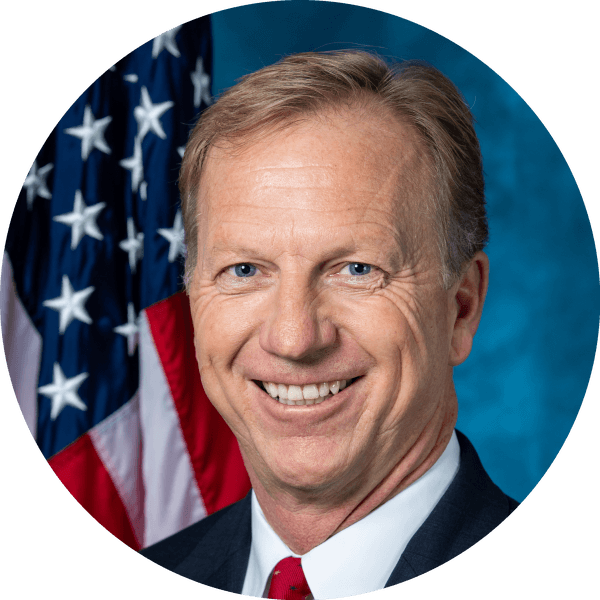
Kevin Hern
Republican · OK-1
The logo on the door stops being your employer
Why it matters
Franchise businesses employ about 8,400,000 people, roughly 5 percent of the American workforce, according to the Oxford Economics figures cited in the bill's findings. H.R. 5267 would let a national brand set your training, your operating hours, your staffing minimums, and your standards of conduct without any of that alone making it your employer. It cleared the House Education and Workforce Committee on an 18-15 vote in July 2026.
H.R. 5267 replaces a contested legal question with a checklist. A franchisor could be called a joint employer only if it both possesses and exercises substantial direct and immediate control over at least one of eight things: wages, benefits, hours, hiring, discharge, discipline, supervision, or direction. Both halves have to be true. Holding the power in the contract is not enough if the brand never uses it.
The bill then defines each of those eight terms narrowly, and pairs most of them with a list of what does not count. A brand does not control your hours by setting the store's operating hours or its minimum staffing levels. It does not control hiring by recommending that the owner add shifts. It does not control supervision by writing brand standards, supplying training materials, or setting minimum training requirements. A brand can tell the owner you are performing poorly, say it thinks little of you, and refuse to let you work under the franchise contract, and the bill counts none of that as controlling your discharge or discipline.
Even qualifying control has to be sustained. It must have a regular or continuous consequential effect on the job; sporadic, isolated, or de minimis involvement is expressly excluded.
The same test would run through two statutes at once. H.R. 5267 writes it into the National Labor Relations Act, which governs union organizing and bargaining, and then into the Fair Labor Standards Act, which governs unpaid wages and overtime. A worker chasing unpaid overtime and a union seeking a seat across from corporate would face the same threshold.
Nothing already in motion changes. The bill does not apply to any proceeding commenced before it is enacted, so pending cases stay under whatever standard governs them today.
Bill Progress
Latest Action · Sep 8, 2026
Placed on House floor schedule, Calendar No. 702.
H.R. 5267 Bill Summary
What H.R. 5267 actually does.
The brand has to actually use its power, not just hold it
A franchisor counts as a joint employer only if it both possesses and exercises substantial direct and immediate control over an essential job term. Authority written into a franchise agreement but left unused would not qualify.
Eight job decisions, and nothing else, decide the question
The bill limits the analysis to wages, benefits, hours of work, hiring, discharge, discipline, supervision, and direction. Brand influence over anything outside those eight areas would not count toward joint-employer status.
Flagging a worker for firing would not count as firing them
The bill states that bringing misconduct or poor performance to the franchisee's attention, expressing a negative opinion of a franchisee's employee, or refusing to let that employee work under the franchise contract is not direct control over discharge or discipline.
Standards, training and staffing minimums are carved out
Setting brand standards, establishing operating hours, requiring minimum staffing to meet service standards, offering training materials, and setting minimum training requirements are each listed as things that do not by themselves establish control.
Occasional control is written out of the test
Substantial control means control with a regular or continuous consequential effect on a job term. The bill expressly excludes control exercised on a sporadic, isolated, or de minimis basis.
One test covers both union cases and unpaid-wage cases
H.R. 5267 adds the standard to the National Labor Relations Act and then applies the same criteria under the Fair Labor Standards Act, so organizing disputes and overtime or minimum-wage claims would turn on the same threshold.
Pending cases stay under today's rules
The bill does not apply to any proceeding commenced before the date of enactment. Cases already filed would continue under the standard in place when they started.
Who benefits from H.R. 5267?
National brands with franchised locations
Restaurant, hotel, gym, convenience and service chains would gain a statutory definition of what does not count as employer control. The carve-outs cover most of what a franchisor does to keep locations consistent: standards, training, hours, staffing minimums, and safety or legal compliance rules.
Franchise owners running individual locations
The local owner would remain the employer in more situations. Franchisees have argued that expansive joint-employer readings push brands to either take over their operations or cut them loose; the bill removes that pressure by fixing where the line sits.
Franchise systems planning expansion
The bill's findings cite about $825,000,000,000 in franchise output in the United States in 2022, drawn from a September 2023 Oxford Economics report. Supporters say a fixed standard lets brands sign new franchisees without pricing in a shifting liability rule.
Brands facing claims in more than one forum
Because the same test would apply under both labor law and wage-and-hour law, a brand would face one threshold rather than two agencies applying different readings of the same relationship.
Who is affected by H.R. 5267?
The 8.4 million people working at franchise businesses
To name the national brand as an employer, a worker would have to show it actually determined pay rates, chose who was hired or fired, set individual schedules, or consistently instructed employees how to do the work — on a regular or continuous basis. Complaints about brand standards or training rules would not reach that bar.
Workers filing unpaid wage and overtime claims
The Fair Labor Standards Act half of the bill matters most when a franchisee closes, goes bankrupt, or cannot pay a judgment. A narrower test reduces the situations in which the brand can be pulled in as a second responsible party.
Unions organizing franchised workforces
Bargaining with a brand rather than location by location depends on joint-employer status. The bill would require the same direct-control showing before a franchisor could be brought to the table.
The NLRB, the Labor Department, and the courts
Agencies and judges would apply a franchise-specific statutory test with defined terms and explicit exclusions, rather than the common-law and regulatory standards that have shifted across administrations.
Parties in cases filed on either side of enactment
Because the bill is not retroactive, two workers with nearly identical claims against the same brand could be judged under different standards depending on when the proceeding began.
What Congress Is Saying
H.R. 5267 has come up 38 times in the Congressional Record so far.
H.R. 5267 also appeared in 1 more House floor reference and 37 routine cosponsor filings.
HR5267 Legislative Journey
House: Committee Action
Sep 8, 2026
Reported (Amended) by the Committee on Education and Workforce. H. Rept. 119-802.
House: Vote: 18-15
Jul 21, 2026
Ordered to be Reported (Amended) by the Yeas and Nays: 18 - 15.
House: Committee Action
Sep 10, 2025
Referred to the House Committee on Education and Workforce.
About the Sponsor
Kevin Hern
Republican, Oklahoma's 1st congressional district · 8 years in Congress
Committees: Ways and Means
View full profile →
Cosponsors (158)
This bill has 158 cosponsors: 17 Democrats, 141 Republicans, reflecting bipartisan support. Cosponsors represent 40 states: Alaska, Alabama, Arkansas, and 37 more.
Donald Davis
Democrat · NC
Beth Van Duyne
Republican · TX

Hillary Scholten
Democrat · MI

Chuck Edwards
Republican · NC
Jim Costa
Democrat · CA
Mark Alford
Republican · MO
Adam Gray
Democrat · CA
August Pfluger
Republican · TX
Henry Cuellar
Democrat · TX

Nathaniel Moran
Republican · TX
Ami Bera
Democrat · CA
Vicente Gonzalez
Democrat · TX
Cosponsor Coverage Map
Committee Sponsors
Education and Workforce Committee
19 of 37 committee members cosponsored


2 Republicans across this committee haven't cosponsored yet. Mobilize their constituents
H.R. 5267 Quick Facts
- Committee
- Education and Workforce
- Chamber
- House
- Policy
- Labor and Employment
- Introduced
- Sep 10, 2025
Placed on House floor schedule, Calendar No. 702.
Sep 8, 2026
Official Sources
Official bill page with text, sponsors, cosponsors, actions, and committee status for the American Franchise Act.
Full official text of H.R. 5267 as introduced, published by the Government Publishing Office.
The NLRB s own page on the joint-employer standard the bill would replace with a statutory franchise-specific test.
Full text of the National Labor Relations Act, the statute the bill amends for union organizing and bargaining cases.
Official U.S. Code text of Title 29 Chapter 7, which contains the National Labor Relations Act sections cited in the bill (29 U.S.C. 151 et seq.).
Official FLSA definitions section, relevant because the bill applies the same joint-employer test to federal wage-and-hour law.
Federal Trade Commission guide to the Franchise Rule, which defines the franchisor-franchisee relationship the bill legislates around.
Bill text posted by the House Education and Workforce Committee, which ordered H.R. 5267 reported on July 21, 2026.
H.R. 5267 Common Questions
What does H.R. 5267 actually change?
It sets one statutory test for when a national franchise brand counts as your employer. The brand would qualify only if it both holds and uses substantial direct control over your pay, benefits, hours, hiring, firing, discipline, supervision, or work assignments.
Can a franchise brand get me fired and still not be my employer?
Under H.R. 5267, yes. The bill states that telling the franchise owner about your misconduct or poor performance, voicing a negative opinion of you, or refusing to let you work under the franchise contract is not direct control over discharge or discipline.
Which job decisions decide employer status?
Eight, and only eight: wages, benefits, hours of work, hiring, discharge, discipline, supervision, and direction. Control also has to be regular or continuous — the bill excludes involvement that is sporadic, isolated, or minimal.
Do brand standards or training rules count as control?
No. H.R. 5267 lists brand standards, store operating hours, minimum staffing to meet service standards, training materials, and minimum training requirements as things that do not by themselves make a franchisor a joint employer.
Does H.R. 5267 cover unpaid wages or just union disputes?
Both. The bill writes the test into the National Labor Relations Act for organizing and bargaining cases, then applies the same criteria under the Fair Labor Standards Act. Overtime and minimum-wage claims would use the same threshold.
What happens to lawsuits already filed?
They stay where they are. H.R. 5267 does not apply to any proceeding commenced before the date it is enacted, so pending cases and agency complaints continue under the standard that governed them when they started.
Where does H.R. 5267 stand in Congress?
The House Education and Workforce Committee ordered it reported, amended, on July 21, 2026, by a vote of 18-15. Kevin Hern (R-OK) introduced it in September 2025, and it now carries 155 cosponsors, 17 of them Democrats.
Based on H.R. 5267 bill text
H.R. 5267 Bill Text
“To preserve the franchise business model.”
Source: U.S. Government Publishing Office
Get notified when H.R. 5267 moves
Committee votes, floor action, cosponsor changes — straight to your inbox.
Bill alerts + Legisletter's monthly briefing. Unsubscribe anytime.
Labor and Employment Bills
9 related bills we're tracking
Protect America's Workforce Act

Received in the Senate.
Dec 15, 2025
Paycheck Fairness Act

Referred to the Committee on Education and Workforce, and in addition to the Committee on Oversight and Government Reform, for a period to be subsequently determined by the Speaker, in each case for consideration of such provisions as fall within the jurisdiction of the committee concerned.
Mar 25, 2025
Richard L. Trumka Protecting the Right to Organize Act of 2025

Referred to the House Committee on Education and Workforce.
Mar 5, 2025
FAMILY Act
Referred to the House Committee on Ways and Means.
Sep 16, 2025
Public Service Freedom to Negotiate Act of 2025


Referred to the House Committee on Education and Workforce.
Apr 8, 2025
Raise the Wage Act of 2025

Referred to the House Committee on Education and Workforce.
Apr 8, 2025
Healthy Families Act

Referred to the Committee on Education and Workforce, and in addition to the Committees on House Administration, and Oversight and Government Reform, for a period to be subsequently determined by the Speaker, in each case for consideration of such provisions as fall within the jurisdiction of the committee concerned.
Feb 12, 2026
Asunción Valdivia Heat Illness, Injury, and Fatality Prevention Act of 2025

Referred to the House Committee on Education and Workforce.
Jul 16, 2025
Workplace Violence Prevention for Health Care and Social Service Workers Act


Referred to the Committee on Education and Workforce, and in addition to the Committees on Energy and Commerce, and Ways and Means, for a period to be subsequently determined by the Speaker, in each case for consideration of such provisions as fall within the jurisdiction of the committee concerned.
Apr 1, 2025
Trending Right Now
Bills gaining momentum across Congress
North Platte Canteen Congressional Gold Medal Act


Referred to the House Committee on Financial Services.
Feb 21, 2025
ASAP Act

Ordered to be Reported in the Nature of a Substitute by the Yeas and Nays: 40 - 0.
Sep 16, 2026
Fit to Serve Act


Referred to the House Committee on Armed Services.
May 21, 2025
Tracking Labor and Employment in Congress? Monitor bills, track cosponsor momentum, and launch advocacy campaigns — all from one advocacy platform.