H.R. 4443: Asunción Valdivia Heat Illness, Injury, and Fatality Prevention Act of 2025
Sponsor

Judy Chu
Democrat · CA-28
Make OSHA finalize a federal worker heat rule in one year
Why it matters
H.R. 4443 would force OSHA to issue a federal worker heat protection rule within one year of enactment — and bypass the usual administrative review delays to get there. The rule would have to include the basics: cool water, paid rest breaks, shade, and an acclimatization period for workers in dangerous heat. The bill is named for Asunción Valdivia, a farmworker who died of heat stroke in 2004 after picking grapes for ten hours in 105-degree California heat. The Bureau of Labor Statistics counted 36 work-related heat deaths in 2021 alone.
Some states have written workplace heat safety rules. The federal government hasn't. H.R. 4443 — the Asunción Valdivia Heat Illness, Injury, and Fatality Prevention Act of 2025 — would change that.
The bill orders the Labor Department to issue an interim final heat protection standard within one year of enactment, and to do it without first running the proposal through the administrative review processes that often slow OSHA rulemakings down. Once the interim rule is published, it has the same legal force as a permanent OSHA standard until a final rule replaces it.
The bill names what the rule has to include. Cool potable water at the employer's expense. Paid rest breaks scheduled to bring heat stress below hazardous levels. Access to shade or cool-down spaces. An acclimatization policy for workers who are new to heat exposure or returning after a break. It also points to engineering controls like ventilation and cooling tech, administrative changes like schedule shifts, employer-paid cooling gear, and written prevention plans developed with employee input.
Workers get pay protection for time spent on rest breaks, training, and medical removal. Required training, posters, and written plans must be in English plus any language workers actually understand. Whistleblower protections piggyback on existing OSHA law: workers have 180 days to file a retaliation complaint, the Secretary has 90 days to respond, and if that response doesn't come, the worker can sue in federal district court for relief plus attorney's fees and costs. OSHA gets four years from the date of a violation to issue a citation.
The bill is named for Asunción Valdivia, a farmworker who collapsed after picking grapes for ten hours in 105-degree California heat in July 2004. He died on the way to the hospital. His son was driving him. Rep. Judy Chu (D-CA) introduced the bill in July 2025, and it has 141 cosponsors as of early 2026 — almost all Democrats, plus Reps. Michael Lawler (R-NY) and Brian Fitzpatrick (R-PA). It has been parked in the House Committee on Education and Workforce since introduction. The Bureau of Labor Statistics counted 36 work-related heat deaths in 2021.
Bill Progress
Latest Action · Jul 16, 2025
Referred to the House Committee on Education and Workforce.
H.R. 4443 Bill Summary
What H.R. 4443 actually does.
OSHA must finalize a heat rule within one year
The Labor Department has one year from enactment to publish an interim final worker heat protection standard. The rule takes legal effect upon issuance and stays in force until a permanent rule replaces it. The bill exempts this rulemaking from typical administrative review steps — including environmental and paperwork reviews — to keep it from getting bogged down.
Cool water, paid rest, shade, acclimatization — required
Where heat stress can't be reduced through engineering or protective gear, employers must provide cool potable water at company expense, paid rest breaks scheduled to bring heat stress below hazardous levels, access to shade or cool-down spaces, and an acclimatization policy for new workers and workers returning from time away.
Pay continues during rest breaks and medical removal
Workers receive their regular rate of pay for any time the rule requires — rest breaks, training, and medical removal. Without this protection, mandated breaks could come out of workers' paychecks.
Workers can sue if OSHA stalls on retaliation complaints
Workers have 180 days to file a heat-safety retaliation complaint with OSHA. The Secretary has 90 days to respond. If that response doesn't come, the worker can sue the employer in federal district court for full relief, plus attorney's fees and costs.
Training and posters in workers' actual languages
Required training, posters, hazard labels, and written prevention plans must be in English and any other language workers understand, prepared at a vocabulary and literacy level the workers can actually use.
OSHA gets four years to cite a heat violation
Citations for violations of the new heat standard can be issued for up to four years after the violation occurred — a longer enforcement window than the limit on most other OSHA citations.
Who benefits from H.R. 4443?
Outdoor workers
Farmworkers, construction crews, roofers, landscapers, and delivery drivers — the people most directly hit by extreme heat — would gain a single federal floor of protection: water, shade, paid rest, and an acclimatization period when starting in hot conditions.
Indoor workers in hot conditions
Warehouse pickers, commercial kitchen staff, foundry and laundry workers, and others exposed to indoor heat — often invisible in public conversations about extreme heat — get the same baseline protections under the bill.
New and returning workers
Workers in their first days on a hot job, or coming back from time away, are at the highest risk for heat illness. The bill specifically requires acclimatization policies aimed at this period.
Workers without strong English
Required training, hazard alerts, and written plans must be provided in English plus any language workers actually speak — a meaningful change in industries like agriculture, construction, and food processing where Spanish or Indigenous languages are common on the job.
Who is affected by H.R. 4443?
Employers in heat-exposed industries
Agriculture, construction, manufacturing, warehousing, food service, and other hot-workplace employers would have to add hydration stations, shade or cool-down spaces, paid rest breaks, training, and written prevention plans — and document compliance.
Small businesses
Smaller employers carry the same compliance duties as larger ones, though the bill says rules must be 'feasible.' Industry groups have argued in past versions that infrastructure costs — shade structures, cooling tech, schedule changes — hit small operators hardest.
OSHA and the Labor Department
Federal regulators would have to write the rule on a one-year clock, defend it in the D.C. Circuit, run inspections, and update the existing temporary labor camp standard — all while the agency's parallel heat rulemaking continues.
States with their own heat rules
California, Oregon, Washington, and a handful of other states with workplace heat standards would see their rules positioned as templates rather than outliers. The bill explicitly lets OSHA point to state heat rules in effect at least a year as proof similar federal requirements are feasible.
HR4443 Legislative Journey
House: Committee Action
Jul 16, 2025
Referred to the House Committee on Education and Workforce.
About the Sponsor
Judy Chu
Democrat, California's 28th congressional district · 17 years in Congress
Committees: Ways and Means, the Budget
View full profile →
Cosponsors (146)
This bill has 146 cosponsors: 144 Democrats, 2 Republicans. Cosponsors represent 33 states: Arizona, California, Colorado, and 30 more.

Robert Scott
Democrat · VA

Alma Adams
Democrat · NC

Gabe Amo
Democrat · RI

Yassamin Ansari
Democrat · AZ

Nanette Barragán
Democrat · CA

Suzanne Bonamici
Democrat · OR

Julia Brownley
Democrat · CA

Nikki Budzinski
Democrat · IL
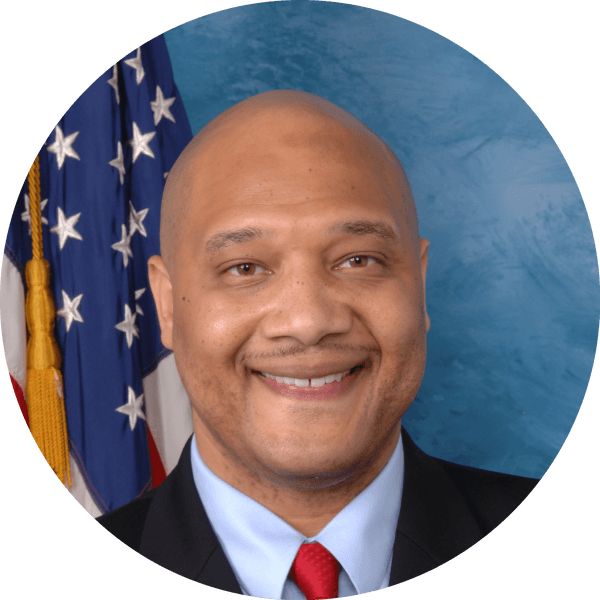
André Carson
Democrat · IN

Troy Carter
Democrat · LA

Greg Casar
Democrat · TX

Sean Casten
Democrat · IL
Cosponsor Coverage Map
Committee Sponsors
Education and Workforce Committee
14 of 37 committee members cosponsored


2 Democrats across this committee haven't cosponsored yet. Mobilize their constituents
H.R. 4443 Quick Facts
- Committee
- Education and Workforce
- Chamber
- House
- Policy
- Labor and Employment
- Introduced
- Jul 16, 2025
Referred to the House Committee on Education and Workforce.
Jul 16, 2025
Official Sources
Official bill tracker with full text, 141 cosponsors, actions, and committee referral status for the Asuncion Valdivia Heat Illness, Injury, and Fatality Prevention Act of 2025.
Sponsor Rep. Judy Chu (CA-28) announced the bill on July 16, 2025, alongside Sen. Padilla and union workers from UFW, AFSCME, and United Steelworkers. Named for Asuncion Valdivia, a farmworker who died of heat stroke in 2004 after picking grapes for 10 hours in 105-degree heat.
Over 250 organizations support the bill including AFL-CIO, United Farm Workers, Teamsters, Public Citizen, Sierra Club, and National Employment Law Project.
OSHA's parallel heat rulemaking published August 30, 2024. Post-hearing comment period closed October 30, 2025. HR 4443 would legislatively mandate what OSHA is pursuing through regulation, providing a congressional backstop if the rule is delayed or weakened.
The NIOSH criteria document HR 4443 names as 'best available evidence' for the heat standard. Defines recommended exposure limits using wet bulb globe temperature for acclimatized and unacclimatized workers.
NIOSH overview of occupational heat stress covering health risks (heat stroke, exhaustion, rhabdomyolysis), risk factors, and prevention strategies — the scientific basis for the protections HR 4443 would require.
Bureau of Labor Statistics Census of Fatal Occupational Injuries data showing 36 heat-related worker deaths in 2021 alone, with construction accounting for one-third of all occupational heat fatalities from 2011-2020.
The committee to which HR 4443 was referred on July 16, 2025. Chaired by Rep. Tim Walberg (MI). Any markup, hearing, or floor action on the bill would originate here.
H.R. 4443 Common Questions
Does H.R. 4443 require employers to give workers water and shade?
Yes — when heat hazards remain. The bill requires cool potable water at company expense, paid rest breaks, access to shade or cool-down spaces, and an acclimatization policy for new workers. Engineering fixes like ventilation come first; if heat stress is still dangerous after that, these baseline protections kick in.
Do workers get paid during heat rest breaks under H.R. 4443?
Yes. Workers must receive their regular rate of pay for any time required by the rule — including rest breaks, training, and medical removal. The bill explicitly bars employers from making mandated breaks unpaid.
How fast would the federal heat rule actually take effect?
The bill gives the Labor Department one year from enactment to publish an interim final rule. That rule takes legal effect upon issuance and stays in place until OSHA finalizes a permanent rule. The interim version would have the full force of an OSHA standard from day one.
What happens if my employer fires me for reporting heat-safety problems?
You'd have 180 days to file a retaliation complaint with OSHA. The Secretary has 90 days to respond. If that response doesn't come — or if OSHA declines to act — you can sue your employer in federal district court for full relief plus attorney's fees and litigation costs.
Does H.R. 4443 cover indoor heat or just outdoor work?
Both. The bill covers any place of employment where heat stress could reasonably cause death or serious harm. That includes outdoor sites — farms, construction, delivery routes — and indoor settings like warehouses, commercial kitchens, foundries, and laundries.
Would training have to be in Spanish or other languages workers actually speak?
Yes. Required training, posters, hazard labels, and written prevention plans must be provided in English plus any other language workers understand, prepared at a vocabulary and literacy level the workers can actually use.
Why is the bill named for Asunción Valdivia?
Asunción Valdivia was a farmworker who picked grapes for ten hours in 105-degree California heat in July 2004 and collapsed at the end of his shift. He died on the way to the hospital. His son was driving him. The bill bears his name.
Could the federal rule replace California's heat standard?
It would set a national floor, not a ceiling. The bill says no rule issued under it can reduce protections in an existing standard. It also lets OSHA point to state heat rules in effect at least a year as proof similar federal requirements are feasible — positioning California's rule as a model rather than a target.
Based on H.R. 4443 bill text
H.R. 4443 Bill Text
“To direct the Secretary of Labor to promulgate an occupational safety and health standard to protect workers from heat-related injuries and illnesses.”
Source: U.S. Government Publishing Office
Get notified when H.R. 4443 moves
Committee votes, floor action, cosponsor changes — straight to your inbox.
Bill alerts + Legisletter's monthly briefing. Unsubscribe anytime.
Labor and Employment Bills
9 related bills we're tracking
Protect America's Workforce Act

Received in the Senate.
Dec 15, 2025
Paycheck Fairness Act



Referred to the Committee on Education and Workforce, and in addition to the Committee on Oversight and Government Reform, for a period to be subsequently determined by the Speaker, in each case for consideration of such provisions as fall within the jurisdiction of the committee concerned.
Mar 25, 2025
Richard L. Trumka Protecting the Right to Organize Act of 2025



Referred to the House Committee on Education and Workforce.
Mar 5, 2025
FAMILY Act
Referred to the House Committee on Ways and Means.
Sep 16, 2025
Public Service Freedom to Negotiate Act of 2025

Referred to the House Committee on Education and Workforce.
Apr 8, 2025
Raise the Wage Act of 2025

Referred to the House Committee on Education and Workforce.
Apr 8, 2025
American Franchise Act





Placed on the Union Calendar, Calendar No. 702.
Sep 8, 2026
Healthy Families Act

Referred to the Committee on Education and Workforce, and in addition to the Committees on House Administration, and Oversight and Government Reform, for a period to be subsequently determined by the Speaker, in each case for consideration of such provisions as fall within the jurisdiction of the committee concerned.
Feb 12, 2026
Workplace Violence Prevention for Health Care and Social Service Workers Act


Referred to the Committee on Education and Workforce, and in addition to the Committees on Energy and Commerce, and Ways and Means, for a period to be subsequently determined by the Speaker, in each case for consideration of such provisions as fall within the jurisdiction of the committee concerned.
Apr 1, 2025
Trending Right Now
Bills gaining momentum across Congress
North Platte Canteen Congressional Gold Medal Act



Referred to the House Committee on Financial Services.
Feb 21, 2025
Fit to Serve Act




Referred to the House Committee on Armed Services.
May 21, 2025
ASAP Act



Ordered to be Reported in the Nature of a Substitute by the Yeas and Nays: 40 - 0.
Sep 16, 2026
Tracking Labor and Employment in Congress? Monitor bills, track cosponsor momentum, and launch advocacy campaigns — all from one advocacy platform.