H.R. 5390: FAMILY Act
Sponsor

Rosa DeLauro
Democrat · CT-3
201 Lawmakers Want Paid Leave Built Into Social Security
Why it matters
Only 27% of private-sector workers have access to paid family leave. This bill would make it a federal benefit — administered through Social Security — paying $580 to $4,000 per month to anyone who qualifies, regardless of employer.
The bill would create a new Office of Paid Family and Medical Leave inside the Social Security Administration. That office would process applications, determine eligibility, and cut checks — the same way SSA handles retirement and disability benefits today.
The benefit formula works on a sliding scale favoring lower earners. For the first $1,257 of your average monthly earnings, you'd get back 85%. The next tier (up to $3,500) pays 69%. Earnings up to $6,200 pay 50%. The floor is $580 per month; the ceiling is $4,000. Both amounts index to wages after the first year.
To qualify, you need at least $2,000 in wages or self-employment income over the prior two years. That's a low bar by design — it pulls in part-time workers, gig workers, and people who've recently entered the workforce. Self-employed workers qualify on the same terms.
The covered reasons for leave go well beyond the traditional newborn-and-surgery list. The bill covers birth or adoption of a child, your own serious illness, caring for a sick family member, and — notably — leave connected to domestic violence, sexual assault, stalking, or sex trafficking. That last category includes time for counseling, relocation, legal proceedings, medical treatment, and changing schools or childcare.
The definition of "family" is unusually broad. Spouses, domestic partners recognized by any state, children of any age, parents, siblings, grandparents, grandchildren, in-laws, and anyone "related by blood or affinity whose association is equivalent to a family relationship." That language is designed to cover the way people actually live — not just nuclear family structures.
Your total leave in a 12-month benefit period is capped at 12 times your regular weekly hours. If you work 40 hours a week, that's 480 hours — roughly 12 weeks of full-time leave. Part-time workers get proportionally less. Any month where you log fewer than 4 caregiving hours pays nothing.
The bill includes job protection teeth. Your employer must restore you to the same or equivalent position with the same pay, benefits, and terms. They must maintain your health insurance during leave. And if your employer takes any adverse action against you within 12 months of your leave, the bill creates a rebuttable presumption of retaliation — meaning the employer has to prove the action wasn't payback.
Bill Progress
Latest Action · Sep 16, 2025
Referred to the House Committee on Ways and Means.
H.R. 5390 Bill Summary
What H.R. 5390 actually does.
A federal paid leave benefit through Social Security
Creates a new Office of Paid Family and Medical Leave within SSA to administer a national benefit program. Workers apply directly to the federal government, bypassing employer-level decisions about who gets leave.
Benefits from $580 to $4,000 per month
Monthly benefits are calculated on a sliding scale: 85% of earnings up to $1,257, 69% of the next tier up to $3,500, and 50% up to $6,200. The minimum is $580 and the cap is $4,000 in the first year, with both amounts indexed to wages going forward.
Qualifying bar set at $2,000 in earnings
You need just $2,000 in wages or self-employment income over the prior two years to qualify. That threshold is designed to include part-time, seasonal, and gig workers who are most likely to lack employer-provided leave.
Leave covers violence survivors, not just illness
Beyond birth, adoption, and serious health conditions, the bill covers leave for domestic violence, sexual assault, stalking, and sex trafficking — including time for counseling, relocation, legal proceedings, medical care, and school changes.
Family defined the way people actually live
Covered relationships include spouses, state-recognized domestic partners, children of any age, parents, siblings, grandparents, grandchildren, in-laws, and anyone related by blood or affinity equivalent to a family relationship.
12-month retaliation presumption protects your job
Employers must restore you to an equivalent position and maintain health benefits. Any adverse action within 12 months of leave is presumed retaliatory — shifting the burden of proof to the employer.
Who benefits from H.R. 5390?
Workers without employer-provided leave
73% of private-sector workers currently have no paid family leave. Anyone with $2,000 in earnings over two years would qualify for the federal benefit — regardless of employer size or industry.
Low-wage and part-time workers
The sliding scale is designed to replace a higher percentage of income for lower earners. Someone earning $1,257 per month would get 85% of their wages back. The $580 monthly floor sets a baseline even for the lowest earners.
Survivors of domestic violence and sexual assault
Paid leave to seek counseling, relocate, attend court, get medical care, or change a child's school — without losing income. No other federal program provides this specific benefit.
Self-employed and gig workers
Freelancers, contractors, and self-employed workers qualify on the same terms as traditional employees. The $2,000 income threshold applies to self-employment income.
Who is affected by H.R. 5390?
The Social Security Administration
SSA would absorb a major new program — hiring staff, building application systems, processing claims, and issuing monthly payments through a dedicated Office of Paid Family and Medical Leave.
Employers
Businesses would need to comply with job restoration and health benefit maintenance requirements. The 12-month retaliation presumption adds legal exposure for any employer who takes adverse action after an employee's leave.
States with existing paid leave programs
States that already run paid leave programs (like California, New York, and Washington) can qualify as 'legacy states' and receive federal grants instead of having their residents shift to the federal program.
Taxpayers and wage earners
The bill creates a permanent federal benefit but the available text does not specify the funding mechanism. Financing will likely involve some form of payroll contribution, though the details remain to be worked out in committee.
HR5390 Legislative Journey
House: Committee Action
Sep 16, 2025
Referred to the House Committee on Ways and Means.
About the Sponsor
Rosa DeLauro
Democrat, Connecticut's 3rd congressional district · 35 years in Congress
Committees: Appropriations
View full profile →
Cosponsors (207)
All 207 cosponsors are Democrats. Cosponsors represent 38 states: Alabama, Arizona, California, and 35 more.

Shomari Figures
Democrat · AL

Terri Sewell
Democrat · AL

Yassamin Ansari
Democrat · AZ

Jared Huffman
Democrat · CA
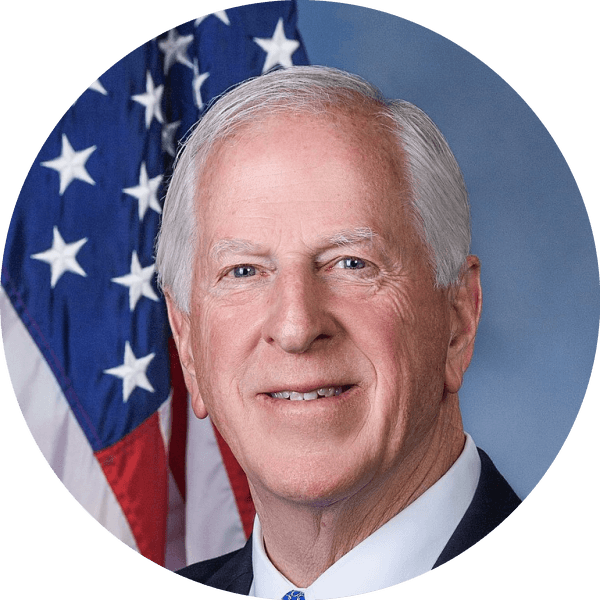
Mike Thompson
Democrat · CA

Ami Bera
Democrat · CA

Doris Matsui
Democrat · CA

John Garamendi
Democrat · CA

Mark DeSaulnier
Democrat · CA

Nancy Pelosi
Democrat · CA

Lateefah Simon
Democrat · CA

Eric Swalwell
Democrat · CA
Cosponsor Coverage Map
Committee Sponsors
Ways and Means Committee
18 of 45 committee members cosponsored


1 Democrats across this committee haven't cosponsored yet. Mobilize their constituents
H.R. 5390 Quick Facts
- Committee
- Ways and Means
- Chamber
- House
- Policy
- Labor and Employment
- Introduced
- Sep 16, 2025
Referred to the House Committee on Ways and Means.
Sep 16, 2025
Official Sources
H.R. 5390 Common Questions
How much would the FAMILY Act pay per month?
Between $580 and $4,000 per month in the first year, indexed to wages after that. The exact amount depends on your earnings — the formula replaces 85% of earnings up to $1,257/month, 69% of the next tier, and 50% up to $6,200/month.
Who qualifies for FAMILY Act paid leave?
Anyone with at least $2,000 in wages or self-employment income over the prior two years. That includes part-time workers, gig workers, and self-employed people. You do not need a specific employer or minimum hours worked per week.
Does the FAMILY Act cover leave for domestic violence?
Yes. H.R. 5390 covers leave for counseling, relocation, legal proceedings, medical care, school or childcare changes, and other steps after domestic violence, sexual assault, stalking, or sex trafficking — for yourself or a family member.
How many weeks of paid leave does the FAMILY Act provide?
Your caregiving hours in a 12-month benefit period are capped at 12 times your regular weekly work hours. For a 40-hour-per-week worker, that works out to about 12 weeks of full-time leave. Part-time workers get proportionally less.
Can self-employed workers get paid leave under the FAMILY Act?
Yes. Self-employment income counts the same as wages for eligibility purposes. If you have $2,000 or more in self-employment income over two years, you qualify. Your benefit amount is based on your self-employment earnings.
Which family members are covered under the FAMILY Act?
Spouses, state-recognized domestic partners, children of any age, parents, siblings, grandparents, grandchildren, in-laws, and anyone related by blood or affinity whose relationship is equivalent to family. Adult children and siblings are explicitly included.
Does the FAMILY Act protect your job while you're on leave?
Yes. Your employer must restore you to the same or equivalent position with the same pay and benefits. They must maintain your health insurance during leave. Any adverse action within 12 months is presumed retaliatory under the bill.
When would FAMILY Act benefits become available?
Applications could be filed starting 18 months after the bill is signed into law. Benefits can also be paid retroactively for qualified caregiving during the 90 days before you file your application.
Based on H.R. 5390 bill text
H.R. 5390 Bill Text
“To provide paid family and medical leave benefits to certain individuals, and for other purposes.”
Source: U.S. Government Publishing Office
Get notified when H.R. 5390 moves
Committee votes, floor action, cosponsor changes — straight to your inbox.
Bill alerts + Legisletter's monthly briefing. Unsubscribe anytime.
Labor and Employment Bills
9 related bills we're tracking
Protect America's Workforce Act




Received in the Senate.
Dec 15, 2025
Paycheck Fairness Act

Referred to the Committee on Education and Workforce, and in addition to the Committee on Oversight and Government Reform, for a period to be subsequently determined by the Speaker, in each case for consideration of such provisions as fall within the jurisdiction of the committee concerned.
Mar 25, 2025
Richard L. Trumka Protecting the Right to Organize Act of 2025




Referred to the House Committee on Education and Workforce.
Mar 5, 2025
Public Service Freedom to Negotiate Act of 2025


Referred to the House Committee on Education and Workforce.
Apr 8, 2025
Raise the Wage Act of 2025



Referred to the House Committee on Education and Workforce.
Apr 8, 2025
American Franchise Act





Placed on the Union Calendar, Calendar No. 702.
Sep 8, 2026
Healthy Families Act


Referred to the Committee on Education and Workforce, and in addition to the Committees on House Administration, and Oversight and Government Reform, for a period to be subsequently determined by the Speaker, in each case for consideration of such provisions as fall within the jurisdiction of the committee concerned.
Feb 12, 2026
Asunción Valdivia Heat Illness, Injury, and Fatality Prevention Act of 2025


Referred to the House Committee on Education and Workforce.
Jul 16, 2025
Workplace Violence Prevention for Health Care and Social Service Workers Act


Referred to the Committee on Education and Workforce, and in addition to the Committees on Energy and Commerce, and Ways and Means, for a period to be subsequently determined by the Speaker, in each case for consideration of such provisions as fall within the jurisdiction of the committee concerned.
Apr 1, 2025
Trending Right Now
Bills gaining momentum across Congress
North Platte Canteen Congressional Gold Medal Act




Referred to the House Committee on Financial Services.
Feb 21, 2025
Fit to Serve Act





Referred to the House Committee on Armed Services.
May 21, 2025
ASAP Act



Ordered to be Reported in the Nature of a Substitute by the Yeas and Nays: 40 - 0.
Sep 16, 2026
Tracking Labor and Employment in Congress? Monitor bills, track cosponsor momentum, and launch advocacy campaigns — all from one advocacy platform.