H.R. 4796: Restoring Essential Healthcare Act
Sponsor
Laura Friedman
Democrat · CA-30
The Medicaid ban expired. The unpaid year did not.
Why it matters
For one year, federal Medicaid stopped paying a narrow set of reproductive health providers for everything they did — contraception, cancer screening, STI testing, wellness visits. KFF found that in 2023, nearly one in five female Medicaid enrollees got their contraceptive care at a Planned Parenthood clinic. That restriction ran out on its own in July 2026, so the live question in H.R. 4796 is no longer whether the cutoff continues. It is whether the year of blocked claims behind it gets paid.
H.R. 4796 is seventeen lines long and does two things. It repeals section 71113 of Public Law 119-21 — the 2025 reconciliation law — and it says that any Medicaid care furnished by an entity that section blocked, between the day that law was enacted and the day this one would be, must be paid for as if the block had never been written.
Section 71113 named no organization. It defined a "prohibited entity" by four traits, measured as of October 1, 2025: a 501(c)(3) nonprofit, an essential community provider primarily delivering family planning and reproductive health care, one that provides abortions beyond the exceptions federal law already allows, and one that took in more than $800,000 in combined federal and state Medicaid reimbursement in fiscal 2023. Affiliates, subsidiaries, successors and clinics were swept in alongside it. KFF's tracking of the resulting litigation identifies the providers actually blocked as Planned Parenthood affiliates, Maine Family Planning and Health Imperatives.
The cutoff reached every service those providers billed Medicaid for, not only abortion. KFF found that in 2023, nearly one in five female Medicaid enrollees got their contraceptive care at a Planned Parenthood clinic.
The restriction ran for exactly one year from enactment and then lapsed in early July 2026 without Congress having to do anything. The courts did not shorten it. A district court enjoined the provision in July 2025, the First Circuit paused that injunction in September and blocked it outright that December, and the cutoff was in force for most of its life.
That calendar is what H.R. 4796 now turns on. The half of the bill that repeals the restriction has been overtaken by events — the restriction is already gone. What is left is the retroactive half: about a year of Medicaid claims that were never paid, which this bill would order paid.
The bill attaches no appropriation, no payment rate, no cap and no penalty. It covers care furnished under a state Medicaid plan and under a waiver of that plan, so managed care and demonstration arrangements are inside it. It offers no estimate of what reopening those claims would cost, and no CBO score has been published for it.
Bill Progress
Latest Action · Jul 29, 2025
Referred to the House Committee on Energy and Commerce.
H.R. 4796 Bill Summary
What H.R. 4796 actually does.
The one-year Medicaid cutoff comes off the books
H.R. 4796 repeals section 71113 of Public Law 119-21, the provision that barred federal Medicaid payments to providers meeting its four-part definition. The provision had already reached its own one-year expiration in July 2026; the repeal removes it from the statute rather than leaving it lapsed.
A year of blocked claims would be paid
For items and services those providers furnished between the enactment of Public Law 119-21 and the enactment of this bill, payment must be made as if the restriction had never been enacted. This is the operative half of the bill.
Waiver care counts, not just standard state plan care
The payment requirement reaches services furnished under a state Medicaid plan and under a waiver of that plan, which covers managed care and demonstration arrangements rather than fee-for-service alone.
The definition of who was blocked stays as written
The bill does not create or narrow a category of affected providers. It points back to the definition in the repealed provision to identify whose claims are covered by the retroactive payment.
No money, no rate and no penalty are attached
H.R. 4796 carries no appropriation, no funding cap, no reimbursement formula and no fine. Claims would be processed under the Medicaid payment rules that already apply.
Who benefits from H.R. 4796?
Patients at the clinics that were cut off
Planned Parenthood operates more than 600 health centers serving over 2 million patients a year, more than half of them covered by Medicaid, according to KFF. Restoring payment affects whether those centers can keep taking Medicaid patients at that scale.
The blocked providers themselves
KFF reports that more than a third of Planned Parenthood affiliates’ aggregate revenue came from federal Medicaid reimbursement in 2023. Maine Family Planning and Health Imperatives were also blocked. A year of that revenue is what the retroactive payment clause addresses.
The eleven states that covered the gap themselves
California, Colorado, Connecticut, Illinois, Massachusetts, Maine, New Jersey, New Mexico, New York, Oregon and Washington spent state-only dollars to keep affected providers operating through the cutoff, according to KFF. The bill directs payment for that window as though the restriction had never existed.
Who is affected by H.R. 4796?
State Medicaid agencies
States would need to identify roughly a year of denied or unbilled claims from the affected providers, reopen them, and pay them under normal Medicaid rules.
Managed care plans and billing operations
Plans, clearinghouses and provider billing staff would have to reconcile and resubmit claims that were denied or never filed because of the restriction, including claims furnished under waivers.
The Centers for Medicare & Medicaid Services
CMS issued guidance to states on implementing the restriction and would need to issue guidance on unwinding it and handling retroactive payment.
Members who backed the restriction
The provision expired on its own without a vote. Repealing it and paying the withheld claims would reverse both the policy and its financial effect, which is a different outcome than letting it lapse.
HR4796 Legislative Journey
House: Committee Action
Jul 29, 2025
Referred to the House Committee on Energy and Commerce.
About the Sponsor
Laura Friedman
Democrat, California's 30th congressional district · 1 years in Congress
Committees: Science, Space, and Technology, Transportation and Infrastructure
View full profile →
Cosponsors (155)
All 155 cosponsors are Democrats. Cosponsors represent 37 states: Alabama, Arizona, California, and 34 more.
Nikema Williams
Democrat · GA

Chris Pappas
Democrat · NH
Julia Brownley
Democrat · CA
Gilbert Cisneros
Democrat · CA
Ted Lieu
Democrat · CA

Doris Matsui
Democrat · CA

LaMonica McIver
Democrat · NJ
Mary Gay Scanlon
Democrat · PA
Brad Sherman
Democrat · CA
Rashida Tlaib
Democrat · MI
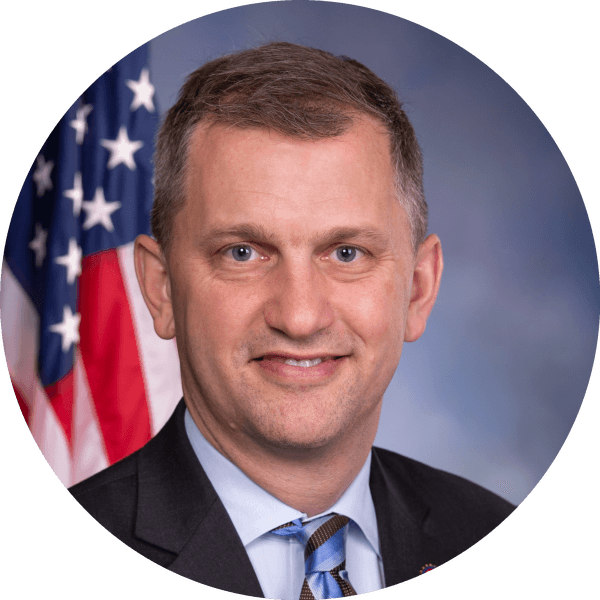
Sean Casten
Democrat · IL
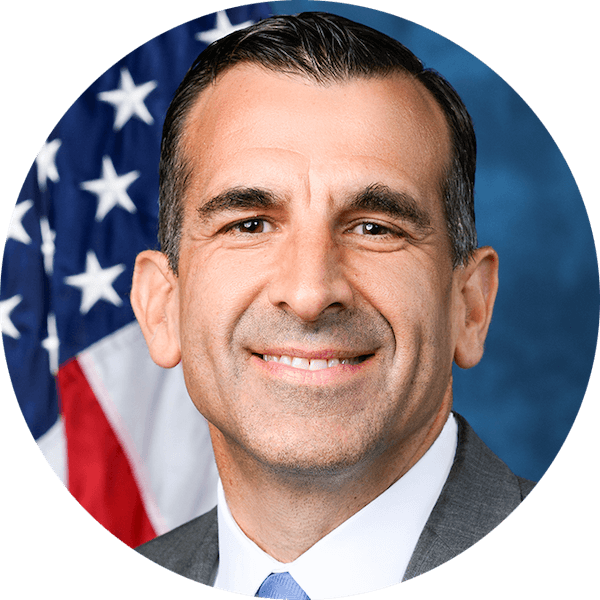
Sam Liccardo
Democrat · CA
Cosponsor Coverage Map
Committee Sponsors
Energy and Commerce Committee
20 of 54 committee members cosponsored


4 Democrats across this committee haven't cosponsored yet. Mobilize their constituents
What laws does H.R. 4796 change?
1 changes
Sections Repealed
71113 of Public Law 119-21
H.R. 4796 Quick Facts
- Committee
- Energy and Commerce
- Chamber
- House
- Policy
- Health
- Introduced
- Jul 29, 2025
Referred to the House Committee on Energy and Commerce.
Jul 29, 2025
Official Sources
Official status, actions, cosponsor list and committee referral for the Restoring Essential Healthcare Act.
The full seventeen-line text of the bill as introduced on July 29, 2025, published by the Government Publishing Office.
The 2025 reconciliation law containing section 71113, the one-year Medicaid payment prohibition this bill would repeal and its four-part definition of a prohibited entity.
Subsection (a)(4)(C) is what makes family planning services and supplies a Medicaid benefit, which is the category of care the payment cutoff reached.
The state plan the bill points to; subsection (a)(23) is the free-choice-of-provider requirement that governs which providers a Medicaid enrollee may use.
Section 1115 of the Social Security Act, the waiver authority behind the demonstration and managed care arrangements the bill explicitly covers.
The committee H.R. 4796 was referred to on July 29, 2025, where it has had no hearing or markup.
Official House site of the bill sponsor, Rep. Laura Friedman of California.
H.R. 4796 Common Questions
Which providers did the Medicaid payment ban actually apply to?
The 2025 reconciliation law did not name anyone. It blocked 501(c)(3) nonprofits that are essential community providers primarily delivering family planning and reproductive health care, that provide abortions beyond the exceptions federal law allows, and that took in over $800,000 in Medicaid reimbursement in fiscal 2023. KFF identifies the providers actually blocked as Planned Parenthood affiliates, Maine Family Planning and Health Imperatives.
Didn’t the Medicaid ban already expire on its own?
Yes. It ran for exactly one year from July 4, 2025 and lapsed in early July 2026 with no vote required. That is why the forward-looking half of H.R. 4796 no longer changes anything. What still matters is the retroactive half, which would pay for care delivered during that year.
Would H.R. 4796 pay for care that already happened?
That is its main effect. For items and services those providers furnished between the reconciliation law’s enactment and this bill’s enactment, payment would be made as if the restriction had never been enacted.
Did the ban block abortion coverage, or all care?
All of it. Federal Medicaid already limits abortion coverage under longstanding law. The 2025 restriction went further and blocked federal Medicaid payment to the covered providers for every service they billed — contraception, cancer screening, STI testing, wellness visits.
Did courts stop the Medicaid cutoff from taking effect?
Not for long. A district court enjoined the provision in July 2025. The First Circuit paused that injunction on September 11, 2025 and blocked it outright on December 12, 2025, and a separate suit brought by 22 states and D.C. was also cleared for enforcement that December. The cutoff was in force for most of its one-year life.
What did states do while federal payments were blocked?
Eleven states — California, Colorado, Connecticut, Illinois, Massachusetts, Maine, New Jersey, New Mexico, New York, Oregon and Washington — used state-only dollars to keep affected providers operating for their Medicaid enrollees, according to KFF. Other states did not backfill.
Are Medicaid waiver services covered by the payment fix?
Yes. The bill reaches care furnished under a state Medicaid plan and under a waiver of that plan, so managed care and demonstration arrangements are included rather than fee-for-service alone.
Does H.R. 4796 have a realistic chance of passing?
It has 155 cosponsors and all of them are Democrats. It was referred to the House Committee on Energy and Commerce on July 29, 2025 and has had no hearing or markup since. In a Republican-controlled House, attachment to a larger health package is a more likely route than a standalone vote.
Based on H.R. 4796 bill text
H.R. 4796 Bill Text
“To amend Public Law 119–21 to repeal the prohibition on making payments under the Medicaid program to certain entities.”
Source: U.S. Government Publishing Office
Get notified when H.R. 4796 moves
Committee votes, floor action, cosponsor changes — straight to your inbox.
Bill alerts + Legisletter's monthly briefing. Unsubscribe anytime.
Health Bills
9 related bills we're tracking
Nancy Gardner Sewell Medicare Multi-Cancer Early Detection Screening Coverage Act

Reported (Amended) by the Committee on Ways and Means. H. Rept. 119-333, Part I.
Oct 3, 2025
Mikaela Naylon Give Kids a Chance Act



Received in the Senate.
Dec 2, 2025
Improving Seniors’ Timely Access to Care Act of 2025
Ordered to be Reported in the Nature of a Substitute by the Yeas and Nays: 42 - 0.
Jul 15, 2026
CONNECT for Health Act of 2025


Referred to the Committee on Energy and Commerce, and in addition to the Committee on Ways and Means, for a period to be subsequently determined by the Speaker, in each case for consideration of such provisions as fall within the jurisdiction of the committee concerned.
Jun 26, 2025
ASAP Act

Ordered to be Reported in the Nature of a Substitute by the Yeas and Nays: 40 - 0.
Sep 16, 2026
Momnibus Act



Referred to the Subcommittee on Health.
Apr 20, 2026
Ensuring Lasting Smiles Act


Referred to the Committee on Energy and Commerce, and in addition to the Committees on Education and Workforce, and Ways and Means, for a period to be subsequently determined by the Speaker, in each case for consideration of such provisions as fall within the jurisdiction of the committee concerned.
May 8, 2025
Right to Contraception Act
Referred to the House Committee on Energy and Commerce.
Feb 5, 2025
Women’s Health Protection Act of 2025


Referred to the Committee on Energy and Commerce, and in addition to the Committee on the Judiciary, for a period to be subsequently determined by the Speaker, in each case for consideration of such provisions as fall within the jurisdiction of the committee concerned.
Jun 24, 2025
Trending Right Now
Bills gaining momentum across Congress
North Platte Canteen Congressional Gold Medal Act


Referred to the House Committee on Financial Services.
Feb 21, 2025
America’s Olympic and Paralympic Games Commemorative Coins Act



Referred to the House Committee on Financial Services.
Jul 14, 2025
Fit to Serve Act
Referred to the House Committee on Armed Services.
May 21, 2025
Tracking Health in Congress? Monitor bills, track cosponsor momentum, and launch advocacy campaigns — all from one advocacy platform.