H.R. 2086: Rights for the TSA Workforce Act
Sponsor

Bennie Thompson
Democrat · MS-2
TSA workers screen 2 million passengers a day — without basic federal job protections
Why it matters
152 bipartisan cosponsors. More than 60,000 TSA employees operate under a separate personnel system created after 9/11 that gives them weaker union rights, fewer appeal protections, and less predictable pay than virtually every other federal employee. H.R. 2086 moves them into the standard civil service system under Title 5 and locks in collective bargaining rights within 90 days — before any administration can reverse course.
H.R. 2086 forces a full conversion. Every TSA position — screeners, Federal Air Marshals, inspectors, all of them — moves into the same Title 5 personnel system that covers most federal workers. The Secretary of Homeland Security picks the conversion date, but the deadline is hard: no later than December 31, 2025.
The bill works on two clocks. The fast clock starts 90 days after enactment: screeners get federal union rights under Chapter 71 and employee appeal protections under Chapter 77. That means the ability to collectively bargain and challenge disciplinary actions through the same process available to other federal employees. The slow clock is the full system conversion — pay scales, job classifications, leave rules, the whole structure.
During the transition, TSA is frozen. The agency cannot rewrite its existing personnel rules or create new ones, with narrow exceptions for annual pay adjustments, genuinely unresolved issues, and emergencies tied to transportation security threats. Even those exceptions require notifying Congress within 7 days.
To make the conversion work, the Office of Personnel Management has to build new federal job classifications for TSA-specific roles — Transportation Security Officers, Federal Air Marshals, Transportation Security Inspectors. The bill explicitly protects pay: no employee's adjusted basic pay or law enforcement availability pay can be reduced because of the switch. Federal Air Marshals get LEAP and overtime pay matching what they'd receive under the Fair Labor Standards Act.
The bill also preserves the existing collective bargaining unit. The union certified by the Federal Labor Relations Authority in 2011 stays in place as the exclusive representative for screeners, with bargaining at the national level by default. Local bargaining can happen only by mutual consent.
One thing the bill does not do: it does not give TSA employees the right to strike. Existing federal prohibitions on striking against the government remain in full effect.
Bill Progress
Latest Action · Mar 11, 2025
Assigned to Subcommittee on Transportation and Maritime Security. for review
H.R. 2086 Bill Summary
What H.R. 2086 actually does.
Every TSA employee moves into the standard federal system
All TSA positions convert from the agency's standalone personnel system to Title 5 — the same framework covering park rangers, VA nurses, and most other federal workers. Deadline: December 31, 2025.
Union and appeal rights arrive in 90 days
Screeners gain federal collective bargaining rights and the ability to appeal disciplinary actions through standard channels within 90 days of enactment — before the full system conversion is complete.
TSA's special personnel authority ends permanently
The legal provisions that let TSA build and run its own custom hiring, pay, and labor system — authorities originally granted after 9/11 — are repealed outright.
No pay cuts during the switch
No TSA employee can see their adjusted basic pay or law enforcement availability pay reduced as a result of the conversion. Years of service in TSA pay bands count toward General Schedule step placement.
Rules are frozen during the transition
From enactment until the conversion date, TSA cannot rewrite existing personnel policies or create new ones — with narrow exceptions for annual pay updates, unresolved issues, and genuine security emergencies (Congress must be notified within 7 days).
Federal Air Marshals get LEAP and overtime protections
Air Marshals receive law enforcement availability pay and overtime at rates no lower than what they'd get under the Fair Labor Standards Act — putting them on equal footing with other federal law enforcement officers.
Who benefits from H.R. 2086?
TSA screeners — roughly 47,000 Transportation Security Officers
They gain the same union rights, appeal protections, and predictable pay scales that most federal employees already have. No more personnel rules that can be rewritten by a new administrator.
Federal Air Marshals and Transportation Security Inspectors
Marshals get formal LEAP and overtime protections. Inspectors move into classified federal positions with standard career ladders instead of TSA-specific pay bands that vary by administration.
Federal employee unions, especially AFGE
The American Federation of Government Employees — certified as the screeners' exclusive representative in 2011 — gets its bargaining rights anchored in federal statute rather than agency policy that can be revoked.
Air travelers who want experienced screeners
TSA has long struggled with high turnover. If standard protections improve retention, passengers benefit from a more experienced and stable checkpoint workforce.
Who is affected by H.R. 2086?
DHS and TSA leadership
The department loses its special authority to design custom personnel rules for TSA. All workforce management must follow standard federal rules — less flexibility to reorganize, reassign, or discipline outside normal channels.
Office of Personnel Management
OPM has to build entirely new federal job series and classification standards for TSA-specific roles — a significant administrative lift that must be completed within 180 days or by the conversion deadline.
Future administrations
Once TSA employees are in Title 5, rolling back their protections requires an act of Congress — not just an executive decision. This bill is explicitly designed to prevent future administrations from reversing course unilaterally.
Congressional oversight committees
Four committees receive notification rights when TSA uses any exception during the transition period. The GAO also conducts three separate mandatory reviews — of recruitment, implementation, and promotion equity.
HR2086 Legislative Journey
House: Committee Action
Mar 11, 2025
Referred to the Subcommittee on Transportation and Maritime Security.
About the Sponsor
Bennie Thompson
Democrat, Mississippi's 2nd congressional district · 33 years in Congress
Committees: Homeland Security
View full profile →
Cosponsors (190)
This bill has 190 cosponsors: 181 Democrats, 9 Republicans. Cosponsors represent 37 states: Alabama, Arizona, California, and 34 more.

Gerald Connolly
Democrat · VA

Rosa DeLauro
Democrat · CT

LaMonica McIver
Democrat · NJ

Lauren Underwood
Democrat · IL

Timothy Kennedy
Democrat · NY

Don Bacon
Republican · NE

Brian Fitzpatrick
Republican · PA

Jefferson Van Drew
Republican · NJ

Nicole Malliotakis
Republican · NY

Nick LaLota
Republican · NY

Michael Lawler
Republican · NY
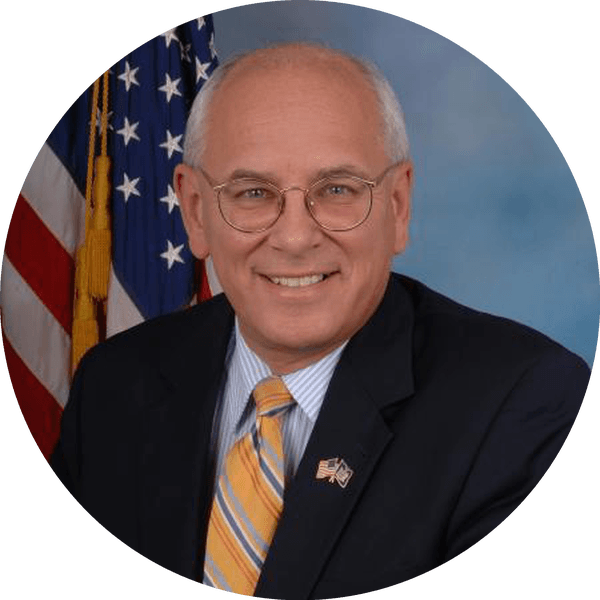
Paul Tonko
Democrat · NY
Cosponsor Coverage Map
Committee Sponsors
Homeland Security Committee
15 of 33 committee members cosponsored


Oversight and Government Reform Committee
19 of 47 committee members cosponsored


4 Democrats across these committees haven't cosponsored yet. Mobilize their constituents
What laws does H.R. 2086 change?
1 changes
Sections Repealed
111(d) of Aviation and Transportation Security Act (Public Law 107-71; 49 U.S.C. 44935 note)
H.R. 2086 Quick Facts
- Committee
- Homeland Security
- Chamber
- House
- Policy
- Government Operations and Politics
- Introduced
- Mar 11, 2025
Assigned to Subcommittee on Transportation and Maritime Security. for review
Mar 11, 2025
Official Sources
Full bill text, actions, cosponsors, and status tracking for the Rights for the TSA Workforce Act in the 119th Congress
DHS announcement ending collective bargaining for Transportation Security Officers — the action this bill is designed to reverse and prevent
TSA's implementation of the DHS decision — rescinding the 2024 CBA and eliminating union representation for 47,000 screeners
The federal labor-management statute this bill would apply to TSA employees — collective bargaining rights, union recognition, and grievance procedures
OPM must build new job classification standards for TSA roles (TSO, Federal Air Marshal, Inspector) within 180 days of enactment under Sec. 3(c)(3)
Federal Labor Relations Authority announcement certifying AFGE as the exclusive bargaining representative for screeners — the union preserved by this bill
NFC must convert TSA payroll and HR systems to Title 5 compliance under Sec. 3(c)(3) — handles payroll for 590,000+ federal employees across 156 agencies
Sec. 12 requires TSA to analyze FEVS results annually to measure job satisfaction and retention — OPM administers this survey government-wide
H.R. 2086 Common Questions
When would TSA employees get union rights under H.R. 2086?
Within 90 days of enactment. Screeners gain federal collective bargaining rights under Chapter 71 and employee appeal protections under Chapter 77 on that fast timeline — before the full system conversion is complete.
Can TSA cut employee pay during the Title 5 conversion?
No. The bill explicitly prohibits reducing any employee's adjusted basic pay or law enforcement availability pay because of the conversion. Years of service in TSA pay bands also count toward General Schedule step placement.
What is the deadline for TSA's full conversion to Title 5?
December 31, 2025. The Secretary of Homeland Security picks the exact date, but the bill sets that as the hard deadline. After that date, all TSA personnel systems cease to exist and employees fall under standard federal rules.
Can TSA screeners strike under H.R. 2086?
No. The bill explicitly preserves existing federal prohibitions on striking against the government. TSA employees gain union and appeal rights but cannot legally strike — same as other federal workers.
Does H.R. 2086 give Federal Air Marshals overtime and LEAP pay?
Yes. Starting on the conversion date, Federal Air Marshals receive law enforcement availability pay and overtime at rates no lower than what they'd get under the Fair Labor Standards Act — putting them on equal footing with other federal law enforcement.
Can TSA rewrite its personnel rules after the bill passes?
Generally no. The bill freezes existing TSA personnel policies from enactment until conversion. Narrow exceptions exist for annual pay adjustments, genuinely unresolved issues, and security emergencies — but emergency exceptions require notifying Congress within 7 days.
Is bargaining for TSA employees national or local under H.R. 2086?
National by default. Local-level bargaining can supplement a national agreement, but only by mutual consent of the union and the local Federal Security Director. Neither side can force local negotiations.
What happens to pending TSA grievances when the bill takes effect?
Employees with pending grievances or appeals can choose: move them into the standard Title 5 process, or keep them within TSA's existing system. Either way, all timelines are paused until Chapter 71 and 77 rights become available.
Based on H.R. 2086 bill text
H.R. 2086 Bill Text
“To enhance the security operations of the Transportation Security Administration and stability of the transportation security workforce by applying the personnel system under title 5, United States Code, to employees of the Transportation Security Administration, and for other purposes.”
Source: U.S. Government Publishing Office
Get notified when H.R. 2086 moves
Committee votes, floor action, cosponsor changes — straight to your inbox.
Bill alerts + Legisletter's monthly briefing. Unsubscribe anytime.
Government Operations and Politics Bills
9 related bills we're tracking
Protect Our Letter Carriers Act of 2025



Referred to the Committee on the Judiciary, and in addition to the Committee on Oversight and Government Reform, for a period to be subsequently determined by the Speaker, in each case for consideration of such provisions as fall within the jurisdiction of the committee concerned.
Feb 6, 2025
John R. Lewis Voting Rights Advancement Act of 2025



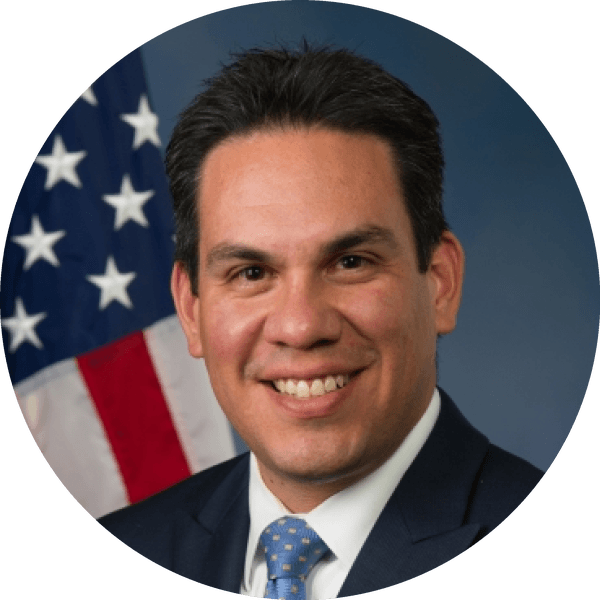

Referred to the House Committee on the Judiciary.
Mar 5, 2025
Washington, D.C. Admission Act


Referred to the Committee on Oversight and Government Reform, and in addition to the Committees on Rules, Armed Services, the Judiciary, and Energy and Commerce, for a period to be subsequently determined by the Speaker, in each case for consideration of such provisions as fall within the jurisdiction of the committee concerned.
Jan 3, 2025
DISCLOSE Act of 2026

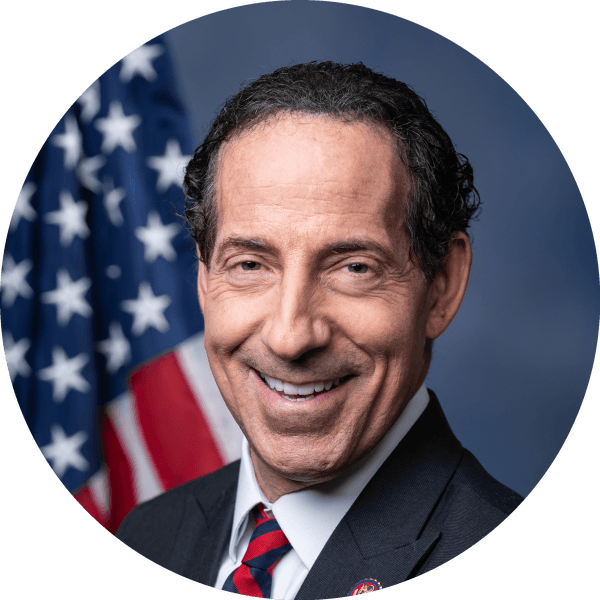
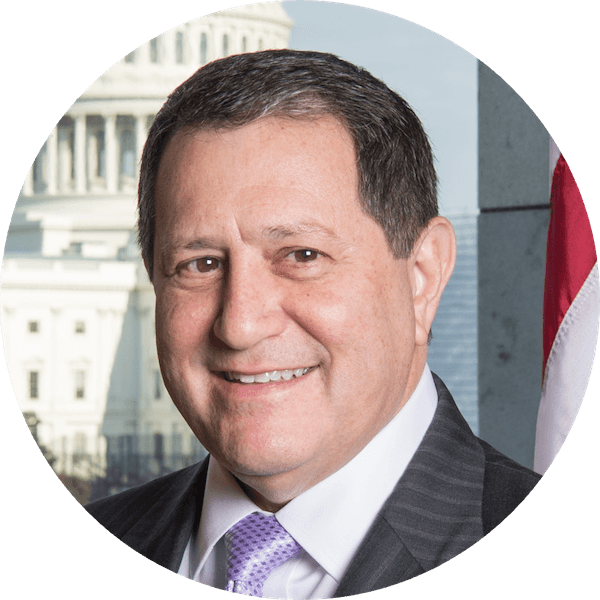


Referred to the Committee on House Administration, and in addition to the Committees on Ways and Means, and the Judiciary, for a period to be subsequently determined by the Speaker, in each case for consideration of such provisions as fall within the jurisdiction of the committee concerned.
Mar 4, 2026
Federal Retirement Fairness Act



ASSUMING FIRST SPONSORSHIP - Ms. Randall asked unanimous consent that she may hereafter be considered as the first sponsor of H.R. 1522, a bill originally introduced by Representative Connolly, for the purpose of adding cosponsors and requesting reprintings pursuant to clause 7 of rule XII. Agreed to without objection.
Jul 22, 2025
FIND Act





Referred to the House Committee on Oversight and Government Reform.
Jan 3, 2025
Fair Pay for Federal Contractors Act of 2025


Referred to the Committee on Appropriations, and in addition to the Committee on Oversight and Government Reform, for a period to be subsequently determined by the Speaker, in each case for consideration of such provisions as fall within the jurisdiction of the committee concerned.
Sep 30, 2025
Saving the Civil Service Act

ASSUMING FIRST SPONSORSHIP - Mr. Walkinshaw asked unanimous consent that he may hereafter be considered as the first sponsor of H.R. 492, a bill originally introduced by Representative Connolly, for the purpose of adding cosponsors and requesting reprintings pursuant to clause 7 of rule XII. Agreed to without objection.
Sep 16, 2025
SAVE America Act





Referred to the House Committee on House Administration.
Jan 30, 2026
Trending Right Now
Bills gaining momentum across Congress
North Platte Canteen Congressional Gold Medal Act




Referred to the House Committee on Financial Services.
Feb 21, 2025
Fit to Serve Act





Referred to the House Committee on Armed Services.
May 21, 2025
ASAP Act



Ordered to be Reported in the Nature of a Substitute by the Yeas and Nays: 40 - 0.
Sep 16, 2026
Tracking Government Operations and Politics in Congress? Monitor bills, track cosponsor momentum, and launch advocacy campaigns — all from one advocacy platform.