H.R. 22: SAVE Act
Sponsor

Chip Roy
Republican · TX-21
The SAVE Act would make your birth certificate a voting requirement
Why it matters
110 House Republicans backed a bill that passed 220-208 to require documentary proof of U.S. citizenship for voter registration in federal elections. Every state would have 30 days to build a noncitizen identification program, and federal agencies would have just 24 hours to respond to verification requests — all with zero new federal funding.
H.R. 22 rewrites the National Voter Registration Act of 1993 to require documentary proof of U.S. citizenship before any state can accept a voter registration for federal elections. The bill defines exactly which documents qualify: a U.S. passport, a REAL ID-compliant license that indicates citizenship, a military ID paired with service records showing U.S. birth, or a government-issued photo ID combined with a certified birth certificate, naturalization papers, adoption decree, consular report of birth abroad, or an American Indian Card classified as 'KIC.'
The birth certificate requirements alone are unusually specific. The bill requires seven elements: issuance by the jurisdiction of birth, filing with the state vital records office, the applicant's full name, date of birth, and place of birth, at least one parent's full name, the signature of an authorized official, the filing date, and the official seal.
For people who register at the DMV, the motor vehicle office would take on a new role: verifying citizenship and collecting the required documents before completing voter registration. For people who register by mail, the form alone would no longer be enough. They would have to appear in person at an election office before the state's registration deadline — or at the polling place in states that allow same-day registration — to present their documents.
The bill requires every state to set up a program within 30 days to identify noncitizens on voter rolls, using data from DHS, Social Security, state DMVs, or other databases. Federal agencies would be required to respond to state verification requests within 24 hours, at no charge. If DHS determines through this process that a noncitizen is registered, the bill directs the agency to investigate whether to begin removal proceedings.
People who lack any of the listed documents would not be automatically turned away. The bill requires states to create an alternative process where applicants can submit other evidence of citizenship along with a sworn attestation under penalty of perjury. A state or local official would then decide whether citizenship has been sufficiently established and sign an affidavit explaining the basis for that decision.
The bill also creates a private right of action — meaning any person could sue an election official who registers someone without the required documents. Election officials who do so would also face criminal penalties. Information collected during DMV-based registration could be used as evidence in criminal or immigration proceedings against anyone who knowingly lies about their eligibility.
The Election Assistance Commission would have 10 days after enactment to issue implementation guidance to every state. The Paperwork Reduction Act would not apply to any voter registration materials created or modified under the law.
Bill Progress
Latest Action · Apr 10, 2025
Passed the House, received in Senate
Visual Summary
H.R. 22 at a Glance
<div style="max-width:100%;">
  <img src="https://legisletter.org/images/bill-infographics/hr22-editorial-20251204-104725.png" alt="HR22 Visual Summary - SAVE Act" style="max-width:100%;height:auto;display:block;" />
  <p style="margin:8px 0 0;font-size:14px;color:#555;text-align:center;">
    <a href="https://legisletter.org/bill/hr22-save-act" target="_blank" rel="noopener noreferrer" style="color:inherit;text-decoration:underline;">HR22 Visual Summary – SAVE Act</a>
    <span> via </span>
    <a href="https://legisletter.org" target="_blank" rel="noopener noreferrer" style="color:inherit;text-decoration:none;font-weight:500;">legisletter.org</a>
  </p>
</div>H.R. 22 Bill Summary
What H.R. 22 actually does.
Your voter registration now requires physical documents
States can no longer accept a voter registration for federal elections unless you present one of a specific list of citizenship documents in person. Signing a form under penalty of perjury is no longer sufficient on its own.
Mail registration becomes a two-step process
If you register to vote by mail, that form alone does not complete your registration. You must later appear in person at an election office — or at the polls in same-day registration states — with your citizenship documents before your registration counts for federal elections.
Your DMV visit becomes a citizenship checkpoint
When you register to vote through a driver's license application, the motor vehicle office must verify your citizenship and collect approved documents before processing the registration. The familiar 'check this box to register' step now comes with a document requirement.
States get 30 days to build a noncitizen detection program
Every state must establish a program to identify noncitizens on voter rolls within 30 days, using data from DHS, Social Security, state DMVs, or other databases. States must remove any noncitizens found on the rolls immediately upon receipt of verified information.
A safety valve for people without documents
If you lack the listed documents, states must offer an alternative process. You can submit other evidence of citizenship along with a sworn statement under penalty of perjury, and a state or local official decides whether you have sufficiently established citizenship.
Election officials face lawsuits and criminal charges
Anyone can sue an election official who registers a voter without the required citizenship documents. Officials who do so also face criminal penalties under the National Voter Registration Act. Federal employees who help noncitizens register face separate criminal liability.
Who benefits from H.R. 22?
Voters concerned about noncitizen registration
The bill replaces the current honor system — a signed statement under penalty of perjury — with a document-based verification regime covering passports, birth certificates, naturalization papers, and more. Supporters argue this closes a gap that self-attestation alone cannot.
Election officials who want clear verification standards
County clerks and registrars currently operate under a patchwork of state rules about what to accept. The bill gives them a single federal list of approved documents and a structured process for handling edge cases, reducing discretion and legal exposure.
People who register through the alternative evidence process
The bill requires every state to create a pathway for applicants who lack the standard documents. Rather than being turned away outright, they can submit other evidence plus a sworn attestation, and an official must evaluate their claim and explain the decision in writing.
Who is affected by H.R. 22?
Eligible citizens without easy access to their documents
According to the Brennan Center for Justice, roughly 11% of U.S. citizens lack a current government-issued photo ID. For people whose birth certificates were lost, never filed, or contain errors — common for older Americans, those born in rural areas, and adoptees — the bill adds a multi-step process to exercise a right they previously accessed with a signature.
People who register to vote by mail
Mail registration currently lets you complete the process from home. Under this bill, mailing the form is only the first step. You must then appear in person with documents before your state's registration deadline, or your registration will not count for federal elections.
State and county election offices
States would need to build document verification workflows, train staff on seven categories of acceptable proof, set up data-sharing pipelines with DHS and Social Security, and create an alternative evidence process — all within 30 days and with no dedicated federal funding.
DMV workers
Motor vehicle offices would take on a new role as citizenship verification points. Staff who currently process license applications would now also be responsible for collecting and evaluating citizenship documents before completing voter registrations.
What Congress Is Saying
61 legislators have weighed in on H.R. 22 — 33 Democrats, 28 Republicans.
Mr. Speaker, I rise in strong support of this rules package for the 119th Congress. As my colleagues have said before, the American people sent us a mandate in November to deliver on President Trump's America First agenda, focused on reining in the Federal Government, securing our borders, protecting the freedom of individuals, and ending, once and for all, the woke policies of the left that are holding our country back. This package before us will empower House Republicans to build off the important work begun last Congress.
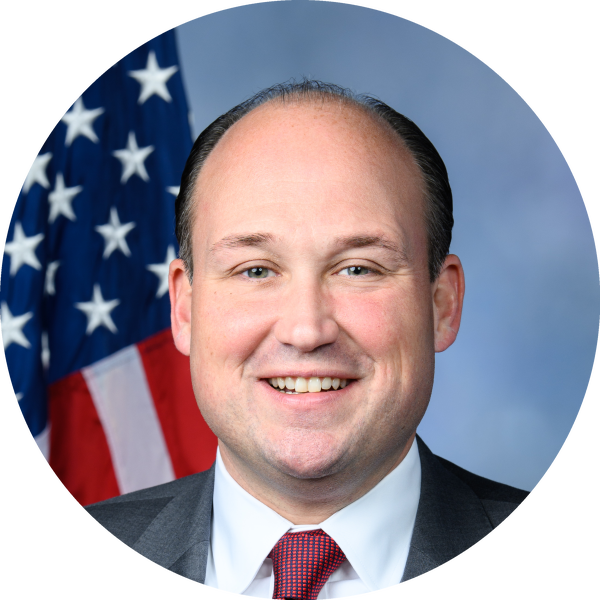
H.R. 22 also appeared in 4 more House floor references, 1 more Senate floor reference, 1 in the Extensions of Remarks, and 15 routine cosponsor filings.
HR22 Legislative Journey
House: Passed 220-208
Apr 10, 2025
On passage Passed by the Yeas and Nays: 220 - 208 (Roll no. 102). (text: CR H1569-1571)
+12 more actions this day
House: Passed
Apr 8, 2025
Rule H. Res. 294 passed House.
House: Committee Action
Apr 7, 2025
Rules Committee Resolution H. Res. 294 Reported to House. Rule provides for consideration of S.J. Res. 18, S.J. Res. 28, H.R. 1526 and H.R. 22. The resolution provides for consideration of H.R. 22, H.R. 1526, S.J. Res. 18, and S.J. Res. 28 under a closed rule. The resolution provides for one hour of debate on each measure and one motion to recommit on H.R. 22 and H.R. 1526, and one motion to commit on S.J. Res. 18 and S.J. Res. 28.
House: Committee Action
Apr 1, 2025
Rules Committee Resolution H. Res. 282 Reported to House. Rule provides for consideration of H.R. 22, H.R. 1526, S.J. Res. 18 and S.J. Res. 28. The resolution provides for consideration of H.R. 22, H.R. 1526, S.J. Res. 18, and S.J. Res. 28 under a closed rule. The resolution provides for one hour of debate on each measure and one motion to recommit on H.R. 22 and H.R. 1526, and one motion to commit on S.J. Res. 18 and S.J. Res. 28. The resolution also provides that H. Res. 23 and H. Res. 164 are laid on the table.
House: Committee Action
Jan 3, 2025
Referred to the House Committee on House Administration.
About the Sponsor
Chip Roy
Republican, Texas's 21st congressional district · 7 years in Congress
Committees: Rules, the Judiciary, the Budget
View full profile →
Cosponsors (110)
All 110 cosponsors are Republicans. Cosponsors represent 32 states: Alabama, Arkansas, Arizona, and 29 more.

Andrew Garbarino
Republican · NY

Nicole Malliotakis
Republican · NY

Brad Finstad
Republican · MN

Andrew Clyde
Republican · GA

Clay Higgins
Republican · LA

Diana Harshbarger
Republican · TN

Nancy Mace
Republican · SC

Kat Cammack
Republican · FL

Eric Burlison
Republican · MO

Andrew Ogles
Republican · TN

Harriet Hageman
Republican · WY

Russ Fulcher
Republican · ID
Cosponsor Coverage Map
Committee Sponsors
Committee on House Administration
5 of 12 committee members cosponsored


3 Republicans across this committee haven't cosponsored yet. Mobilize their constituents
What laws does H.R. 22 change?
8 key amendments · 9 total changes
National Voter Registration Act of 1993, Section 3 (52 U.S.C. 20502)
As used(a) IN GENERAL.—As usedWhat this means: This formally creates a subsection structure in the definitions section, paving the way for new defined terms like 'documentary proof of United States citizenship.'
National Voter Registration Act of 1993, Section 3 (52 U.S.C. 20502)
''(b) DOCUMENTARY PROOF OF UNITED STATES CITIZENSHIP.—As used in this Act, the term 'documentary proof of United States citizenship' means, with respect to an applicant for voter registration, any of the following:
''(1) A form of identification issued consistent with the requirements of the REAL ID Act of 2005 that indicates the applicant is a citizen of the United States.
''(2) A valid United States passport.
''(3) The applicant's official United States military identification card, together with a United States military record of service showing that the applicant's place of birth was in the United States.
''(4) A valid government-issued photo identification card issued by a Federal, State or Tribal government showing that the applicant's place of birth was in the United States.
''(5) A valid government-issued photo identification card issued by a Federal, State or Tribal government other than an identification described in paragraphs (1) through (4), but only if presented together with one or more of the following:
''(A) A certified birth certificate issued by a State, a unit of local government in a State, or a Tribal government which—
''(i) was issued by the State, unit of local government, or Tribal government in which the applicant was born;
''(ii) was filed with the office responsible for keeping vital records in the State;
''(iii) includes the full name, date of birth, and place of birth of the applicant;
''(iv) lists the full names of one or both of the parents of the applicant;
''(v) has the signature of an individual who is authorized to sign birth certificates on behalf of the State, unit of local government, or Tribal government in which the applicant was born;
''(vi) includes the date that the certificate was filed with the office responsible for keeping vital records in the State; and
''(vii) has the seal of the State, unit of local government, or Tribal government that issued the birth certificate.
''(B) An extract from a United States hospital Record of Birth created at the time of the applicant's birth which indicates that the applicant's place of birth was in the United States.
''(C) A final adoption decree showing the applicant's name and that the applicant's place of birth was in the United States.
''(D) A Consular Report of Birth Abroad of a citizen of the United States or a certification of the applicant's Report of Birth of a United States citizen issued by the Secretary of State.
''(E) A Naturalization Certificate or Certificate of Citizenship issued by the Secretary of Homeland Security or any other document or method of proof of United States citizenship issued by the Federal government pursuant to the Immigration and Nationality Act.
''(F) An American Indian Card issued by the Department of Homeland Security with the classification 'KIC'.''
What this means: This adds a detailed statutory definition of acceptable 'documentary proof of United States citizenship' that applicants must present to register to vote in federal elections.
National Voter Registration Act of 1993, Section 4(a) and new 4(b) (52 U.S.C. 20503)
in subsection (a), the cross-reference "subsection (b)" (the prior text merely referred to "subsection (b)")in subsection (a), "subsection (c)" and a new subsection: ''(b) REQUIRING APPLICANTS TO PRESENT DOCUMENTARY PROOF OF UNITED STATES CITIZENSHIP.—Under any method of voter registration in a State, the State shall not accept and process an application to register to vote in an election for Federal office unless the applicant presents documentary proof of United States citizenship with the application.''What this means: This redesigns the section and imposes a nationwide rule that no voter registration for federal elections may be accepted or processed unless the applicant provides documentary proof of U.S. citizenship.
National Voter Registration Act of 1993, Section 5(a)(1) (52 U.S.C. 20504(a)(1))
"Each State motor vehicle driver's license application""Subject to the requirements under section 8(j), each State motor vehicle driver's license application"What this means: This makes state motor-vehicle-based voter registration explicitly subject to new requirements that will be set out in section 8(j), tightening how DMV-linked voter registration operates.
National Voter Registration Act of 1993, Section 5(c)(2)(B) (52 U.S.C. 20504(c)(2)(B))
In clause (i), nothing; in clause (ii), the existing ending without a conjunction(technical edits to clause (i) and (ii) to add 'and') and a new clause: ''(iii) verify that the applicant is a citizen of the United States;''What this means: This requires that when voter registration is offered through driver's license applications, the State must verify that the applicant is a U.S. citizen as part of that process.
National Voter Registration Act of 1993, Section 5(c)(2)(C)(i) (52 U.S.C. 20504(c)(2)(C)(i))
"(including citizenship)"", including the requirement that the applicant provides documentary proof of United States citizenship"What this means: This clarifies that the driver's-license-based voter registration form must inform applicants specifically about the requirement to provide documentary proof of U.S. citizenship, not just a generic statement about citizenship.
National Voter Registration Act of 1993, Section 5(c)(2)(D)(iii) (52 U.S.C. 20504(c)(2)(D)(iii))
; and, other than as evidence in a criminal proceeding or immigration proceeding brought against an applicant who knowingly attempts to register to vote and knowingly makes a false declaration under penalty of perjury that the applicant meets the eligibility requirements to register to vote in an election for Federal office; and''What this means: This creates an explicit exception allowing certain driver's-license-voter-registration information to be used as evidence in criminal or immigration cases against people who deliberately lie about their eligibility to register.
National Voter Registration Act of 1993, Section 6 (52 U.S.C. 20505)
Section 6(a)(1): "Each State shall accept and use" and "Federal Election Commission"; Section 6(c)(1) previously had only subparagraphs (A) and (B) and no citizenship-proof ground; Section 6 had no subsection (e).Section 6(a)(1): "Subject to the requirements under section 8(j), each State shall accept and use" and "Election Assistance Commission"; Section 6(b): new sentence "The chief State election official of a State shall take such steps as may be necessary to ensure that residents of the State are aware of the requirement to provide documentary proof of United States citizenship to register to vote in elections for Federal office in the State."; Section 6(c)(1)(C): "(C) the person did not provide documentary proof of United States citizenship when registering to vote.''; and a new subsection 6(e) titled "ENSURING PROOF OF UNITED STATES CITIZENSHIP" requiring mail applicants to present documentary proof in person by specified deadlines, mandating notice of this requirement, and requiring reasonable accommodations for individuals with disabilities.What this means: These changes overhaul the federal mail voter registration process so that states must condition registration on in-person presentation of documentary proof of citizenship, notify applicants of this requirement, and ensure accessibility, while also shifting oversight references from the FEC to the Election Assistance Commission.
+ 1 more changes in the full bill text
H.R. 22 Quick Facts
- Committee
- House Administration
- Chamber
- House
- Policy
- Government Operations and Politics
- Introduced
- Jan 3, 2025
Passed the House, received in Senate
Apr 10, 2025
Official Sources
Full bill text, actions, cosponsors, and status tracking for the SAVE Act
DOJ Civil Rights Division overview of the law H.R. 22 amends
The Systematic Alien Verification for Entitlements system referenced in the bill for citizenship verification
How the SAVE system works, what it verifies, and which agencies use it
The federal voter registration form the bill modifies to require documentary proof of citizenship
The agency required to issue implementation guidance within 10 days of enactment
DHS information on the REAL ID Act, which sets standards for the ID documents the bill accepts as proof of citizenship
USCIS guidance on the naturalization certificates and certificates of citizenship accepted under the bill
H.R. 22 Common Questions
What documents count as proof of citizenship under H.R. 22?
The bill accepts a U.S. passport, a REAL ID-compliant license that indicates citizenship, a military ID with service records showing U.S. birth, or a government-issued photo ID combined with one of several supporting documents: a certified birth certificate (meeting seven specific requirements), a hospital birth record, a final adoption decree, a Consular Report of Birth Abroad, naturalization papers, or an American Indian Card classified as 'KIC.'
What happens if I don't have any of the listed citizenship documents?
You would not be automatically turned away. The bill requires every state to create an alternative process where you can submit other evidence of citizenship along with a sworn statement under penalty of perjury. A state or local official then decides whether your citizenship has been sufficiently established and must sign an affidavit explaining that decision.
Can I still register to vote by mail under the SAVE Act?
You can mail in the registration form, but it would no longer complete your registration on its own. You would still need to appear in person at an election office with your citizenship documents before your state's registration deadline. In states that allow same-day registration, you could present documents at the polling place instead.
Does the SAVE Act change what happens when you register to vote at the DMV?
Yes. Motor vehicle offices would be required to verify your citizenship and collect approved documents before processing your voter registration. The current process — where you check a box on your license application to register — would now include a document verification step.
Could an election official be sued or charged for not following H.R. 22?
Yes, both. The bill creates a private right of action, meaning any person could sue an election official who registers a voter without the required citizenship documents. Officials who do so also face criminal penalties. Federal employees who provide material assistance to a noncitizen attempting to register face separate criminal liability.
How quickly would states have to implement the SAVE Act?
The bill takes effect immediately upon enactment. States would have 30 days to establish a program to identify noncitizens on voter rolls. The Election Assistance Commission would have just 10 days to issue implementation guidance. There is no phase-in period or pilot program.
Does H.R. 22 provide federal funding for states to comply?
No. The bill does not authorize any new federal spending or reimbursement for states. The costs of building document verification systems, training staff, mailing notices, and setting up noncitizen identification programs would fall entirely on state and local budgets. Federal agencies must respond to verification requests at no charge, absorbing those costs from existing budgets.
Has H.R. 22 passed yet?
H.R. 22 passed the House on April 10, 2025, by a vote of 220-208 along party lines. It has been received in the Senate but has not yet been scheduled for a vote. The bill has 110 cosponsors, all Republican.
Based on H.R. 22 bill text
H.R. 22 Bill Text
“To amend the National Voter Registration Act of 1993 to require proof of United States citizenship to register an individual to vote in elections for Federal office, and for other purposes.”
Source: U.S. Government Publishing Office
Get notified when H.R. 22 moves
Committee votes, floor action, cosponsor changes — straight to your inbox.
Bill alerts + Legisletter's monthly briefing. Unsubscribe anytime.
Government Operations and Politics Bills
9 related bills we're tracking
Protect Our Letter Carriers Act of 2025





Referred to the Committee on the Judiciary, and in addition to the Committee on Oversight and Government Reform, for a period to be subsequently determined by the Speaker, in each case for consideration of such provisions as fall within the jurisdiction of the committee concerned.
Feb 6, 2025
John R. Lewis Voting Rights Advancement Act of 2025

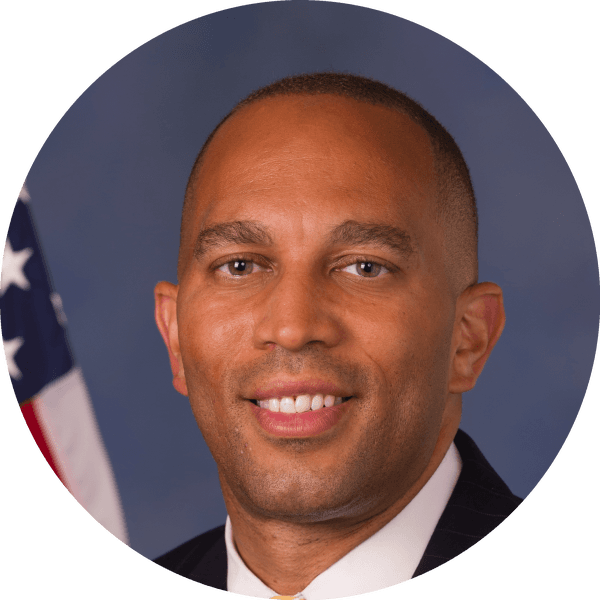

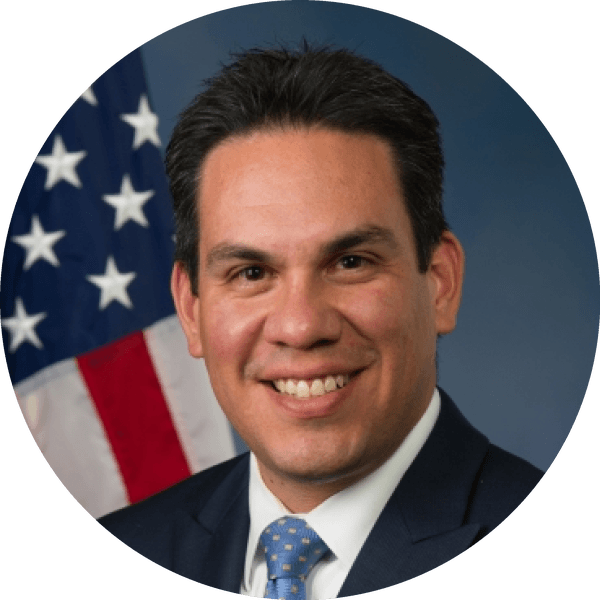

Referred to the House Committee on the Judiciary.
Mar 5, 2025
Washington, D.C. Admission Act


Referred to the Committee on Oversight and Government Reform, and in addition to the Committees on Rules, Armed Services, the Judiciary, and Energy and Commerce, for a period to be subsequently determined by the Speaker, in each case for consideration of such provisions as fall within the jurisdiction of the committee concerned.
Jan 3, 2025
Rights for the TSA Workforce Act





Referred to the Subcommittee on Transportation and Maritime Security.
Mar 11, 2025
DISCLOSE Act of 2026

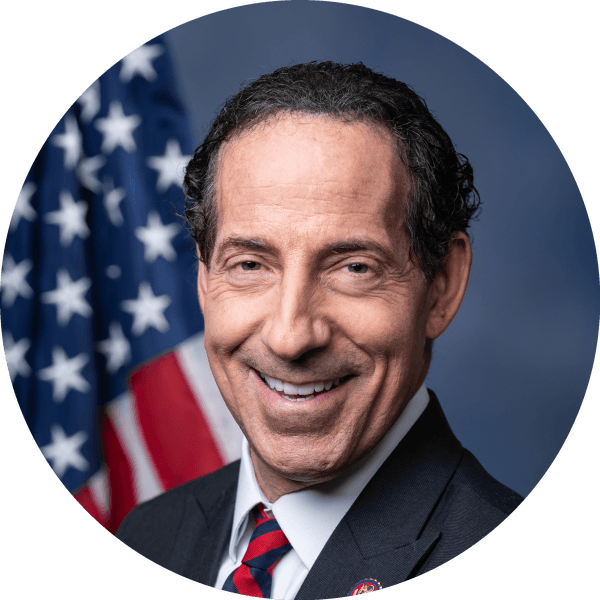


Referred to the Committee on House Administration, and in addition to the Committees on Ways and Means, and the Judiciary, for a period to be subsequently determined by the Speaker, in each case for consideration of such provisions as fall within the jurisdiction of the committee concerned.
Mar 4, 2026
Federal Retirement Fairness Act




ASSUMING FIRST SPONSORSHIP - Ms. Randall asked unanimous consent that she may hereafter be considered as the first sponsor of H.R. 1522, a bill originally introduced by Representative Connolly, for the purpose of adding cosponsors and requesting reprintings pursuant to clause 7 of rule XII. Agreed to without objection.
Jul 22, 2025
FIND Act




Referred to the House Committee on Oversight and Government Reform.
Jan 3, 2025
Fair Pay for Federal Contractors Act of 2025


Referred to the Committee on Appropriations, and in addition to the Committee on Oversight and Government Reform, for a period to be subsequently determined by the Speaker, in each case for consideration of such provisions as fall within the jurisdiction of the committee concerned.
Sep 30, 2025
Saving the Civil Service Act
ASSUMING FIRST SPONSORSHIP - Mr. Walkinshaw asked unanimous consent that he may hereafter be considered as the first sponsor of H.R. 492, a bill originally introduced by Representative Connolly, for the purpose of adding cosponsors and requesting reprintings pursuant to clause 7 of rule XII. Agreed to without objection.
Sep 16, 2025
Trending Right Now
Bills gaining momentum across Congress
North Platte Canteen Congressional Gold Medal Act


Referred to the House Committee on Financial Services.
Feb 21, 2025
ASAP Act



Ordered to be Reported in the Nature of a Substitute by the Yeas and Nays: 40 - 0.
Sep 16, 2026
Fit to Serve Act




Referred to the House Committee on Armed Services.
May 21, 2025
Tracking Government Operations and Politics in Congress? Monitor bills, track cosponsor momentum, and launch advocacy campaigns — all from one advocacy platform.