Mr. President, America is expected to build the equivalent of 1,000 major data centers during the next 5 years. You heard that correctly--a thousand data centers within the next 5 years, with more than 2,000 projects currently being proposed and tracked. We need to protect American ratepayers from footing the bill. The clock is ticking, and we have no time for delay. Americans are becoming ever more reliant on computing power from data centers for their daily lives--from medicine to manufacturing, education to agriculture, and national defense to the way we deliver basic services.
H.R. 9340: Ratepayer Protection Act
Introduced Jun 18, 202642 cosponsors
Sponsor

Gabe Evans
Republican · CO-8
Data Centers Should Pay for Their Grid Upgrades
3 min readLast updated November 4, 2026
Why it matters
100 megawatts is the minimum peak demand that would bring a data or computing campus under H.R. 9340. The bill would require regulators and nonregulated utilities to consider making those customers cover the full added cost of the power plants, transmission lines, and local equipment needed to serve them.
H.R. 9340 would create a proposed federal rate standard for new electricity requests and agreements involving very large data and computing facilities. It would cover a single site or campus with combined peak demand of at least 100 megawatts.
Under the proposed standard, the large customer would cover the full incremental cost of every generation, transmission, and distribution upgrade needed to serve its load. Utilities would obtain enough financial assurance or upfront contributions to cover an upgrade before beginning work. The customer would remain responsible for those costs if it later ended the agreement or stopped buying electricity.
The bill would not automatically impose the pricing rule nationwide. State regulators and nonregulated utilities would have one year to begin considering the standard and two years to reach a decision. Those deadlines would not apply where comparable action had already occurred before enactment.
Bill Progress
IntroducedJun 18
Committee
Pass HouseSep 16
Pass Senate
Signed
Law
Latest Action · Sep 30, 2026
1/3
Passed the House, received in Senate
H.R. 9340 Bill Summary
What H.R. 9340 actually does.
1
Large customers cover the upgrades they require
The proposed rate standard would recover from a covered customer the full added cost of generation, transmission, and distribution upgrades needed to supply its electricity.
2
The rule starts at 100 megawatts
Coverage would begin when qualifying data or computing facilities at one site or campus have combined peak demand of at least 100 megawatts.
3
Utilities secure the money before construction
Before starting a covered upgrade, a utility would obtain financial assurances or customer contributions sufficient to cover its cost. The bill sets no fixed dollar amount.
4
Walking away does not erase the bill
A covered customer would remain responsible for upgrade costs even if it ended its agreement or stopped purchasing electricity from the utility.
5
New power requests and agreements trigger coverage
The definition would apply to qualifying customers that request or enter an electricity agreement on or after enactment, rather than automatically sweeping in every existing arrangement.
6
States get two years to decide
State regulators and nonregulated utilities would begin considering the standard or schedule a hearing within one year, then make a determination within two years. Comparable action taken before enactment could satisfy the requirement.
Who benefits from H.R. 9340?
Households paying monthly electric bills
Residential customers could be protected from sharing the added grid costs associated with a new data or computing campus demanding at least 100 megawatts.
Local shops and other existing businesses
Businesses below the threshold could face less risk that their rates will help finance infrastructure built for a much larger customer.
Utility customers near unfinished projects
Customers could be less exposed to upgrade costs left behind when a large facility cancels its agreement or stops buying power.
Utilities planning major expansions
Utilities could collect contributions or other financial backing before committing money to generation, transmission, or distribution work for a covered project.
Who is affected by H.R. 9340?
Large data centers and computing campuses
A qualifying site with at least 100 megawatts of combined peak demand could be charged the full added cost of the grid infrastructure needed to serve it.
Developers seeking new electricity service
Developers could have to provide substantial financial assurances before a utility begins construction, with the amount tied to the actual upgrade cost.
State utility regulators
Regulators would have to open consideration within one year and reach a decision within two years unless their state had already taken comparable action.
Nonregulated electric utilities
Publicly governed and other nonregulated utilities would face the same review timetable and would have to decide whether to implement the proposed cost-recovery standard.
On the Record
What Congress Is Saying
H.R. 9340 has come up 25 times in the Congressional Record so far.
Mr. President, I rise in opposition to the motion to proceed to H.R. 9340. Electricity demand, as we all know, is growing, driven in large part by hyperscalers and data centers. Tech companies have promised to pay their fair share and not make American households pay the extra costs, but it is not enough to take their word for it, and it is not enough to merely tell States to consider--consider--making utilities charge data centers for all of the costs associated with the generation, additional transmission, and distribution upgrades necessary to serve them. States are already taking action.

Mr. President, reserving the right to object, the Senator from Ohio and I agree on one thing: AI data centers can mean higher costs for American families, and in a lot of places, they already do. The Federal Reserve Bank of Dallas found that data center demand has already pushed electricity prices across the Nation up by 2 to 6 percent--a number that they expect to increase to 20 to 30 percent by 2028. In the Mid-Atlantic region, that means an extra $840 per year, per family, for the next 2 years--840 bucks.
H.R. 9340 also appeared in 5 more Senate floor references and 13 routine cosponsor filings.
HR9340 Legislative Journey
Action Taken
Sep 30, 2026
Motion to proceed to consideration of measure withdrawn in Senate. (CR S5199)
Action Taken
Sep 29, 2026
Motion to proceed to consideration of measure made in Senate.
Action Taken
Sep 28, 2026
Cloture motion on the motion to proceed to the measure presented in Senate. (CR S5065)
Action Taken
Sep 24, 2026
Read the second time. Placed on Senate Legislative Calendar under General Orders. Calendar No. 684.
Action Taken
Sep 23, 2026
Read the first time. Placed on Senate Legislative Calendar under Read the First Time.
Sent to Senate
Sep 17, 2026
Received in the Senate.
House: Vote: 417-3
Sep 16, 2026
On motion to suspend the rules and pass the bill, as amended Agreed to by the Yeas and Nays: (2/3 required): 417 - 3 (Roll no. 312). (text: CR H5656-5657)
House: Vote Held
Sep 15, 2026
At the conclusion of debate, the Yeas and Nays were demanded and ordered. Pursuant to the provisions of clause 8, rule XX, the Chair announced that further proceedings on the motion would be postponed.
House: Committee Action
Sep 10, 2026
Reported (Amended) by the Committee on Energy and Commerce. H. Rept. 119-814.
House: Vote: 52-0
Jul 21, 2026
Ordered to be Reported in the Nature of a Substitute by the Yeas and Nays: 52 - 0.
House: Committee Action
Jul 20, 2026
Committee Consideration and Mark-up Session Held
House: Vote Held
Jun 24, 2026
Forwarded by Subcommittee to Full Committee by Voice Vote.
House: Committee Action
Jun 18, 2026
Referred to the Subcommittee on Energy.
About the Sponsor
Gabe Evans
Republican, Colorado's 8th congressional district · 1 years in Congress
Committees: Homeland Security, Energy and Commerce
View full profile →
Cosponsors (42)
No new cosponsors in 55 days
This bill has 42 cosponsors: 7 Democrats, 35 Republicans, reflecting bipartisan support. Cosponsors represent 19 states: California, Colorado, Florida, and 16 more.
7Democrats35Republicans·19 statesBipartisan

Kathy Castor
Democrat · FL

Jefferson Van Drew
Republican · NJ

John Joyce
Republican · PA

Michael McCaul
Republican · TX

Michael Baumgartner
Republican · WA

Clay Fuller
Republican · GA

Robert Wittman
Republican · VA

Robert Onder
Republican · MO

Harriet Hageman
Republican · WY

Thomas Kean
Republican · NJ

Derrick Van Orden
Republican · WI

John McGuire
Republican · VA
Committee Sponsors
Energy and Commerce Committee
24D30R
|8 signed46 not yet8 of 54 committee members cosponsored


24 Republicans across this committee haven't cosponsored yet. Mobilize their constituents
What laws does H.R. 9340 change?
2 changes
Sections Amended
Section 111(d) of Public Utility Regulatory Policies Act of 1978 (16 U.S.C. 2621(d))
adding at the end the following: ``(22) Standards for large-load customers
Section 124 of Public Utility Regulatory Policies Act of 1978 (16 U.S.C. 2634)
adding at the end the following: ``In the case of the standard established by paragraph (22) of section 111(d), the reference contained in this section to the date of enactment of this Act shall be deemed to be a reference to the date of enactment of that paragraph (22)
H.R. 9340 Quick Facts
Cosponsors
42
- Committee
- Energy and Commerce
- Chamber
- House
- Policy
- Energy
- Introduced
- Jun 18, 2026
Passed the House, received in Senate
Sep 30, 2026
Official Sources
H.R. 9340 on Congress.gov
The official congressional bill page provides H.R. 9340's text, sponsors, legislative actions, and current status.
H.R. 9340 Committee Report
The House committee report explains the legislation's large-load cost-recovery standard and its intended effect on utility ratepayers.
H.R. 9340 Reported Bill Text on GovInfo
GovInfo provides the official reported version of H.R. 9340 containing the proposed large-load customer standard.
House Report 119-814 on GovInfo
The official published House report provides legislative background and analysis of the Ratepayer Protection Act.
Public Utility Regulatory Policies Act of 1978
This is the official Statutes at Large publication of the law that H.R. 9340 proposes to amend.
H.R. 9340 Common Questions
Which data centers would H.R. 9340 cover?
It would cover nonresidential data or computing facilities at one site or campus with combined peak demand of at least 100 megawatts and a qualifying electricity request or agreement made after enactment.
How much would a covered data center pay for grid upgrades?
The bill sets no fixed amount. The proposed rate standard would charge the customer the full added cost of necessary generation, transmission, and distribution upgrades.
Would data centers have to pay before construction begins?
Utilities would obtain financial assurances or customer contributions sufficient to cover an upgrade before starting the work. The form and dollar value would depend on the project.
Can a data center avoid the cost by canceling its contract?
No. Under the proposed standard, a covered customer would remain responsible for upgrade costs even after ending its agreement or stopping electricity purchases.
Would H.R. 9340 apply to existing electricity contracts?
Not automatically. Coverage is tied to a qualifying request or agreement made on or after enactment, so an existing facility could be affected if it later seeks a new agreement or additional service.
Would every state have to adopt the data center pricing rule?
No. States and nonregulated utilities would have to consider the standard and make a determination, but the bill does not require every regulator to adopt it.
Would H.R. 9340 lower residential electric bills?
It would not guarantee a bill reduction. Its proposed standard is designed to keep future grid-upgrade costs tied to covered large customers instead of spreading those costs among other ratepayers.
How quickly would regulators have to act on H.R. 9340?
They would have one year after enactment to begin considering the standard or schedule a hearing, and two years to make a determination. Certain comparable actions taken earlier could satisfy the requirement.
Based on H.R. 9340 bill text
H.R. 9340 Bill Text
“To amend the Public Utility Regulatory Policies Act of 1978 to establish a Federal standard relating to the recovery of the full, incremental costs of upgrades that serve large-load customers, and for other purposes.”
Source: U.S. Government Publishing Office
Bill Alerts
Get notified when H.R. 9340 moves
Committee votes, floor action, cosponsor changes — straight to your inbox.
Bill alerts + Legisletter's monthly briefing. Unsubscribe anytime.
Energy Bills
9 related bills we're tracking
H.R. 7977
Energy Bills Relief Act

Sean CastenD-IL




+159
163 cosponsors
+1 this monthReferred to the Committee on Energy and Commerce, and in addition to the Committees on Agriculture, Ways and Means, Natural Resources, Financial Services, Transportation and Infrastructure, Education and Workforce, Oversight and Government Reform, and Science, Space, and Technology, for a period to be subsequently determined by the Speaker, in each case for consideration of such provisions as fall within the jurisdiction of the committee concerned.
Mar 18, 2026
HouseEnergy
H.R. 3699
Energy Choice Act
Nicholas LangworthyR-NY


+153
157 cosponsors
Placed on the Union Calendar, Calendar No. 412.
Feb 4, 2026
HouseEnergy
H.R. 2486
Heating and Cooling Relief Act
Yassamin AnsariD-AZ


+49
53 cosponsors
Referred to the Committee on Energy and Commerce, and in addition to the Committee on Education and Workforce, for a period to be subsequently determined by the Speaker, in each case for consideration of such provisions as fall within the jurisdiction of the committee concerned.
Mar 31, 2025
HouseEnergy
H.R. 6529
Protecting Families from AI Data Center Energy Costs Act

Greg LandsmanD-OH


+20
24 cosponsors
Ordered to be Reported by the Yeas and Nays: 44 - 0.
Jul 21, 2026
HouseEnergy
H.R. 1355
Weatherization Enhancement and Readiness Act of 2025
Paul TonkoD-NY



+17
21 cosponsors
Placed on the Union Calendar, Calendar No. 410.
Feb 4, 2026
HouseEnergy
H.R. 6176
Electricity Transmission Scorecard Act
Sean CastenD-IL




+11
15 cosponsors
Referred to the House Committee on Energy and Commerce.
Nov 20, 2025
HouseEnergy
H.R. 7066
SHIELD Act
Mike LevinD-CA

+10
14 cosponsors
Referred to the House Committee on Energy and Commerce.
Jan 14, 2026
HouseEnergy
H.R. 755
Critical Mineral Consistency Act of 2025

Juan CiscomaniR-AZ




+9
13 cosponsors
Received in the Senate. Read twice. Placed on Senate Legislative Calendar under General Orders. Calendar No. 348.
Mar 4, 2026
HouseEnergy
S. 714
Critical Mineral Consistency Act of 2025
Mike LeeR-UT



+1
5 cosponsors
Placed on Senate Legislative Calendar under General Orders. Calendar No. 335.
Feb 11, 2026
SenateEnergy
Trending Right Now
Bills gaining momentum across Congress
H.R. 1502Surging+19
North Platte Canteen Congressional Gold Medal Act

Adrian SmithR-NE


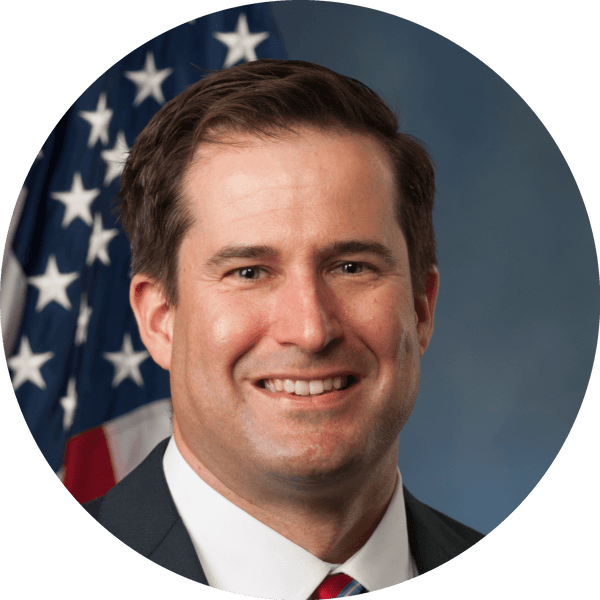
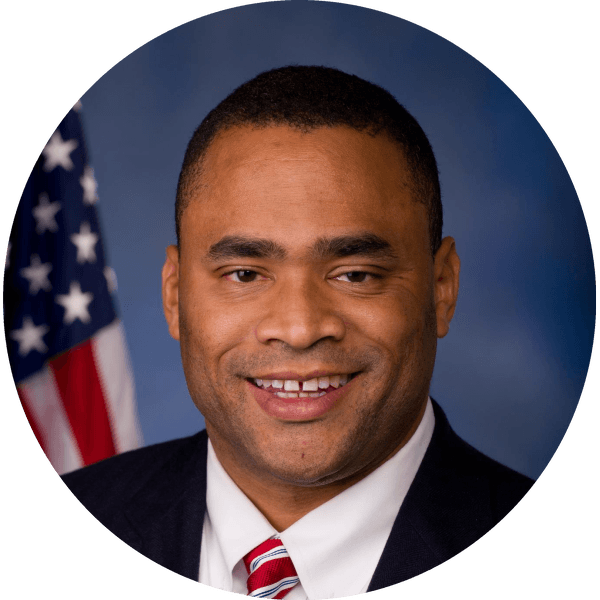
+266
270 cosponsors
+19 this monthReferred to the House Committee on Financial Services.
Feb 21, 2025
HouseArmed Forces and National Security
H.R. 3277Surging+15
Ensuring Lasting Smiles Act
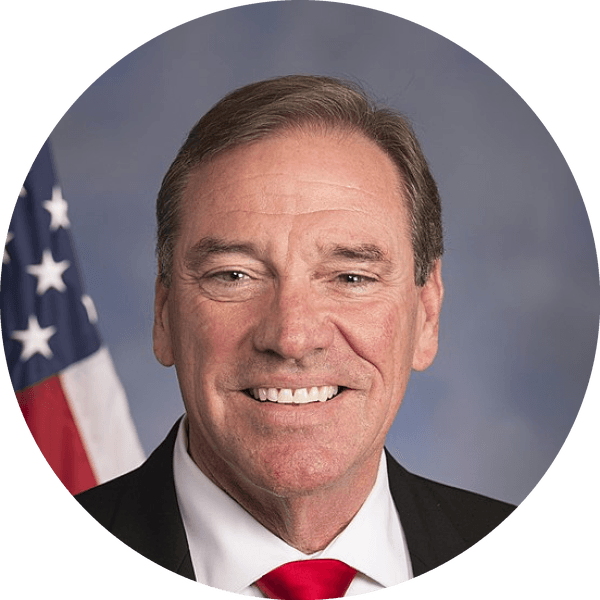
Neal DunnR-FL




+218
222 cosponsors
+15 this monthReferred to the Committee on Energy and Commerce, and in addition to the Committees on Education and Workforce, and Ways and Means, for a period to be subsequently determined by the Speaker, in each case for consideration of such provisions as fall within the jurisdiction of the committee concerned.
May 8, 2025
HouseHealth
H.R. 6130Surging+11
ASAP Act

Vern BuchananR-FL
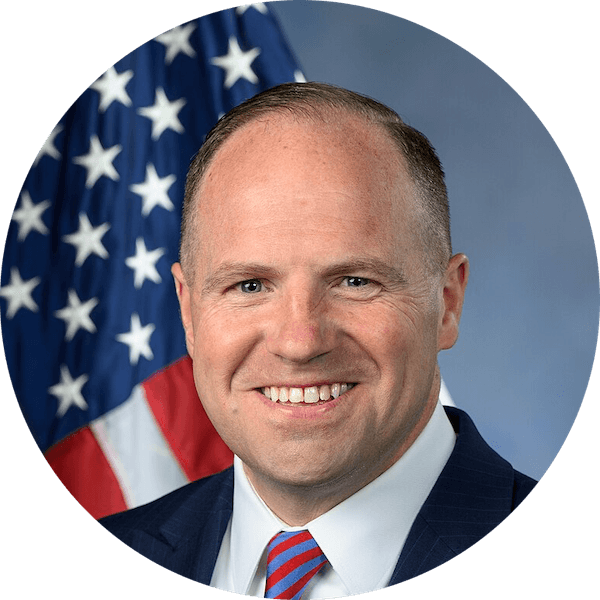


+231
235 cosponsors
+11 this monthOrdered to be Reported in the Nature of a Substitute by the Yeas and Nays: 40 - 0.
Sep 16, 2026
HouseHealth
Tracking Energy in Congress? Monitor bills, track cosponsor momentum, and launch advocacy campaigns — all from one advocacy platform.