H.R. 7066: SHIELD Act
Sponsor

Mike Levin
Democrat · CA-49
Giant power users would pay for their own grid
Why it matters
Any single site that draws more than 75 megawatts — the scale of a large data center or a heavy industrial plant — would have to cover 100% of the cost to expand the grid to serve it, instead of having that cost spread across everyone else's electric bill. H.R. 7066 would even make that customer class pay if the facility later shuts down or uses less power than it promised.
H.R. 7066, the SHIELD Act — short for the Stopping Hikes In Electricity from Large Load Demands Act — adds two new standards to a 1978 federal law that governs how state regulators set utility rules. It does not spend federal money. It changes who picks up the tab.
The core rule is a reclassification. Any facility, or cluster of facilities at one site, with peak demand above 75 megawatts becomes its own class of electricity customer. Utilities would then have to recover all the costs of upgrading generation, transmission, and distribution to serve that class — including local equipment — from the big users themselves, not from general ratepayers.
The bill goes a step further on financial risk. If one of these facilities shuts down or ends up using less power than it projected when the upgrade was built, the large-load class still has to cover those costs. That puts the risk of an overbuilt grid connection on the giant customer rather than on everyone else.
There is a carve-out. An existing facility does not count as a large load if its rising demand comes mainly from electrification or from steps to cut greenhouse gas emissions. The bill is aimed at brand-new or newly intensified mega-loads, not a factory swapping gas equipment for electric.
The measure also tells utilities to move certain projects to the front of the line. Large loads get priority service if they agree to use demand-cutting tools — energy efficiency, onsite battery storage, or demand-response technology — and if they meet all of their demand with zero-emission power generated onsite or bought nearby. The bill defines zero-emission power broadly: solar, wind, geothermal, hydroelectric, tidal, nuclear fission, or fusion.
The clock is short. State regulators and nonregulated utilities would have to start considering the new standards within 1 year of enactment and finish with a decision within 2 years, then report to two congressional committees within 30 days of deciding. States that already implemented a comparable rule, already held a proceeding on one, or whose legislature voted on one in the prior 3 years are off the hook.
Bill Progress
Latest Action · Jan 14, 2026
Referred to the House Committee on Energy and Commerce.
H.R. 7066 Bill Summary
What H.R. 7066 actually does.
Cross 75 megawatts, become your own rate class
Any facility, or group of facilities at a single site, with peak demand above 75 megawatts would be treated as a separate class of electricity customers for the purpose of setting rates and recovering costs.
Big users cover the full cost of the grid they need
Utilities would have to recover all costs of upgrading generation, transmission, and distribution — including local facilities — from the large-load class, rather than spreading those costs across general ratepayers.
The cost sticks even if the facility leaves
If a large-load facility ceases operations or uses less power than it projected when the upgrade was built, the large-load class still has to cover those costs, shifting that financial risk away from other customers.
Clean, all-onsite power moves you up the line
Utilities would have to prioritize service requests from large loads that agree to meet all of their demand with zero-emission power generated onsite or bought through a power purchase agreement within the same balancing authority.
Demand-cutting commitments earn priority too
Large loads that agree to use energy efficiency, conservation, onsite energy storage, or demand-response and load-flexibility tools would also move to the front of the line for utility service.
States get 1 year to start, 2 years to decide
State regulators and nonregulated utilities would have to begin considering the new standards within 1 year of enactment, finish with a determination within 2 years, and report the process and outcome to two congressional committees within 30 days of deciding.
Who benefits from H.R. 7066?
Households paying a monthly electric bill
If the costs of major grid upgrades land on the new large-load class instead of general rates, residential customers would no longer help pay for wires and substations built mainly to serve a single giant user.
Small and mid-size businesses
Businesses outside the large-load class could avoid carrying a share of generation, transmission, and distribution upgrades built for very large new customers next door.
Large facilities that build clean and flexible
A facility above 75 megawatts that commits to onsite zero-emission power or demand-cutting technology would get priority for utility service over large-load applicants that don't.
Utilities setting terms for mega-loads
Utilities would get a clearer mandate to recover the full cost of serving very large loads and to favor projects that bring their own clean generation, storage, or demand flexibility.
Who is affected by H.R. 7066?
Data centers and other very large new power users
A single site drawing more than 75 megawatts would be responsible for the full cost of the grid upgrades it requires — including the case where it later shuts down or uses less power than it projected.
State regulatory authorities
They would have to start considering the standards within 1 year, complete a determination within 2 years, and report to two congressional committees within 30 days, unless a pre-enactment exemption applies.
Nonregulated utilities
Utilities outside traditional state commission oversight would face the same 1-year, 2-year, and 30-day obligations to consider and decide on the standards.
Existing facilities electrifying their operations
An existing site is not a large load if its higher demand comes mainly from electrification or from cutting greenhouse gas emissions, so it would be treated differently from a brand-new mega-load.
HR7066 Legislative Journey
House: Committee Action
Jan 14, 2026
Referred to the House Committee on Energy and Commerce.
About the Sponsor
Mike Levin
Democrat, California's 49th congressional district · 7 years in Congress
Committees: Appropriations
View full profile →
Cosponsors (14)
All 14 cosponsors are Democrats. Cosponsors represent 8 states: California, Florida, Illinois, and 5 more.

Kathy Castor
Democrat · FL

Mike Quigley
Democrat · IL

Greg Landsman
Democrat · OH

Daniel Goldman
Democrat · NY

George Latimer
Democrat · NY

Sean Casten
Democrat · IL
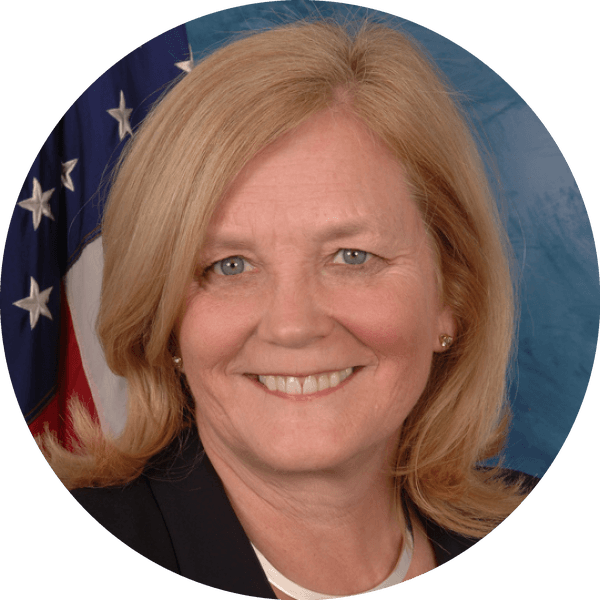
Chellie Pingree
Democrat · ME

Seth Magaziner
Democrat · RI

Ted Lieu
Democrat · CA

Kevin Mullin
Democrat · CA

Salud Carbajal
Democrat · CA

Emilia Sykes
Democrat · OH
Committee Sponsors
Energy and Commerce Committee
3 of 54 committee members cosponsored


21 Democrats across this committee haven't cosponsored yet. Mobilize their constituents
What laws does H.R. 7066 change?
3 changes
Sections Amended
Section 111(d) of Public Utility Regulatory Policies Act of 1978 (16 U.S.C. 2621(d))
adding at the end the following: ``(22) Large load facility class
Section 111 of Public Utility Regulatory Policies Act of 1978 (16 U.S.C. 2621)
adding at the end the following: ``(e) Definitions
Section 124 of Public Utility Regulatory Policies Act of 1978 (16 U.S.C. 2634)
inserting ``In the case of each standard established by paragraphs (22) and (23) of section 111(d), the reference contained in this section to the date of enactment of this Act shall be deemed to be a reference to the date of enactment of such paragraphs (22) and (23)
H.R. 7066 Quick Facts
- Committee
- Energy and Commerce
- Chamber
- House
- Policy
- Energy
- Introduced
- Jan 14, 2026
Referred to the House Committee on Energy and Commerce.
Jan 14, 2026
Official Sources
Official Congress.gov page for the SHIELD Act with bill text, status, cosponsors, and actions.
The SHIELD Act amends this section of PURPA, the 1978 law that sets the standards state regulators must consider when establishing utility rates.
The federal office focused on grid reliability, transmission, and distribution — the systems the bill says large loads must pay to upgrade.
DOE's program for upgrading the generation, transmission, and distribution grid that new mega-loads would draw on.
EPA resource on procuring zero-emission electricity, including the power purchase agreements the bill rewards with priority utility service.
H.R. 7066 Common Questions
What makes a facility a "large load facility" under the SHIELD Act?
A single site — one facility or a cluster of them in one place — counts if its peak demand tops 75 megawatts. That's the scale of a large data center or heavy industrial plant, not a normal business.
Could utilities charge data centers for the full cost of grid upgrades?
Yes. H.R. 7066 would require utilities to recover 100% of the cost of upgrading generation, transmission, and distribution to serve a large load from that large-load class — not from everyone else's rates.
Do big power users still pay if the project shuts down or uses less than expected?
Yes. Under H.R. 7066, the large-load class still has to cover those upgrade costs even if a facility ceases operations or uses less power than it projected when the upgrade was built.
How fast would states have to act under the SHIELD Act?
States and nonregulated utilities would have to start considering the standards within 1 year of enactment, finish with a decision within 2 years, and report to two congressional committees within 30 days of deciding.
Can clean-energy or flexible large loads get priority service?
Yes. Utilities would have to prioritize large loads that meet all their demand with onsite or nearby zero-emission power, or that commit to demand-cutting tools like energy efficiency, onsite battery storage, or demand response.
Which energy sources count as zero-emission under the SHIELD Act?
The bill counts solar, wind, geothermal, hydroelectric, tidal, nuclear fission, and fusion as zero-emission electric energy — power generated without emitting greenhouse gases.
Is an existing factory exempt if its power demand rises from electrification?
Yes. H.R. 7066 says an existing facility is not a large load if its increased demand is caused mainly by electrification or by measures to cut greenhouse gas emissions.
Can a state skip the review if it already passed or considered a similar rule?
Yes. The requirement doesn't apply if a state already implemented a comparable standard, already held a proceeding on one, or its legislature voted on one in the 3 years before enactment.
Based on H.R. 7066 bill text
H.R. 7066 Bill Text
“To amend the Public Utility Regulatory Policies Act of 1978 to add a standard relating to the consideration of large load facilities as a class of electric consumers, and for other purposes.”
Source: U.S. Government Publishing Office
Get notified when H.R. 7066 moves
Committee votes, floor action, cosponsor changes — straight to your inbox.
Bill alerts + Legisletter's monthly briefing. Unsubscribe anytime.
Energy Bills
9 related bills we're tracking
Energy Bills Relief Act



Referred to the Committee on Energy and Commerce, and in addition to the Committees on Agriculture, Ways and Means, Natural Resources, Financial Services, Transportation and Infrastructure, Education and Workforce, Oversight and Government Reform, and Science, Space, and Technology, for a period to be subsequently determined by the Speaker, in each case for consideration of such provisions as fall within the jurisdiction of the committee concerned.
Mar 18, 2026
Energy Choice Act





Placed on the Union Calendar, Calendar No. 412.
Feb 4, 2026
Heating and Cooling Relief Act


Referred to the Committee on Energy and Commerce, and in addition to the Committee on Education and Workforce, for a period to be subsequently determined by the Speaker, in each case for consideration of such provisions as fall within the jurisdiction of the committee concerned.
Mar 31, 2025
Protecting Families from AI Data Center Energy Costs Act


Ordered to be Reported by the Yeas and Nays: 44 - 0.
Jul 21, 2026
Weatherization Enhancement and Readiness Act of 2025




Placed on the Union Calendar, Calendar No. 410.
Feb 4, 2026
Electricity Transmission Scorecard Act


Referred to the House Committee on Energy and Commerce.
Nov 20, 2025
Critical Mineral Consistency Act of 2025





Received in the Senate. Read twice. Placed on Senate Legislative Calendar under General Orders. Calendar No. 348.
Mar 4, 2026
Critical Mineral Consistency Act of 2025





Placed on Senate Legislative Calendar under General Orders. Calendar No. 335.
Feb 11, 2026
Homeowner Energy Freedom Act



Received in the Senate and Read twice and referred to the Committee on Energy and Natural Resources.
Feb 25, 2026
Trending Right Now
Bills gaining momentum across Congress
America’s Olympic and Paralympic Games Commemorative Coins Act





Referred to the House Committee on Financial Services.
Jul 14, 2025
Fit to Serve Act





Referred to the House Committee on Armed Services.
May 21, 2025
ASAP Act




Ordered to be Reported in the Nature of a Substitute by the Yeas and Nays: 40 - 0.
Sep 16, 2026
Tracking Energy in Congress? Monitor bills, track cosponsor momentum, and launch advocacy campaigns — all from one advocacy platform.