Mr. Speaker, I was absent from the floor and missed Roll Call Nos. 75 and 76. Had I been present, I would have voted YEA on Roll Call No. 75, the motion to recommit H.R. 4626 and NAY on Roll Call No. 76, passage of H.R. 4626. personal explanation
H.R. 4626: Home Appliance Protection and Affordability Act
Introduced Jul 23, 20250 cosponsors
Sponsor

Rick Allen
Republican · GA-12
Congress moves to shield your gas stove from new efficiency rules
5 min readLast updated June 19, 2026
Why it matters
Before the Energy Department could tighten a single appliance standard, it would have to prove the rule saves at least 0.3 quads of energy over 30 years and adds zero net cost to you. H.R. 4626 also locks in a permanent ban on new rules for the transformers that power the grid and gives critics a fast track to undo standards already on the books.
H.R. 4626, the Home Appliance Protection and Affordability Act, leaves today's appliance standards in place but changes the rules of the game for any future ones. Before the Department of Energy could set a new or tougher standard, it would have to clear a series of new tests — and clearing all of them at once is the whole point.
The headline test is about your money. DOE could not call a standard "economically justified" unless it shows the rule won't raise your net costs and that the energy savings in just the first three years outweigh any higher price tag — purchase, installation, maintenance, disposal, and replacement all counted in. On top of that, the rule would have to deliver at least 0.3 quads of energy savings over 30 years or cut a product's energy or water use by at least 10%.
The bill also opens a new exit door. Today, outside parties can petition DOE to amend a standard. H.R. 4626 lets them petition to revoke one outright, and if a petition argues the standard costs consumers more, saves little energy, isn't feasible, and pushes a product (the text names gas stoves) off the market, DOE would have to grant review. Once a revocation petition is granted, the agency gets 180 days to act.
Two other provisions stand out. DOE could no longer factor the social cost of carbon — the dollar estimate of climate damage from emissions — into whether a standard is worth it. And before issuing any new standard, the Secretary would have to publicly list meetings from the prior five years with groups tied to China or the Chinese Communist Party, or federally funded groups that pushed to restrict energy use. Separately, the bill permanently bars DOE from writing new standards for distribution transformers, the equipment that steps grid voltage down for homes and businesses.
The House passed it 217-190 in February. The Senate Energy and Natural Resources Committee now decides whether it moves, stalls, or gets reworked.
Bill Progress
IntroducedJul 23
Committee
Pass HouseFeb 24
Pass Senate
Signed
Law
Latest Action · Feb 25, 2026
Passed the House, received in Senate
H.R. 4626 Bill Summary
What H.R. 4626 actually does.
1
New rules must clear a higher cost-and-savings bar
DOE could not set a new or tougher standard unless it shows the rule delivers at least 0.3 quads of energy savings over 30 years or a 10% cut in energy or water use, and that three years of savings exceed any added cost to you.
2
A standard can't raise your net costs
Before issuing a rule, DOE would have to run a quantitative economic analysis — covering low-income households, rural and regional differences, jobs, and full lifecycle costs — and find the standard won't leave consumers paying more on net.
3
Five years before a new standard reaches the shelf
Any amended standard would apply only to products manufactured five years after the final rule is published, giving manufacturers a longer runway to redesign.
4
A new path to revoke existing standards
Outside parties could petition not just to amend a standard but to revoke it. If the petition argues the rule raises costs, saves little, isn't feasible, and pushes a product off the market, DOE must grant review — and act within 180 days once it does.
5
Permanent ban on transformer standards
DOE could never prescribe new or revised efficiency standards for distribution transformers, the grid equipment that steps voltage down for homes and businesses. Existing standards stay in place.
6
Climate cost estimates barred from the math
When weighing whether a standard is justified, DOE could not consider the social cost of carbon — the dollar estimate of climate damage tied to greenhouse gas emissions.
7
Disclosure of meetings with China-linked groups
Before issuing a new standard, the Secretary would have to publicly list meetings from the prior five years with entities tied to China or the Chinese Communist Party, or federally funded groups that advocated restricting energy use.
Who benefits from H.R. 4626?
Gas stove owners and buyers
The bill names gas stoves directly and is built to make it harder for DOE to issue rules that could push fuel-burning appliances off the market.
Appliance manufacturers
They get a five-year runway before new standards apply and stronger legal footing to challenge rules they argue are costly or unworkable.
Households focused on the price tag
The cost test is designed to block standards that raise the upfront or lifecycle cost of an appliance unless three years of energy savings clearly outweigh it.
Groups seeking to roll back current rules
The new revocation petition gives them a defined process and a 180-day clock to challenge standards already on the books.
Who is affected by H.R. 4626?
The Department of Energy
The agency would face more analyses, more disclosures, and stricter findings before issuing any standard — and a new revocation process it must respond to on a deadline.
Energy-efficiency advocates
They would find it harder to win tougher standards, since DOE could no longer count climate costs and would have to clear the new cost-and-savings tests.
Buyers seeking the most efficient products
If federal updates slow or get revoked, default efficiency levels on new appliances could plateau rather than keep climbing.
The electric grid
With new distribution-transformer standards permanently off the table, the efficiency of that grid equipment would stay frozen at current levels.
On the Record
What Congress Is Saying
15 legislators have weighed in on H.R. 4626 — 9 Democrats, 6 Republicans.
Mr. Speaker, I was absent for recorded votes due to a personal commitment. Had I been present, I would have voted as follows: YEA on Roll Call No. 71, H.R. 6329; YEA on Roll Call No. 72, S. 2503; NAY on Roll Call No. 73, Ordering the Previous Question on H. Res. 1075; NAY on Roll Call No. 74, H. Res. 1075; YEA on Roll Call No. 75, motion to recommit on H.R. 4626; and NAY on Roll Call No. 76, Passage of H.R. 4626.

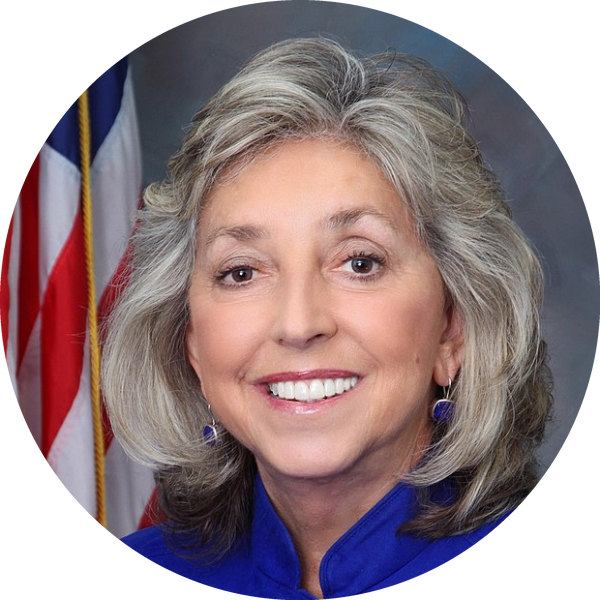
Madam Speaker, I rise today in support of H.R. 4626, the Home Appliance Protection and Affordability Act, sponsored by my colleague from Georgia's 12th District. This legislation modernizes energy efficiency authorities to lower costs for households and protects consumer choice. The Energy Policy and Conservation Act, or EPCA, was established in 1975 amidst the oil crisis of the 1970s.
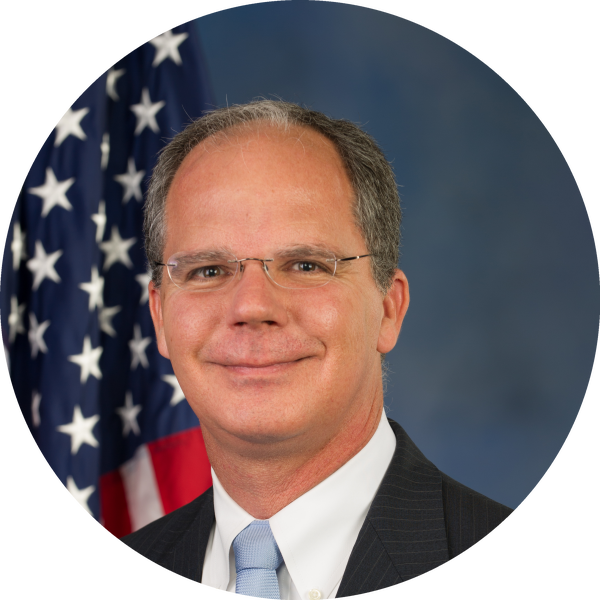
H.R. 4626 also appeared in 2 more House floor references and 3 routine cosponsor filings.
HR4626 Legislative Journey
Committee Action
Feb 25, 2026
Received in the Senate and Read twice and referred to the Committee on Energy and Natural Resources.
House: Passed 217-190
Feb 24, 2026
On passage Passed by the Yeas and Nays: 217 - 190 (Roll no. 76). (text of amendment in the nature of a substitute: CR H4679-4681)
+12 more actions this day
House: Committee Action
Jan 30, 2026
Reported (Amended) by the Committee on Energy and Commerce. H. Rept. 119-470.
House: Vote: 26-22
Dec 3, 2025
Ordered to be Reported by the Yeas and Nays: 26 - 22.
House: Vote: 17-14
Nov 19, 2025
Forwarded by Subcommittee to Full Committee (Amended) by the Yeas and Nays: 17 - 14.
House: Committee Action
Jul 23, 2025
Referred to the Subcommittee on Energy.
About the Sponsor
Rick Allen
Republican, Georgia's 12th congressional district · 11 years in Congress
Committees: Education and Workforce, Energy and Commerce
View full profile →
Committee Sponsors
Energy and Natural Resources Committee
8D11R1I
|0 signed20 not yet0 of 20 committee members cosponsored
No committee members have cosponsored this bill
Energy and Commerce Committee
24D30R
|0 signed54 not yet0 of 54 committee members cosponsored
No committee members have cosponsored this bill
41 Republicans across these committees haven't cosponsored yet. Mobilize their constituents
What laws does H.R. 4626 change?
4 changes
Sections Amended
Section 325(o) of Energy Policy and Conservation Act (42 U.S.C. 6295(o))
amending paragraphs (2) and (3) to read as follows: ``(2) Requirements
Section 321(7) of Energy Policy and Conservation Act (42 U.S.C. 6291(7))
striking ``in the case of showerheads, faucets, water closets, and urinals'' and inserting ``, as applicable''
Section 346 of Energy Policy and Conservation Act (42 U.S.C. 6317)
striking subsection (c)
Section 346 of Energy Policy and Conservation Act (42 U.S.C. 6317)
adding at the end the following: ``(g) No New or Revised Standards for Distribution Transformers
H.R. 4626 Quick Facts
Cosponsors
0
- Committee
- Energy and Natural Resources
- Chamber
- House
- Policy
- Energy
- Introduced
- Jul 23, 2025
Passed the House, received in Senate
Feb 25, 2026
Official Sources
H.R. 4626 on Congress.gov
The official bill record — full text, the 217-190 House vote, and current status in the Senate Energy and Natural Resources Committee.
CBO Cost Estimate for H.R. 4626
The Congressional Budget Office's analysis of how the bill would affect federal direct spending and DOE administrative costs.
House Report 119-470
The Energy and Commerce Committee report accompanying the bill, explaining each provision the committee approved.
DOE Appliance and Equipment Standards Program
The Energy Department program whose rulemaking process H.R. 4626 would rewrite, covering more than 70 product categories.
DOE Final Standards for Distribution Transformers
The existing distribution-transformer standards that the bill would freeze by permanently barring DOE from issuing new ones.
42 U.S.C. 6295 — Energy Conservation Standards
The section of the Energy Policy and Conservation Act that H.R. 4626 amends to add its new cost-and-savings tests and revocation petition path.
Who is lobbying on H.R. 4626?
10 organizations lobbying on this bill
Total filings: 21
ASSOCIATION OF HOME APPLIANCE MANUFACTURERS | 6 |
A.O. SMITH CORPORATION | 4 |
NATIONAL ELECTRICAL MANUFACTURERS ASSOCIATION (NEMA) | 2 |
REGAL BELOIT AMERICA, INC. | 2 |
PLUMBING MANUFACTURERS INTERNATIONAL | 2 |
AMERICAN COUNCIL FOR AN ENERGY-EFFICIENT ECONOMY | 1 |
MASCO CORPORATION | 1 |
LG ELECTRONICS USA, INC. | 1 |
AIR CONDITIONING, HEATING AND REFRIGERATION INSTITUTE (AHRI) | 1 |
AMERICAN CHEMISTRY COUNCIL | 1 |
Showing 1-10 of 10 organizations
H.R. 4626 Common Questions
Does H.R. 4626 ban gas stoves or any other appliance?
No. It doesn't outlaw any product or repeal existing standards. It makes it harder for the Energy Department to issue new or tougher efficiency rules — and the bill text names gas stoves as the kind of product it aims to keep on the market.
Can the Energy Department still raise appliance efficiency standards?
It can, but only after clearing new tests. A standard can't be deemed justified unless DOE shows it won't raise your net costs and that the first three years of energy savings outweigh any added price, including installation, maintenance, and disposal.
How much energy would a new standard have to save?
At least 0.3 quads of energy over 30 years, or a 10% cut in the product's energy or water use. If a proposed rule misses both marks, DOE can't call it economically justified.
Can existing appliance standards be revoked under H.R. 4626?
Yes. The bill lets outside parties petition to revoke a standard, not just amend it. DOE must grant review if the petition argues the rule raises costs, saves little energy or water, isn't feasible, and pushes a product off the market — then act within 180 days.
Why does the bill single out distribution transformers?
It permanently bars DOE from setting any new or revised efficiency standard for distribution transformers — the grid equipment that steps voltage down for homes and businesses. Standards already in place would stay, but no new ones could be written.
Can DOE still count climate costs when weighing a standard?
No. The bill bars DOE from considering the social cost of carbon — the dollar estimate of climate damage from emissions — when deciding whether a standard is worth it.
Why would DOE have to disclose meetings with China-linked groups?
Before issuing a new standard, the Secretary would have to publicly list meetings from the prior five years with entities tied to China or the Chinese Communist Party, or federally funded groups that advocated restricting energy use.
Did H.R. 4626 pass, and what happens next?
The House passed it 217-190 in February 2026. It's now with the Senate Committee on Energy and Natural Resources, which decides whether it advances, gets reworked, or stalls.
Based on H.R. 4626 bill text
H.R. 4626 Bill Text
“To amend the Energy Policy and Conservation Act to prohibit the Secretary of Energy from prescribing any new or amended energy conservation standard for a product that is not technologically feasible and economically justified, and for other purposes.”
Source: U.S. Government Publishing Office
Bill Alerts
Get notified when H.R. 4626 moves
Committee votes, floor action, cosponsor changes — straight to your inbox.
Bill alerts + Legisletter's monthly briefing. Unsubscribe anytime.
Energy Bills
9 related bills we're tracking
H.R. 7977
Energy Bills Relief Act

Sean CastenD-IL




+159
163 cosponsors
+1 this monthReferred to the Committee on Energy and Commerce, and in addition to the Committees on Agriculture, Ways and Means, Natural Resources, Financial Services, Transportation and Infrastructure, Education and Workforce, Oversight and Government Reform, and Science, Space, and Technology, for a period to be subsequently determined by the Speaker, in each case for consideration of such provisions as fall within the jurisdiction of the committee concerned.
Mar 18, 2026
HouseEnergy
H.R. 3699
Energy Choice Act

Nicholas LangworthyR-NY




+153
157 cosponsors
Placed on the Union Calendar, Calendar No. 412.
Feb 4, 2026
HouseEnergy
H.R. 2486
Heating and Cooling Relief Act
Yassamin AnsariD-AZ



+49
53 cosponsors
+1 this monthReferred to the Committee on Energy and Commerce, and in addition to the Committee on Education and Workforce, for a period to be subsequently determined by the Speaker, in each case for consideration of such provisions as fall within the jurisdiction of the committee concerned.
Mar 31, 2025
HouseEnergy
H.R. 6529
Protecting Families from AI Data Center Energy Costs Act

Greg LandsmanD-OH


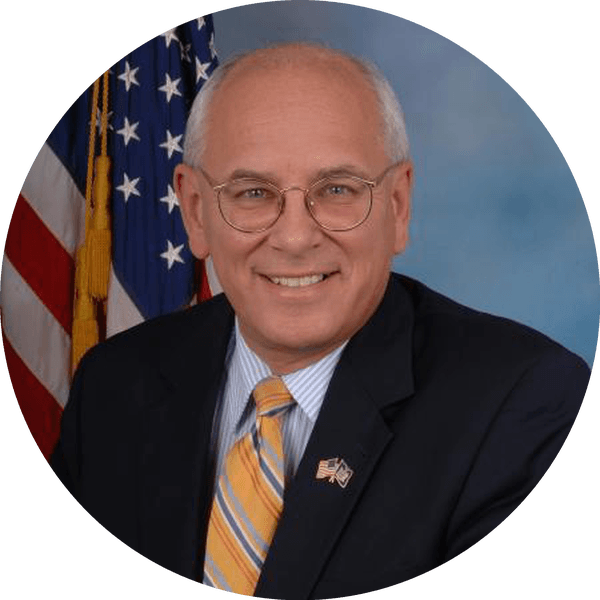
+20
24 cosponsors
Ordered to be Reported by the Yeas and Nays: 44 - 0.
Jul 21, 2026
HouseEnergy
H.R. 1355
Weatherization Enhancement and Readiness Act of 2025
Paul TonkoD-NY




+17
21 cosponsors
Placed on the Union Calendar, Calendar No. 410.
Feb 4, 2026
HouseEnergy
H.R. 6176
Electricity Transmission Scorecard Act
Sean CastenD-IL




+11
15 cosponsors
Referred to the House Committee on Energy and Commerce.
Nov 20, 2025
HouseEnergy
H.R. 7066
SHIELD Act
Mike LevinD-CA


+10
14 cosponsors
Referred to the House Committee on Energy and Commerce.
Jan 14, 2026
HouseEnergy
H.R. 755
Critical Mineral Consistency Act of 2025

Juan CiscomaniR-AZ




+9
13 cosponsors
Received in the Senate. Read twice. Placed on Senate Legislative Calendar under General Orders. Calendar No. 348.
Mar 4, 2026
HouseEnergy
S. 714
Critical Mineral Consistency Act of 2025

Mike LeeR-UT




+1
5 cosponsors
Placed on Senate Legislative Calendar under General Orders. Calendar No. 335.
Feb 11, 2026
SenateEnergy
Trending Right Now
Bills gaining momentum across Congress
H.R. 1502Surging+36
North Platte Canteen Congressional Gold Medal Act

Adrian SmithR-NE




+255
259 cosponsors
+36 this monthReferred to the House Committee on Financial Services.
Feb 21, 2025
HouseArmed Forces and National Security
H.R. 3569Surging+19
Fit to Serve Act

Adam SmithD-WA




+184
188 cosponsors
+19 this monthReferred to the House Committee on Armed Services.
May 21, 2025
HouseArmed Forces and National Security
H.R. 6130Surging+12
ASAP Act

Vern BuchananR-FL



+227
231 cosponsors
+12 this monthOrdered to be Reported in the Nature of a Substitute by the Yeas and Nays: 40 - 0.
Sep 16, 2026
HouseHealth
Tracking Energy in Congress? Monitor bills, track cosponsor momentum, and launch advocacy campaigns — all from one advocacy platform.