H.R. 3699: Energy Choice Act
Sponsor

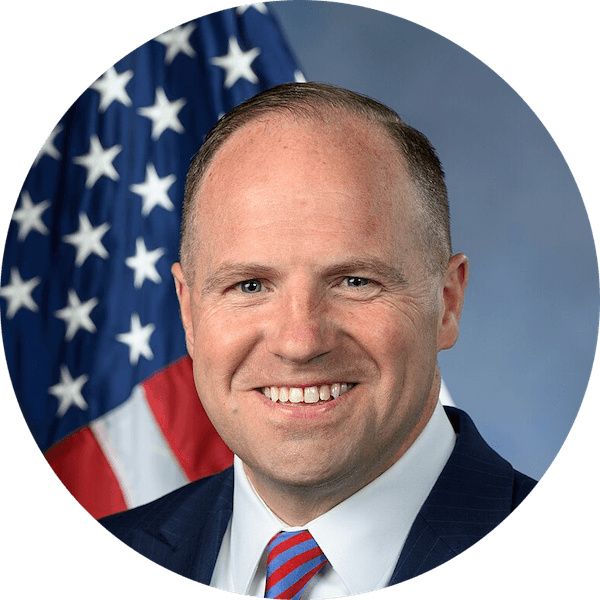
Nicholas Langworthy
Republican · NY-23
Congress wants to override every city gas ban in the country with one sentence
Why it matters
More than 100 cities and counties have restricted or banned natural gas hookups in new buildings — from New York City to San Jose to Berkeley. H.R. 3699 wipes out every one of those policies and prevents any new ones from being adopted. The entire bill is a single sentence of legislative text.
The bill adds a single prohibition to federal law: states, cities, counties, and their regulatory agencies cannot adopt, implement, or enforce any law, regulation, building code, or policy that prohibits or limits energy service based on the type or source of energy being delivered.
That language is broad by design. It covers connections, reconnections, modifications, installations, transportation, distribution, expansion, and access — essentially every point at which a government might try to steer buildings toward or away from a particular fuel. If your city passed a code saying new construction must be all-electric, that code becomes unenforceable. If your state was considering phasing out gas hookups in commercial buildings by 2030, that plan is dead.
The bill does not create any new rights to specific energy infrastructure. It does not require utilities to extend gas lines or guarantee service. It simply removes the power of state and local governments to say no to a particular energy source.
The Energy and Commerce Committee approved the bill 24-21 on December 3, 2025, after the Energy Subcommittee forwarded it by voice vote. It was placed on the Union Calendar on February 4, 2026, making it eligible for a House floor vote at any time.
With 157 cosponsors — including three Democrats — the bill has strong enough support to pass the House. The fight is over whether it can get through the Senate, where 60 votes are needed to clear a filibuster.
Bill Progress
Latest Action · Feb 4, 2026
Placed on House floor schedule, Calendar No. 412.
H.R. 3699 Bill Summary
What H.R. 3699 actually does.
Blocks every local gas ban in the country
No state or local government can adopt or enforce any law, code, or policy that prohibits or limits energy service based on the type of energy. Natural gas bans, all-electric mandates, and fuel-switching requirements all become unenforceable.
Covers the full lifecycle of energy service
The ban applies to connections, reconnections, modifications, installations, transportation, distribution, expansion, and access. There is no gap in coverage that a creative city attorney could exploit.
Includes indirect restrictions
The bill bars policies that have the effect of "directly or indirectly" limiting energy service. A building code that does not mention gas by name but effectively makes gas connections impractical would still violate the law.
Applies to all fuels equally — including renewables
The preemption cuts both ways. A city could not ban gas, but it also could not ban solar or wind connections. Any energy source sold in interstate commerce is protected.
No enforcement mechanism or penalties specified
The bill creates the prohibition but does not establish how it would be enforced — no federal agency authority, no penalties, and no private right of action. Enforcement would likely come through federal court challenges to local ordinances.
Who benefits from H.R. 3699?
Homebuilders and real estate developers
Builders in cities with all-electric mandates could resume offering gas appliances — stoves, furnaces, water heaters — without redesigning projects to comply with patchwork local rules. The National Association of Home Builders backed the bill at introduction.
Natural gas utilities and the fossil fuel industry
Gas utilities facing market contraction from local bans would regain access to every market in the country. Companies that invested in gas distribution infrastructure would no longer risk stranded assets from local policy changes.
Consumers who want fuel choice
If you prefer cooking with gas, heating with propane, or want to keep your existing fuel setup in a city that was phasing it out, this bill preserves that option.
Energy infrastructure investors
Companies building or maintaining pipelines, storage facilities, and distribution networks get regulatory certainty. Local policy risk — the chance a city council votes to eliminate your customer base — goes away.
Who is affected by H.R. 3699?
Cities with clean building policies
More than 100 cities and counties that have adopted gas restrictions or all-electric building codes would see those policies overridden. New York City, Berkeley, San Jose, Seattle, and Denver are among the largest affected.
State governments with building decarbonization plans
States like California, Washington, and New York that have enacted or proposed building emissions standards tied to fuel type would lose the authority to enforce those rules.
Environmental and climate advocacy organizations
Building electrification is a core strategy for reducing carbon emissions — buildings account for roughly 13% of U.S. greenhouse gas emissions. This bill removes one of the most effective local tools for pursuing that strategy.
Electric utilities in markets where all-electric codes created demand
Utilities that expanded capacity or invested in grid upgrades based on anticipated all-electric building mandates may see that demand growth slow or reverse.
HR3699 Legislative Journey
House: Committee Action
Feb 4, 2026
Reported (Amended) by the Committee on Energy and Commerce. H. Rept. 119-482.
House: Vote: 24-21
Dec 3, 2025
Ordered to be Reported by the Yeas and Nays: 24 - 21.
House: Vote Held
Nov 19, 2025
Forwarded by Subcommittee to Full Committee (Amended) by Voice Vote.
House: Committee Action
Jun 4, 2025
Referred to the Subcommittee on Energy.
About the Sponsor
Nicholas Langworthy
Republican, New York's 23rd congressional district · 3 years in Congress
Committees: Rules, Oversight and Government Reform, Energy and Commerce
View full profile →
Cosponsors (157)
This bill has 157 cosponsors: 3 Democrats, 154 Republicans. Cosponsors represent 41 states: Alaska, Alabama, Arkansas, and 38 more.

Michael Baumgartner
Republican · WA

Jack Bergman
Republican · MI

Mike Bost
Republican · IL

Robert Bresnahan
Republican · PA

Ken Calvert
Republican · CA

Mike Carey
Republican · OH
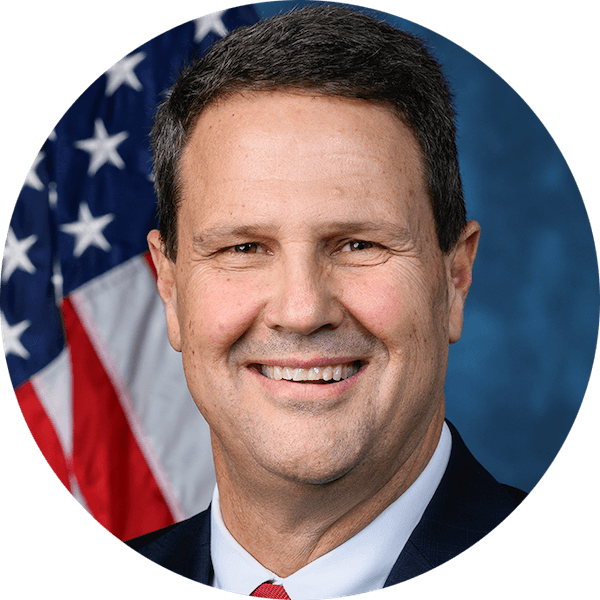
Jeff Crank
Republican · CO

Chuck Edwards
Republican · NC

Jake Ellzey
Republican · TX

Brad Finstad
Republican · MN

Vicente Gonzalez
Democrat · TX

Lance Gooden
Republican · TX
Cosponsor Coverage Map
Committee Sponsors
Energy and Commerce Committee
24 of 54 committee members cosponsored


6 Republicans across this committee haven't cosponsored yet. Mobilize their constituents
H.R. 3699 Quick Facts
- Committee
- Energy and Commerce
- Chamber
- House
- Policy
- Energy
- Introduced
- Jun 4, 2025
Placed on House floor schedule, Calendar No. 412.
Feb 4, 2026
Official Sources
Full text of the one-sentence federal preemption prohibiting state and local gas bans
Identical Senate bill giving the Energy Choice Act a two-chamber path to passage
Energy and Commerce Committee report with rationale, minority views, and 24-21 vote breakdown
32.5 trillion cubic feet consumed in 2023 — residential sector accounts for 14% of total U.S. natural gas use
Natural gas supplies 43% of residential energy; space heating and cooling account for 52% of home energy use
Homes and businesses produce 31% of U.S. greenhouse gas emissions; natural gas is 78% of direct fossil fuel CO2 from buildings
May 2025 — DOE postponed compliance with rules requiring federal buildings to minimize fossil fuel use
DOE program that supports state and local adoption of building energy codes — the codes H.R. 3699 would preempt
H.R. 3699 Common Questions
Can my city still ban natural gas hookups if H.R. 3699 passes?
No. H.R. 3699 prohibits any state or local government from adopting or enforcing a law, code, or policy that limits energy service based on the type of fuel. Existing gas bans become unenforceable and new ones cannot be adopted.
Does the Energy Choice Act apply to existing buildings or just new construction?
Both. The bill covers connections, reconnections, modifications, installations, and expansions of energy service. A city could not ban gas in new buildings or require existing buildings to switch off gas during renovations.
Could a city pass an all-electric building code under H.R. 3699?
No. A building code that requires all-electric construction effectively prohibits gas, oil, and propane service. The bill bars policies that directly or indirectly limit energy service based on fuel type — an all-electric mandate would violate that.
Does H.R. 3699 protect renewable energy too, or just fossil fuels?
All energy sources sold in interstate commerce are covered equally. A local government could not ban gas hookups, but it also could not ban solar thermal, geothermal, or any other energy connection based on fuel type.
How would the Energy Choice Act be enforced?
The bill does not create a specific enforcement mechanism, penalty, or federal agency authority. In practice, enforcement would likely come through federal court lawsuits challenging local ordinances as preempted by federal law.
Can a city use indirect rules to discourage gas without technically banning it?
The bill was written to prevent that. It bars policies that have the effect of "directly or indirectly" prohibiting or limiting energy service based on fuel type. A code that makes gas connections impractical without naming gas would still violate the law.
How many cosponsors does H.R. 3699 have?
157 cosponsors as of March 2026 — 154 Republicans and 3 Democrats. The bill cleared the Energy and Commerce Committee on a 24-21 vote and is on the House Union Calendar awaiting a floor vote.
Does H.R. 3699 override California and New York gas ban policies?
Yes. The bill preempts all state and local laws that prohibit or limit energy service based on fuel type. That includes building decarbonization rules in California, New York, Washington, and any other state.
Based on H.R. 3699 bill text
H.R. 3699 Bill Text
“To prohibit States or local governments from prohibiting or limiting the connection, reconnection, modification, installation, transportation, distribution, or expansion of an energy service based on the type or source of energy to be delivered, and for other purposes.”
Source: U.S. Government Publishing Office
Get notified when H.R. 3699 moves
Committee votes, floor action, cosponsor changes — straight to your inbox.
Bill alerts + Legisletter's monthly briefing. Unsubscribe anytime.
Energy Bills
9 related bills we're tracking
Energy Bills Relief Act





Referred to the Committee on Energy and Commerce, and in addition to the Committees on Agriculture, Ways and Means, Natural Resources, Financial Services, Transportation and Infrastructure, Education and Workforce, Oversight and Government Reform, and Science, Space, and Technology, for a period to be subsequently determined by the Speaker, in each case for consideration of such provisions as fall within the jurisdiction of the committee concerned.
Mar 18, 2026
Heating and Cooling Relief Act


Referred to the Committee on Energy and Commerce, and in addition to the Committee on Education and Workforce, for a period to be subsequently determined by the Speaker, in each case for consideration of such provisions as fall within the jurisdiction of the committee concerned.
Mar 31, 2025
Protecting Families from AI Data Center Energy Costs Act



Ordered to be Reported by the Yeas and Nays: 44 - 0.
Jul 21, 2026
Weatherization Enhancement and Readiness Act of 2025



Placed on the Union Calendar, Calendar No. 410.
Feb 4, 2026
Electricity Transmission Scorecard Act




Referred to the House Committee on Energy and Commerce.
Nov 20, 2025
SHIELD Act


Referred to the House Committee on Energy and Commerce.
Jan 14, 2026
Critical Mineral Consistency Act of 2025





Received in the Senate. Read twice. Placed on Senate Legislative Calendar under General Orders. Calendar No. 348.
Mar 4, 2026
Critical Mineral Consistency Act of 2025




Placed on Senate Legislative Calendar under General Orders. Calendar No. 335.
Feb 11, 2026
Homeowner Energy Freedom Act


Received in the Senate and Read twice and referred to the Committee on Energy and Natural Resources.
Feb 25, 2026
Trending Right Now
Bills gaining momentum across Congress
ASAP Act



Ordered to be Reported in the Nature of a Substitute by the Yeas and Nays: 40 - 0.
Sep 16, 2026
Fit to Serve Act





Referred to the House Committee on Armed Services.
May 21, 2025
America’s Olympic and Paralympic Games Commemorative Coins Act




Referred to the House Committee on Financial Services.
Jul 14, 2025
Tracking Energy in Congress? Monitor bills, track cosponsor momentum, and launch advocacy campaigns — all from one advocacy platform.