H.R. 3978: Nuclear REFUEL (Recycling Efficient Fuels Utilizing Expedited Licensing) Act
Sponsor

Robert Latta
Republican · OH-5
Ease licensing for recycling that doesn't isolate plutonium
Why it matters
For developers trying to recycle spent nuclear fuel, one regulatory label can shape whether a project moves forward. H.R. 3978 would remove equipment that does not isolate plutonium from the federal definition of a nuclear production facility.
H.R. 3978 would change how federal nuclear law classifies certain equipment used to recycle spent fuel. Qualifying equipment would no longer count as a production facility if its process does not isolate plutonium.
If enacted, the bill could ease one regulatory barrier for companies developing this type of nuclear-fuel recycling. It would not create a blanket exemption for every recycling method or eliminate all federal licensing and safety requirements.
The dividing line is the technology itself. A process that keeps plutonium from being isolated could qualify for the exclusion; a process that isolates plutonium could not.
The bill also preserves the existing treatment of equipment used to separate uranium isotopes or enrich uranium-235. No grants, tax credits, fees, penalties, spending authorization, or implementation deadline are included.
What to watch
The House has sent H.R. 3978 to the Senate, where it is on the legislative calendar. The central question is whether Senate leaders schedule a vote; any Senate amendment would then need House approval before the bill could reach the president.
Bill Progress
Latest Action · Nov 10, 2026
Passed the House, received in Senate
How the House voted
Passed · November 9, 20262 Democrats broke with their party to vote no
 Delia Ramirez
 Rashida Tlaib
On Motion to Suspend the Rules and Pass, as Amended: H R 3978 Nuclear REFUEL (Recycling Efficient Fuels Utilizing Expedited Licensing) Act · Roll no. 315 · Official record
H.R. 3978 Bill Summary
What H.R. 3978 actually does.
Qualifying recycling equipment gets a different classification
Equipment that reprocesses spent nuclear fuel without isolating plutonium would be excluded from the federal definition of a production facility.
Plutonium isolation sets the boundary
The exclusion would turn on whether the recycling process isolates plutonium. Methods that do isolate it would not qualify under the bill.
Uranium enrichment rules remain in place
The revised definition would continue to cover equipment used to separate uranium isotopes or enrich uranium-235.
Other nuclear requirements stay intact
H.R. 3978 changes one statutory classification. It does not expressly eliminate every federal license, safety review, or regulatory requirement that could apply to a recycling project.
Who benefits from H.R. 3978?
Teams developing new spent-fuel recycling systems
Researchers and companies working on processes that do not isolate plutonium could pursue projects without having their equipment classified as a production facility under this definition.
Nuclear projects seeking to reuse spent fuel
Project developers using qualifying technology could face a narrower federal licensing framework, although other nuclear rules could still apply.
Who is affected by H.R. 3978?
Companies whose processes isolate plutonium
Their equipment would not qualify for the proposed exclusion and would remain subject to the existing classification rules.
Federal nuclear regulators
Regulators would need to determine whether each recycling process isolates plutonium and therefore whether its equipment qualifies for the exclusion.
Communities considering nuclear recycling projects
The bill could affect how proposed facilities are classified, but it does not remove every federal review or establish new community funding.
Uranium enrichment operators
Their equipment would remain covered by the production-facility definition; the bill reorganizes that language without creating a comparable exclusion for enrichment.
What Congress Is Saying
H.R. 3978 has come up 31 times in the Congressional Record so far.
H.R. 3978 also appeared in 1 in the Extensions of Remarks and 23 routine cosponsor filings.
HR3978 Legislative Journey
Sent to Senate
Nov 10, 2026
Received in the Senate. Read twice. Placed on Senate Legislative Calendar under General Orders. Calendar No. 695.
House: Vote: 397-2
Nov 9, 2026
On motion to suspend the rules and pass the bill, as amended Agreed to by the Yeas and Nays: (2/3 required): 397 - 2 (Roll no. 315). (text: CR H6096)
House: Committee Action
Nov 5, 2026
Reported (Amended) by the Committee on Energy and Commerce. H. Rept. 119-871.
House: Vote: 44-0
Sep 2, 2026
Ordered to be Reported by the Yeas and Nays: 44 - 0.
House: Vote Held
Jul 14, 2026
Forwarded by Subcommittee to Full Committee by Voice Vote.
House: Committee Action
Jun 12, 2025
Referred to the Subcommittee on Energy.
About the Sponsor
Robert Latta
Republican, Ohio's 5th congressional district · 19 years in Congress
Committees: Energy and Commerce
View full profile →
Cosponsors (28)
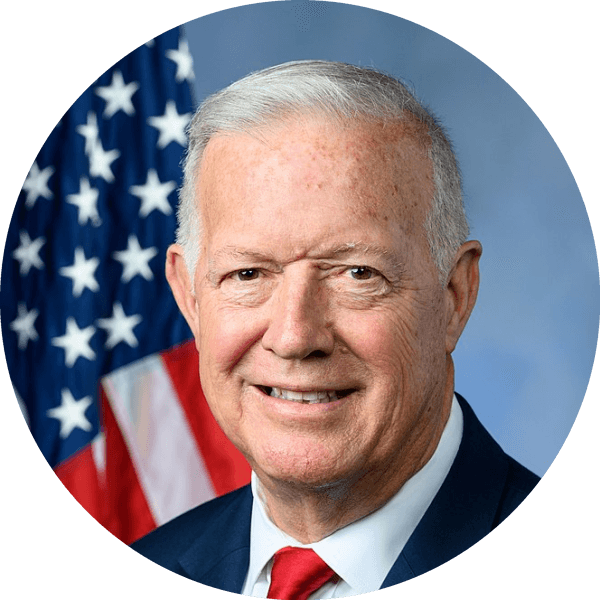
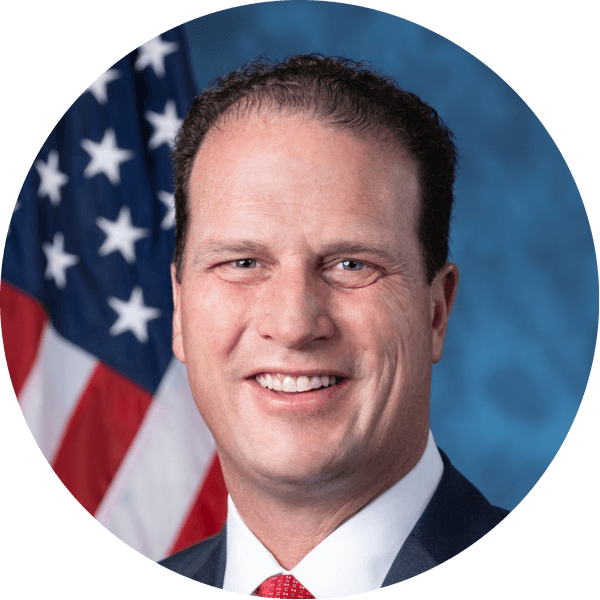
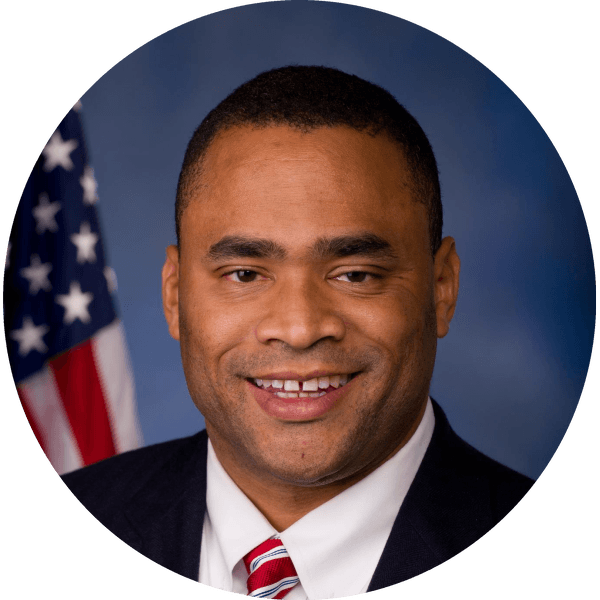
This bill has 28 cosponsors: 8 Democrats, 20 Republicans, reflecting bipartisan support. Cosponsors represent 18 states: Alabama, California, Colorado, and 15 more.

Scott Peters
Democrat · CA

Claudia Tenney
Republican · NY

Gary Palmer
Republican · AL
Randy Weber
Republican · TX

Byron Donalds
Republican · FL

Jay Obernolte
Republican · CA

Michael Lawler
Republican · NY
August Pfluger
Republican · TX

Mariannette Miller-Meeks
Republican · IA

Jake Auchincloss
Democrat · MA

Kevin Mullin
Democrat · CA
Marc Veasey
Democrat · TX
Committee Sponsors
Energy and Commerce Committee
16 of 54 committee members cosponsored


19 Republicans across this committee haven't cosponsored yet. Mobilize their constituents
H.R. 3978 Quick Facts
- Committee
- Energy and Commerce
- Chamber
- House
- Policy
- Energy
- Introduced
- Jun 12, 2025
Passed the House, received in Senate
Nov 10, 2026
Official Sources
The official bill page provides the legislation's text, actions, sponsors, committee activity, and current status.
The official House report explains the committee's rationale for H.R. 3978 and its proposed amendment to the Atomic Energy Act.
The official compiled text of the Atomic Energy Act provides the broader statutory framework governing nuclear facilities and materials.
The Nuclear Regulatory Commission explains its oversight of facilities involved in processing and handling nuclear fuel.
This NRC resource describes the licensing framework that can apply to nuclear fuel-cycle facilities even when a statutory classification changes.
The NRC's reprocessing resource provides regulatory context for technologies that recover usable material from spent nuclear fuel.
The NRC describes uranium-enrichment facilities, which would remain within the production-facility definition under the bill.
The NRC explains federal regulation of spent nuclear fuel storage, illustrating that other safety and licensing requirements would remain relevant.
H.R. 3978 Common Questions
What would H.R. 3978 do?
It would exclude certain spent-fuel recycling equipment from the federal definition of a production facility, but only when the process does not isolate plutonium.
Would the Nuclear REFUEL Act cover processes that isolate plutonium?
No. A recycling process that isolates plutonium would not qualify for the bill's proposed exclusion.
Would H.R. 3978 eliminate all nuclear licensing requirements?
No. It would change one production-facility classification, not erase every federal license, safety review, or regulatory requirement that may apply.
Does H.R. 3978 change nuclear safety standards?
Not expressly. The bill changes how qualifying recycling equipment is classified; it does not create or repeal specific operating, environmental, or safety standards.
Who would decide whether recycling equipment qualifies?
Federal nuclear regulators would apply the revised definition and determine whether a specific process reuses spent fuel without isolating plutonium.
Would the bill change the rules for uranium enrichment equipment?
The bill would reorganize the wording but continue to include equipment used to separate uranium isotopes or enrich uranium-235 in the production-facility definition.
How much funding would the Nuclear REFUEL Act provide?
None. H.R. 3978 authorizes no grants, appropriations, tax incentives, or new fees, and it sets no implementation deadline.
Has H.R. 3978 become law?
No. The House sent H.R. 3978 to the Senate, where it was placed on the legislative calendar. It would still need Senate passage and the president's signature.
Based on H.R. 3978 bill text
H.R. 3978 Bill Text
“To amend the definition of “production facility” in the Atomic Energy Act of 1954 to exclude an equipment or device capable of reprocessing spent nuclear fuel in a manner that does not separate plutonium from other transuranic elements, and for other purposes.”
Source: U.S. Government Publishing Office
Get notified when H.R. 3978 moves
Committee votes, floor action, cosponsor changes — straight to your inbox.
Bill alerts + Legisletter's monthly briefing. Unsubscribe anytime.
Energy Bills
9 related bills we're tracking
Energy Bills Relief Act





Referred to the Committee on Energy and Commerce, and in addition to the Committees on Agriculture, Ways and Means, Natural Resources, Financial Services, Transportation and Infrastructure, Education and Workforce, Oversight and Government Reform, and Science, Space, and Technology, for a period to be subsequently determined by the Speaker, in each case for consideration of such provisions as fall within the jurisdiction of the committee concerned.
Mar 18, 2026
Energy Choice Act



Placed on the Union Calendar, Calendar No. 412.
Feb 4, 2026
Heating and Cooling Relief Act


Referred to the Committee on Energy and Commerce, and in addition to the Committee on Education and Workforce, for a period to be subsequently determined by the Speaker, in each case for consideration of such provisions as fall within the jurisdiction of the committee concerned.
Mar 31, 2025
Ratepayer Protection Act





Motion to proceed to consideration of measure withdrawn in Senate. (CR S5199)
Sep 30, 2026
Efficient Nuclear Licensing Hearings Act



Received in the Senate and Read twice and referred to the Committee on Environment and Public Works.
Nov 12, 2026
Protecting Families from AI Data Center Energy Costs Act



Ordered to be Reported by the Yeas and Nays: 44 - 0.
Jul 21, 2026
Weatherization Enhancement and Readiness Act of 2025


Placed on the Union Calendar, Calendar No. 410.
Feb 4, 2026
Electricity Transmission Scorecard Act



Referred to the House Committee on Energy and Commerce.
Nov 20, 2025
SHIELD Act

Referred to the House Committee on Energy and Commerce.
Jan 14, 2026
Trending Right Now
Bills gaining momentum across Congress
North Platte Canteen Congressional Gold Medal Act



Referred to the House Committee on Financial Services.
Feb 21, 2025
Ensuring Lasting Smiles Act



Referred to the Committee on Energy and Commerce, and in addition to the Committees on Education and Workforce, and Ways and Means, for a period to be subsequently determined by the Speaker, in each case for consideration of such provisions as fall within the jurisdiction of the committee concerned.
May 8, 2025
Major Richard Star Act





Received in the Senate and Read twice and referred to the Committee on Armed Services.
Nov 12, 2026
Tracking Energy in Congress? Monitor bills, track cosponsor momentum, and launch advocacy campaigns — all from one advocacy platform.