H.R. 6500: Continuing Appropriations and Extensions Act, 2027
Sponsor
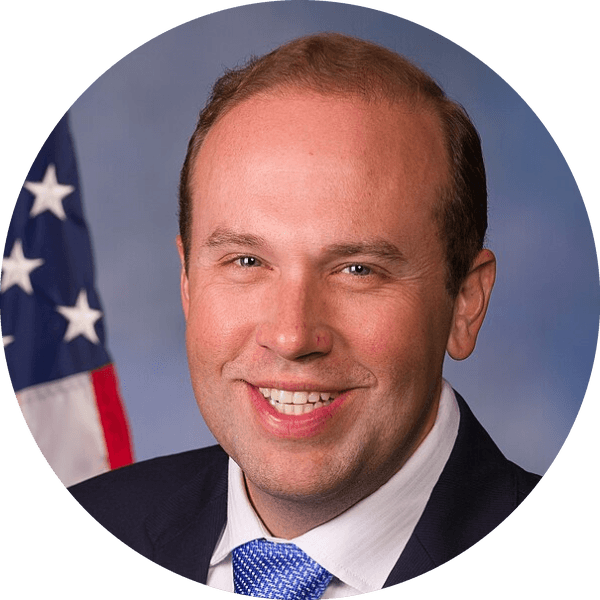
Jason Smith
Republican · MO-8
Congress bought 72 days, not a budget
Why it matters
For 72 days, this law runs the federal government on last year's budget and stacks flood insurance, highway money, veterans' housing grants and dozens of other expiring programs on one December 11 deadline. Trade preferences for Africa and Haiti are the exception: they run through 2028.
H.R. 6500 is a stopgap, now Public Law 119-103. It funds most of the federal government at fiscal year 2026 rates until Congress passes a full-year spending bill for each agency or December 11, 2026 arrives, whichever comes first. Nothing in it sets a full-year budget, so the fight over 2027 spending moves to December instead of ending.
A stopgap comes with a freeze. Agencies generally cannot start anything that lacked funding last year, the Pentagon cannot begin new production or raise production rates, and programs that usually pay out early in the year have to hold back so they do not get ahead of the final budget.
The real choices are in the exceptions. Agencies can spend faster where the calendar will not wait: WIC participation, senior food boxes, wildfire suppression, FEMA disaster response, small-business and farm loans, and rural air service. Departments can also speed up payroll spending to avoid furloughs, once they have cut other administrative costs.
The largest named sums go to the Navy and national security. Up to $2.6 billion can cover cost increases on 20 past shipbuilding programs, led by Virginia-class and Columbia-class submarines, and up to $2.853 billion can go to National Security Systems. Together that is about $5.5 billion in a law that otherwise bars new defense starts.
Dozens of authorities now expire together. Federal flood insurance, the Defense Production Act, cybersecurity information-sharing protections, highway and transit programs, and most of the veterans extensions all run through December 11, so Congress has to renew them in the same few weeks.
Highway and transit programs get 72/365ths of last year's authorization, about 19.7%. Veterans programs get the same arithmetic in hard dollars, led by $130.2 million for Supportive Services for Veteran Families, which works out to about $660 million a year.
A few items reach past December. Trade preferences under the African Growth and Opportunity Act and the Haiti Economic Lift Program run through 2028, and customs user fees move to March 2032. HUD can use unspent voucher money to keep families from losing rental assistance. A rewrite of the federal grant rules known as the Uniform Guidance is blocked through December 11, and members of Congress get no cost-of-living raise during the stopgap.
What to watch
December 11 is the hard stop. Congress can pass full-year spending bills, write another stopgap or let funding lapse, and the same date decides flood insurance, the Defense Production Act and cybersecurity information sharing. The White House budget office owes appropriators a full list of rescissions by November 20. Highway and transit programs are on a bridge too: the five-year infrastructure law's authority ended September 30, and only a long-term replacement ends the extensions.
Bill Progress
Latest Action · Sep 2, 2026
Became Public Law No: 119-103.
How the House voted
Passed · September 1, 202629 Democrats broke with their party to vote no
 Yassamin Ansari
 Brendan Boyle
 André Carson
 Gregorio Casar
 Joaquin Castro
 Maxine Dexter
 Adriano Espaillat
 Maxwell Frost
 Robert Julio Garcia
 Chuy García
 Jimmy Gomez
 Pramila Jayapal
 Andy Biggs
 Sheri Biggs
 Josh Brecheen
 Eric Burlison
 Michael Cloud
 Andrew Clyde
 Eli Crane
 Warren Davidson
 Andy Harris
 Clay Higgins
 Thomas Massie
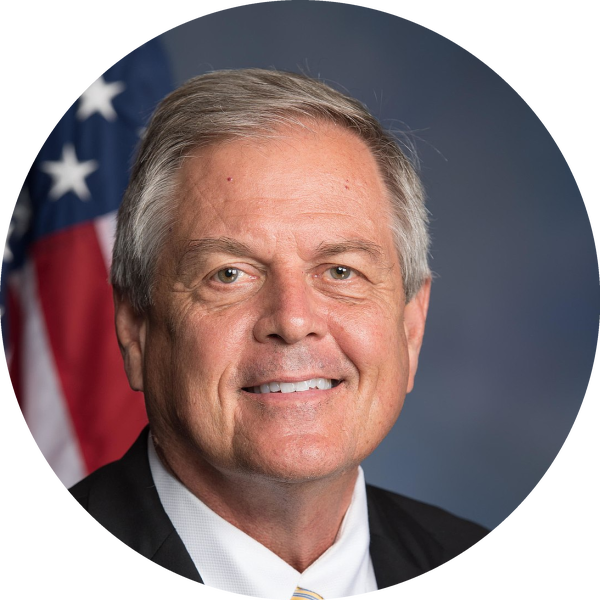 Ralph Norman
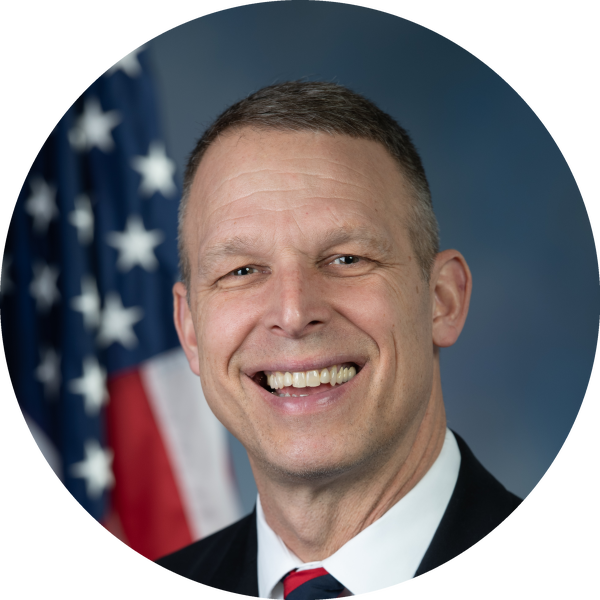 Scott Perry
 John W. Rose
 Chip Roy
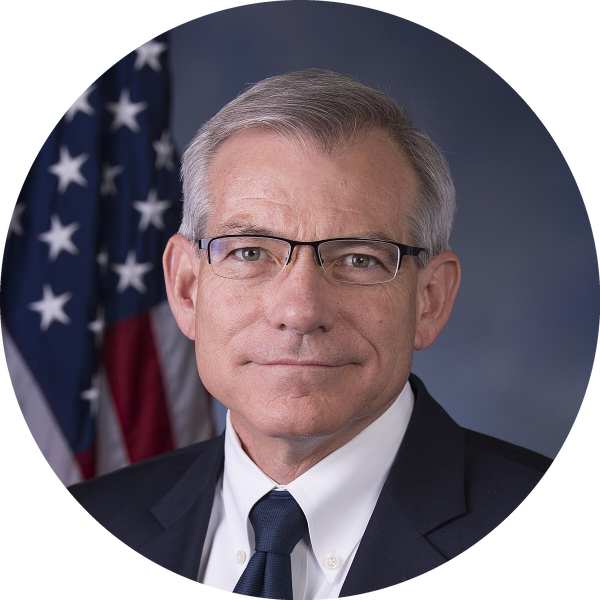 David Schweikert
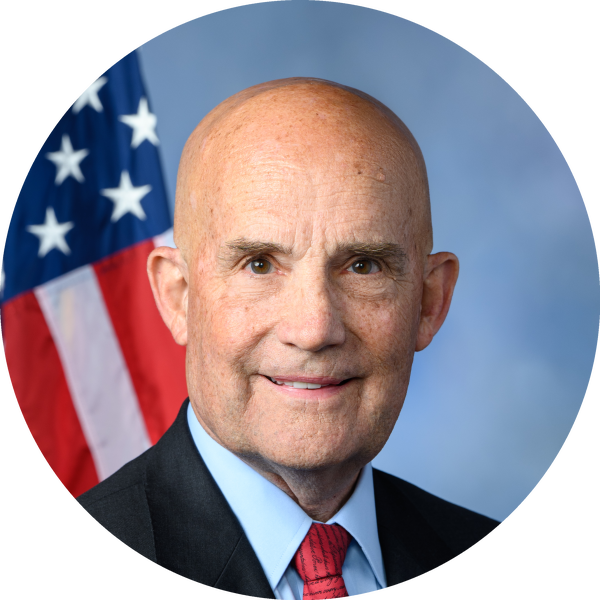 Keith Self
 Pete Sessions
 Gregory Steube
On Motion to Suspend the Rules and Concur in the Senate Amendments: H R 6500 AGOA Extension Act · Roll no. 286 · Official record
How the Senate voted
Passed · August 8, 20263 Democrats broke with their party to vote no
 Tim Kaine
 Ed Markey
 Elizabeth Warren
2 Republicans broke with their party to vote no
 Bill Cassidy
 Rand Paul
On Passage of the Bill H.R. 6500 · Record vote 228 · Official record
How the House voted
Passed · January 12, 202611 Democrats broke with their party to vote no
 Lloyd Doggett
 Valerie Hoyle
 Marcy Kaptur
 John Larson
 Summer Lee
 Donald Norcross
 Delia Ramirez
 Josh Riley
 Rashida Tlaib
 Nydia Velázquez
43 Republicans broke with their party to vote no
 Lauren Boebert
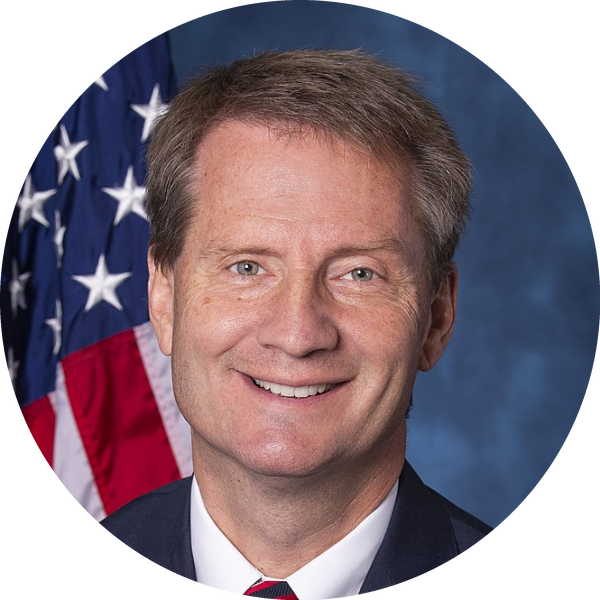 Tim Burchett
 Katherine Cammack
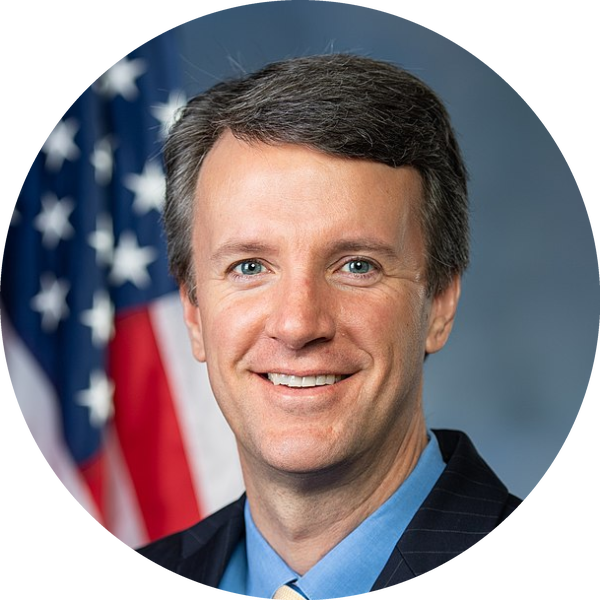 Ben Cline
 Mike Collins
On Motion to Suspend the Rules and Pass, as Amended: H R 6500 AGOA Extension Act · Roll no. 14 · Official record
H.R. 6500 Bill Summary
What H.R. 6500 actually does.
Most of the government stays open through December 11
Covered agencies run at fiscal year 2026 rates until their 2027 spending bill becomes law or December 11 arrives. They generally cannot start projects that lacked funding last year.
Food aid and disaster response can spend faster
Agencies may move money sooner to maintain WIC participation, the Commodity Supplemental Food Program caseload, wildfire suppression, FEMA disaster response, Essential Air Service and small-business and farm loan demand.
The Navy gets room for $2.6 billion in ship cost increases
Twenty past shipbuilding programs can draw up to $2.612 billion, including $566.5 million for one Columbia-class line and $561.1 million for one Virginia-class line. A separate line allows up to $2.853 billion for National Security Systems.
Flood insurance and cyber protections get a short extension
The National Flood Insurance Program, the Defense Production Act, the Cybersecurity Information Sharing Act and the Technology Modernization Fund all run through December 11.
Highways and transit run on a 19.7% share
Surface transportation programs receive 72/365ths of their fiscal year 2026 authorization, from October 1 through December 11, on the same terms as last year.
Veterans programs get prorated funding in hard dollars
Six named allocations total $136,740,825, from $130.2 million for Supportive Services for Veteran Families to $197,261 for homeless women veterans and veterans with children. Dozens of other veterans authorities also run through December 11.
Trade preferences for Africa and Haiti run through 2028
The law extends the African Growth and Opportunity Act and the Haiti Economic Lift Program through 2028, well past the December deadline that governs most of this law.
Who benefits from H.R. 6500?
Families on WIC and seniors using food boxes
Agencies can spend at whatever rate it takes to maintain WIC participation and the current Commodity Supplemental Food Program caseload during the stopgap.
Veteran families at risk of losing housing
Supportive Services for Veteran Families gets $130.2 million for the 72 days, the largest of six named veterans allocations totaling about $136.7 million.
Renters holding housing vouchers
HUD can use unspent voucher money to prevent families from losing rental assistance in the 2026 funding cycle, and the law covers emergency housing vouchers for units under lease on September 30.
Patients at newly opened Indian Health Service facilities
The law adds funding at an annual rate of about $84.1 million to staff and run facilities opened, renovated or expanded in fiscal years 2022, 2026 and 2027.
Medicaid programs in the Northern Mariana Islands
The law raises the islands' federal Medicaid allotment by $21.4 million for fiscal year 2026 as temporary disaster relief, on top of the normal amount.
Businesses trading with sub-Saharan Africa and Haiti
Duty-free access under the African Growth and Opportunity Act and the Haiti Economic Lift Program continues through 2028.
Who is affected by H.R. 6500?
Federal employees and contractors
Paychecks and contracts continue, but only through December 11. Departments can speed up payroll spending to avoid furloughs after cutting other administrative costs.
Defense contractors
The Pentagon generally cannot start new production, raise production rates or begin certain multiyear purchases, apart from the named exceptions for shipbuilding cost increases and National Security Systems.
Grant recipients and nonprofits
Programs that usually pay out early in the year have to hold back during the stopgap. A planned rewrite of the federal grant rules cannot be issued or take effect through December 11.
Members of Congress
No cost-of-living adjustment to congressional pay can be made during the stopgap.
The Medicare Improvement Fund
The fund falls by $21 million, from $2.062 billion to $2.041 billion.
Owners of older nonprofit affordable housing
HUD can pay off certain Flex Sub loans for nonprofit properties with fewer than 100 assisted units, a balance of at least $1.5 million and top inspection and management scores. A competition decides who gets it.
What Congress Is Saying
26 legislators have weighed in on H.R. 6500 — 8 Democrats, 18 Republicans.
H.R. 6500 also appeared in 2 more House floor references, 13 more Senate floor references, and 8 routine cosponsor filings.
HR6500 Legislative Journey
Signed into Law
Sep 2, 2026
Became Public Law No: 119-103.
+5 more actions this day
House: Vote: 370-48
Sep 1, 2026
Passed/agreed to in House: On Motion to Suspend the Rules and Concur in the Senate Amendments: H R 6500 AGOA Extension Act: Passed 370 - 48 (Roll no. 286).
Action Taken
Aug 10, 2026
Message on Senate action sent to the House.
Passed 90-6
Aug 8, 2026
Passed Senate with an amendment and an amendment to the Title by Yea-Nay Vote. 90 - 6. Record Vote Number: 228.
+1 more action this day
Floor Action
Aug 7, 2026
Considered by Senate. (consideration: CR S4542, S4546-4547, S4553-4555)
Vote Held
Aug 5, 2026
Motion to proceed to consideration of measure agreed to in Senate by Voice Vote. (CR S4448)
Floor Action
Aug 4, 2026
Motion to proceed to measure considered in Senate. (CR S4415)
Floor Action
Aug 3, 2026
Motion to proceed to measure considered in Senate. (CR S4414)
Action Taken
Jul 30, 2026
Cloture motion on the motion to proceed to the measure presented in Senate. (CR S4365)
Action Taken
Feb 10, 2026
Read the second time. Placed on Senate Legislative Calendar under General Orders. Calendar No. 320.
Action Taken
Feb 9, 2026
Read the first time. Placed on Senate Legislative Calendar under Read the First Time.
Sent to Senate
Jan 13, 2026
Received in the Senate.
House: Vote: 340-54
Jan 12, 2026
On motion to suspend the rules and pass the bill, as amended Agreed to by the Yeas and Nays: (2/3 required): 340 - 54 (Roll no. 14). (text: CR H637)
House: Committee Action
Dec 30, 2025
Reported (Amended) by the Committee on Ways and Means. H. Rept. 119-416.
House: Vote: 37-3
Dec 10, 2025
Ordered to be Reported in the Nature of a Substitute (Amended) by the Yeas and Nays: 37 - 3.
House: Committee Action
Dec 9, 2025
Referred to the House Committee on Ways and Means.
About the Sponsor
Jason Smith
Republican, Missouri's 8th congressional district · 13 years in Congress
Committees: Joint Committee on Taxation, Ways and Means
View full profile →
Cosponsors at time of passage (1)
This bill has 1 cosponsor: 1 Republican. Cosponsors represent 1 state: Nebraska.
Committee Sponsors
Ways and Means Committee
1 of 45 committee members cosponsored at the time

What laws does H.R. 6500 change?
12 changes
Sections Amended
Section 717(a) of Defense Production Act of 1950 (50 U.S.C. 4564(a))
striking ``September 30, 2026'' and inserting ``December 11, 2026''
Section 26(b) of Toxic Substances Control Act (15 U.S.C. 2625(b))
striking paragraph (6) and inserting the following: ``(6) Termination
Section 506B of Trade Act of 1974 (19 U.S.C. 2466b)
striking ``2026'' and inserting ``2028''
Section 112(g) of African Growth and Opportunity Act (19 U.S.C. 3721(g))
striking ``2026'' and inserting ``2028''
Section 213A(h) of Caribbean Basin Economic Recovery Act (19 U.S.C. 2703a(h))
striking ``2026'' and inserting ``2028''
Section 503 of United States-Korea Free Trade Agreement Implementation Act (Public Law 112-41;19 U.S.C. 3805 note)
striking ``December 31, 2031'' and inserting ``March 31, 2032''
H.R. 6500 Quick Facts

- Committee
- Ways and Means
- Chamber
- House
- Policy
- Economics and Public Finance
- Introduced
- Dec 9, 2025
Became Public Law No: 119-103.
Sep 2, 2026
Official Sources
Congress.gov provides the official legislative history, actions, text, and status of the Continuing Appropriations and Extensions Act, 2027.
GovInfo provides the authenticated text of Public Law 119-103, including the temporary appropriations and program extensions enacted by H.R. 6500.
The law permits funding to be distributed as needed to maintain participation in USDA's WIC nutrition-assistance program.
The law lets agencies spend at the rate needed to maintain the current Commodity Supplemental Food Program caseload.
The largest named veterans allocation in the law, $130.2 million for 72 days, goes to this VA housing program.
The bill temporarily extends federal surface-transportation funding, including highway programs administered through the Federal Highway Administration.
The law supplies a prorated funding bridge for federal transit programs through December 11, 2026.
H.R. 6500 allows continued preparations for the 2030 Census during the temporary funding period.
The law provides funding flexibility intended to protect schedules for NOAA's next-generation GeoXO weather-satellite system.
About Legisletter
Legisletter is the advocacy platform that tracks every bill from introduction to Public Law — and connects the constituents affected by a bill to the legislators who vote on it.
H.R. 6500 Common Questions
Is H.R. 6500 law?
Yes. It was signed on September 2, 2026 and became Public Law 119-103. It is a stopgap: it funds the government at last year's rates and extends dozens of expiring programs.
When does government funding run out under H.R. 6500?
December 11, 2026 for most agencies, or sooner if a full-year spending bill for that agency becomes law first. Congress then has to pass those bills, write another stopgap or let funding lapse.
Does H.R. 6500 extend flood insurance?
Yes, through December 11, 2026. The National Flood Insurance Program gets the same short deadline as most of this law, so it needs another extension from Congress after that.
Did H.R. 6500 extend AGOA?
Yes. The African Growth and Opportunity Act now runs through 2028, and the Haiti Economic Lift Program got the same extension. Both reach far past this law's December deadline.
Do members of Congress get a raise under H.R. 6500?
No. The law blocks the automatic cost-of-living adjustment to congressional pay for as long as the stopgap lasts.
Can federal workers be furloughed under H.R. 6500?
The law gives departments a way to avoid it. They can speed up payroll spending to prevent furloughs, but only after cutting or deferring other administrative costs first.
How much does H.R. 6500 provide for veterans programs?
Six named allocations total about $136.7 million for the 72 days. Most of it, $130.2 million, goes to Supportive Services for Veteran Families, which helps families keep stable housing.
How does H.R. 6500 fund highways and transit?
Programs get 72/365ths of last year's authorization, about 19.7%, to cover October 1 through December 11. The rules stay the same as fiscal year 2026.
Based on H.R. 6500 bill text
H.R. 6500 Bill Text
“Making continuing appropriations and extensions for fiscal year 2027, and for other purposes.”
Source: U.S. Government Publishing Office
Get notified when H.R. 6500 moves
Committee votes, floor action, cosponsor changes — straight to your inbox.
Bill alerts + Legisletter's monthly briefing. Unsubscribe anytime.
Economics and Public Finance Bills
9 related bills we're tracking
Department of Homeland Security Appropriations Act, 2026



Referred to the Committee on Appropriations, and in addition to the Committee on the Budget, for a period to be subsequently determined by the Speaker, in each case for consideration of such provisions as fall within the jurisdiction of the committee concerned.
Feb 11, 2026
Incentivize Savings Act

Ordered to be Reported (Amended) by the Yeas and Nays: 25 - 19.
Feb 4, 2026
Inflation Reduction Act of 2025

Referred to the Committee on Ways and Means, and in addition to the Committees on Energy and Commerce, Agriculture, Natural Resources, Financial Services, Science, Space, and Technology, Transportation and Infrastructure, and Oversight and Government Reform, for a period to be subsequently determined by the Speaker, in each case for consideration of such provisions as fall within the jurisdiction of the committee concerned.
Jan 3, 2025
An act to provide for reconciliation pursuant to title II of H. Con. Res. 14.
Became Public Law No: 119-21.
Jul 4, 2025
Department of Defense Appropriations Act, 2026
Motion to proceed to consideration of measure made in Senate. (CR S8522)
Dec 8, 2025
Energy and Water Development and Related Agencies Appropriations Act, 2026
Read the second time. Placed on Senate Legislative Calendar under General Orders. Calendar No. 156.
Sep 10, 2025
Departments of Labor, Health and Human Services, and Education, and Related Agencies Appropriations Act, 2026

Placed on the Union Calendar, Calendar No. 227.
Sep 11, 2025
Continuing Appropriations, Agriculture, Legislative Branch, Military Construction and Veterans Affairs, and Extensions Act, 2026
Became Public Law No: 119-37.
Nov 12, 2025
Executive Action Cost Transparency Act
Referred to the House Committee on the Budget.
Dec 10, 2025
Trending Right Now
Bills gaining momentum across Congress
North Platte Canteen Congressional Gold Medal Act


Referred to the House Committee on Financial Services.
Feb 21, 2025
Ensuring Lasting Smiles Act

Referred to the Committee on Energy and Commerce, and in addition to the Committees on Education and Workforce, and Ways and Means, for a period to be subsequently determined by the Speaker, in each case for consideration of such provisions as fall within the jurisdiction of the committee concerned.
May 8, 2025
Dismantle Foreign Scam Syndicates Act
Motion to reconsider laid on the table Agreed to without objection.
Nov 18, 2026
Tracking Economics and Public Finance in Congress? Monitor bills, track cosponsor momentum, and launch advocacy campaigns — all from one advocacy platform.