H.R. 4553: Energy and Water Development and Related Agencies Appropriations Act, 2026
Enacted as part of HR6938: Commerce, Justice, Science; Energy and Water Development; and Interior and Environment Appropriations Act, 2026· Jan 23, 2026
Sponsor

Charles Fleischmann
Republican · TN-3
A $5B energy bill that squeaked through by one vote
Why it matters
H.R. 4553 redirects more than $5.1 billion toward small modular reactors and advanced nuclear, and more than doubles one New Mexico rural water program from $870 million to $1.815 billion. It also carries policy riders on DEI funding, COVID-19 mandates, nuclear-waste consent, and China-linked energy deals. The House passed it 214 to 213.
H.R. 4553 sets fiscal year 2026 funding for the agencies that run the country's dams, reactors, and water projects: the Army Corps of Engineers, the Bureau of Reclamation, and the Department of Energy. The headline number is nuclear.
The bill pulls more than $5.1 billion in unspent infrastructure-law money out of five programs, including renewable energy and carbon-capture accounts, and redirects it into the Energy Department's nuclear account for small modular reactors and advanced reactor demonstrations.
Western water gets a boost too. A New Mexico rural water program would more than double from $870 million to $1.815 billion. Desalination authority would climb from $30 million to $106.5 million, and wastewater and groundwater recycling from $50 million to $177.5 million.
The bill also moves to wall off China-linked energy deals. It blocks Strategic Petroleum Reserve sales to firms the bill describes as controlled by the Chinese Communist Party or destined for export to China, and it bars Energy Department grants, contracts, or loans of $10 million or more to what the bill calls entities of concern.
Riding alongside the money is a stack of policy riders. The bill would cut off federal funding for DEI programs and training, block federal COVID-19 mask or vaccine mandates, require federal computer networks to filter pornography with a law-enforcement exception, and limit which flags fly over federal buildings.
On nuclear waste, the bill says federal money cannot support consolidated interim storage of spent fuel unless the host state, local government, and any affected tribes have agreed. And big projects face more scrutiny: Energy Department construction over $100 million would need an independent cost estimate first.
Bill Progress
Latest Action · Sep 10, 2025
Passed the House, received in Senate
H.R. 4553 Bill Summary
What H.R. 4553 actually does.
Small reactor projects get a $5.1 billion push
H.R. 4553 pulls more than $5.1 billion in unspent infrastructure-law funds out of five Energy Department programs and redirects it into the nuclear account for small modular reactor deployment and advanced reactor demonstrations, the bill's clearest funding priority.
Western water projects get bigger spending room
The bill raises several Bureau of Reclamation authorizations, including the Northwestern New Mexico Rural Water Projects Act from $870 million to $1.815 billion, desalination from $30 million to $106.5 million, and wastewater and groundwater recycling from $50 million to $177.5 million.
China-linked deals face new funding blocks
The bill prohibits Strategic Petroleum Reserve sales for export to China or to entities it describes as controlled by the Chinese Communist Party. It also bars Energy Department grants or loans of $10 million or more to certain covered foreign-linked entities.
Big Energy Department projects get extra scrutiny
Projects above $100 million would need an independent cost estimate, and some high-hazard nuclear facilities could not receive funding unless independent oversight is in place.
Federal agencies face tighter spending notices
Energy Department officials would have to notify Congress before grants or awards of at least $1 million and before larger reprogrammings. Army Corps project managers also face detailed caps on how much money they can shift without approval.
Nuclear waste storage needs local consent
Federal funds could not be used for consolidated interim spent nuclear fuel storage unless the host state, local government, and tribal governments consent.
Who benefits from H.R. 4553?
Communities waiting on western water projects
Places dealing with drought, water scarcity, or delayed infrastructure could benefit from higher authorization ceilings, including a New Mexico rural water project authority that would more than double from $870 million to $1.815 billion.
Companies building small modular reactors
Advanced nuclear developers and their suppliers stand to gain from the bill's $5.1 billion transfer into small reactor and demonstration work, which could speed engineering, licensing, and construction activity.
States and local communities near proposed waste sites
They gain negotiating power because H.R. 4553 says federal money cannot support interim spent fuel storage unless host state, local, and tribal governments agree.
Visitors who legally carry at Army Corps sites
People who can legally possess a firearm under state law would be allowed to carry at covered Army Corps water projects under the bill's rules.
Who is affected by H.R. 4553?
Energy Department officials and grant managers
They would face tighter notice requirements before large grants, awards, and budget shifts, plus a ban on grants or loans of $10 million or more to certain covered entities.
Federal offices running workplace or training programs
Agencies and contractors using federal funds for DEI initiatives, DEI training, or related programming would have to stop if these riders remain in the final bill.
China-linked firms seeking energy business
Some companies tied to China would lose access to Strategic Petroleum Reserve purchases, certain federal procurement, and some Energy Department funding streams.
Army Corps managers moving money between projects
They would have to stay within strict reprogramming caps, such as 15% up to $3 million for larger construction lines and 15% up to $5 million for larger operation and maintenance lines.
Cost & Funding
Authorization
H.R. 4553 redirects more than $5.1 billion toward nuclear reactor work and raises several western water authorizations, including one that more than doubles to $1.815 billion.
- The bill transfers $5,104,132,548 into the Department of Energy's nuclear account, pulled from five unspent infrastructure-law programs: $672.7 million from renewable energy, $981.5 million from existing nuclear funds, $1 billion from fossil energy, $1.5 billion from carbon-dioxide transportation, and $950 million from clean-energy demonstrations.
- The Northwestern New Mexico Rural Water Projects Act would rise by $945 million, from $870 million to $1.815 billion.
- Wastewater and groundwater recycling authority would rise by $127.5 million, from $50 million to $177.5 million.
- Desalination authority would rise by $76.5 million, from $30 million to $106.5 million.
- A separate reclamation authorization would rise by $80 million, from $920 million to $1 billion.
- Emergency drought relief authority would rise by $10 million, from $120 million to $130 million.
- The Army Corps could also transfer up to $8.733 million to the Fish and Wildlife Service for fisheries mitigation.
What Congress Is Saying
86 legislators have weighed in on H.R. 4553 — 44 Democrats, 40 Republicans, 2 Independents.
Mr. Chair, I rise in support of my amendments to H.R. 4553, the Energy and Water Development and Related Agencies Appropriations Act for Fiscal Year 2026, and in opposition to the underlying bill. The bill itself cuts over $750 million from the FY25 spending levels, revokes $5 billion from the Bipartisan Infrastructure Law, zeroes out Army Corps programs that clean up radioactive waste and blocks clean energy initiatives. My four amendments support essential funding for our National Labs and our continued goal to restore the Chesapeake Bay.
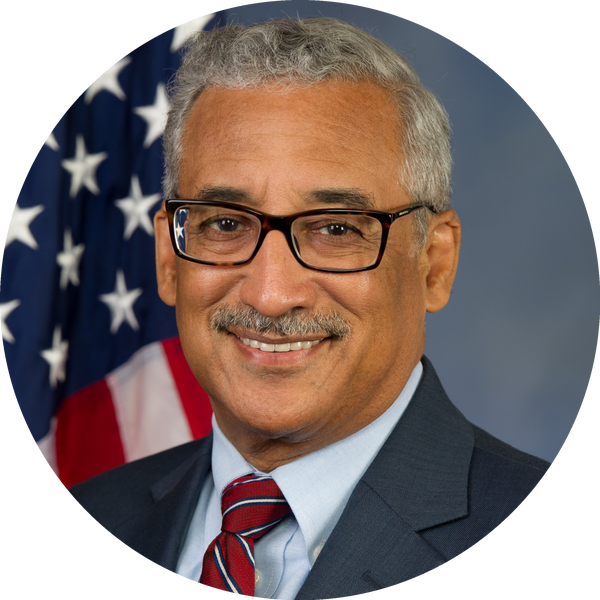
H.R. 4553 also appeared in 4 more House floor references, 10 more Senate floor references, and 5 routine cosponsor filings.
HR4553 Legislative Journey
Action Taken
Sep 10, 2025
Read the second time. Placed on Senate Legislative Calendar under General Orders. Calendar No. 156.
Action Taken
Sep 9, 2025
Read the first time. Placed on Senate Legislative Calendar under Read the First Time.
Sent to Senate
Sep 8, 2025
Received in the Senate.
House: Passed 214-213
Sep 4, 2025
On passage Passed by the Yeas and Nays: 214 - 213 (Roll no. 239).
+16 more actions this day
House: Vote Held
Sep 3, 2025
On motion that the committee rise Agreed to by voice vote.
About the Sponsor
Charles Fleischmann
Republican, Tennessee's 3rd congressional district · 15 years in Congress
Committees: Science, Space, and Technology, Appropriations
View full profile →
Committee Sponsors
Appropriations Committee
0 of 63 committee members cosponsored at the time
No committee members have cosponsored this bill
What laws does H.R. 4553 change?
1 changes
Sections Amended
Section 9504(e) of Omnibus Public Land Management Act of 2009 (42 U.S.C. 10364(e))
striking ``$920,000,000'' and inserting ``$1,000,000,000''
H.R. 4553 Quick Facts
- Committee
- Appropriations
- Chamber
- House
- Policy
- Economics and Public Finance
- Introduced
- Jul 21, 2025
Passed the House, received in Senate
Sep 10, 2025
Official Sources
Official bill page with status, text, actions, and related documents for H.R. 4553.
The bill directs billions into the Department of Energy's nuclear energy account, the office that runs the reactor programs it funds.
This DOE page explains the small modular reactor program that receives the bill's $5.1 billion transfer.
The bill pulls $950 million in unspent funds out of this DOE demonstration office and redirects it to nuclear work.
Official DOE page for the Strategic Petroleum Reserve, which the bill bars from selling oil for export to China.
Explains spent nuclear fuel storage and disposal, the subject of the bill's requirement for state, local, and tribal consent before interim storage can be federally supported.
About Legisletter
Legisletter is the advocacy platform that tracks every bill from introduction to Public Law — and connects the constituents affected by a bill to the legislators who vote on it.
H.R. 4553 Common Questions
How much money does H.R. 4553 send to small modular reactors?
More than $5.1 billion. The bill pulls unspent infrastructure-law money out of five Energy Department programs and redirects it into the nuclear account for small modular reactors and advanced reactor demonstrations.
Does H.R. 4553 block oil reserve sales to China?
Yes. The bill says Strategic Petroleum Reserve oil cannot be sold for export to China or to entities it describes as controlled by the Chinese Communist Party.
What happens to the New Mexico rural water project cap?
It would rise from $870 million to $1.815 billion under H.R. 4553, a $945 million increase.
Can DOE still give big grants or loans to covered foreign-linked entities?
Not above $10 million. H.R. 4553 bars Energy Department grants or loans of $10 million or more to certain covered entities of concern.
Does H.R. 4553 ban federal spending on DEI programs?
Yes, if the rider stays in the final bill. H.R. 4553 bars federal funds for DEI initiatives, DEI training, and related concepts defined by the bill.
Would nuclear waste storage need local consent under H.R. 4553?
Yes. Federal funds could not support consolidated interim spent fuel storage unless the host state, local government, and tribal governments consent.
Can you legally carry a firearm at Army Corps water projects under H.R. 4553?
Yes, if you can legally possess the firearm and you follow the law of the state where the project is located.
Did H.R. 4553 become law?
Not on its own. The standalone bill stalled on the Senate calendar after passing the House 214-213. But the energy and water funding it carried became law through a larger consolidated package, H.R. 6938, signed in January 2026.
Based on H.R. 4553 bill text
H.R. 4553 Bill Text
“Making appropriations for energy and water development and related agencies for the fiscal year ending September 30, 2026, and for other purposes.”
Source: U.S. Government Publishing Office
Economics and Public Finance Bills
9 related bills we're tracking
Department of Homeland Security Appropriations Act, 2026





Referred to the Committee on Appropriations, and in addition to the Committee on the Budget, for a period to be subsequently determined by the Speaker, in each case for consideration of such provisions as fall within the jurisdiction of the committee concerned.
Feb 11, 2026
Incentivize Savings Act





Ordered to be Reported (Amended) by the Yeas and Nays: 25 - 19.
Feb 4, 2026
Inflation Reduction Act of 2025





Referred to the Committee on Ways and Means, and in addition to the Committees on Energy and Commerce, Agriculture, Natural Resources, Financial Services, Science, Space, and Technology, Transportation and Infrastructure, and Oversight and Government Reform, for a period to be subsequently determined by the Speaker, in each case for consideration of such provisions as fall within the jurisdiction of the committee concerned.
Jan 3, 2025
An act to provide for reconciliation pursuant to title II of H. Con. Res. 14.

Became Public Law No: 119-21.
Jul 4, 2025
Department of Defense Appropriations Act, 2026

Motion to proceed to consideration of measure made in Senate. (CR S8522)
Dec 8, 2025
Departments of Labor, Health and Human Services, and Education, and Related Agencies Appropriations Act, 2026

Placed on the Union Calendar, Calendar No. 227.
Sep 11, 2025
Continuing Appropriations, Agriculture, Legislative Branch, Military Construction and Veterans Affairs, and Extensions Act, 2026

Became Public Law No: 119-37.
Nov 12, 2025
Executive Action Cost Transparency Act

Referred to the House Committee on the Budget.
Dec 10, 2025
Commerce, Justice, Science; Energy and Water Development; and Interior and Environment Appropriations Act, 2026
Became Public Law No: 119-74.
Jan 23, 2026
Trending Right Now
Bills gaining momentum across Congress
America’s Olympic and Paralympic Games Commemorative Coins Act




Referred to the House Committee on Financial Services.
Jul 14, 2025
Fit to Serve Act





Referred to the House Committee on Armed Services.
May 21, 2025
ASAP Act





Ordered to be Reported in the Nature of a Substitute by the Yeas and Nays: 40 - 0.
Sep 16, 2026
Tracking Economics and Public Finance in Congress? Monitor bills, track cosponsor momentum, and launch advocacy campaigns — all from one advocacy platform.