H.R. 5438: Incentivize Savings Act
Sponsor

Richard McCormick
Republican · GA-7
Ending the government's use-it-or-lose-it spending rush
Why it matters
Every dollar a federal agency doesn't spend by its deadline normally vanishes back to the Treasury, and offices often rush to burn it first. H.R. 5438 changes the deal: of any money left unspent, 49% stays with the agency for another year, 49% pays down the national debt, and 2% funds employee retention bonuses. In exchange, an agency that uses the rule can't ask for a bigger budget the next year beyond inflation. The bill cleared the House Oversight Committee on a 25-19 vote and has 69 cosponsors, a handful from both parties.
H.R. 5438, the Incentivize Savings Act, sets a new rule for what happens to time-limited money a federal agency doesn't spend before its deadline. Today most of it goes back to the Treasury. Under the bill, it splits three ways: 49% stays with the agency for one more year, 49% goes to principal and interest on the national debt, and 2% funds retention bonuses for employees.
The math is easy to picture. For every $100 million an agency leaves on the table, $49 million carries over, $49 million pays down debt, and up to $2 million goes to staff bonuses — and no single bonus can top 10% of an employee's basic pay. Any bonus money not paid out also goes to the debt.
The bill pairs that carryover with a leash. An agency that uses these savings rules can't turn around and ask for a bigger budget the next year — its request to the Office of Management and Budget and in the President's budget to Congress can't exceed the prior year's request, except for an inflation adjustment tied to the Consumer Price Index. Sponsors frame this as keeping agencies from banking savings and still padding future asks.
It reaches broadly: every executive-branch agency, plus the U.S. Postal Service and the Postal Regulatory Commission, though not the American Red Cross. Supporters say it rewards finding savings instead of rushing to spend. Critics counter that paying agencies and staff out of unspent funds could push offices to delay hiring, contracts, or services just to show a surplus — and the savings only materialize if agencies actually leave more money unspent.
Bill Progress
Latest Action · Feb 4, 2026
Committee approved bill for floor consideration (Amended) by the Yeas and Nays: 25 - 19.
H.R. 5438 Bill Summary
What H.R. 5438 actually does.
Unspent money no longer just disappears
If an agency doesn't spend its time-limited funds by the deadline, it keeps 49% of the leftover for one additional fiscal year instead of returning all of it.
Half the savings pays down the national debt
Another 49% of any unspent funds must be used for payments of principal and interest on the public debt.
A slice funds employee retention bonuses
The remaining 2% of unspent funds is set aside for retention bonuses, paid within 30 days after the funding period ends.
Bonuses are capped at 10% of pay
No retention bonus paid under the bill can exceed 10% of an employee's basic pay, and any bonus money left over goes to the public debt.
Saving money freezes next year's budget request
Once an agency uses these rules, its budget request the following year can't be larger than the prior year's request, adjusted only by the Consumer Price Index.
Covers nearly the whole executive branch
The rule applies to executive agencies plus the U.S. Postal Service and the Postal Regulatory Commission; the American Red Cross is specifically excluded.
Who benefits from H.R. 5438?
Taxpayers
Every dollar an agency banks instead of burning in a year-end rush is a dollar not wasted, and 49% of it goes straight toward the national debt.
Federal employees at lean agencies
Staff at agencies that come in under budget could receive retention bonuses of up to 10% of their basic pay, paid within 30 days of the funding period closing.
Agencies that run efficiently
Instead of losing all unspent money when the period ends, they keep 49% of it to use the following year.
Deficit-focused lawmakers
The bill builds a standing channel from unspent appropriations to debt payments, with no annual fight required to make it happen.
Who is affected by H.R. 5438?
Executive-branch agencies
They face new rules for leftover time-limited funds and a hard cap on the next year's budget request once they use those rules.
Budget and finance officers
They would track unspent balances, run the 49/49/2 split, transfer money to debt service, and pay bonuses within 30 days.
Programs that rely on full annual spending
Hiring, contracts, or projects could be deferred if managers hold back spending to produce a surplus under the new formula.
The Postal Service and Postal Regulatory Commission
Both are explicitly pulled into the definition of a federal agency; the American Red Cross is explicitly left out.
HR5438 Legislative Journey
House: Vote: 25-19
Feb 4, 2026
Ordered to be Reported (Amended) by the Yeas and Nays: 25 - 19.
House: Committee Action
Sep 17, 2025
Referred to the Committee on Oversight and Government Reform, and in addition to the Committee on the Budget, for a period to be subsequently determined by the Speaker, in each case for consideration of such provisions as fall within the jurisdiction of the committee concerned.
About the Sponsor
Richard McCormick
Republican, Georgia's 7th congressional district · 3 years in Congress
Committees: Science, Space, and Technology, Armed Services, Oversight and Government Reform
View full profile →
Cosponsors (69)
This bill has 69 cosponsors: 4 Democrats, 65 Republicans. Cosponsors represent 28 states: Alaska, Alabama, Arizona, and 25 more.

Josh Brecheen
Republican · OK

Chuck Edwards
Republican · NC

James Baird
Republican · IN

Ben Cline
Republican · VA
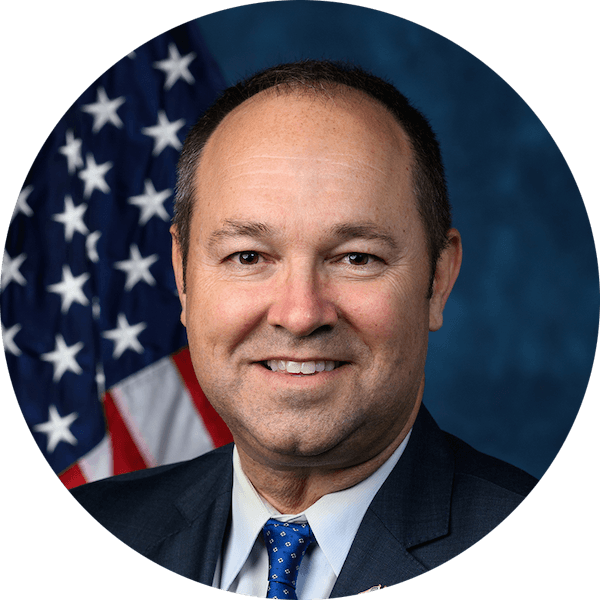
Marlin Stutzman
Republican · IN

Eric Burlison
Republican · MO

Pat Fallon
Republican · TX

Beth Van Duyne
Republican · TX

Ronny Jackson
Republican · TX

Keith Self
Republican · TX

Daniel Webster
Republican · FL

Glenn Grothman
Republican · WI
Committee Sponsors
Oversight and Government Reform Committee
23 of 47 committee members cosponsored


Budget Committee
11 of 37 committee members cosponsored


14 Republicans across these committees haven't cosponsored yet. Mobilize their constituents
H.R. 5438 Quick Facts
- Committee
- Oversight and Government Reform
- Chamber
- House
- Policy
- Economics and Public Finance
- Introduced
- Sep 17, 2025
Committee approved bill for floor consideration (Amended) by the Yeas and Nays: 25 - 19.
Feb 4, 2026
Official Sources
Official bill page with full text, the 25-19 Oversight Committee markup, cosponsors, and current status.
The Government Accountability Office's review of the federal year-end 'use-it-or-lose-it' spending surge this bill is designed to curb.
The existing retention-bonus statute the bill's 2% set-aside is paid under, with its own 10% cap rules.
The statute governing the President's annual budget request, which the bill caps for any agency that uses these savings rules.
The 'Executive agency' definition the bill builds on to set which agencies are covered, before adding the Postal Service and excluding the Red Cross.
Subchapter I of this chapter is exactly where the bill inserts the new section 1311 that creates the 49/49/2 split.
Treasury's explanation of how principal and interest on the public debt work — the destination for 49% of every agency's unspent funds.
H.R. 5438 Common Questions
What does the Incentivize Savings Act actually do?
It changes what happens to money a federal agency doesn't spend before its deadline. Instead of nearly all of it returning to the Treasury, 49% stays with the agency for one more year, 49% pays down the national debt, and 2% funds employee retention bonuses.
Why do federal agencies rush to spend money at the end of the year?
Money an agency doesn't spend by its deadline normally disappears, and returning it can make next year's request look too big. So offices often rush to spend what's left before the clock runs out. H.R. 5438 lets agencies keep 49% of leftover funds instead, aiming to ease that pressure.
How big can a federal employee's retention bonus be under H.R. 5438?
The bill carves out 2% of an agency's unspent funds for retention bonuses, paid within 30 days after the funding period ends. No single bonus can exceed 10% of that employee's basic pay, and any bonus money not paid out goes to the national debt.
Does any of the unspent money go toward the national debt?
Yes. 49% of any unspent agency funds would go toward principal and interest on the public debt. If bonus money set aside under the bill isn't fully paid out, that remainder goes to the debt too.
Can an agency just request a bigger budget the next year to make up for it?
No. If an agency uses these savings rules, its budget request the next year — both to OMB and in the President's budget to Congress — can't be larger than the prior year's request, adjusted only for inflation using the Consumer Price Index.
Does the Incentivize Savings Act apply to the Postal Service?
Yes. The bill's definition of a federal agency covers executive-branch agencies plus the U.S. Postal Service and the Postal Regulatory Commission. The American Red Cross is the one entity specifically left out.
Has H.R. 5438 passed, and what's its status?
Not yet. The House Oversight and Government Reform Committee approved an amended version on a 25-19 vote on February 4, 2026. It has 69 cosponsors — mostly Republicans with a few Democrats — and still needs Budget Committee action and a House floor vote.
Based on H.R. 5438 bill text
H.R. 5438 Bill Text
“To incentivize Federal agencies to create savings for the American people, and for other purposes.”
Source: U.S. Government Publishing Office
Get notified when H.R. 5438 moves
Committee votes, floor action, cosponsor changes — straight to your inbox.
Bill alerts + Legisletter's monthly briefing. Unsubscribe anytime.
Economics and Public Finance Bills
9 related bills we're tracking
Department of Homeland Security Appropriations Act, 2026





Referred to the Committee on Appropriations, and in addition to the Committee on the Budget, for a period to be subsequently determined by the Speaker, in each case for consideration of such provisions as fall within the jurisdiction of the committee concerned.
Feb 11, 2026
Inflation Reduction Act of 2025




Referred to the Committee on Ways and Means, and in addition to the Committees on Energy and Commerce, Agriculture, Natural Resources, Financial Services, Science, Space, and Technology, Transportation and Infrastructure, and Oversight and Government Reform, for a period to be subsequently determined by the Speaker, in each case for consideration of such provisions as fall within the jurisdiction of the committee concerned.
Jan 3, 2025
An act to provide for reconciliation pursuant to title II of H. Con. Res. 14.

Became Public Law No: 119-21.
Jul 4, 2025
Department of Defense Appropriations Act, 2026

Motion to proceed to consideration of measure made in Senate. (CR S8522)
Dec 8, 2025
Energy and Water Development and Related Agencies Appropriations Act, 2026

Read the second time. Placed on Senate Legislative Calendar under General Orders. Calendar No. 156.
Sep 10, 2025
Departments of Labor, Health and Human Services, and Education, and Related Agencies Appropriations Act, 2026

Placed on the Union Calendar, Calendar No. 227.
Sep 11, 2025
Continuing Appropriations, Agriculture, Legislative Branch, Military Construction and Veterans Affairs, and Extensions Act, 2026

Became Public Law No: 119-37.
Nov 12, 2025
Executive Action Cost Transparency Act

Referred to the House Committee on the Budget.
Dec 10, 2025
Commerce, Justice, Science; Energy and Water Development; and Interior and Environment Appropriations Act, 2026
Became Public Law No: 119-74.
Jan 23, 2026
Trending Right Now
Bills gaining momentum across Congress
North Platte Canteen Congressional Gold Medal Act





Referred to the House Committee on Financial Services.
Feb 21, 2025
Fit to Serve Act





Referred to the House Committee on Armed Services.
May 21, 2025
ASAP Act




Ordered to be Reported in the Nature of a Substitute by the Yeas and Nays: 40 - 0.
Sep 16, 2026
Tracking Economics and Public Finance in Congress? Monitor bills, track cosponsor momentum, and launch advocacy campaigns — all from one advocacy platform.