Mr. President, had there been a recorded vote on Calendar No. 311, H.R. 7147, Department of Homeland Security Appropriations Act, 2026, as amended, I would have voted nay. In addition, had there been a recorded vote on tabling the House message to accompany H.R. 7147, I would have voted nay.
H.R. 7147: Homeland Security and Further Additional Continuing Appropriations Act, 2026.
Signed Into LawPublic Law 119-75
Enacted as part of HR7148: Consolidated Appropriations Act, 2026· Feb 3, 2026
Sponsor

Tom Cole
Republican · OK-4
Bill Progress
IntroducedJan 20
Committee
Pass House
Pass SenateMar 27
SignedApr 30
LawApr 30
Latest Action · Apr 30, 2026
1/2
Became Public Law No: 119-86.
Congress wants a closer watch on how DHS spends and detains
4 min readLast updated June 22, 2026
Why it matters
This is the Department of Homeland Security's funding bill for 2026, and Congress attached strings to the check: $20 million for body-worn cameras on immigration enforcement agents, another $20 million for independent inspections of detention facilities, and monthly reports on what DHS spends and who it hires. The House passed it 220-207, and it has since stalled on repeated cloture votes in the Senate.
H.R. 7147 keeps the Department of Homeland Security running through September 2026. It funds the department's leadership offices, the Management Directorate, intelligence and situational-awareness work, and the independent inspector general — more than $2.6 billion in the portion with public dollar figures, on top of the budgets it sets for agencies like Customs and Border Protection, ICE, TSA, the Coast Guard, and FEMA.
What sets the bill apart is how much it asks for in return. DHS would have to send Congress a monthly breakdown of what it spends and how many people it employs, report every grant and contract awarded without full competition, and brief lawmakers on its biggest acquisition programs each quarter. The bill even withholds $5 million from the Office of the Secretary until the department answers all of its budget-hearing questions for the record.
A second theme runs through the immigration provisions. The bill gives the inspector general $20 million for additional detention-facility inspections, bars funds from being used to destroy records of deaths or alleged abuse in DHS custody, and lets members of Congress enter detention facilities for oversight without advance notice. It also sets aside $20 million for body-worn cameras on agents performing immigration enforcement, with a spending plan due to Congress within 30 days.
Scattered through the rest are dozens of smaller mandates: senior officials and lawmakers cannot skip airport screening, DHS cannot charge a new fee for crossing the border on foot or by car, and a late addition routes $140 million to the FAA for a 3.8% pay raise for air traffic controllers. Supporters frame the package as basic accountability for a sprawling agency. The House passed it 220-207, and it has since stalled in the Senate, where backers have repeatedly failed to clear the 60-vote threshold to move forward.
H.R. 7147 Bill Summary
What H.R. 7147 actually does.
1
Body cameras for immigration enforcement agents
Section 109 sets aside $20 million to buy, deploy, and operate body-worn cameras for agents and officers performing immigration enforcement, with a spending plan due to Congress within 30 days of enactment.
2
More independent inspections of detention facilities
The DHS inspector general gets $20 million dedicated to additional inspections and oversight of detention facilities, on top of funds to track how earlier appropriations are being spent.
3
Monthly spending and staffing reports
DHS would have to send Congress a monthly accounting of what it obligated and how many people it employs, broken down by program, within 30 days after each month ends.
4
A $5 million holdback until DHS answers Congress
The bill withholds $5 million from the Office of the Secretary until the department submits answers to all of its budget-hearing questions for the record.
5
Scrutiny for no-bid contracts
The Secretary must report every grant and contract awarded without full and open competition in 2025 and 2026, and the inspector general must review whether DHS followed the law.
6
Members of Congress can inspect detention sites unannounced
Section 547 bars DHS from blocking members of Congress, or their designated staff, from entering detention facilities for oversight, and from making temporary changes that alter what a visiting lawmaker sees.
Who benefits from H.R. 7147?
Congressional appropriators and oversight committees
They get far more frequent and detailed reporting on spending, staffing, contracts, fund transfers, and major acquisition programs.
The DHS Office of Inspector General
The watchdog office gets added money to inspect detention facilities, audit contracting, and track how appropriated funds are spent.
People held in DHS detention
The bill adds inspection funding, limits the use of restraints on pregnant women in custody, and bars funds from being used to destroy records of deaths or alleged abuse.
Air traffic controllers
A late provision adds $140 million so the FAA can give controllers and their supervisors a 3.8% pay raise for 2026, if the agency finds matching workforce or efficiency gains.
Who is affected by H.R. 7147?
DHS leadership
Senior officials face new reporting deadlines and a $5 million funding holdback until they answer Congress's budget questions.
Companies seeking DHS contracts
Firms awarded work without full competition face inspector-general review, and their major subcontractors can be disclosed to Congress.
Immigration detention operators
Facilities face more inspections, and the bill cuts off funding for any detention contract whose two most recent performance reviews fall below 'adequate.'
DHS program managers
Officials launching pilot programs over $5 million or 10 staff must document goals, methods, and costs before spending, and brief Congress on major acquisitions each quarter.
Cost & Funding
Authorization
At least $2,671,110,000 in appropriations is specified for the management, intelligence, and oversight accounts in the public text, on top of the budgets the bill sets for the rest of DHS
- Office of the Secretary and Executive Management, Operations and Support: $316,295,000
- Management Directorate, Operations and Support: $1,690,380,000
- Intelligence, Analysis, and Situational Awareness, Operations and Support: $340,819,000
- Office of Inspector General, Operations and Support: $257,599,000, including $20,000,000 dedicated to detention-facility inspections
- Section 109 adds $20,000,000 for body-worn cameras for immigration enforcement agents
- Section 549 adds $140,000,000 to the FAA for a 3.8% air traffic controller pay raise, conditioned on efficiency gains
- Section 548 adds $30,000,000 for Supreme Court security
- Section 551 rescinds about $89 million in unobligated balances across CBP, the Management Directorate, and CISA accounts
- Some funds remain available beyond fiscal year 2026, through September 30, 2027 or 2028 depending on the account
On the Record
What Congress Is Saying
127 legislators have weighed in on H.R. 7147 — 56 Democrats, 70 Republicans, 1 Independents.
Mr. Speaker, I was not present during the following House votes today. Had I been present, I would have voted YEA on Roll Call No. 107 and AYE on Roll Call No. 108. Pursuant to the adoption of House Resolution 1142, the Senate amendment to H.R. 7147 is considered as agreed to with an amendment consisting of the text of the Rules Committee Print 119-21. Senate amendment: Strike all after the enacting clause and insert the following: SECTION 1. SHORT TITLE. This Act may be cited as the "Homeland Security and Further Additional Continuing Appropriations Act, 2026.". SEC. 2. TABLE OF CONTENTS.
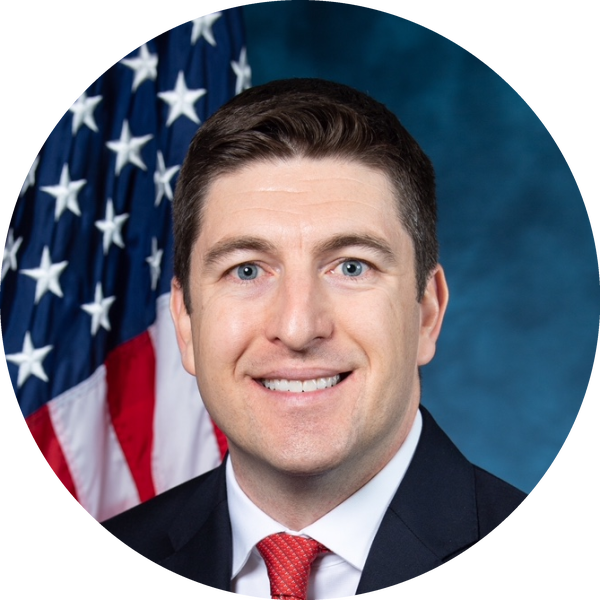

Mr. Speaker, we are here tonight to debate the rule providing for consideration of the Senate amendment for H.R. 7147, the Further Additional Continuing Appropriations Act of 2026. The rule provides that the House shall be considered to have taken from the Speaker's table H.R. 7147, with the Senate amendment thereto, and to have concurred in the Senate amendment with an amendment consisting of the text of Rules Committee Print 119-21. Simply put, a vote for this rule is a vote to fund the entire Department of Homeland Security through May 22, 2026. Mr.
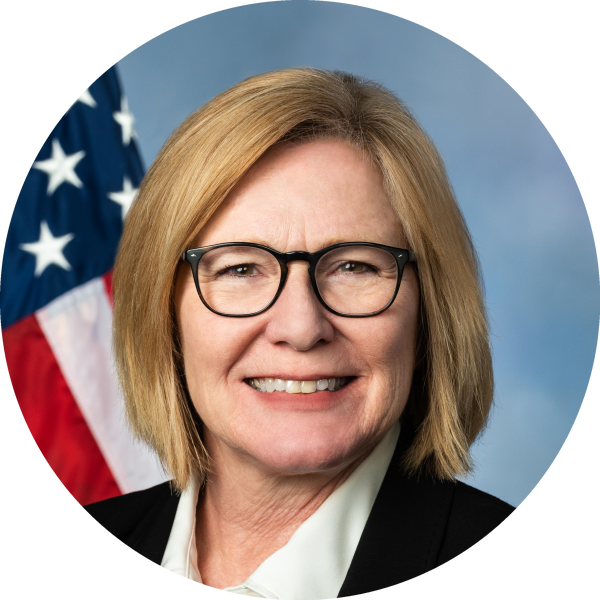
Is there further debate on the bill? Hearing none, the bill having been read the third time, the question is, Shall the bill pass? The bill (H.R. 7147), as amended, was passed.
The Presiding Officer··Senate
Mr. Speaker, I rise in support of H.R. 7147, the Department of Homeland Security Appropriations Act. This bill marks the final measure of our FY26 agenda. Our work here is about one of the most important duties, which is keeping the American people and our homeland safe. This legislation delivers just that and upholds the America First agenda through supporting border patrol enforcement agents, detention and deportation efforts, cutting-edge technology to detect illicit activity, and Coast Guard investments to counter Communist China's aggression in the maritime sphere.

Mr. Speaker, I rise today in support of the rule. The appropriations bills need to be passed for fiscal year 2026 Defense; Homeland Security; Labor, Health and Human Services, and Education; and Transportation, Housing, and Urban Development. For the first time in years, Congress is approaching the finish line of passing all 12 appropriations bills in a transparent and timely manner, reclaiming our constitutional power of the purse.

Mr. Speaker, I rise in support of the rule and of the underlying legislation. This morning, the Rules Committee met and produced a rule, House Resolution 1014, providing for consideration of H.R. 7147 and H.R. 7148. The rule provides for consideration of H.R. 7148, the Consolidated Appropriations Act, 2026, under a structured rule with two amendments made in order. The rule further provides that H.R. 7147, the Department of Homeland Security Appropriations Act, 2026, will be considered under a closed rule.

H.R. 7147 also appeared in 8 more House floor references, 36 more Senate floor references, and 18 routine cosponsor filings.
HR7147 Legislative Journey
Signed into Law
Apr 30, 2026
Became Public Law No: 119-86.
+11 more actions this day
Vote Held
Apr 2, 2026
Motion to table the House message to accompany H.R. 7147 agreed to by Voice Vote.
Passed
Mar 27, 2026
Passed Senate with an amendment by Voice Vote.
+9 more actions this day
Action Taken
Mar 26, 2026
Motion by Senator Thune to reconsider the vote by which the fourth cloture on the motion to proceed to the measure was not invoked (Record Vote No. 74) entered in Senate.
Vote Held
Mar 25, 2026
Motion by Senator Thune to reconsider the vote (Record Vote No. 54) by which the third cloture motion on the motion to proceed to the measure was not invoked agreed to in Senate by Voice Vote.
Action Taken
Mar 24, 2026
Fourth cloture motion on the motion to proceed to the measure presented in Senate. (CR S1577)
Action Taken
Mar 22, 2026
Motion to proceed to consideration of measure made in Senate. (CR S1495)
Action Taken
Mar 21, 2026
Motion to proceed to consideration of measure made in Senate. (CR S1461)
Vote Held
Mar 20, 2026
Motion by Senator Thune to reconsider the vote by which the second cloture motion on the motion to proceed to the measure was not invoked (Record Vote No. 39) agreed to in Senate by Voice Vote.
Action Taken
Mar 19, 2026
Motion to proceed to consideration of measure made in Senate. (CR S1311)
Floor Action
Mar 12, 2026
Motion to proceed to measure considered in Senate. (CR S1024)
Action Taken
Mar 10, 2026
Third cloture motion on the motion to proceed to the measure presented in Senate. (CR S946)
About the Sponsor
Tom Cole
Republican, Oklahoma's 4th congressional district · 23 years in Congress
Committees: Appropriations
View full profile →
Committee Sponsors
Budget Committee
16D21R
|0 signed37 others0 of 37 committee members cosponsored at the time
No committee members have cosponsored this bill
Appropriations Committee
28D35R
|0 signed63 others0 of 63 committee members cosponsored at the time
No committee members have cosponsored this bill
What laws does H.R. 7147 change?
1 changes
Sections Amended
Section 515(b) of Public Law 108-334 (49 U.S.C. 44945 note)
striking ``report'' each place it appears (including in the subsection heading) and inserting ``briefing'' and by striking ``transmit to'' and inserting ``provide''
H.R. 7147 Quick Facts
Cosponsors
0
- Committee
- Budget
- Chamber
- House
- Policy
- Economics and Public Finance
- Introduced
- Jan 20, 2026
Became Public Law No: 119-86.
Apr 30, 2026
About Legisletter
Legisletter is the advocacy platform that tracks every bill from introduction to Public Law — and connects the constituents affected by a bill to the legislators who vote on it.
H.R. 7147 Common Questions
How much does H.R. 7147 spend on body cameras for immigration agents?
Section 109 sets aside $20,000,000 to buy, deploy, and operate body-worn cameras for agents and officers performing immigration enforcement. DHS has to send Congress a spending plan within 30 days of enactment.
Can members of Congress inspect ICE detention facilities without notice?
Yes. Under Section 547, DHS can't block a member of Congress from entering a detention facility for oversight, and can't make temporary changes to alter what a visiting lawmaker sees. Members don't have to give advance notice; designated staff may be asked for 24 hours.
How much does the bill give the inspector general for detention inspections?
The DHS Office of Inspector General gets $20,000,000 dedicated to additional detention-facility inspections and oversight, on top of money to track how earlier funding is being spent.
Does H.R. 7147 withhold DHS money until budget questions are answered?
Yes. The bill holds back $5,000,000 from the Office of the Secretary until DHS submits answers to all of its budget-hearing questions for the record. It's a direct pressure point to force quicker responses to appropriators.
How big is FEMA's Disaster Relief Fund in the 2026 DHS bill?
H.R. 7147 provides $26,367,000,000 for FEMA's Disaster Relief Fund — the money that pays for response and recovery after major disasters.
How much does H.R. 7147 provide for nonprofit security grants?
The bill provides $300,000,000 for the Nonprofit Security Grant Program, which helps at-risk nonprofits like houses of worship and community centers pay for security upgrades.
Does H.R. 7147 require DHS to report no-bid contracts?
Yes. Under Section 101, DHS must report every grant and contract it awarded without full and open competition in 2025 and 2026 by October 15, 2026, and the inspector general has to review whether the department followed the law by February 15, 2027.
Can DHS start a new pilot program over $5 million without telling Congress?
No. Under Section 106, any new pilot or demonstration that uses more than 10 staff or spends $5,000,000 or more has to document clear objectives, a measurement plan, and a budget first, and DHS must report those details to Congress before spending the money.
Based on H.R. 7147 bill text
H.R. 7147 Bill Text
“Making further consolidated appropriations for the fiscal year ending September 30, 2026, and for other purposes.”
Source: U.S. Government Publishing Office
Economics and Public Finance Bills
9 related bills we're tracking
H.R. 7481
Department of Homeland Security Appropriations Act, 2026

Rosa DeLauroD-CT



+110
114 cosponsors
Referred to the Committee on Appropriations, and in addition to the Committee on the Budget, for a period to be subsequently determined by the Speaker, in each case for consideration of such provisions as fall within the jurisdiction of the committee concerned.
Feb 11, 2026
HouseEconomics and Public Finance
H.R. 5438
Incentivize Savings Act

Richard McCormickR-GA




+65
69 cosponsors
Ordered to be Reported (Amended) by the Yeas and Nays: 25 - 19.
Feb 4, 2026
HouseEconomics and Public Finance
H.R. 191
Inflation Reduction Act of 2025

Andrew OglesR-TN



+11
15 cosponsors
Referred to the Committee on Ways and Means, and in addition to the Committees on Energy and Commerce, Agriculture, Natural Resources, Financial Services, Science, Space, and Technology, Transportation and Infrastructure, and Oversight and Government Reform, for a period to be subsequently determined by the Speaker, in each case for consideration of such provisions as fall within the jurisdiction of the committee concerned.
Jan 3, 2025
HouseEconomics and Public Finance
H.R. 1
An act to provide for reconciliation pursuant to title II of H. Con. Res. 14.

Jodey ArringtonR-TX
0 cosponsors
Became Public Law No: 119-21.
Jul 4, 2025
HouseEconomics and Public Finance
H.R. 4016
Department of Defense Appropriations Act, 2026

Ken CalvertR-CA
0 cosponsors
Motion to proceed to consideration of measure made in Senate. (CR S8522)
Dec 8, 2025
HouseEconomics and Public Finance
H.R. 4553
Energy and Water Development and Related Agencies Appropriations Act, 2026

Charles FleischmannR-TN
0 cosponsors
Read the second time. Placed on Senate Legislative Calendar under General Orders. Calendar No. 156.
Sep 10, 2025
HouseEconomics and Public Finance
H.R. 5304
Departments of Labor, Health and Human Services, and Education, and Related Agencies Appropriations Act, 2026

Robert AderholtR-AL
0 cosponsors
Placed on the Union Calendar, Calendar No. 227.
Sep 11, 2025
HouseEconomics and Public Finance
H.R. 5371
Continuing Appropriations, Agriculture, Legislative Branch, Military Construction and Veterans Affairs, and Extensions Act, 2026
Tom ColeR-OK
0 cosponsors
Became Public Law No: 119-37.
Nov 12, 2025
HouseEconomics and Public Finance
H.R. 6569
Executive Action Cost Transparency Act
Ron EstesR-KS
0 cosponsors
Referred to the House Committee on the Budget.
Dec 10, 2025
HouseEconomics and Public Finance
Trending Right Now
Bills gaining momentum across Congress
H.R. 5267Surging+19
American Franchise Act

Kevin HernR-OK



+144
148 cosponsors
+19 this monthOrdered to be Reported (Amended) by the Yeas and Nays: 18 - 15.
Jul 21, 2026
HouseLabor and Employment
H.R. 9250Surging+66
Great American Outdoors Act 250

Bruce WestermanR-AR




+217
221 cosponsors
+66 this monthOrdered to be Reported in the Nature of a Substitute (Amended) by Voice Vote.
Jun 24, 2026
HousePublic Lands and Natural Resources
H.R. 3747Surging+15
Accelerating Access to Dementia and Alzheimer’s Provider Training Act

Troy BaldersonR-OH




+93
97 cosponsors
+15 this monthReceived in the Senate and Read twice and referred to the Committee on Health, Education, Labor, and Pensions.
Jul 21, 2026
HouseHealth
Tracking Economics and Public Finance in Congress? Monitor bills, track cosponsor momentum, and launch advocacy campaigns — all from one advocacy platform.