Mr. President, we are here tonight because our Republican colleagues have introduced a budget resolution. It is a budget resolution that unlocks the reconciliation process. But before we examine this next reconciliation bill, let's recognize that it has been just 10 months since we passed the last one. That was the one that was known as H.R. 1, or in Trump lingo: One Big Beautiful Bill. Of course, most of the Nation called it "One Big Ugly Betrayal" because that was a more accurate describer of what it did to families across our Nation.
H.R. 1: An act to provide for reconciliation pursuant to title II of H. Con. Res. 14.
Introduced May 20, 20250 cosponsors
Sponsor

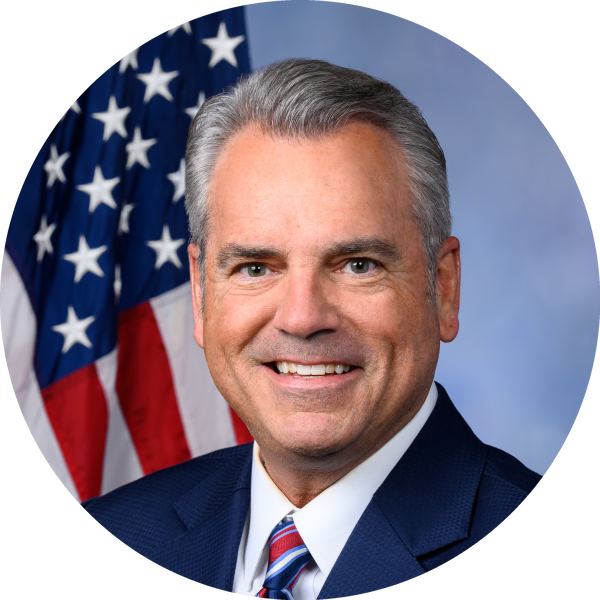
Jodey Arrington
Republican · TX-19
Tax breaks that expire, SNAP changes that don't
5 min readLast updated June 17, 2026
Why it matters
H.R. 1 is now law, and it touches your paycheck, your grocery benefits, and the border all at once. It puts $91.55 billion into border wall and detention, hands tip and overtime workers new deductions that vanish after 2028, and permanently shifts billions in SNAP costs onto the states. If you earn tips, work overtime, itemize in a high-tax state, or rely on food assistance, what you keep and what you pay just changed.
H.R. 1 passed as a reconciliation bill, the kind that needs only a simple Senate majority. It cleared the House 218-214 and the Senate 51-50 before becoming Public Law 119-21. The single largest line is the border: $46.55 billion for wall and barrier systems and $45 billion for detention capacity, both available through 2029.
The tax side is where most households will feel it. The law creates a deduction of up to $25,000 for qualified tips and lets some workers deduct overtime pay up to $12,500, or $25,000 for joint filers. Both phase out above $150,000 in income ($300,000 for joint filers) and end after 2028. It also lifts the state and local tax deduction cap to $40,000 in 2025, climbing through 2029, before it snaps back to $10,000 in 2030. The estate and gift tax exemption rises to $15 million after 2025.
SNAP moves the opposite direction. Benefit calculations are now pinned to USDA's 2021 thrifty food plan, and future recalculations are limited. States pick up more of the tab: the federal share of administrative costs drops from 50% to 25% in fiscal year 2027, and states with higher payment error rates start covering 5% to 15% of benefit costs in fiscal year 2028.
The rest of the law reaches into corners most bills never touch. It cuts the CFPB's funding cap roughly in half, mandates more onshore and offshore oil and gas lease sales, lowers the federal coal royalty rate to 7%, adds a $100 asylum fee and a $5,000 removal-in-absentia fee, and starts charging space launch and reentry fees at $0.25 per pound or $30,000 in 2026, rising through 2033.
Bill Progress
IntroducedMay 20
Committee
Pass HouseMay 22
Pass SenateJul 1
SignedJul 4
LawJul 4
Latest Action · Jul 4, 2025
1/2
Became Public Law No: 119-21.
H.R. 1 Bill Summary
What H.R. 1 actually does.
1
Border wall and detention get $91.55 billion
H.R. 1 provides $46.55 billion for border wall and barrier systems and $45 billion for detention capacity. Both funding streams are available through 2029.
2
Tip and overtime workers get a tax break — until 2028
Workers can deduct up to $25,000 in qualified tips and up to $12,500 in overtime pay, or $25,000 for joint filers. The deductions phase out above $150,000 in income ($300,000 for joint filers) and expire after 2028.
3
The SALT cap jumps before dropping back
The state and local tax deduction cap rises to $40,000 in 2025 and $40,400 in 2026, then increases through 2029 before returning to $10,000 in 2030.
4
SNAP costs shift toward states
Starting in fiscal year 2027, the federal share of SNAP administrative costs drops from 50% to 25%. Starting in fiscal year 2028, states with higher payment error rates must also cover 5% to 15% of benefit costs.
5
Oil, gas, and coal producers get easier federal access
The law requires at least four onshore oil and gas lease sales each year in nine states, mandates at least 30 Gulf of Mexico lease sales through 2040, and lowers the federal coal royalty rate to 7%.
6
New federal fees land on asylum seekers and rocket launches
Asylum applicants pay a $100 fee starting in fiscal year 2025, and some people ordered removed in absentia face a $5,000 fee, both indexed to inflation. Space launch and reentry fees begin in 2026 at $0.25 per pound or $30,000, rising to as much as $1.50 per pound or $200,000 by 2033.
Who benefits from H.R. 1?
Workers who earn tips or overtime
If your pay depends on gratuities or long shifts, H.R. 1 can lower your taxable income for a few years. The maximum deduction is $25,000 for tips and $12,500 for overtime, or $25,000 for joint filers on overtime.
Households with high state and local tax bills
If you itemize and live somewhere with high property or income taxes, the temporary SALT cap increase to $40,000 lets you deduct far more than the current $10,000 limit.
High-wealth families passing on large estates
Families planning large inheritances benefit from the estate and gift tax exemption rising to $15 million after 2025, which shields more wealth from federal transfer taxes.
Defense contractors, military programs, and fossil fuel producers
The law directs billions into ships, housing, defense health, and other Pentagon priorities, while oil, gas, and coal producers get guaranteed lease sales and a lower coal royalty rate.
Who is affected by H.R. 1?
SNAP recipients and the states that run the program
If you rely on SNAP, benefit calculations are now tied more tightly to the 2021 USDA food plan model. States also have to cover more of the program's administrative and, in some cases, benefit costs.
Immigrants seeking asylum or facing removal orders
H.R. 1 adds a $100 asylum fee and a $5,000 fee for certain removal-in-absentia cases, both starting in fiscal year 2025 and adjusted for inflation.
Consumers who depend on federal financial oversight
The CFPB's funding cap falls from 12% to 6.5% of Federal Reserve operating expenses, which may reduce how much capacity the agency has to supervise banks and other financial companies.
Space launch companies and satellite operators
If your business launches payloads, you now face federal user fees that start in 2026 and rise over time, either by payload weight or as a flat charge.
Cost & Funding
Authorization
H.R. 1 includes at least $111.445 billion in specifically identified appropriations, alongside tax changes and other policy shifts with broader budget effects.
- Border enforcement alone totals $91.55 billion: $46.55 billion for wall and barrier systems plus $45 billion for detention capacity.
- Defense and military quality-of-life funding includes $2.9 billion for housing supplements, $2 billion for the Defense Health Program, and $1 billion for housing modernization.
- Shipbuilding adds another $10 billion: $4.6 billion for a second Virginia-class submarine and $5.4 billion for two additional DDG ships.
- Space funding includes $9.995 billion for Mars and Artemis missions through 2032, including $700 million for a Mars telecommunications orbiter due by the end of 2028.
- The tax side is harder to summarize in one number, but the winners are easy to spot: workers with tips or overtime, households claiming SALT, and families with estates above today's exemption.
On the Record
What Congress Said
H.R. 1 was signed into law on Jul 8, 2025.
Mr. President, when the Senate considers the reconciliation bill, H.R. 1, it is my intention to make the following motions to commit to the bill: A motion to commit the bill, H.R. 1, to the Committee on Banking, Housing, and Urban Affairs of the Senate with instructions to report the same back to the Senate in 3 days, not counting any day on which the Senate is not in session, with changes that—(1) are within the jurisdiction of such committee; and (2) would strike provisions that reduce or eliminate grants or loans under the Green and Resilient Retrofit Program of the Department of Housing…


Mr. President, I rise today because our Republican colleagues have introduced a new budget resolution to yet again utilize a special process called reconciliation. We just voted a short while ago on a motion to proceed. That motion to proceed succeeded along purely party lines, and that takes us into the realm of this special device called reconciliation. Just 10 months ago, we already had a reconciliation bill that is sometimes called H.R. 1. President Trump called it the One Big Beautiful Bill, but much of America has a different name for it. They call it the Big Ugly Betrayal. Why?
Mr. Speaker, today, I introduce the Equal Treatment of the District of Columbia Under the Rural Health Transformation Program Act of 2025, which would make the District of Columbia eligible for funding under the Rural Health Transformation Program (Program). The $50 billion Program was established by the One Big Beautiful Bill Act (H.R. 1). While the Program's title refers to rural health, H.R. 1 permits the Program's funds to be used for health care services, providers and technology outside rural areas.

Mr. Speaker, I have a motion at the desk. The SPEAKER pro tempore. The Clerk will designate the motion. The text of the motion is as follows: Mr. Arrington of Texas moves that the House concur in the Senate amendment to H.R. 1.

Foxx) for her work on this. Mr. Speaker, I rise today in support of the rule and in strong support of H.R. 1, President Trump's One Big Beautiful Bill Act. Today, Mr. Speaker, we face a watershed moment for the American people. This Republican majority was given a clear mandate by the American people, which is the America First agenda. This bill is our opportunity to deliver on that agenda. H.R. 1 stops the largest tax increase in U.S. history, while providing the largest tax cut for working-and middle-class families ever, with no tax on tips, no tax on overtime, and tax breaks for seniors.
Mr. President, when the Senate considers the reconciliation bill, H.R. 1, it is my intention to make the following motions to commit the bill: A motion to commit the bill to the Committee on Agriculture with instructions to make strong investments in rural communities, including improvements to water and wastewater infrastructure, housing assistance, energy efficiency, business development, and high-speed internet access.

H.R. 1 also appeared in 27 more House floor references, 533 more Senate floor references, 4 in the Extensions of Remarks, and 22 routine cosponsor filings.
HR1 Legislative Journey
Signed into Law
Jul 4, 2025
Became Public Law No: 119-21.
+3 more actions this day
House: Vote: 218-214
Jul 3, 2025
On motion that the House agree to the Senate amendment Agreed to by recorded vote: 218 - 214 (Roll no. 190). (text: CR H3059-3143)
Passed 51-50
Jul 1, 2025
Passed Senate with an amendment by Yea-Nay Vote. 51 - 50. Record Vote Number: 372.
+5 more actions this day
Failed
Jun 30, 2025
Motion by Senator Padilla to commit to Senate Committee on Finance with instructions rejected in Senate by Yea-Nay Vote. 47 - 53. Record Vote Number: 353.
+20 more actions this day
Action Taken
Jun 28, 2025
Motion to proceed to consideration of measure agreed to in Senate by Yea-Nay Vote. 51 - 49. Record Vote Number: 329.
Sent to Senate
Jun 27, 2025
Received in the Senate. Read the first time. Placed on Senate Legislative Calendar under Read the First Time.
House: Passed 215-214
May 22, 2025
On passage Passed by the Yeas and Nays: 215 - 214, 1 Present (Roll no. 145). (text: CR H2235-2334)
+5 more actions this day
About the Sponsor
Jodey Arrington
Republican, Texas's 19th congressional district · 9 years in Congress
Committees: the Budget, Joint Economic Committee, Ways and Means
View full profile →
Committee Sponsors
Budget Committee
16D21R
|0 signed37 others0 of 37 committee members cosponsored at the time
No committee members have cosponsored this bill
What laws does H.R. 1 change?
64 changes
Sections Amended
Section 3 of Food and Nutrition Act of 2008 (7 U.S.C. 2012)
striking subsection (u) and inserting the following: ``(u) Thrifty Food Plan
Section 6(o) of Food and Nutrition Act of 2008 (7 U.S.C. 2015(o))
striking paragraph (3) and inserting the following: ``(3) Exceptions
Section 6(f) of Food and Nutrition Act of 2008 (7 U.S.C. 2015(f))
read as follows: ``(f) No individual who is a member of a household otherwise eligible to participate in the supplemental nutrition assistance program under this section shall be eligible to participate in the supplemental nutrition assistance program as a member of that or any other household unless he or she is-- ``(1) a resident of the United States; and ``(2) either-- ``(A) a citizen or national of the United States; ``(B) an alien lawfully admitted for permanent residence as an immigrant as defined by sections 101(a)(15) and 101(a)(20) of the Immigration and Nationality Act, excluding, among others, alien visitors, tourists, diplomats, and students who enter the United States temporarily with no intention of abandoning their residence in a foreign country; ``(C) an alien who has been granted the status of Cuban and Haitian entrant, as defined in section 501(e) of the Refugee Education Assistance Act of 1980 (Public Law 96-422); or ``(D) an individual who lawfully resides in the United States in accordance with a Compact of Free Association referred to in section 402(b)(2)(G) of the Personal Responsibility and Work Opportunity Reconciliation Act of 1996
Section 1111 of Agricultural Act of 2014 (7 U.S.C. 9011)
striking paragraph (19) and inserting the following: ``(19) Reference price
Section 1001B(d) of Food Security Act of 1985 (7 U.S.C. 1308-2(d))
striking ``partnerships and joint ventures'' and inserting ``qualified pass- through entities''
Section 1001D(d) of Food Security Act of 1985 (7 U.S.C. 1308-3a(d))
striking ``, general partnership, or joint venture'' each place it appears
Sections Repealed
(a) of section 50262 of Public Law 117-169 (136 Stat. 2056)
(e) of section 50262 of Public Law 117-169 (136 Stat. 2057)
50261 of Public Law 117-169 (136 Stat. 2056)
50263 of Public Law 117-169 (30 U.S.C. 1727)
20003 of Public Law 115-97 (42 U.S.C. 6241 note)
50142 of Public Law 117-169 (136 Stat. 2044) (commonly known as the ``Inflation Reduction Act of 2022'')
132 of Clean Air Act (42 U.S.C. 7432) are rescinded. SEC. 60002. REPEAL OF GREENHOUSE GAS REDUCTION FUND. Section 134 of the Clean Air Act (42 U.S.C. 7434)
103(e) of SECURE 2.0 Act of 2022
(e) of section 455 of the Higher Education Act of 1965 (20 U.S.C. 1087e(e))
H.R. 1 Quick Facts
Cosponsors
0
- Committee
- Budget
- Chamber
- House
- Policy
- Economics and Public Finance
- Introduced
- May 20, 2025
Became Public Law No: 119-21.
Jul 4, 2025
Official Sources
H.R. 1 on Congress.gov
Official Congress.gov page for H.R. 1, including status, text, actions, and related materials.
Public Law 119-21 on GovInfo
Official published public law version confirming H.R. 1 became Public Law 119-21.
USDA SNAP Program Overview
Official USDA page for SNAP, relevant to the bill’s changes to SNAP work rules, benefit calculations, and state cost sharing.
USDA Thrifty Food Plan
Official USDA food plan resource relevant to the bill’s provision locking SNAP updates to the 2021 thrifty food plan model.
IRS Topic No. 761, Tips – Withholding and Reporting
Official IRS guidance on tip income, useful for understanding how the new qualified tips deduction interacts with existing tax treatment.
IRS Topic No. 503, Deductible Taxes
Official IRS guidance on the itemized deduction for state and local taxes, relevant to the bill’s temporary SALT cap increase.
USCIS Fee Schedule
Official USCIS fee schedule page relevant to the bill’s new asylum-related immigration fees.
CBO: Estimated Budgetary Effects of Public Law 119-21
Official Congressional Budget Office cost estimate for the enacted law, scoring its effects on deficits, spending, and revenues.
About Legisletter
Legisletter is the advocacy platform that tracks every bill from introduction to Public Law — and connects the constituents affected by a bill to the legislators who vote on it.
H.R. 1 Common Questions
Did H.R. 1 become law?
Yes. H.R. 1 passed Congress and became Public Law 119-21 on July 4, 2025.
How much does H.R. 1 spend on the border wall and detention?
It provides $46.55 billion for border wall and barrier systems and $45 billion for detention capacity — $91.55 billion combined.
Does H.R. 1 make tips tax-free?
Not entirely. It creates a deduction of up to $25,000 for qualified tips, so eligible workers lower their taxable income rather than exclude every dollar of tips. The break phases out above $150,000 in income and ends after 2028.
How much overtime can you deduct under H.R. 1?
Up to $12,500 if you file single, or $25,000 if you file jointly. The deduction phases out above $150,000 in income, or $300,000 for joint filers, and ends after 2028.
What happens to the SALT deduction under H.R. 1?
The cap rises to $40,000 in 2025 and $40,400 in 2026, grows through 2029, then drops back to $10,000 in 2030.
Does H.R. 1 cut SNAP funding to states?
It shifts more of the cost onto states. The federal share of SNAP administrative costs drops from 50% to 25% in fiscal year 2027, and starting in 2028 states with higher payment error rates have to cover 5% to 15% of benefit costs themselves.
What new immigration fees are in H.R. 1?
The law adds a $100 asylum application fee in fiscal year 2025 and a $5,000 fee for certain removal-in-absentia cases. Both are indexed for inflation.
What are the space launch fees in H.R. 1?
Starting in 2026, launches and reentries pay either $0.25 per pound or a $30,000 flat fee. By 2033, that rises to $1.50 per pound or $200,000.
Based on H.R. 1 bill text
H.R. 1 Bill Text
“To provide for reconciliation pursuant to title II of H. Con. Res. 14.”
Source: U.S. Government Publishing Office
Bill Alerts
Get notified when H.R. 1 moves
Committee votes, floor action, cosponsor changes — straight to your inbox.
Bill alerts + Legisletter's monthly briefing. Unsubscribe anytime.
Economics and Public Finance Bills
9 related bills we're tracking
H.R. 7481
Department of Homeland Security Appropriations Act, 2026

Rosa DeLauroD-CT




+110
114 cosponsors
Referred to the Committee on Appropriations, and in addition to the Committee on the Budget, for a period to be subsequently determined by the Speaker, in each case for consideration of such provisions as fall within the jurisdiction of the committee concerned.
Feb 11, 2026
HouseEconomics and Public Finance
H.R. 5438
Incentivize Savings Act

Richard McCormickR-GA




+65
69 cosponsors
Ordered to be Reported (Amended) by the Yeas and Nays: 25 - 19.
Feb 4, 2026
HouseEconomics and Public Finance
H.R. 191
Inflation Reduction Act of 2025

Andrew OglesR-TN




+11
15 cosponsors
Referred to the Committee on Ways and Means, and in addition to the Committees on Energy and Commerce, Agriculture, Natural Resources, Financial Services, Science, Space, and Technology, Transportation and Infrastructure, and Oversight and Government Reform, for a period to be subsequently determined by the Speaker, in each case for consideration of such provisions as fall within the jurisdiction of the committee concerned.
Jan 3, 2025
HouseEconomics and Public Finance
H.R. 4016
Department of Defense Appropriations Act, 2026

Ken CalvertR-CA
0 cosponsors
Motion to proceed to consideration of measure made in Senate. (CR S8522)
Dec 8, 2025
HouseEconomics and Public Finance
H.R. 4553
Energy and Water Development and Related Agencies Appropriations Act, 2026

Charles FleischmannR-TN
0 cosponsors
Read the second time. Placed on Senate Legislative Calendar under General Orders. Calendar No. 156.
Sep 10, 2025
HouseEconomics and Public Finance
H.R. 5304
Departments of Labor, Health and Human Services, and Education, and Related Agencies Appropriations Act, 2026

Robert AderholtR-AL
0 cosponsors
Placed on the Union Calendar, Calendar No. 227.
Sep 11, 2025
HouseEconomics and Public Finance
H.R. 5371
Continuing Appropriations, Agriculture, Legislative Branch, Military Construction and Veterans Affairs, and Extensions Act, 2026

Tom ColeR-OK
0 cosponsors
Became Public Law No: 119-37.
Nov 12, 2025
HouseEconomics and Public Finance
H.R. 6569
Executive Action Cost Transparency Act

Ron EstesR-KS
0 cosponsors
Referred to the House Committee on the Budget.
Dec 10, 2025
HouseEconomics and Public Finance
H.R. 6938
Commerce, Justice, Science; Energy and Water Development; and Interior and Environment Appropriations Act, 2026
Tom ColeR-OK
0 cosponsors
Became Public Law No: 119-74.
Jan 23, 2026
HouseEconomics and Public Finance
Trending Right Now
Bills gaining momentum across Congress
H.R. 1502Surging+30
North Platte Canteen Congressional Gold Medal Act

Adrian SmithR-NE




+264
268 cosponsors
+30 this monthReferred to the House Committee on Financial Services.
Feb 21, 2025
HouseArmed Forces and National Security
H.R. 6130Surging+12
ASAP Act

Vern BuchananR-FL




+227
231 cosponsors
+12 this monthOrdered to be Reported in the Nature of a Substitute by the Yeas and Nays: 40 - 0.
Sep 16, 2026
HouseHealth
H.R. 3569Surging+13
Fit to Serve Act

Adam SmithD-WA




+185
189 cosponsors
+13 this monthReferred to the House Committee on Armed Services.
May 21, 2025
HouseArmed Forces and National Security
Tracking Economics and Public Finance in Congress? Monitor bills, track cosponsor momentum, and launch advocacy campaigns — all from one advocacy platform.