H.R. 7481: Department of Homeland Security Appropriations Act, 2026
Enacted as part of HR7147: Homeland Security and Further Additional Continuing Appropriations Act, 2026.· Apr 30, 2026
Sponsor

Rosa DeLauro
Democrat · CT-3
Every day FEMA makes you wait costs it $100,000
Why it matters
When more than 500 disaster reimbursement requests have been sitting in final review for longer than 60 days, H.R. 7481 docks a DHS management account $100,000 for every day the backlog stays that high. Late grant applications carry the same daily charge. This is the House minority's version of a Homeland Security spending bill, and it puts a price on the parts of the process that make communities wait.
H.R. 7481 funds the Department of Homeland Security for the budget year ending September 30, 2026. Rosa DeLauro, the top Democrat on the House Appropriations Committee, introduced it with 114 cosponsors, all of them Democrats. The dollar amounts matter less than the conditions attached to them, because the House majority writes the spending bill that actually moves.
The FEMA grant calendar is the most specific part. Applications have to reach eligible applicants within 60 days of enactment, applicants then get 80 days to file, and FEMA has 65 days after receiving an application to act on it. Miss that first 60-day mark and FEMA's operations account drops $100,000 for every day the applications stay unavailable. Grant administrative costs are capped at 5%, and awards run three to five years.
Two more penalties follow the same shape. Announce a grant publicly before appropriators have had five full business days' notice and $1,000,000 is rescinded. File the monthly Disaster Relief Fund report late and a DHS management account loses $100,000 a day. That same account takes $100,000 a day whenever more than 500 disaster reimbursement requests have been in final review past 60 days, unless the fund is down to lifesaving spending only.
The bill also narrows how far DHS can move money on its own. Shifting more than $5,000,000 or 10% into an existing program, whichever is smaller, or cutting a program's funding or staffing by 10% or more, requires 30 days' notice to Congress. Transfers between accounts are capped at 5%, and no account can grow more than 10% that way. Money cannot be transferred into any Customs and Border Protection or Immigration and Customs Enforcement account at all.
A set of riders reaches past the budget. Members of Congress, agency heads, the Attorney General, senior DHS officials and senior White House staff are not exempt from federal passenger and baggage screening, and no funds may be used to change that. DHS may not destroy records of deaths, alleged sexual assaults, or abuse allegations involving people in its custody. Restraints on a pregnant woman in DHS custody are barred unless an official makes an individualized finding of serious flight risk or immediate danger, or a medical professional calls for therapeutic restraints, and restraints are never allowed during active labor or delivery.
On the money itself, the bill carries $98,000,000 for Coast Guard MQ-9 aircraft and base stations through 2030 while barring long-range unmanned aircraft with kinetic capabilities, $140,000,000 for a 3.8% pay raise for air traffic controllers if the FAA Administrator finds the agency hit efficiency targets, and $30,000,000 for the Supreme Court. It pulls money back as well, including $52,349,050 from the cybersecurity agency's operations account.
Bill Progress
Latest Action · Feb 11, 2026
Referred to Appropriations, and in addition to the Committee on the Budget, for a period to be subsequently determined by the Speaker, in each case for consideration of such provisions as fall within the jurisdiction of the committee concerned. for review
H.R. 7481 Bill Summary
What H.R. 7481 actually does.
A 60-day clock on FEMA grant applications
Applications for several FEMA assistance grants must be available to eligible applicants within 60 days of enactment. Applicants then have 80 days to file, and FEMA has 65 days after receiving an application to act. Every day past the 60-day mark cuts FEMA's operations funding by $100,000.
Disaster reimbursement backlogs start costing DHS money
If more than 500 individual or public assistance reimbursement requests have been in final review for over 60 days, a DHS management account is reduced by $100,000 for each day the backlog exceeds that number. The penalty does not apply when the Disaster Relief Fund only has enough money left for lifesaving or life-sustaining work.
Announcing a grant early triggers a $1,000,000 rescission
FEMA must brief House and Senate appropriators five full business days before publicly announcing an intent to award certain grants. If the announcement comes earlier, the bill rescinds $1,000,000 from FEMA's operations account.
Three business days' warning before big awards
DHS would notify appropriators at least three full business days before grants over $1,000,000, Disaster Relief Fund grants over $100,000, contracts or other transaction agreements over $2,000,000, task or delivery orders over $5,000,000, and any sole-source grant. The Secretary can skip advance notice when waiting would pose a substantial risk to human life, health, or safety, and notify within three days after.
No transferring money into CBP or ICE accounts
DHS may move up to 5% of an appropriation between accounts with 30 days' notice, and no account may grow by more than 10% that way. Customs and Border Protection and Immigration and Customs Enforcement accounts are carved out of that transfer authority entirely.
Lawmakers and cabinet officials keep going through screening
The bill states that Members of Congress including leadership, agency and commission heads, the Attorney General and U.S. Attorneys, senior DHS officials, and senior Executive Office of the President staff are not exempt from federal passenger and baggage screening. It also bars funds from being used to carry out legislation changing that.
Custody records cannot be destroyed
No funds may be used to destroy any record concerning a death in DHS custody, a potential sexual assault or abuse, or an allegation of abuse or criminal activity by someone in custody. A person charged, segregated, or punished over such an allegation can request those records.
Limits on restraining pregnant women in DHS custody
Restraints on a pregnant woman or one in post-delivery recuperation are barred unless a DHS official individually determines she is a serious flight risk or an immediate threat that cannot be handled another way, or a medical professional finds therapeutic restraints appropriate. Restraints are never permitted during active labor or delivery, and face-down four-point restraints and belts constricting the pregnancy are prohibited.
$98 million for Coast Guard drones, none armed
The bill provides $98,000,000 for Coast Guard MQ-9 aircraft, base stations, equipment, and program management, available through September 30, 2030. It bars the money from going to long-range unmanned aircraft with kinetic capabilities.
Who benefits from H.R. 7481?
Local governments waiting to be paid back after a disaster
Counties, cities, tribes, and special districts that front the cost of debris removal or rebuilding and then wait on FEMA. The bill attaches a $100,000 daily charge to a reimbursement queue where more than 500 requests sit past 60 days.
Anyone applying for a FEMA preparedness grant
Fire departments, emergency managers, transit agencies, and nonprofits get a fixed calendar instead of an open-ended one: 60 days to see the application, 80 days to file, 65 days for a decision.
Grantees planning multi-year projects
Awards would run no less than three and no more than five years, and recipients could spend up to 5% of a grant on administering it, which affects hiring and project scheduling.
People held in DHS custody
Records of deaths, alleged sexual assaults, and abuse allegations could not be destroyed, and restraints on pregnant women would be limited to individually determined safety, flight-risk, or medical situations.
Air traffic controllers
$140,000,000 would fund a 3.8% pay increase for calendar year 2026 for controllers and the supervisors who manage air traffic, if the FAA Administrator determines the agency achieved the scheduling and staffing improvements the bill describes.
Who is affected by H.R. 7481?
FEMA program staff
They would work under the bill's hardest deadlines. A late application posting costs $100,000 a day, an early public award announcement costs $1,000,000, and a late monthly Disaster Relief Fund report costs $100,000 a day.
Customs and Border Protection and ICE
Both are walled off from the bill's account-transfer authority, so DHS could not shift money into their accounts through the 5% transfer mechanism.
The cybersecurity agency
The bill rescinds $52,349,050 from CISA operations and support and derives $99,750,000 of its operations funding by transfer from unobligated balances in the Cybersecurity Response and Recovery Fund.
DHS budget and acquisition officials
Monthly obligation and staffing reports, quarterly briefings on major acquisition programs, and advance documentation for any new pilot using more than 10 full-time staff or $5,000,000 would all be required.
Senior federal officials who fly
Lawmakers, agency heads, the Attorney General, senior DHS leaders, and senior White House staff would be covered by federal passenger and baggage screening like other travelers.
DHS offices awarding large grants and contracts
More awards would need advance notice to appropriators before they can be made or announced, which moves internal planning earlier and slows public rollouts.
Cost & Funding
Authorization
H.R. 7481 appropriates DHS funding for the year ending September 30, 2026, plus targeted add-ons outside the department: $98,000,000 for Coast Guard MQ-9 aircraft and base stations, $140,000,000 for FAA air traffic operations tied to a 3.8% controller pay raise, $30,000,000 for the Supreme Court, and $2,000,000 for the National Computer Forensics Institute. It also rescinds previously appropriated money.
- The FEMA application penalty compounds: 10 days late is $1,000,000, 30 days late is $3,000,000, at $100,000 per day.
- A disaster reimbursement backlog above 500 requests held past 60 days costs a DHS management account $100,000 a day, so a month-long backlog runs about $3,000,000.
- A public FEMA award announcement made before the five-business-day briefing triggers a separate $1,000,000 rescission.
- $98,000,000 for Coast Guard MQ-9 aircraft and base stations stays available through September 30, 2030.
- Rescissions include $73,327,000 from the Management Directorate's procurement account and $52,349,050 from CISA operations and support, plus $2,362,000 from the DHS Nonrecurring Expenses Fund.
- International conference spending is capped at $500,000 per conference, with a 50-employee attendance trigger for notifying Congress.
What Congress Is Saying
23 legislators have weighed in on H.R. 7481 — 7 Democrats, 16 Republicans.
H.R. 7481 also appeared in 3 more House floor references and 8 routine cosponsor filings.
HR7481 Legislative Journey
House: Committee Action
Feb 11, 2026
Referred to the Committee on Appropriations, and in addition to the Committee on the Budget, for a period to be subsequently determined by the Speaker, in each case for consideration of such provisions as fall within the jurisdiction of the committee concerned.
About the Sponsor
Rosa DeLauro
Democrat, Connecticut's 3rd congressional district · 35 years in Congress
Committees: Appropriations
View full profile →
Cosponsors at time of passage (114)
All 114 cosponsors are Democrats. Cosponsors represent 35 states: Alabama, Arizona, California, and 32 more.

Ed Case
Democrat · HI

Scott Peters
Democrat · CA

Steny Hoyer
Democrat · MD

Betty McCollum
Democrat · MN
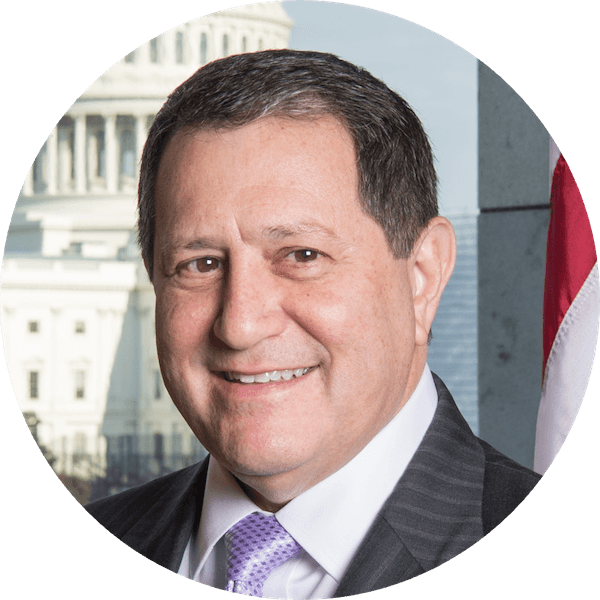
Joseph Morelle
Democrat · NY

Terri Sewell
Democrat · AL

Bonnie Watson Coleman
Democrat · NJ
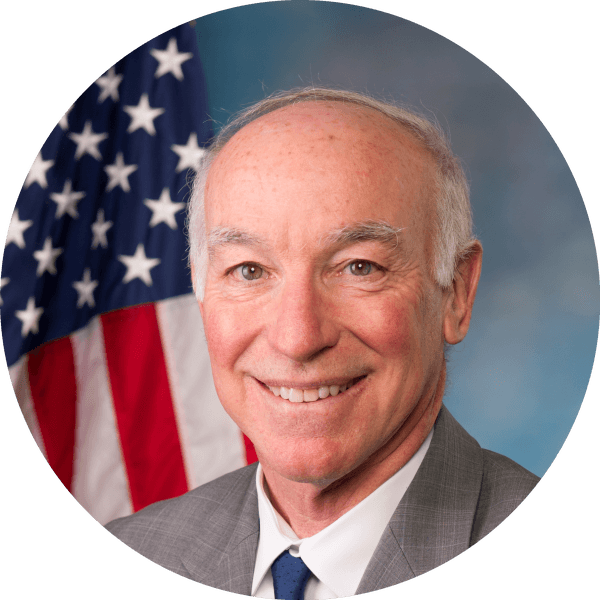
Joe Courtney
Democrat · CT

Norma Torres
Democrat · CA

Frank Mrvan
Democrat · IN

Veronica Escobar
Democrat · TX

Madeleine Dean
Democrat · PA
Cosponsor Coverage Map
Committee Sponsors
Budget Committee
8 of 37 committee members cosponsored at the time


Appropriations Committee
19 of 63 committee members cosponsored at the time


What laws does H.R. 7481 change?
1 changes
Sections Amended
Section 515(b) of Public Law 108-334 (49 U.S.C. 44945 note)
striking ``report'' each place it appears (including in the subsection heading) and inserting ``briefing'' and by striking ``transmit to'' and inserting ``provide''
H.R. 7481 Quick Facts
- Committee
- Budget
- Chamber
- House
- Policy
- Economics and Public Finance
- Introduced
- Feb 11, 2026
Referred to Appropriations, and in addition to the Committee on the Budget, for a period to be subsequently determined by the Speaker, in each case for consideration of such provisions as fall within the jurisdiction of the committee concerned. for review
Feb 11, 2026
Official Sources
Official legislative status, text, and cosponsor list for the Department of Homeland Security Appropriations Act, 2026.
FEMA's preparedness grant programs are the ones the bill puts on a 60-day application clock, with $100,000 a day docked from FEMA operations for every day past the deadline.
Public Assistance is the program that reimburses local governments for debris removal and rebuilding, the queue the bill penalizes when more than 500 requests sit in final review past 60 days.
The monthly Disaster Relief Fund report to Congress is the filing the bill charges $100,000 a day for submitting late.
TSA's passenger and baggage screening procedures, which the bill says lawmakers, agency heads, and senior White House staff are not exempt from.
The detention standards governing care and use of restraints in immigration custody, the backdrop for the bill’s limits on restraining pregnant women.
The DHS Inspector General, which the bill directs to review reports on noncompetitive grants and contracts.
The subcommittee that writes the DHS spending bill and receives the advance notifications the bill would require before large grants and awards.
About Legisletter
Legisletter is the advocacy platform that tracks every bill from introduction to Public Law — and connects the constituents affected by a bill to the legislators who vote on it.
H.R. 7481 Common Questions
Is H.R. 7481 likely to become law?
Not as written. It has 114 cosponsors, all Democrats, in a House the Republicans control, and it was referred to the Appropriations Committee. Minority spending bills are rarely taken up on their own. Individual provisions can still be traded into the package that does move.
Can FEMA really lose $100,000 a day under H.R. 7481?
Yes. Certain FEMA grant applications must be available to eligible applicants within 60 days of enactment. For each day past that deadline, the bill cuts FEMA's operations funding by $100,000. Ten days late would be $1,000,000.
How fast would FEMA have to act on a grant application?
Applicants get 80 days to apply once a grant is announced, and FEMA then has 65 days after receiving an application to act on it. Awards would run no less than three and no more than five years, and up to 5% of a grant could go to administering it.
What happens if disaster reimbursement requests pile up?
If more than 500 individual or public assistance reimbursement requests have been in final review longer than 60 days, a DHS management account loses $100,000 for each day the backlog stays above that line. The penalty pauses if the Disaster Relief Fund has only enough left for lifesaving work.
Does H.R. 7481 block money from going to ICE or CBP?
It blocks one route. DHS could transfer up to 5% of an appropriation between accounts with 30 days' notice to Congress, but the bill carves out Customs and Border Protection and Immigration and Customs Enforcement, so no money could be transferred into their accounts that way.
Would lawmakers and top officials still go through TSA screening?
Yes. The bill states that Members of Congress including leadership, agency heads, the Attorney General, senior DHS officials, and senior White House staff are not exempt from federal passenger and baggage screening. It also bars funds from being used to carry out any legislation changing that.
Does H.R. 7481 limit restraints on pregnant women in DHS custody?
Yes. Restraints are barred unless a DHS official individually determines the woman is a serious flight risk or an immediate threat that cannot be handled another way, or a medical professional finds therapeutic restraints appropriate. Restraints are never allowed during active labor or delivery.
Could DHS still destroy records about deaths in its custody?
No. The bill bars funds from being used to destroy any record concerning a death in DHS custody, a potential sexual assault or abuse, or an allegation of abuse or criminal activity by someone held. People charged or punished over such an allegation could request those records.
Based on H.R. 7481 bill text
H.R. 7481 Bill Text
“Making appropriations for the Department of Homeland Security for the fiscal year ending September 30, 2026, and for other purposes.”
Source: U.S. Government Publishing Office
Economics and Public Finance Bills
9 related bills we're tracking
Incentivize Savings Act





Ordered to be Reported (Amended) by the Yeas and Nays: 25 - 19.
Feb 4, 2026
Inflation Reduction Act of 2025




Referred to the Committee on Ways and Means, and in addition to the Committees on Energy and Commerce, Agriculture, Natural Resources, Financial Services, Science, Space, and Technology, Transportation and Infrastructure, and Oversight and Government Reform, for a period to be subsequently determined by the Speaker, in each case for consideration of such provisions as fall within the jurisdiction of the committee concerned.
Jan 3, 2025
An act to provide for reconciliation pursuant to title II of H. Con. Res. 14.

Became Public Law No: 119-21.
Jul 4, 2025
Department of Defense Appropriations Act, 2026

Motion to proceed to consideration of measure made in Senate. (CR S8522)
Dec 8, 2025
Energy and Water Development and Related Agencies Appropriations Act, 2026

Read the second time. Placed on Senate Legislative Calendar under General Orders. Calendar No. 156.
Sep 10, 2025
Departments of Labor, Health and Human Services, and Education, and Related Agencies Appropriations Act, 2026

Placed on the Union Calendar, Calendar No. 227.
Sep 11, 2025
Continuing Appropriations, Agriculture, Legislative Branch, Military Construction and Veterans Affairs, and Extensions Act, 2026

Became Public Law No: 119-37.
Nov 12, 2025
Executive Action Cost Transparency Act
Referred to the House Committee on the Budget.
Dec 10, 2025
Commerce, Justice, Science; Energy and Water Development; and Interior and Environment Appropriations Act, 2026
Became Public Law No: 119-74.
Jan 23, 2026
Trending Right Now
Bills gaining momentum across Congress
ASAP Act





Ordered to be Reported in the Nature of a Substitute by the Yeas and Nays: 40 - 0.
Sep 16, 2026
Fit to Serve Act





Referred to the House Committee on Armed Services.
May 21, 2025
America’s Olympic and Paralympic Games Commemorative Coins Act




Referred to the House Committee on Financial Services.
Jul 14, 2025
Tracking Economics and Public Finance in Congress? Monitor bills, track cosponsor momentum, and launch advocacy campaigns — all from one advocacy platform.