Mr. Speaker, I yield myself the balance of my time. Mr. Speaker, I urge my colleagues to support H.R. 6392 because the bill makes it clear that homeschooled graduates have access to higher education. By further clarifying the intent of the Higher Education Act, this bill would ensure that students who complete a home school program recognized under their State's law can continue to qualify for title IV aid, including Pell grants and Federal student loans.
H.R. 6392: Home School Graduation Recognition Act
Introduced Dec 3, 20259 cosponsors
Sponsor

Mark Harris
Republican · NC-8
Homeschool grads would count as high school graduates
3 min readLast updated June 3, 2026
Why it matters
Homeschool families have long worried that without an accredited diploma, a student could get tripped up applying for federal college aid. H.R. 6392 would settle it: a homeschool graduate recognized under state law counts as a high school graduate for federal student aid, with no GED or accredited diploma required.
H.R. 6392 makes one focused change to federal higher education law. It says a student who finished secondary school in a homeschool setting counts as a high school graduate for federal student aid, as long as that homeschool is recognized under state law as a homeschool or private school. In plain terms: if your state treats your homeschool education as legitimate, the federal government would too when it comes to aid eligibility.
The practical payoff is clarity. Federal aid rules have long included pathways for students from nontraditional backgrounds, but homeschool families often weren't sure their completion status would be treated the same as a standard diploma. This bill drops qualifying homeschool students squarely into the "high school graduate" category instead of leaving them to thread through other, less direct routes.
That classification matters because it shapes how students, colleges, and financial aid offices handle proof of eligibility. A clear federal rule could cut down on paperwork disputes and inconsistent treatment from one school to the next, making it easier for homeschool graduates to move into college, job training, or other programs that rely on federal aid.
The bill leans entirely on state law. It does not set a national homeschool standard or a federal graduation test. It only applies where the student's homeschool is treated as a homeschool or private school under state rules, so a student's treatment can still hinge on how their state defines and regulates homeschooling.
Bill Progress
IntroducedDec 3
Committee
Pass HouseMar 3
Pass Senate
Signed
Law
Latest Action · Mar 9, 2026
1/2
Passed the House, received in Senate
H.R. 6392 Bill Summary
What H.R. 6392 actually does.
1
Homeschool grads count as high school graduates
A student who completes secondary education in a qualifying homeschool setting would be treated as a high school graduate for purposes of federal higher education law and aid eligibility.
2
No accredited diploma or GED required
Qualifying homeschool students wouldn't need an accredited diploma or a GED to count as high school graduates for federal aid; state recognition of the homeschool is what matters.
3
Your state's law decides who qualifies
A homeschool setting qualifies only if state law treats it as a homeschool or private school, so federal recognition tracks state recognition.
4
The aid eligibility category gets renamed
The bill changes the heading covering these students from one focused on students who are not high school graduates to broader language covering students from nontraditional settings.
5
No new federal program or money
The bill does not create a scholarship, grant, or loan program. It only changes how certain students are classified under existing law.
Who benefits from H.R. 6392?
Homeschooled students applying for college aid
They'd get clear recognition as high school graduates, which could make the federal aid application simpler and remove a common point of uncertainty.
Homeschool families
Parents and guardians may face fewer disputes or questions about whether their child's completed homeschool education counts for federal purposes.
Colleges and financial aid offices
Schools would get a clearer federal rule for classifying applicants from homeschool backgrounds, reducing inconsistent interpretations.
Job-training and postsecondary programs using federal aid
Programs that rely on federal eligibility rules would have a more straightforward way to evaluate applicants educated at home.
Who is affected by H.R. 6392?
Students educated in home school settings
Their federal status would become clearer if their education is recognized under state law, especially when applying for higher education programs.
State governments and education regulators
Because the bill relies on state definitions, state homeschool and private school rules would continue to shape who qualifies.
Federal student aid administrators
They would need to apply the updated definition when reviewing student eligibility for federal aid.
Students in states with unclear homeschool rules
They could still face uneven outcomes if their state's laws do not clearly recognize their homeschool setting in the way the bill requires.
On the Record
What Congress Is Saying
H.R. 6392 has come up 12 times in the Congressional Record so far.
Mr. Speaker, I rise in support of H.R. 6392, the Home School Graduation Recognition Act. The bill reinstates and clarifies present law to make clear that homeschooled students are eligible for Federal student aid so that they can pursue higher education. Under the Higher Education Act, students who complete a home school program recognized under their State's law qualify for title IV aid, including Pell grants and Federal student loans. Each State sets its own requirements for the education of homeschooled students.
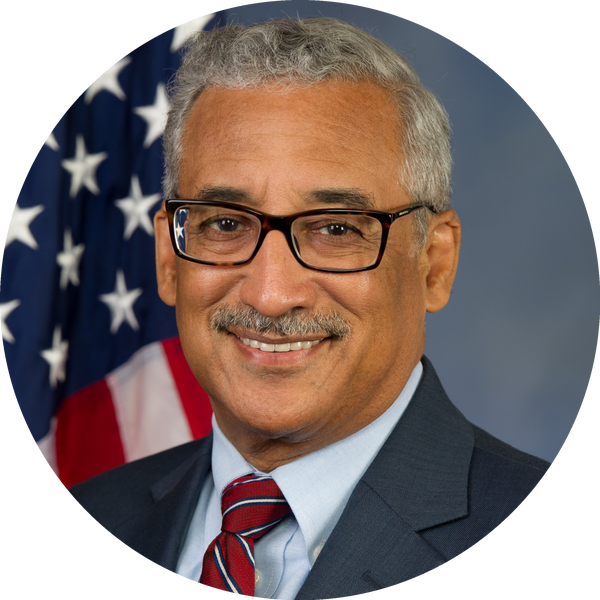
H.R. 6392 also appeared in 1 more House floor reference and 5 routine cosponsor filings.
HR6392 Legislative Journey
Sent to Senate
Mar 9, 2026
Received in the Senate.
House: Action Taken
Mar 5, 2026
Mr. Walberg asked unanimous consent that the Clerk be directed to make the correction to the engrossment of H.R. 6392 that has been placed at the desk. Agreed to without objection.
House: Vote: 2364-2365
Mar 3, 2026
On motion to suspend the rules and pass the bill, as amended Agreed to by voice vote. (text: CR H2364-2365)
House: Committee Action
Feb 10, 2026
Reported (Amended) by the Committee on Education and Workforce. H. Rept. 119-492.
House: Vote: 33-0
Dec 11, 2025
Ordered to be Reported (Amended) by the Yeas and Nays: 33 - 0.
House: Committee Action
Dec 3, 2025
Referred to the House Committee on Education and Workforce.
About the Sponsor
Mark Harris
Republican, North Carolina's 8th congressional district · 1 years in Congress
Committees: Education and Workforce, the Judiciary, Agriculture
View full profile →
Cosponsors (9)
No new cosponsors in 274 days — momentum stalled
All 9 cosponsors are Republicans. Cosponsors represent 8 states: Arizona, California, Colorado, and 5 more.
9Republicans·8 states




Committee Sponsors
Education and Workforce Committee
16D20R1I
|3 signed34 not yet3 of 37 committee members cosponsored


18 Republicans across this committee haven't cosponsored yet. Mobilize their constituents
H.R. 6392 Quick Facts
Cosponsors
9





- Committee
- Education and Workforce
- Chamber
- House
- Policy
- Education
- Introduced
- Dec 3, 2025
Passed the House, received in Senate
Mar 9, 2026
Official Sources
H.R. 6392 on Congress.gov
The official bill page tracking H.R. 6392's text, actions, and Senate status.
H. Rept. 119-492 — House Committee Report
The Education and Workforce Committee's report explaining the purpose and effect of the bill.
CBO Cost Estimate for H.R. 6392
The Congressional Budget Office's analysis of the bill's fiscal impact, confirming it creates no new spending.
20 U.S.C. 1091 — Student Eligibility
The statute the bill amends — Section 484(d) of the Higher Education Act, which sets federal student aid eligibility.
Federal Student Aid — Basic Eligibility Requirements
The Department of Education's official rules on who qualifies for federal student aid, including high school completion.
Federal Student Aid — No High School Diploma
How Federal Student Aid treats applicants without a standard diploma, including homeschool completion approved under state law.
H.R. 6392 Common Questions
Does H.R. 6392 let homeschool graduates get federal student aid?
Yes. H.R. 6392 would treat a student who finished secondary school in a state-recognized homeschool as a high school graduate for federal student aid, clearing one of the eligibility hurdles homeschool grads can hit on the FAFSA.
Do I need an accredited diploma or GED to qualify?
No. Under H.R. 6392, you wouldn't need an accredited diploma or a GED. If your state recognizes your homeschool education, the federal government would count you as a high school graduate for aid purposes.
Does my state's homeschool law decide whether I qualify?
Yes. H.R. 6392 ties federal recognition to state law: your homeschool has to be treated as a homeschool or private school under your state's rules. So how your state regulates homeschooling still shapes who qualifies.
What if my state treats my homeschool as a private school?
You'd still qualify. H.R. 6392 covers homeschool settings that state law treats as either a homeschool or a private school, so either classification works.
Does H.R. 6392 create a new grant or scholarship?
No. The bill doesn't create any new money, grant, or loan program. It only changes how homeschool graduates are classified for existing federal student aid.
Does H.R. 6392 create a federal homeschool standard or test?
No. There's no national homeschool standard or federal graduation test in the bill. It leans entirely on your state's recognition of your homeschool, keeping that call with state governments.
Is H.R. 6392 law yet?
Not yet. The House passed it in March 2026 and sent it to the Senate, where it's awaiting action. It would need to pass the Senate and be signed before it takes effect.
Based on H.R. 6392 bill text
H.R. 6392 Bill Text
“To amend the Higher Education Act of 1965 to recognize students who have completed secondary school education in a home school setting as high school graduates, and for other purposes.”
Source: U.S. Government Publishing Office
Bill Alerts
Get notified when H.R. 6392 moves
Committee votes, floor action, cosponsor changes — straight to your inbox.
Bill alerts + Legisletter's monthly briefing. Unsubscribe anytime.
Education Bills
9 related bills we're tracking
H.R. 1810Surging+12
Safe Schools Improvement Act

Linda SánchezD-CA




+214
218 cosponsors
+12 this monthReferred to the House Committee on Education and Workforce.
Mar 3, 2025
HouseEducation
H.R. 2598
IDEA Full Funding Act

Jared HuffmanD-CA




+171
175 cosponsors
+4 this monthReferred to the House Committee on Education and Workforce.
Apr 2, 2025
HouseEducation
H.R. 5486
Tyler Clementi Higher Education Anti-Harassment Act of 2025
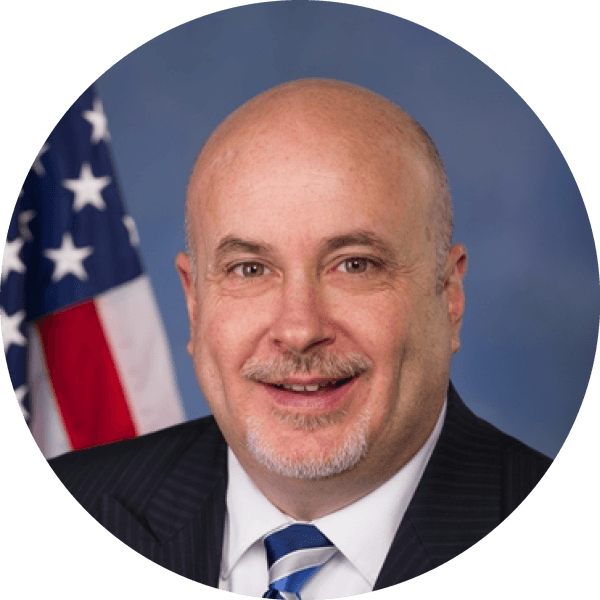
Mark PocanD-WI




+167
171 cosponsors
+1 this monthReferred to the House Committee on Education and Workforce.
Sep 18, 2025
HouseEducation
H.R. 2028
REDI Act

Brian BabinR-TX



+129
133 cosponsors
+3 this monthReferred to the House Committee on Education and Workforce.
Mar 11, 2025
HouseEducation
H.R. 433
Department of Education Protection Act

Jahana HayesD-CT




+128
132 cosponsors
Referred to the House Committee on Education and Workforce.
Jan 15, 2025
HouseEducation
H.R. 4253
Expanding Access to Mental Health Services in Schools Act of 2025

Rosa DeLauroD-CT

+125
129 cosponsors
Referred to the House Committee on Education and Workforce.
Jun 30, 2025
HouseEducation
H.R. 768
Holocaust Education and Antisemitism Lessons Act

Josh GottheimerD-NJ



+108
112 cosponsors
Referred to the House Committee on Education and Workforce.
Jan 28, 2025
HouseEducation
H.R. 2021
American Teacher Act

Frederica WilsonD-FL



+98
102 cosponsors
+1 this monthReferred to the House Committee on Education and Workforce.
Mar 10, 2025
HouseEducation
H.R. 7340
Rebuild America’s Schools Act of 2026

Robert ScottD-VA



+93
97 cosponsors
Referred to the Committee on Education and Workforce, and in addition to the Committee on Ways and Means, for a period to be subsequently determined by the Speaker, in each case for consideration of such provisions as fall within the jurisdiction of the committee concerned.
Feb 4, 2026
HouseEducation
Trending Right Now
Bills gaining momentum across Congress
H.R. 1502Surging+36
North Platte Canteen Congressional Gold Medal Act

Adrian SmithR-NE



+255
259 cosponsors
+36 this monthReferred to the House Committee on Financial Services.
Feb 21, 2025
HouseArmed Forces and National Security
H.R. 3569Surging+19
Fit to Serve Act
Adam SmithD-WA


+184
188 cosponsors
+19 this monthReferred to the House Committee on Armed Services.
May 21, 2025
HouseArmed Forces and National Security
H.R. 6130Surging+12
ASAP Act

Vern BuchananR-FL
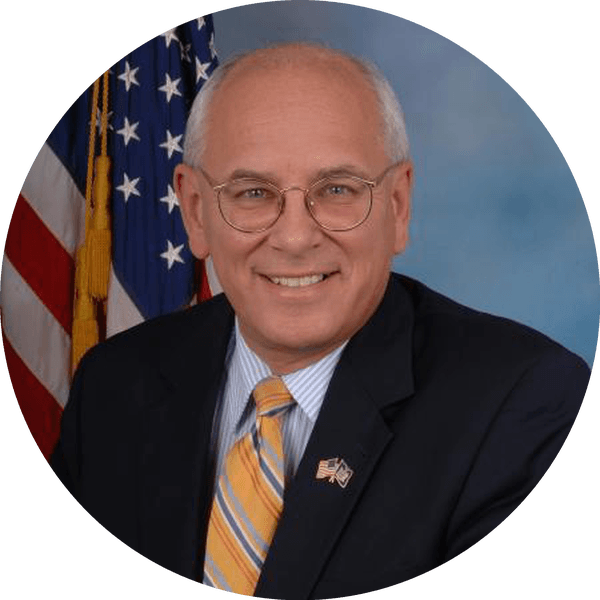



+227
231 cosponsors
+12 this monthOrdered to be Reported in the Nature of a Substitute by the Yeas and Nays: 40 - 0.
Sep 16, 2026
HouseHealth
Tracking Education in Congress? Monitor bills, track cosponsor momentum, and launch advocacy campaigns — all from one advocacy platform.