H.R. 7497: Supporting Trauma-Informed Education Practices Act of 2026
Sponsor

Jahana Hayes
Democrat · CT-5
A child's trauma shouldn't be a teacher's problem alone
Why it matters
H.R. 7497 authorizes $50 million a year for five years, $250 million in total, for trauma and mental health support in schools, tribal education systems, and child care. Each award could run up to five years, long enough to hire and train staff rather than start a pilot and watch it end.
H.R. 7497 rewrites a school trauma grant program first created in the 2018 SUPPORT for Patients and Communities Act, the federal opioid response law. The Education Department, working with Health and Human Services, would fund schools and child-serving agencies to link students with community mental health care.
Recipients choose at least one use from a menu: partnering with local mental health providers, adopting trauma-informed discipline models, training teachers and staff to spot and refer students in distress, serving kids at full-service community schools, working with families, or bringing early childhood programs into the effort. The adults count too: funds can go to mental health and resiliency programs for teachers, aides, and school leaders.
The bill attaches conditions. Anyone delivering services must be fully licensed or certified. Applicants must show how programs reach students with disabilities, work across languages, and use peer support. Every recipient must sign an agreement with local mental health, child welfare, juvenile justice, and Head Start agencies that spells out who pays for what, so the school is not carrying the cost alone.
The budget sets the limits. After up to 5% is set aside for an independent evaluation and administration, about $47.5 million a year would reach recipients. With roughly 49 million students in U.S. public schools, that works out to about $1 per student per year if spread nationwide, so this money would fund a set of local programs, not a national rollout.
Bill Progress
Latest Action · Feb 11, 2026
Referred to the House Committee on Education and Workforce.
H.R. 7497 Bill Summary
What H.R. 7497 actually does.
Schools get a direct line to community mental health care
Grants fund partnerships between schools, districts, or tribal education agencies and local mental health and trauma services, including the Indian Health Service, covering prevention, referral, treatment, and follow-up.
Teachers learn to recognize trauma and refer students
Professional development for teachers, aides, school leaders, and support staff on creating stable classrooms, identifying students who need help, and following best practices set by a federal interagency task force on trauma-informed care.
Educators' own mental health is covered
Funds can create or expand mental health, awareness, and resiliency programs for teachers, paraprofessionals, school leaders, and school-based mental health providers.
Support reaches kids before kindergarten
Recipients can partner with or pass funds to early childhood programs, and state, territory, and tribal agencies that run the Child Care and Development Fund can apply directly.
Local agencies must commit to sharing the cost
Each recipient signs an agreement with mental health, child welfare, juvenile justice, early childhood, and Head Start agencies setting each party's financial responsibility, service quality terms, reimbursement rules, and how disputes are resolved.
Licensed providers and an independent evaluation
Service providers must be fully licensed or certified, and the Education Department must run a rigorous, independent evaluation of funded programs and share what works.
Awards spread across rural, tribal, suburban, and urban areas
The Education Department must distribute awards equitably across U.S. regions and community types, and consult with tribes, Alaska Native Regional Corporations, and Native Hawaiian organizations so they know they are eligible.
Who benefits from H.R. 7497?
Students carrying trauma into the classroom
Kids affected by violence, loss, housing instability, or other hardship could get screening, referral, and treatment through their school instead of waiting on an outside system their family may never reach.
Teachers, aides, and school counselors
The staff who handle student crises every day could get training, a clear referral pathway, and access to mental health and resiliency programs of their own.
Tribal nations and Native communities
Tribes, tribal education agencies, the Bureau of Indian Education, Alaska Native Regional Corporations, and Native Hawaiian education organizations can apply directly, and the department must consult them before awarding funds.
Toddlers and preschoolers in child care
Early childhood programs and the agencies that run federal child care funding can take part, which extends support to children years before they enter a school building.
Parents coordinating care across agencies
Required agreements between schools and local mental health, child welfare, and juvenile justice agencies are meant to reduce how much of that coordination falls on families.
Who is affected by H.R. 7497?
State and local education agencies that apply
Applicants must describe their programs in detail, show access for students with disabilities and non-English speakers, involve parents and former young patients in design, and agree to the federal evaluation.
Local mental health, child welfare, and juvenile justice agencies
These agencies would sign binding agreements that set their share of costs, service standards, reimbursement terms, and a process for resolving disputes.
Districts that do not win an award
With about $47.5 million a year available nationwide, many applicants would not be funded in a given year.
State and local education budgets
Federal dollars must add to existing spending, not replace it, so a district cannot cut its own counseling budget and backfill with the grant.
Law enforcement and courts
The bill states that funded programs do not stop anyone from reporting a crime committed by a student, and do not limit police or courts from acting on it.
Cost & Funding
Authorization
H.R. 7497 authorizes $50 million a year for fiscal years 2027 through 2031, which is $250 million over five years if Congress appropriates the full amount.
- Up to 3% a year ($1.5 million) can go to the independent evaluation and up to 2% ($1 million) to technical assistance and administration, which leaves at least $47.5 million a year for awards.
- If awards averaged $500,000, that would fund roughly 95 recipients a year. The bill does not set an award size.
- Spread across roughly 49 million public school students, $47.5 million is about $1 per student per year.
- Authorization is a ceiling. Congress still has to appropriate the money each year.
HR7497 Legislative Journey
House: Committee Action
Feb 11, 2026
Referred to the House Committee on Education and Workforce.
About the Sponsor
Jahana Hayes
Democrat, Connecticut's 5th congressional district · 7 years in Congress
Committees: Agriculture, Education and Workforce
View full profile →
Cosponsors (20)
All 20 cosponsors are Democrats. Cosponsors represent 16 states: Alabama, Arizona, California, and 13 more.

Shontel Brown
Democrat · OH

Eleanor Norton
Democrat · DC

Debbie Dingell
Democrat · MI
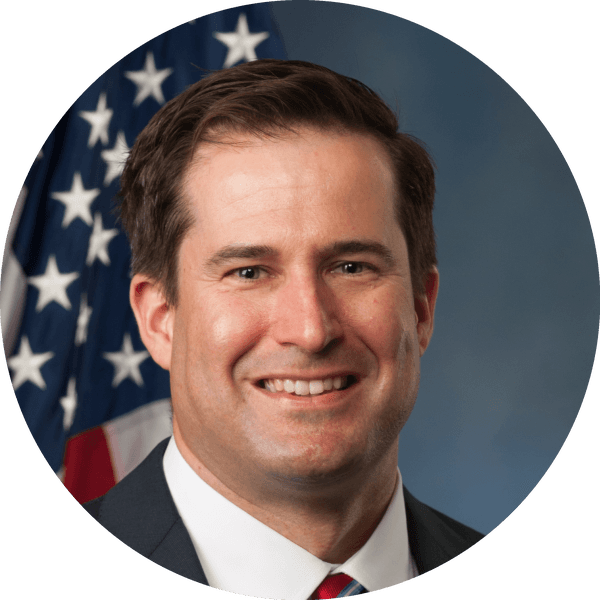
Seth Moulton
Democrat · MA

Shri Thanedar
Democrat · MI

Maxwell Frost
Democrat · FL

Terri Sewell
Democrat · AL

Mark Takano
Democrat · CA

Melanie Stansbury
Democrat · NM

Stephen Lynch
Democrat · MA

Cleo Fields
Democrat · LA

Zoe Lofgren
Democrat · CA
Committee Sponsors
Education and Workforce Committee
3 of 37 committee members cosponsored


13 Democrats across this committee haven't cosponsored yet. Mobilize their constituents
What laws does H.R. 7497 change?
1 changes
Sections Amended
Section 7134 of SUPPORT for Patients and Communities Act (42 U.S.C. 280h-7)
read as follows: ``SEC
H.R. 7497 Quick Facts
- Committee
- Education and Workforce
- Chamber
- House
- Policy
- Education
- Introduced
- Feb 11, 2026
Referred to the House Committee on Education and Workforce.
Feb 11, 2026
Official Sources
Official bill text, sponsor and cosponsor list, and committee actions for H.R. 7497.
The existing school trauma grant statute that H.R. 7497 would rewrite, including its original $50 million annual authorization.
The 2018 federal opioid response law that first created the school trauma grant program this bill updates.
The federal task force whose trauma-informed best practices funded teacher and staff training must follow.
The legal definition of a full-service community school, where the bill lets recipients provide trauma and mental health services.
Defines the state, territory, and tribal child care agencies the bill makes directly eligible to apply.
H.R. 7497 Common Questions
How much funding does H.R. 7497 provide for school mental health?
It authorizes $50 million a year from 2027 through 2031, $250 million in total. About $47.5 million a year would reach recipients after evaluation and administrative costs, and Congress still has to appropriate the money each year.
What is trauma-informed education?
It means schools treat a student's behavior as a possible sign of stress, loss, or violence at home instead of only a discipline problem. Under H.R. 7497, staff learn to spot those signs and connect students with licensed mental health providers.
Who can apply for H.R. 7497 grants?
State and local education agencies, tribes and tribal education agencies, the Bureau of Indian Education, Alaska Native Regional Corporations, Native Hawaiian education organizations, and state, territory, and tribal agencies that run federal child care funding.
Does H.R. 7497 help teachers with their own mental health?
Yes. Grants can fund mental health, awareness, and resiliency programs for teachers, aides, school leaders, and school-based counselors, not just services for students.
Does it cover preschool and child care, or only K-12?
Both. Recipients can partner with or pass funds to early childhood programs, and the agencies that run the federal Child Care and Development Fund can apply directly.
Who pays for services when schools and outside agencies work together?
Each recipient must sign a local agreement with mental health, child welfare, juvenile justice, and Head Start agencies that sets each party's financial responsibility, reimbursement terms, and a process for resolving disputes.
Can schools still report crimes to police under H.R. 7497?
Yes. The bill states that nothing in the program stops staff from reporting a crime committed by a student, or limits police and courts from acting on it.
Is H.R. 7497 a new program?
No. It rewrites an existing school trauma grant program created by the 2018 SUPPORT for Patients and Communities Act, the federal opioid response law, and authorizes new funding for it through 2031.
Based on H.R. 7497 bill text
H.R. 7497 Bill Text
“To amend the SUPPORT for Patients and Communities Act to improve trauma support services and mental health care for children and youth in educational settings, and for other purposes.”
Source: U.S. Government Publishing Office
Get notified when H.R. 7497 moves
Committee votes, floor action, cosponsor changes — straight to your inbox.
Bill alerts + Legisletter's monthly briefing. Unsubscribe anytime.
Education Bills
9 related bills we're tracking
Safe Schools Improvement Act




Referred to the House Committee on Education and Workforce.
Mar 3, 2025
IDEA Full Funding Act



Referred to the House Committee on Education and Workforce.
Apr 2, 2025
Tyler Clementi Higher Education Anti-Harassment Act of 2025



Referred to the House Committee on Education and Workforce.
Sep 18, 2025
Department of Education Protection Act




Referred to the House Committee on Education and Workforce.
Jan 15, 2025
REDI Act


Referred to the House Committee on Education and Workforce.
Mar 11, 2025
Expanding Access to Mental Health Services in Schools Act of 2025

Referred to the House Committee on Education and Workforce.
Jun 30, 2025
Holocaust Education and Antisemitism Lessons Act



Referred to the House Committee on Education and Workforce.
Jan 28, 2025
American Teacher Act



Referred to the House Committee on Education and Workforce.
Mar 10, 2025
Rebuild America’s Schools Act of 2026


Referred to the Committee on Education and Workforce, and in addition to the Committee on Ways and Means, for a period to be subsequently determined by the Speaker, in each case for consideration of such provisions as fall within the jurisdiction of the committee concerned.
Feb 4, 2026
Trending Right Now
Bills gaining momentum across Congress
America’s Olympic and Paralympic Games Commemorative Coins Act




Referred to the House Committee on Financial Services.
Jul 14, 2025
Fit to Serve Act


Referred to the House Committee on Armed Services.
May 21, 2025
ASAP Act



Ordered to be Reported in the Nature of a Substitute by the Yeas and Nays: 40 - 0.
Sep 16, 2026
Tracking Education in Congress? Monitor bills, track cosponsor momentum, and launch advocacy campaigns — all from one advocacy platform.